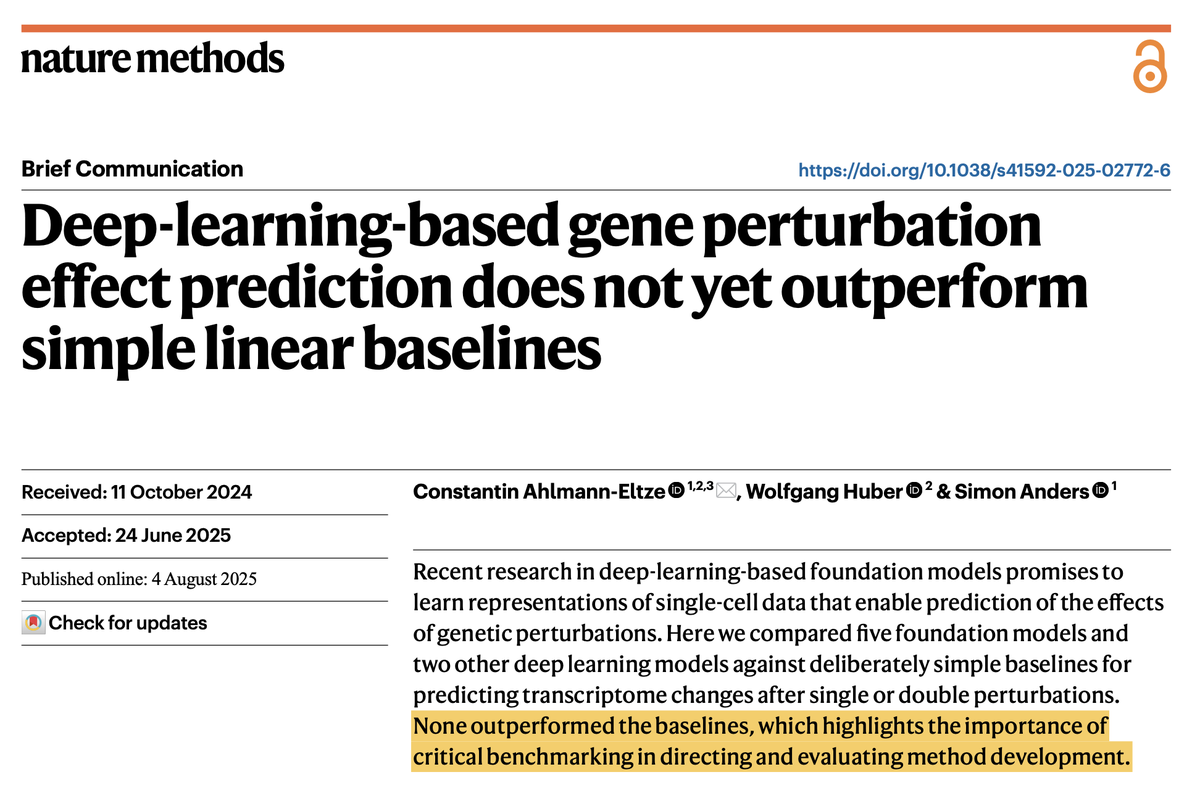
Two years ago the best virtual cell model was ridge regression and yesterday the best virtual cell model was ... ridge regression. But sure, throw a billion more parameters at the problem, no one is stopping you.
Initiatives like the UK Biobank require massive upfront investment, but returns compound over decades
For example, ~57,000 of the original 500,000 participants recruited between 2006-2010 to the UK Biobank had passed away by end of 2024.
As that number grows, we'll have a unique, deeply phenotyped resource for studying aging and mortality trajectories.
The dataset gets more powerful with time.
Just want to give a shout-out to David Kelley @drklly who I think often does not get the credit he deserves (outside our core community).
I want to highlight why I think he is such a fantastic scientist and leader in regulatory genomics. 1/
@MariosGeorgakis I wonder whether this shows MR just has lower power. In protein-protein networks, there are some gold standard regulatory interactions/PPI that are known to affect protein expression. I wonder what percentage of those gold standard (which are probably biased) does MR capture?
We’re hiring in my group at Calico. We build Borzoi and its successors—deep learning models that predict how every nucleotide shapes cell-type-specific gene regulation—and apply them to interpret human genetic variation.
This is a great post on daraxonrasib, the recent breakthrough drug for pancreatic cancer, by @RuxandraTeslo
She explains that pancreatic tumors are hard to treat for several reasons:
- they're usually caught late (after they've spread to other organs)
- they physically wall themselves off from the immune system with dense scar-like tissue and also suppress immune activity from within
- the most common driver mutation, KRAS, sits on a protein with no obvious binding site for conventional drugs...
... until now!
https://t.co/UKdrbOh0V8
Check out this exciting work from the Calico ML team, developing creative techniques to detect subtle information in rich measurements like MRI and analyze the genetic associations driving differences.
Nothing wrong with using AI to analyze your genome but please do not naively believe AI based analyses of genomic information without consulting clinical geneticists, physicians & genetic counselors. Lots of snake oil salesmen in this space.
A side effect of more weakly trained biologists entering techbio is we’re just scaling the same irrelevant experiments that are a root cause of drug failures.
Pharma companies have already run more automated screens in these models than you can imagine.
Anurag Sethi, Principal Data Scientist, studies large human cohorts to better understand aging. He turns complex data into insights that inform our research and drug discovery programs.
Anurag shares what makes his work rewarding.
https://t.co/Xp8BZNDZrh
#AgingScience
We are pleased to announce that the IITB Mars Rover Team has secured second place in the European Rover Challenge – Remote Formula, among 20+ participating international teams.
Our Autonomous & Software subdivision developed an autonomous exploration and navigation framework leveraging the ROS middleware integrated with the Unity simulation platform. This framework enabled the rover to operate in the Mars yard simulated testing environment, performing tasks such as terrain mapping, object detection and obstacle avoidance, autonomous decision-making for exploration, and path planning towards designated goals.
This achievement highlights the potential applications of our work in diverse areas of autonomous robotics, including self-driving vehicles, drone-based reconnaissance, and warehouse automation.
Many thanks to Faculty Advisor Prof. P. J. Guruprasad for his continued guidance.
#ERC2025 #Robotics #AutonomousSystems #IITB
One of the most epic framings of human genetics that lives rent-free in my head:
"The human population, through explosive growth, has performed a comprehensive saturation mutagenesis experiment on itself. It is now the case that any single base substitution that is compatible with life is expected to be present somewhere among the nearly 8 billion living humans. Humanity has thus, in effect, done many of the natural experiments required to understand our own genotype-phenotype map; this leaves geneticists to catalog the outcomes of those experiments, and to leverage both observational and experimental approaches to understand the mechanisms by which variants alter biology."
Such a beautiful idea. Human genetics remains our greatest source of predictive validity for new drug mechanisms. And we're just scratching the surface.
🏏 25 days. 5 battles. Scores tied 2-2.
This isn’t just a game — it’s Test Cricket in all its timeless glory.
A series for the ages. Hats off to IND & ENG for the drama, grit, and greatness.
It's clear that many do not understand what @NIH-funded research does to improve health. It's time to revive a study published 10 years ago that provides incredible information about this. link in the comment
Every single new drug approved by the FDA from 2010–2016 was built on NIH-funded research—that’s all 210 drugs. But what the public sees is just the tip of the iceberg.
Pharma takes credit for the final product, but beneath each drug developed, there are ~20 years of basic research, and 90% of the cost is from basic research funded by the NIH, which discovers drug targets, understands disease mechanisms, and creates life-saving treatments.
Figuring out how cancer evades the immune system, how addiction rewires the brain, and how heart disease develops is the role of the NIH, creating the foundation for the breakthrough drugs that come 20 years later, and the NIH does all that with only 0.8% of the US budget.
Without NIH, there would be no cancer immunotherapy, no anti-overdose medication, no anti-heart attack or stroke medication, no cutting-edge treatments.
If NIH funding is cut, the iceberg will melt. That means fewer cures, more suffering, and more lives lost.
The science beneath the surface keeps us afloat.
Invest in NIH. Invest in life
I shake my head as people actually think DOGE has identified waste, fraud and abuse in 5 days. What they are doing is gutting programs they don't like according to Project 2025. They haven't done any analysis and don't even know the functions of the departments they are cutting.
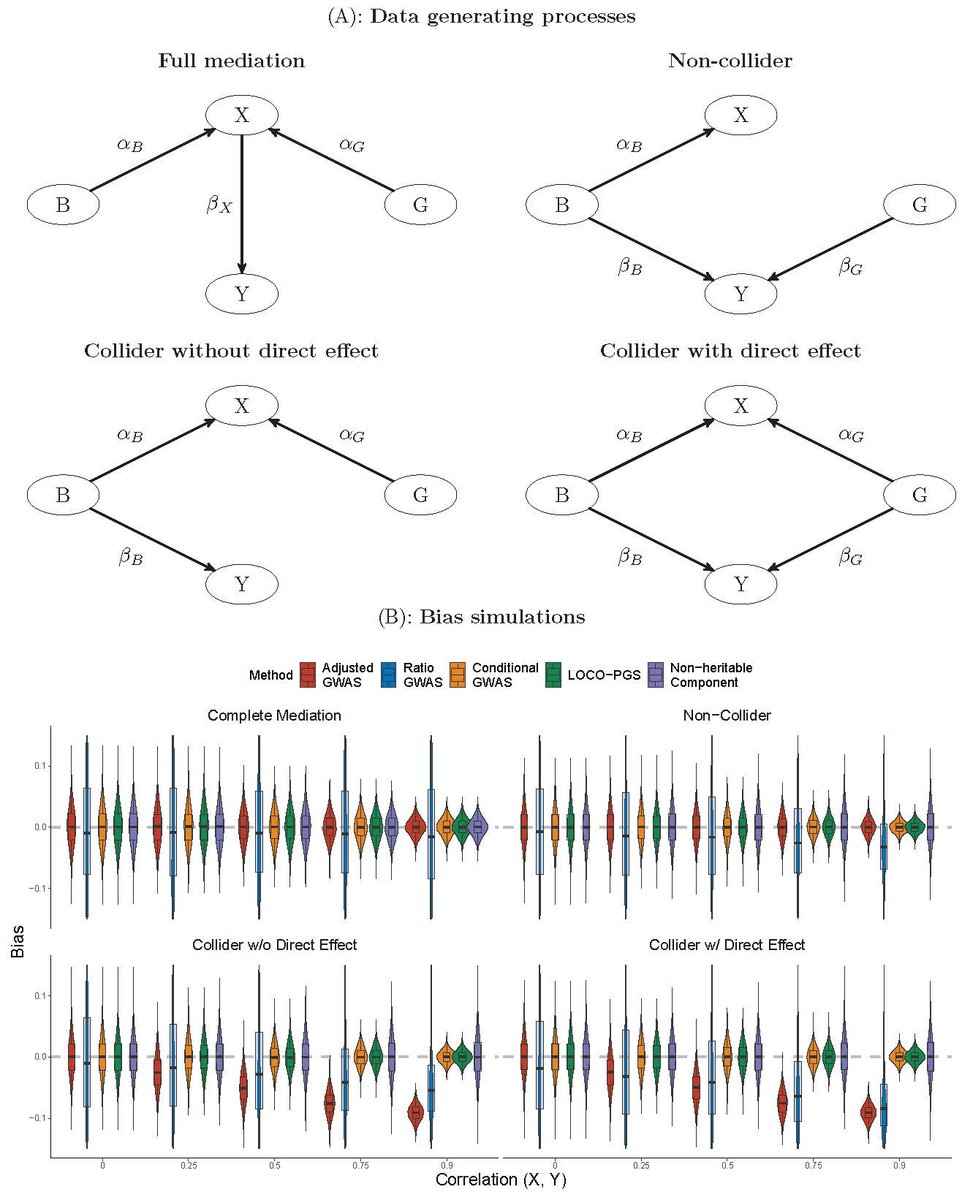
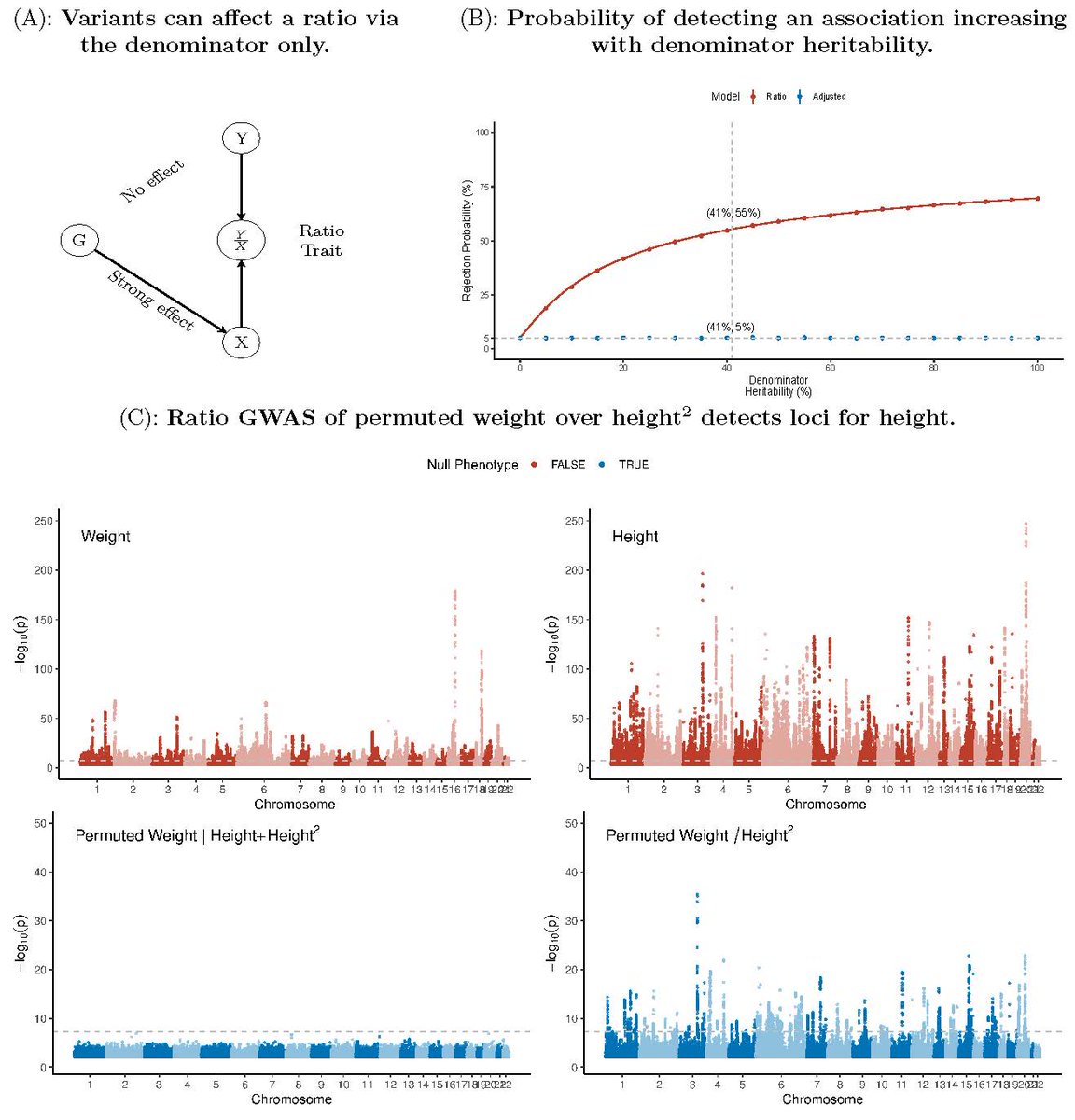
Although genome-wide association studies are often performed on ratios composed of a numerator trait divided by a denominator trait, @HGGAdvances latest article recommends a covariate-adjusted or multivariate model to provide clearer interpretations: https://t.co/C760qhe3vF #ASHG