Congrats to @murataelle, lead author on the latest 28andHe pub out now in JNeuro. Using this precision imaging dataset, she further characterized diurnal brain change in a new & complementary way to the existing literature. Check it out!
5 years ago, on the heels of 28andMe, our team designed a new precision imaging experiment: scanning an individual’s brain throughout her entire pregnancy. We are excited to share that these findings are out today in @NatureNeuro! https://t.co/NfbCsSigXn
Another paper just out! This one was led by stellar first-year grad student, Shivang Shelat (@cogshelat). Together with @JonathanSchool6, we discuss methods for tracking failures of sustained attention, including lapses and mind-wandering. 1/n
Just out in @CommsPsychol ! My stellar team, lead by @jordangarrett__ , @carly_chak, and @BrainOnExercise crunched through a ton of papers to understand the impact of a single acute bout of exercise on cognition. Why? Read on...1/n https://t.co/Cqzheb0QS4
Thank you @Ecquis + his daughter for highlighting this crucial topic! Recent work with @VikBabenko@neilmdundon featured alongside the great C.S. Woolley, who laid the foundation for brain structure + hormone research 🧠
https://t.co/tMUts589QT
How much protein can your body absorb in one meal? The answer might shock you.
It's commonly believed that your body can only absorb 20-30 grams of protein per meal.
I've always doubted this, based on both personal experiences and client data.
Some of my clients regularly consume up to 75 grams of protein in one meal, with positive gains in their lean mass.
A recent study lead by @JornTrommelen and his team at Nutrition Tactics challenges the conventional wisdom on protein consumption.
Researchers compared different post-exercise milk protein amounts (0g, 25g, and 100g) in young adults, measuring over 12 hours.
What they found was the 100-gram group was still digesting protein and had the highest muscle protein synthesis after 12 hours.
What are the big takeaways?
1. The bodybuilding bros were right again.
2. It suggests that fewer, larger meals might be as effective as frequent ones.
3. If your final meal is 100 grams of protein you might still be processing it even after 12 hours of eating.
4. The study was done post-workout. I'd like to see what happens in a non-trained individual.
5. Science is still slow to catch up to what we know in real time.
In any case, protein is the most important nutrient on the planet.
I recommend 1 gram per pound of ideal bodyweight for our clients.
Now if you don't mind, I'm about to get myself some delectable 350-gram striploin steaks for Christmas.
Ps. Here's the link to the study done by @JornTrommelen. Highly recommend giving it a read:
https://t.co/myFgGs5rQj
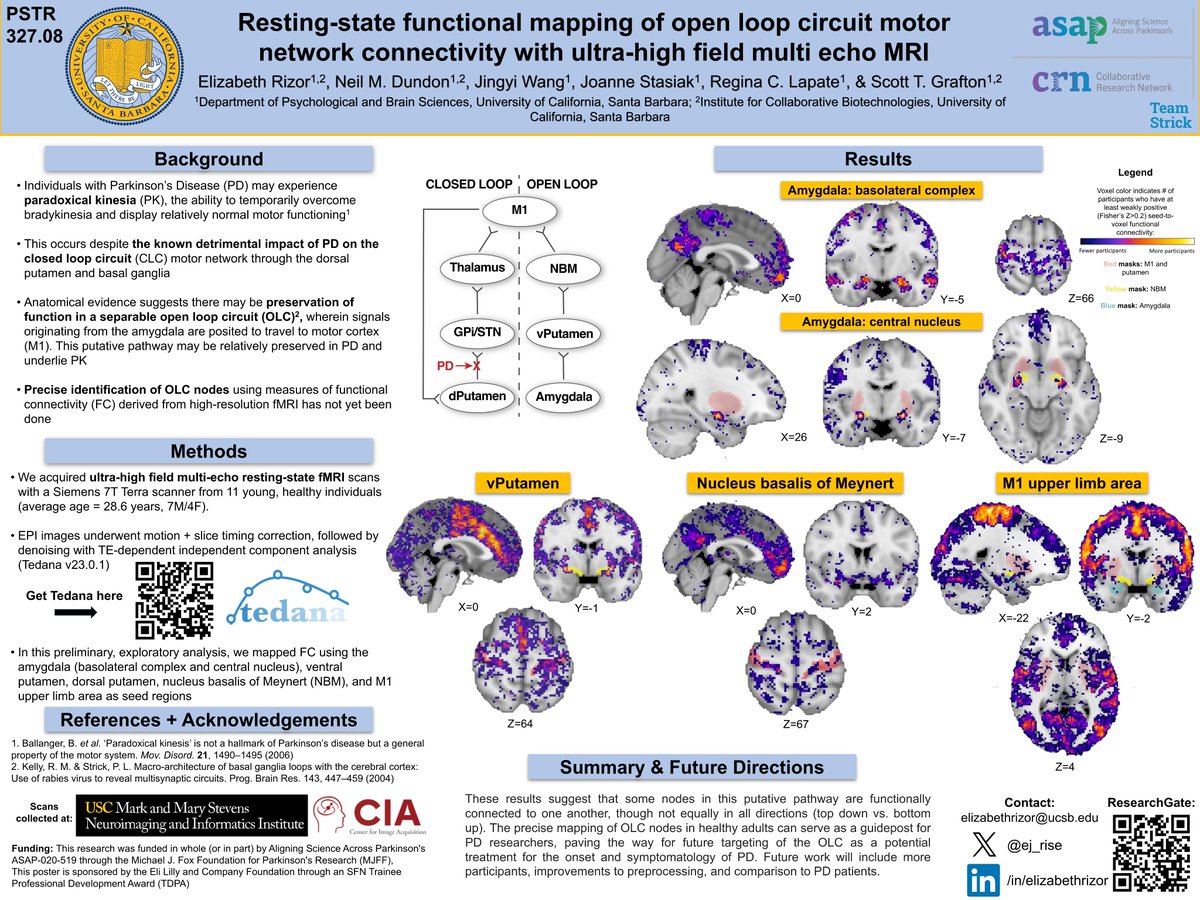
In DC for #SFN23! Come by for new 7T data exploring a motor circuit that may be preserved in Parkinson's Disease 🧠 Will be at TPDA session poster EE23 Sat 6:30-8:30 halls A-C, and Tues. 8am-12pm PSTR 327.08 halls A-C
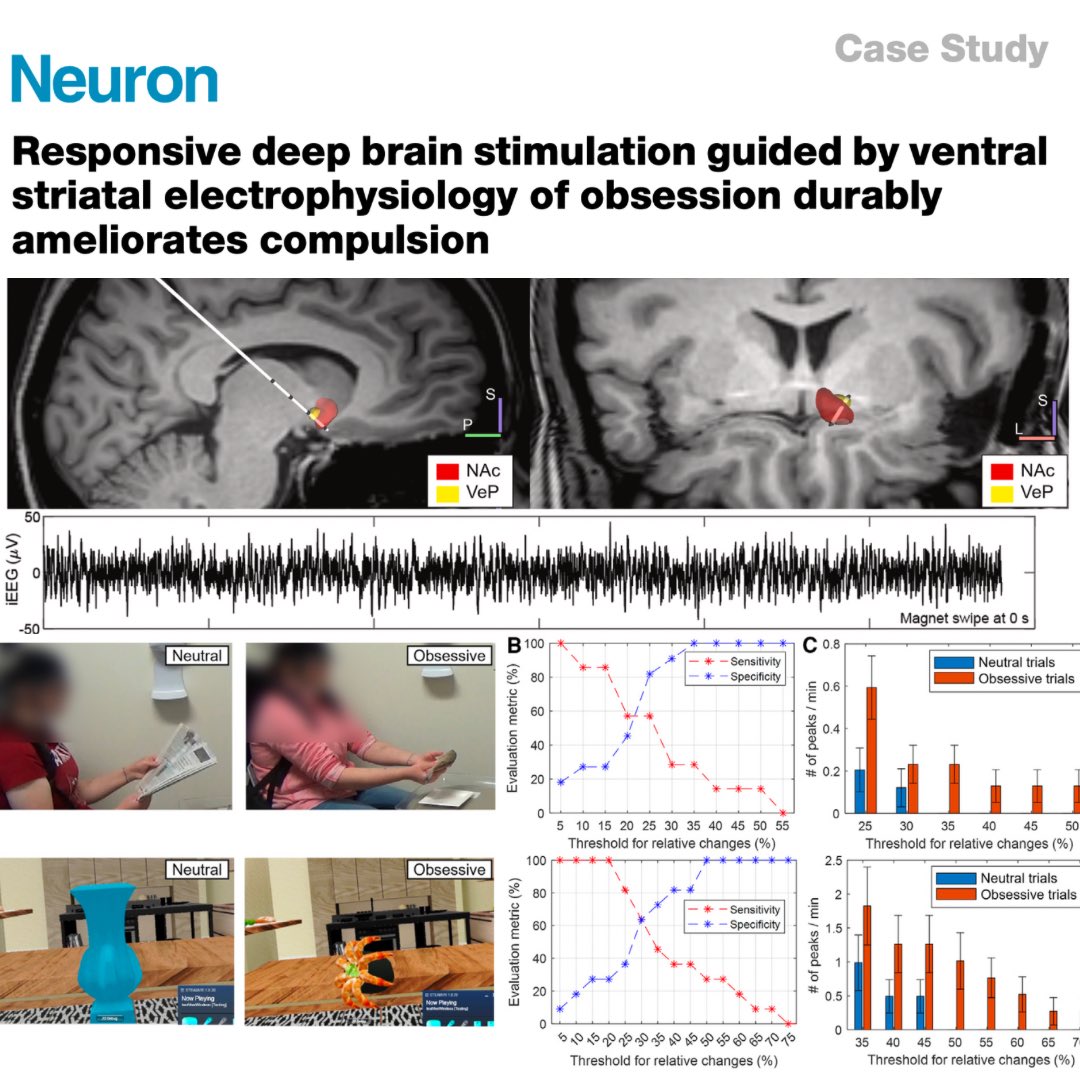
Our latest publication in @NeuroCellPress describes the first-in-human application of responsive deep brain stimulation to treat obsessive symptoms in OCD. This paper embodies our lab’s mission to explore novel and effective applications for DBS.
@PennNSG@PennMedicine
New lab paper 🥳
Our memory study with deep brain recordings during human ambulatory navigation is out today @NatureComms:
Combined intracranial EEG, motion capture, & virtual reality during walking🚶🏻♀️
🧵
https://t.co/aqW8ROJuuj
🚨 New preprint! 🚨 Proud to share the first ever look 🔎👀 at menstrual cycle-driven brain-hormone relationships with multidimensional diffusion imaging - an important step given the dearth of human diffusion studies for 🧠 health of women + those who menstruate
A new study reveals a strong link between vision problems and dementia in the elderly. This vital research reminds us to prioritize vision health as a potential strategy for slowing cognitive decline. Clear vision might mean a clear mind.
https://t.co/bv02f5pgww
#neuroscience
1/2
https://t.co/JPRfpiHvhm
"Resistance exercise induced statistically significant, clinically-meaningful, large-magnitude reductions in depressive symptoms from baseline to week eight.
These findings support guidelines-based RET as a promising treatment for mild depression."
I decided today that I’m going to see if I can find the restaurant with the highest number of brothers. I am on strike and have nothing better to do with my time. Please join me.