Dopamine shifts from reward to cue during learning. But how is this reflected across the brain?
Combining NAc dopamine photometry with whole-brain fMRI in behaving mice, we link this classic dopamine dynamic to brain-wide changes as learning unfolds.
https://t.co/VFcRNleeuR
Does physical activity modulate cognitive and motor progression in PD?
Analysis of longitudinal, observational data from @ccbpstudy demonstrated that higher levels of physical activity associated with slower cognitive decline and motor progression.
Link: https://t.co/AofcA4rJ8i
Excited to share our paper on sex-differences in resting state DLPFC examining motion correction approaches and depression-anxiety comorbidity. Thankful for the incredible support from my supervisor @VSPsych 🙏🏻. 🧵https://t.co/ywAK6FY4nU
Excited to share the lab's first fiber photometry paper, out now in #JNeurosci 🎉😃🐀🧠💫
This one feels particularly special: it marks a new experimental direction for the lab and reflects so much hard work, troubleshooting, learning, and persistence from an incredible team 🔬✨
New (open access) commentary is out now. We review research on symptom validity tests and outline challenges and future directions for the field.
https://t.co/2cMvwhhBkq
Happy to announce our latest review is out @NatureRevCancer ! We provide an overview of the latests advances and future directions in genotype-aware single cell multiomic methods, for linking genotypes to phenotypes in single cells:
https://t.co/cB9D3OOJJx
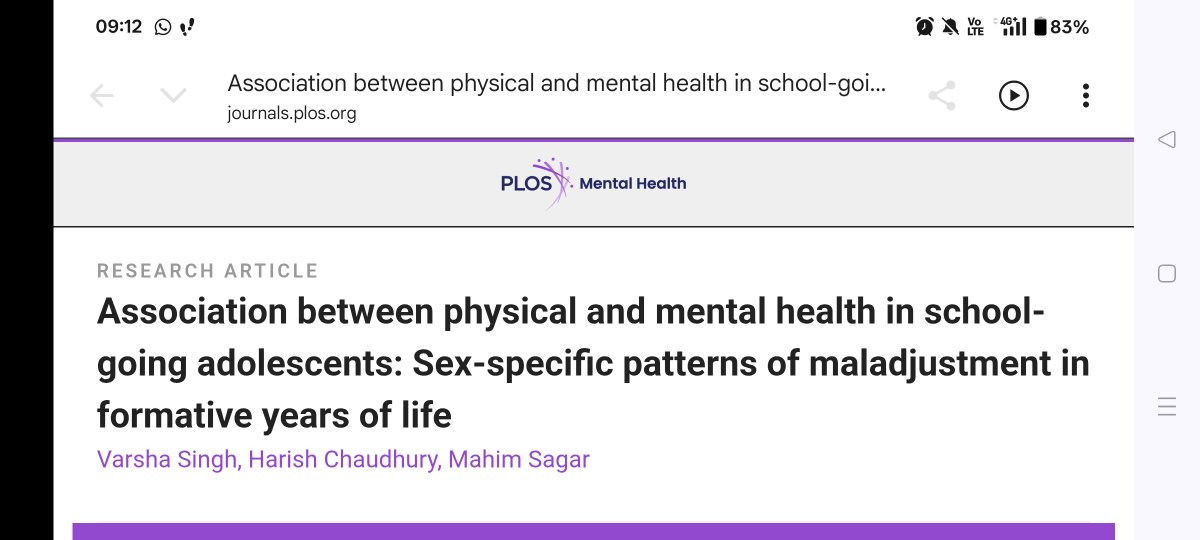
New publication🎉✨Took years, excited to share we looked at how physical-mental health are linked & how they help understand sex-specific pattern of maladjustment in adolescence. An exhausting but enriching experience, enabled by team efforts ✨☀️🙏🏻. https://t.co/TlcbQssi1V
Our new paper: we found that in in vitro stem cell models, ARID5A, an RNA-binding protein in brain immune cells (microglia), links immune signaling, waste clearance, and iron metabolism — and controlling it may protect neurons in neurodegeneration. https://t.co/xIWeLC4f8g
The risk of refractory status epilepticus can be reduced. We demonstrate some of the associated factors in this new study; factors such as speed of benzodiazepine administration. Published in @EpilepsyBehavi1
https://t.co/tp9HHXzg7g
We’re finally able to see tau at the single-molecule level and more deeply explore neurodegenerative drivers.
Thanks for the collaboration, @NautilusBio! There is real patient impact potential in this work.
Read the paper here: https://t.co/3yXl7NkfRY
Can a virtual cell tell us where to look for autism genes?
In our new preprint, NOCAP-AI, we trained a single-cell foundation model on 3.6 million cells from human brain organoids to learn how genetic perturbations affect developing brain cells.
I’m very excited to share our new paper, led by the very talented Jack Bowler, a postdoc in the lab!
https://t.co/JCjF0EyUer
We all know that the way we learn something matters. But how does a training curriculum actually shape how the brain learns to solve a problem? a 🧵 1/N
Large-Scale In Vivo Electrophysiology Analysis Reveals Opposing Thalamic and Hippocampal Excitability After Third-Trimester-Equivalent Alcohol Exposure in Mice | Journal of Neurophysiology | American Physiological Society https://t.co/5v3txiUx7S
I’m delighted to share our latest work on the 3D epigenome of glial cell types in the developing human cortex, published today in Nature!
https://t.co/wB1JDj0F2Z
In two accompanying studies, we found converging evidence that eye–brain dynamics may offer a low-cost window into Alzheimer’s biology and its potential for stage-specific neuroplasticity. Oculomotor signatures differentiate AT(N) profiles, while oculomotor training shows distinct cognitive, tau, and physiological responses across MCI stages. Congrats Ricardo Martínez-Flores, Hans Supèr & the entire team:
https://t.co/iorvRa4KRu & https://t.co/00k5jQFpZf @GeroScienceAGE
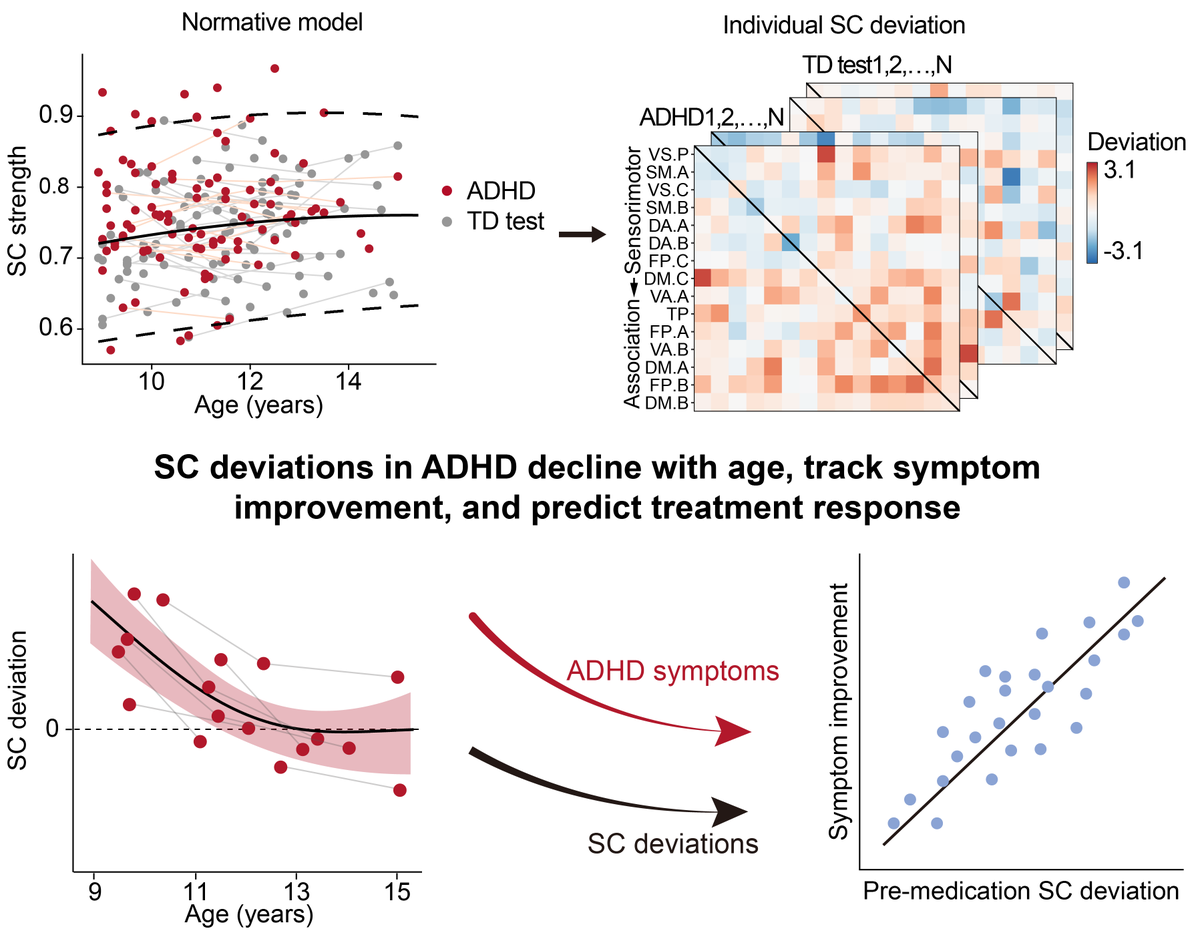
Excited to share our latest @natBME paper!🥳How does structural connectivity (SC) in ADHD deviate from typical development? We show delayed maturation of association-network SC, with some deviations declining with age, tracking symptoms, and predicting treatment response.
Are the descriptions of emotions in natural language consistent with bodily feelings that people experience during emotions? Our new @TurkuPETCentre study based on >500 million words of text confirms that yes they are, and consistently across languages 👇!
The brain may not encode natural movement the way laboratory studies led us to think.
We found that cortical neurons use distributed bursts to efficiently represent features of everyday self-motion.
New paper @ScienceAdvances:
https://t.co/FWzPokMYHE
#Neuroscience#vestibular
Our approach for untangling brain-wide interactions is out today in @NeuroCellPress!
Massive congrats to @mattperich for leading this incredible effort since 2020, and a huge thank you to all of our collaborators.
https://t.co/aIjzMDpQnE