Econ prof at @MarymountU. Researches religion, marriage, law, education. Fascinated by complex systems and emergent order. Engineer. Attorney. Prone to wander.
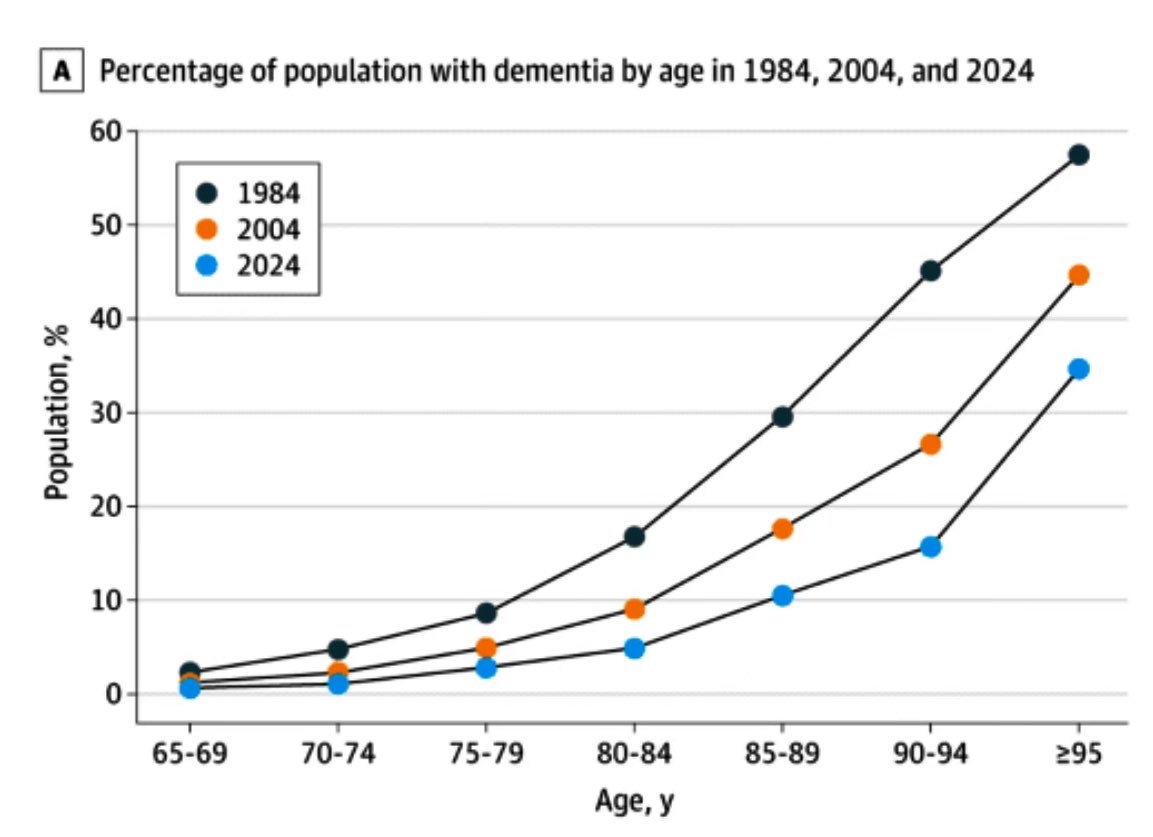
The odds of having dementia at age 85 were close to 1 in 3 in the 80s; now they are 1 in 10.
I don’t think we have a great explanation: better cardiovascular health, diet, and education are often mentioned. Good news nonetheless.
Carnall Farrar. (2025, March 27). Dementia trends.
I'm interested in "trapped buildings": those that couldn't be built today (because of zoning and code changes) but also can't be substantially modified or demolished (because of historic protection rules). One of those phenomena that really makes one wonder what exactly we're trying to do.
Has anyone ever estimated what fraction of buildings in major cities fall into this category?
When I asked Claude about San Francisco, it concluded: "If forced to give a single number with a single confidence rating: roughly 100,000 buildings — about two-thirds of San Francisco's physical structures — sit in the trap as a practical matter. Confidence: moderate. The number could be 70,000 or 130,000 depending on how strictly you operationalize "can't be substantially modified.""
We don’t talk enough about how any state or group which is harvesting encrypted packets right now will be able to read those contents once quantum computers arrive.
There’s a huge espionage and transparency overhang on any information that is currently “secret” and hasn’t been encrypted using post-quantum cryptography.
The team behind my favorite graph - @OurWorldInData - is hiring a writer.
If you can explain complicated things in ways that change how people think AND you want that skill pointed at the world's largest problems, consider applying: https://t.co/okEO4pBIB4
📊 How much do governments spend, and what do they spend it on?
In the chart, we see total government spending broken down by purpose, such as health, education, and defense, relative to the size of the economy (as measured by GDP). This is shown for a selection of OECD countries.
How much governments spend varies quite a lot across OECD countries: in France it’s 57% of GDP, while in Chile it’s less than half that (28%).
Keep in mind that these are relative shares, not absolute amounts. GDP itself varies considerably across countries, so the same percentage can represent very different sums depending on the size of a country’s economy.
For some categories, such as social protection — which includes things like pensions, unemployment benefits, disability support, and other benefits — the difference across countries is relatively large. For example, it’s 26% in Finland compared to 7.9% in the US.
In other categories, such as public services — which include things like paying interest on government debt, the running of core government functions, and foreign aid — the share is more similar across countries.
This data comes from the OECD’s Government at a Glance dataset, which covers 47 countries. Our colleague @parriagadap recently updated our charts with the latest release.
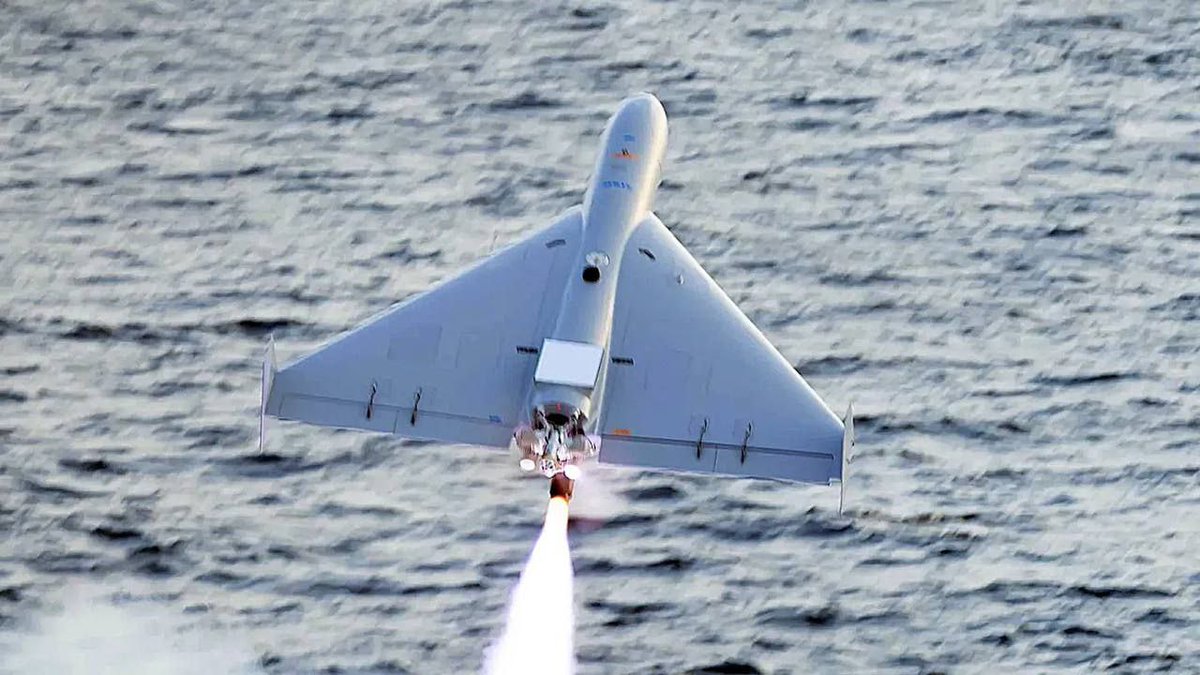
1/ Russian commentators are sounding the alarm over America's use of a new kamikaze drone against Iran, the Low-cost Unmanned Combat Attack System (LUCAS). They note that it appears to have an integrated Starlink terminal and warn that it's a serious threat to Russia. ⬇️
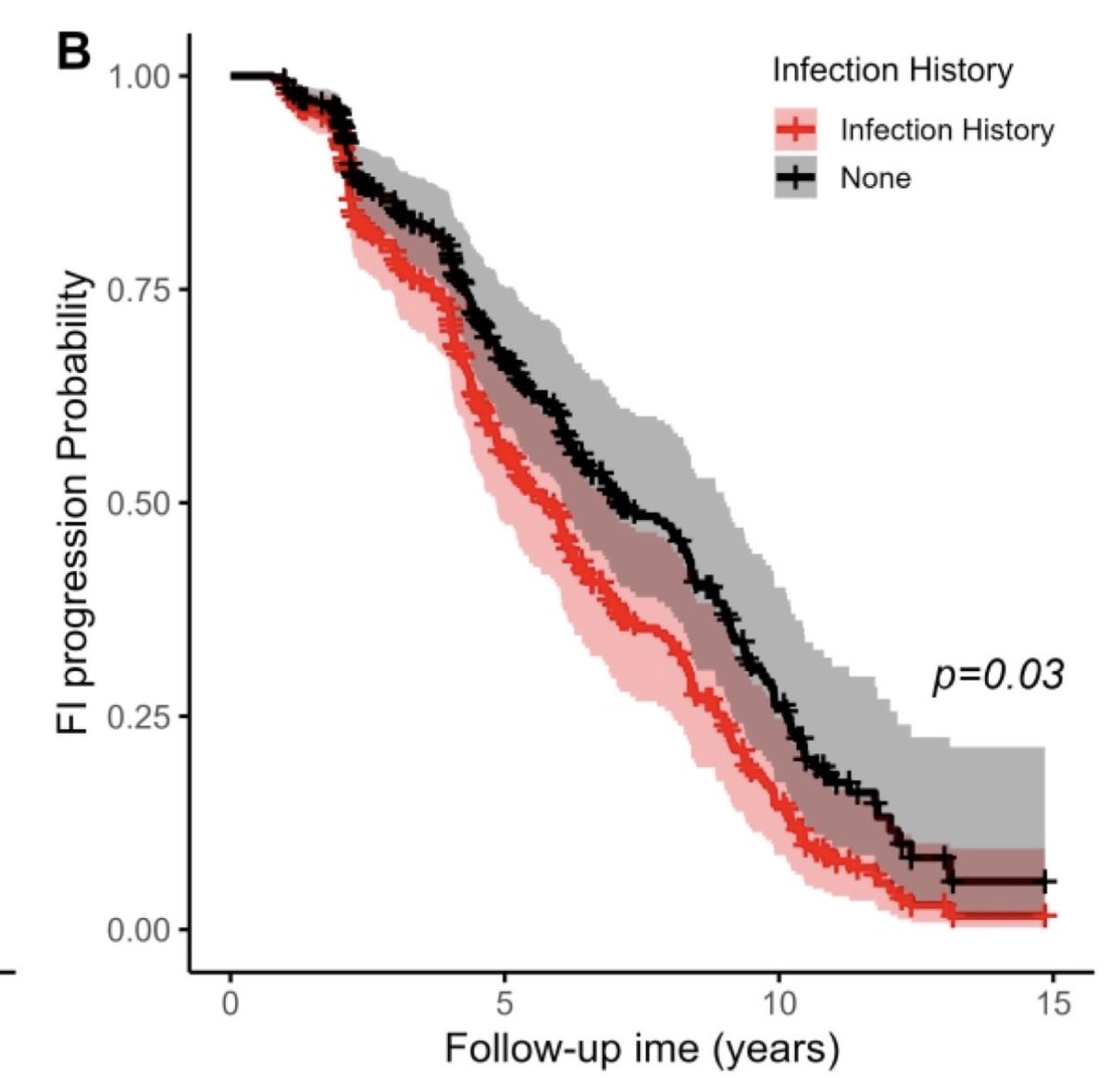
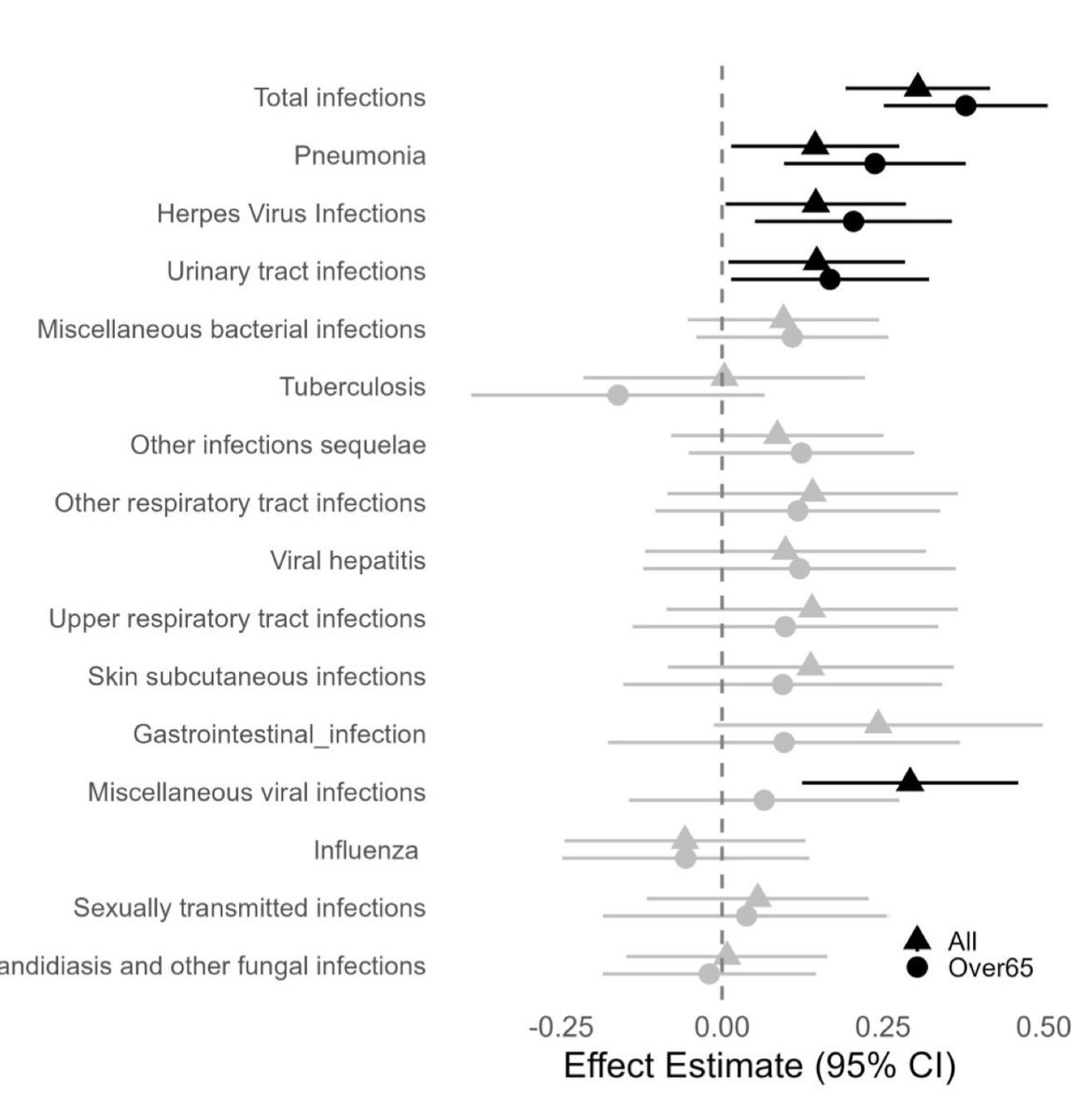
During their lives, centenarians rarely get sick. New paper with 1,400 subjects finds a history of infections (pneumonia, herpes, UTIs) associates with earlier frailty. The authors speculate that obesity makes people more susceptible & that viral infections may accelerate aging
⚡️This confirms full transition into live kinetic brinkmanship.
Iran is now probing for thresholds. Sending a second drone after the first was shot down is a deliberate stress test of U.S. rules of engagement. It is a probe calibrated for ambiguity - deniable enough to delay full reprisal, provocative enough to map the edges of U.S. restraint.
This is structured reflexive escalation. Tehran is baiting a visible overreaction to fracture the negotiation optics, increase regional deterrence credibility, and trigger global mediation pressure before any strike window can close in.
They are operating under a calculated assumption: Washington will hesitate to strike if provoked incrementally without visible loss of life. Each drone increases that edge. Each delay reinforces the perception of asymmetry. Each pass moves the window closer to rupture.
The carrier’s relocation into deeper water does not defuse this. It creates more maneuvering room, but also more ambiguity. Every drone flight tightens the loop between ambiguity and ignition.
If the next drone is not downed fast, it sets a new norm. If it is downed again, it increases pressure on Tehran to escalate further. If one reaches sensor proximity, the threshold for electromagnetic or cyber preemption spikes.
This is buildup to a single catalytic trigger - likely asymmetric, plausibly deniable, and meant to snap the fragile illusion of diplomatic viability.
The clock is now inside the tactical window. Reprisal probability is now rising by the hour, not the week. Every drone is a countdown tick.
A sad, dangerous, and unprecedented abuse of the legal system to pressure the Federal Reserve into doing what is in the best interest of politicians rather than what is in the best interest of the American people.
Latin America is about to have one of the most rapid population collapses in human history.
Brazil, Mexico, Colombia + Argentina account for 70% of Latin America's population. All will be shrinking by 2030.
Since 2018, they have seen their natural growth collapse by ~50%
🇧🇷
2018: 1,684,988
2024: 833,688 (-50.52%)
🇲🇽
2018: 1,439,924
2024: 853,790 (-40.71%)
🇨🇴
2018: 412,183
2024: 171,239 (-58.46%)
🇦🇷
2018: 348,571
2023*: 107,474(-60.17%)
*2024 isn't out yet, but it's probably <67,000
According to the IMF, world GDP per capita (PPP) is now $25,591.
That's pretty incredible. That's about where the United States was in 1972.
What a victory for humanity.
First Sarah Paine lecture & interview is out!
How Imperial Japan (population 47M) crushed Tsarist Russia (130M) and Qing China (400M).
For me, the most interesting thing was that Japan's surprise attack on Port Arthur at the beginning of the Russo-Japanese War (1904) helps us understand why Japan might have thought Pearl Harbor would work.
0:00:00 – Japan's Meiji reforms
0:15:26 – Trans-Siberian Railway & Japan's 3-year window for empire
0:30:42 – The most important battle in the Russo-Japanese war
0:49:22 – China's implosion: imperialism, civil wars, and opium
1:00:15 – Was Russia on track to dominate Asia?
1:15:04 – Pearl Harbor (1941) vs surprise attack of Port Arthur (1904)
1:34:47 – Why big countries still lose wars
1:47:40 – Grand strategy for small countries
Available on YouTube, Apple Podcasts, Spotify, etc.
The new data is in: Divorce probabilities for couples who married more recently start out much lower.
Estimates from Yifeng Wan @UVA: https://t.co/Nhy12OBZen
Google DeepMind's CEO just stunned 60 Minutes viewers.
The Nobel prize winner revealed:
• An AI that can see and understand in real-time
• A plan to end ALL diseases in 10 years
• Exactly when AI will surpass human intelligence
Here are his 4 most jaw-dropping insights:🧵