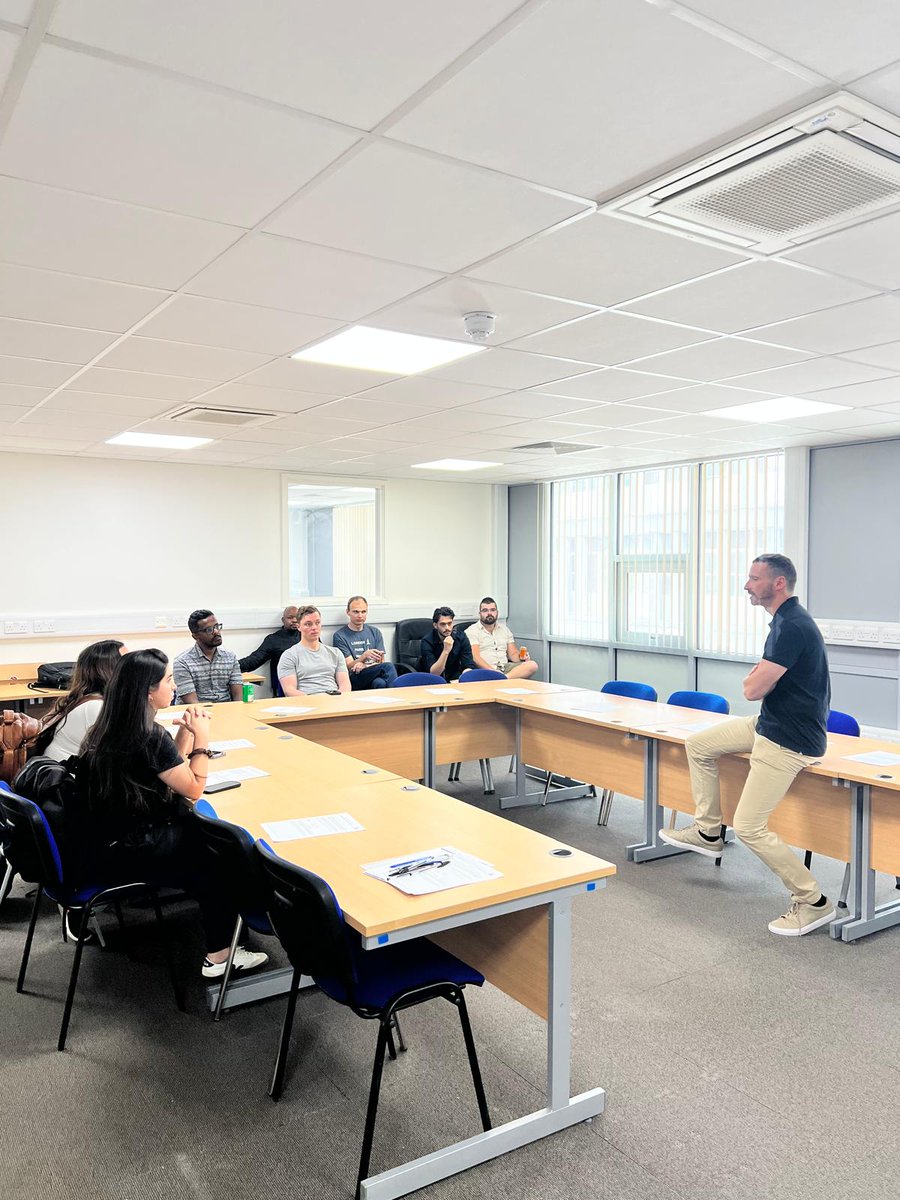
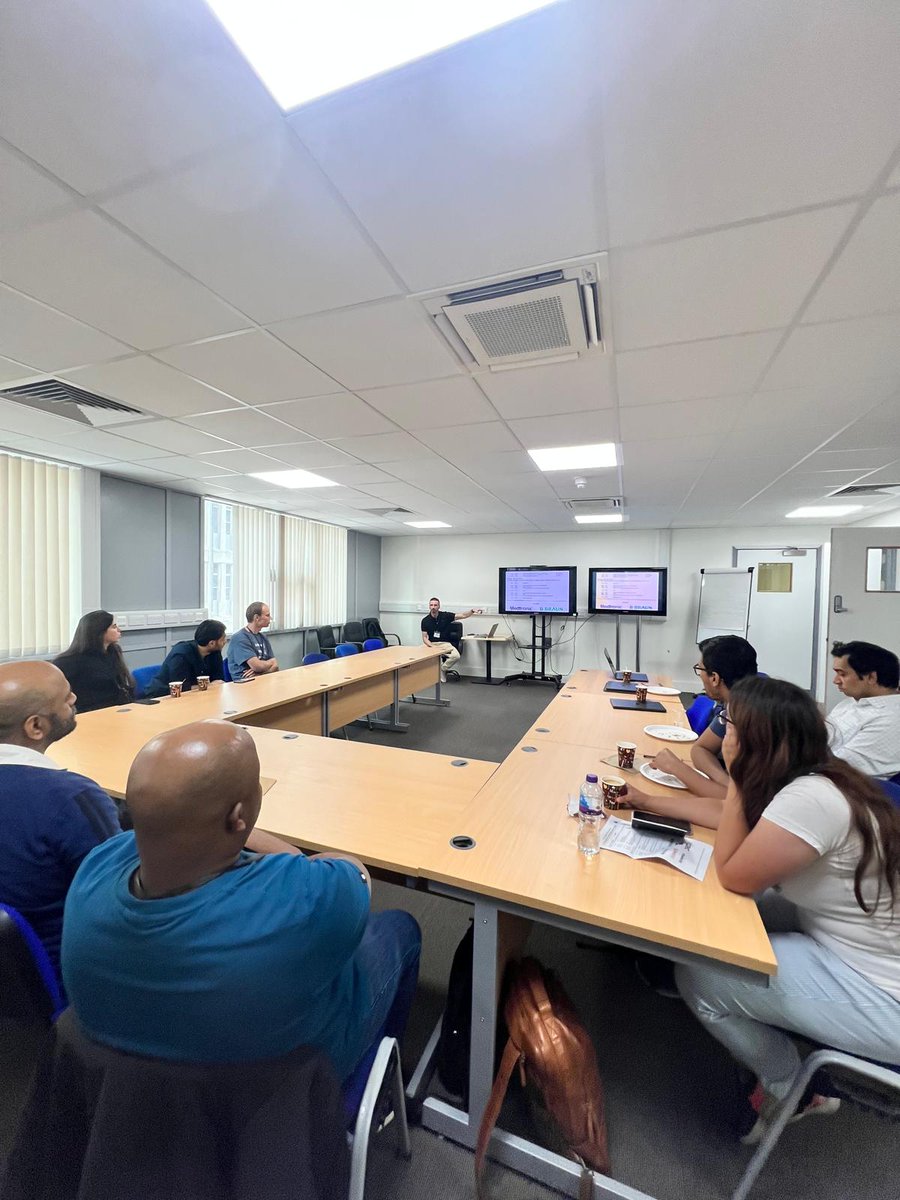
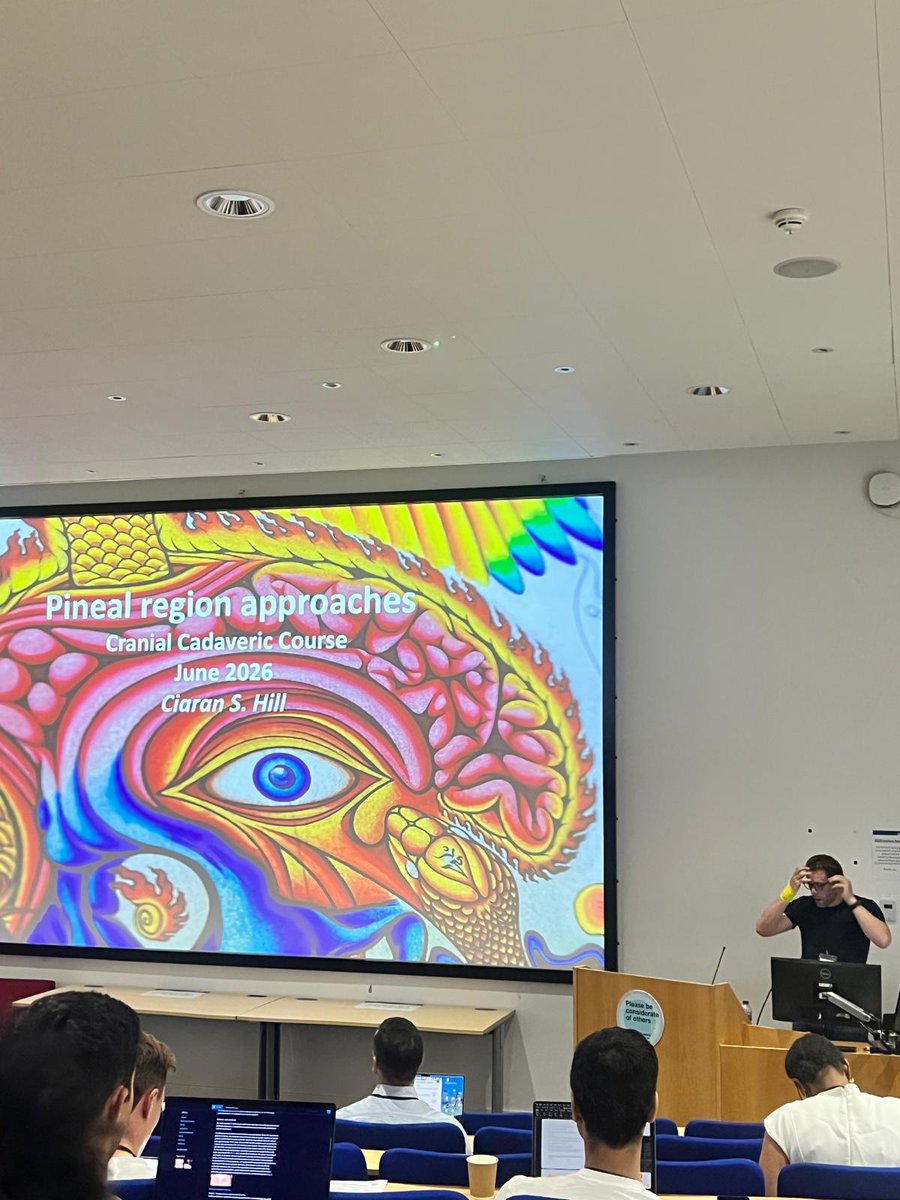
29th June - A fantastic second day of the Queen Square 3rd Advanced Cranial Approaches Course at The Griffin Institute.
Day 2 focused on hands on cadaveric dissection, with delegates practising advanced cranial approaches using microscope and exoscope platforms.
A brilliant opportunity to refine operative anatomy, visualisation and technical confidence across anterior, middle fossa, interhemispheric, pineal and posterior fossa approaches. 🧠🔪
Thank you to our faculty, cadaver lab team, sponsors and delegates for making the course such a success.
Most importantly, we extend our sincere gratitude to the donors who made this learning possible.
#Neurosurgery #Neuroanatomy #SkullBaseSurgery #CranialApproaches #Exoscope #SurgicalSimulation #QueenSquare
A brilliant start to the first day of the Queen Square 3rd Advanced Cranial Approaches Course, led by our Course Director Mr. Pedro Castanho.
A fully packed day of lectures covering 360 degree skull base approaches from interhemispheric, anterior, middle fossa, pineal, posterior fossa, orbital and optic nerve approaches.
Thank you to our delegates and faculty for an inspiring first day!
Looking forward to Day 2 for hands on cadaveric dissection! 🧠🔪
#neurosurgery #Neuroanatomy #SkullBaseSurgery #CranialApproaches #SurgicalEducation #SurgicalSimulation #QueenSquare
#QueenSquareSimulationCentre
🚨 3rd Annual Queen Square Simulation Centre Advanced Cadaver Courses 🧠
🔹 Advanced Cranial Approaches
🔹 Advanced Spinal Surgical Anatomy & Approaches
📅 28 June – 1 July 2026
High faculty-to-delegate ratio, 2 delegates per cadaver, and hands-on exposure to advanced neurosurgical techniques with leading faculty from London and beyond.
Registration: https://t.co/Y3Pn1m6INI
#Neurosurgery #SpineSurgery #SurgicalEducation #MedEd #Simulation #CadaverCourse
I am very proud to be part of the amazing team of researchers, scientists and clinicians who are all co-authors of the important research publication just released in Nature Medicine. The paper documents changes in my brain tumour & blood before and after I received neoadjuvant systemic combination immunotherapy treatment, which occurred in 2023.
Everyone involved, including lead authors Georgina Long and Helen Rizos, used their expertise, knowledge and creative intellect to generate this important data just released.
Whilst the paper deals with the data from just one patient (me), ultimately a clinical trial of a large group of patients needs to be conducted to determine whether or not neoadjuvant (pretreatment) combination immunotherapy is clinically effective in (a subgroup of) brain cancer patients. I hope such a trial begins in the not too distant future.
Congratulations to everyone who has contributed to this research. What a fantastic achievement!
But this is only the beginning & much more research is required to improve treatment and outcomes and ultimately save lives.
@SydneyLHD@NthSydHealth@Sydney_Uni@COBLH
#glioblastoma
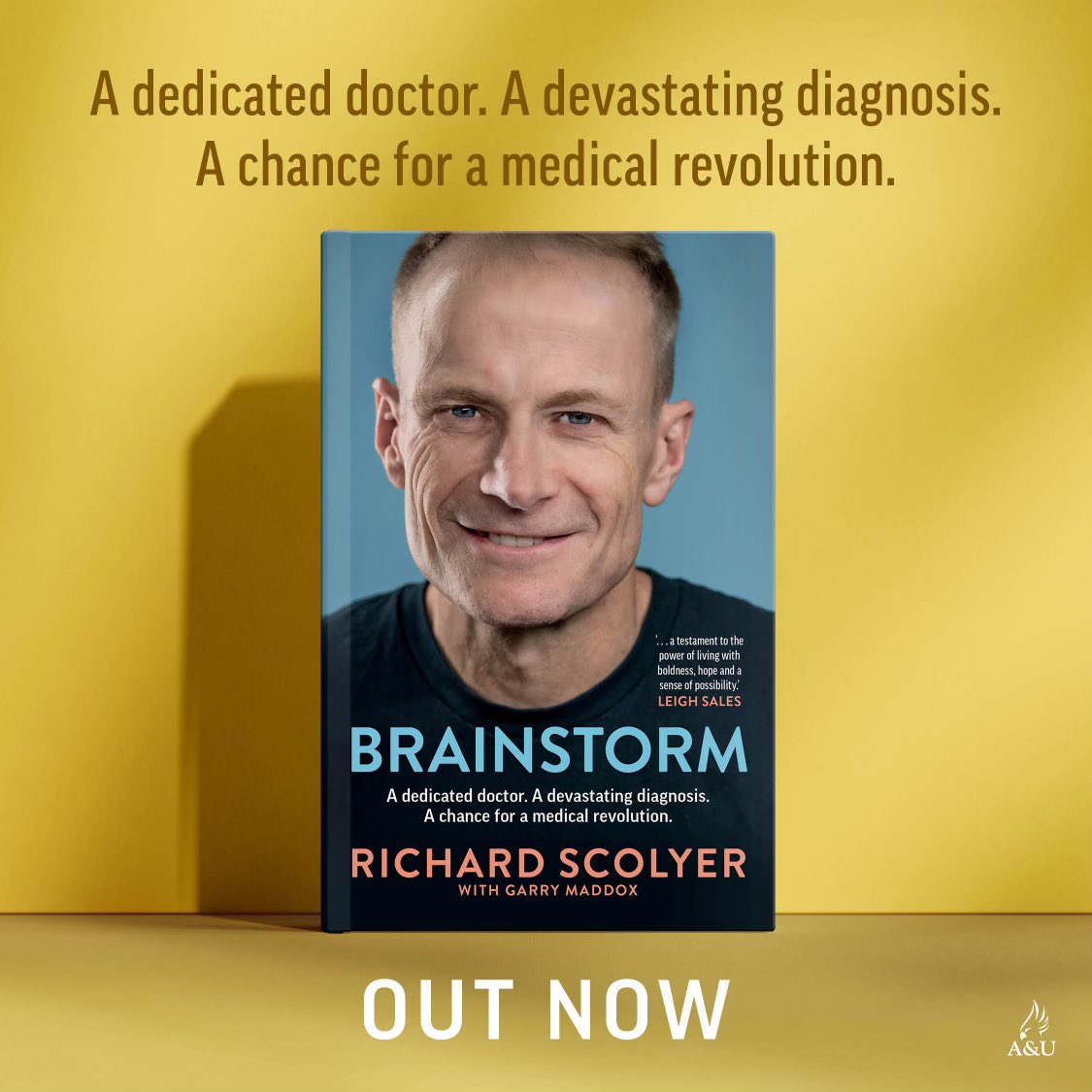
Today my memoir, Brainstorm, written with Garry Maddox, is published. I'm thrilled to share my story with you.
Brainstorm tells the story of my life, from my childhood, the road that led me to medicine, my wonderful family, my contributions to medicine and science and my personal brain cancer journey. The never-ending support of family, friends, and colleagues has helped me as I embarked and travel on a world first experimental treatment plan for brain cancer developed by my friend and colleague @ProfGLongMIA and an incredible team. I sincerely hope that the science my brain cancer journey has generated will push the field of brain cancer research and treatment forward.
Whatever your story- including whether you're on a similar journey to mine, are battling any type of cancer, have cared for someone with cancer, or if you are passionate about medicine or science - I hope that you will enjoy Brainstorm.
It's out now in all good bookstores and online. Or come along to one of my events in Sydney and say hello. I'd love to hear what you think of it.
@AllenAndUnwin@gmaddox@ausoftheyear@SydOperaHouse
#brainstorm
At the end of October 2024, the world lost a founding father of modern Functional Neurosurgery – Professor Tipu Aziz.
Please read a brief obituary of Tipu on the NDS website: https://t.co/Q62S3K9XnG
The @NIH's research integrity scandal involving neuroscience chief and #Alzheimer’s/#Parkinson’s scientist Eliezer Masliah is of an extraordinary scale. It might be useful to follow one thread of the investigation involving the experimental drug prasinezumab from @ProthenaCorp.
Boom! Cerebrospinal fluid (CSF) flow extends to peripheral nerves. Alexander Ligocki, Ed Scott and colleagues @UF@UFHealth blow our minds. New paper @ScienceAdvances. What will we call it now? Cerebro-spinal-nerve fluid (CSNF)? or maybe brain-spinal-nerve fluid (BSN)? Just when you think you have a few ground truths of the brain and nervous system, you are humbled again.
Key Points:
- The authors point out that dogma holds that cerebrospinal fluid is responsible for 'maintaining brain homeostasis through nutrient delivery and waste removal for only the central nervous system.'
- They show extensive CSF flow throughout the peripheral nervous system.
- They traced multimodal 1.9-nanometer gold nanoparticles.
- These nanoparticles were roughly the size of CSF circulating proteins.
- They squirted them into the lateral cerebral ventricle.
-They showed incredibly that the particles transitioned from central to peripheral nervous systems at root attachments and transition zones.
- They showed the particles could make it all the way to the axoplasm of distal peripheral nerves.
- Bigger 15-nanometer gold particles were not able to make the journey.
My take: We know that the nervous system does not contain the more traditional lymphatics and has a force field called the blood brain barrier. We know that CSF delivers nutrients and removes waste from the brain and central nervous system. Our previous ground truth was established by studies using dye tracers. Using small gold nanoparticles these authors 'tore down the dogma.' So the real question is whether it is time for a name change? Cerebrospinal fluid (CSF) or cerebro-spinal-nerve fluid (CSNF)? or maybe brain-spinal-nerve fluid (BSN)? Thoughts? Sartor resartus – the tailor re-tailored our view on this important aspect of neuroscience. BRAVO!
https://t.co/63yeOGTaru #parkinson #CSF #cerebrospinal #Alzheimers
Out today in @NatureMedicine, groundbreaking work by Philip Starr MD, PhD, Simon Little MD, PhD (@littleneuro) and colleagues shows that adaptive DBS provides better symptom control than standard DBS in a real-world setting: https://t.co/NRT827NCa6
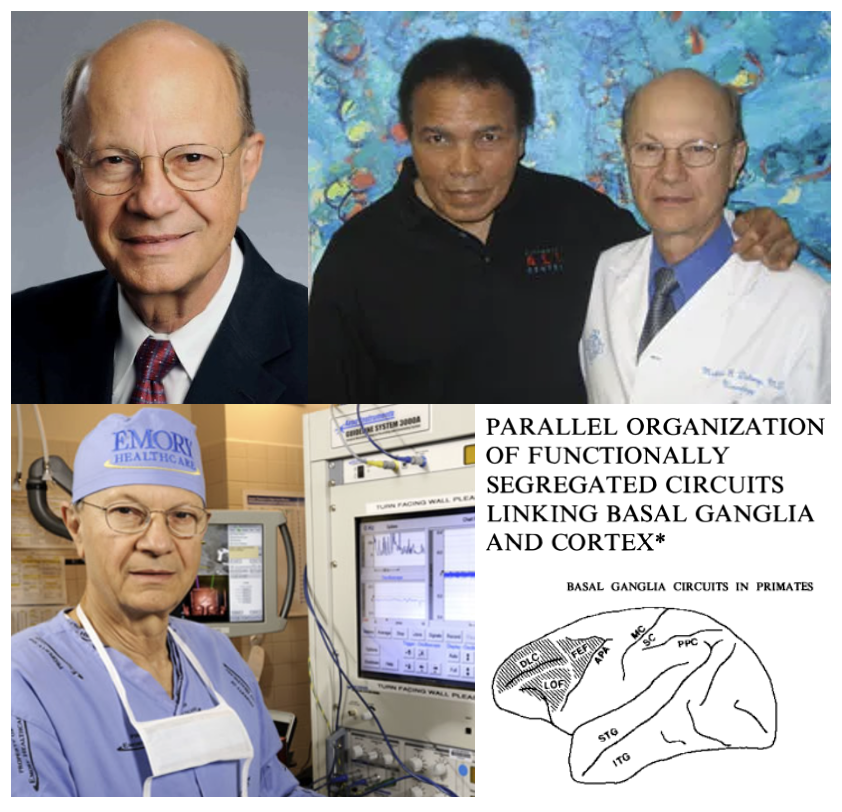
Mahlon DeLong (1938-2024) was the GOAT in his long-running career as a combined neurologist and neuroscientist. He took great care of the world's GOAT (Ali), however this is one title (GOAT neurologist-neuroscientist) that belongs to him, and him alone. It is with a heavy heart that I pen this message. He was a father to me when my dad passed, and a father for many others in neurology and beyond. He was a father to the new field of neuromodulation. He was a father to a generation of great neurologists, neurosurgeons and neuroscientists who are now growing the next generation. Mahlon DeLong was more than an empathetic person, he oozed kindness and compassion. RIP Mahlon, you have impacted countless lives all over the world, and your science has alleviated much suffering for this generation and the next.
Mahlon Robert DeLong, M.D. passed away peacefully at home on May 17, 2024, at the age of eighty six, with his loving family around him. His medical career spanned over fifty years with notable achievements that contributed to foundational science, pioneering treatments and research for the challenging diseases of Parkinson's, Dystonia, and other movement disorders, and decades of patient care. He was known for his humility, generosity, caring nature, and intense interests across a wide and diverse spectrum of topics, which he shared freely with all those around him. Mahlon was born in 1938 in Des Moines, IA, and spent his early childhood there and in Kansas. He soon headed west to Balboa Island in Newport Beach, CA, where he attended the Newport Harbor Union High School, beginning his life-long love for swimming in and being near the ocean. He graduated cum laude from Stanford University in 1961, during which he spent a year abroad at the Free University of Berlin, Germany. After a year in graduate school at Stanford University, he then traveled east and graduated cum laude from Harvard Medical School in 1966. After finishing an internship and the first year of his residency at Boston City Hospital in 1968, he moved south to work at the National Institutes of Health in Bethesda, MD. There he was a Research Associate at the Laboratory of Clinical Science, serving as part of the Reserve Corps in the U.S. Public Health Service. He continued as a Staff Fellow in the Laboratories of Clinical Science and Neurophysiology where he began his life-long passion for and focus on movement disorders, specifically focused on parts of the brain called the basal ganglia. At the time, while it was known that the basal ganglia were generally involved in movement, there was little known about the specifics. Mahlon and colleagues significantly advanced the knowledge about how circuits and networks related to the basal ganglia interacted with the rest of the brain and movement. He then moved to Baltimore, MD, where after completing his residency in Neurology in 1976 he joined the faculty of Johns Hopkins Hospital and School of Medicine. He became a full professor of Neurology and Neuroscience in 1986. During this time, he led intense and deep research into the basal ganglia and the associated brain circuits involved in movement, emotions, and cognition. In 1990, Mahlon was recruited by Emory University to serve as the Chair of the growing Neurology Department and served in that capacity until 2003. Under his leadership, the Department grew substantially, both in size and national and international impact. Among his many accomplishments, he and his team refined a ground-breaking neurosurgical procedure that brought profound relief to patients suffering from the debilitating symptoms of Parkinson's disease. Mahlon was elected to the National Academy of Medicine in 2004 and the American Academy of the Arts and Sciences in 2009. In 2014 he received the Breakthrough Prize in Life Sciences for his pioneering work in the basal ganglia and his development of a life-changing procedure for those affected by Parkinson's disease. He was likewise recognized for this work, along with his colleague Dr. Benabid, with the 2014 Lasker-DeBakey Clinical Medical Research Award. Throughout his career Mahlon held leadership positions and served on dozens of national and international foundations, associations, and advisory boards, including the American Association for the Advancement of Science, the American Neurological Association, the Society for Neuroscience, the Dystonia Medical Research Foundation, and the American Parkinson Disease Association. He published hundreds of papers and gave hundreds of lectures and symposiums to national and international audiences. He was a mentor to and fostered the career development of a whole generation of neurologists, many of whom have become leaders around the globe. Mahlon retired in 2019 as Professor Emeritus and spent time with family and friends, enjoying trips to the shore as he had throughout his life, ranging from the Pacific to the Atlantic - from Nova Scotia to South Carolina, and abroad. He was known for his endless curiosity, his care and love for those around him, and his passion for and love of gardening and dogs, many of whom he rescued throughout his life. He is survived by his wife, Mary DeLong; his children Bryan DeLong (Toni), Ariane DeLong (Roger Chalmers), John DeLong (Melissa), and Laura Aspey (Stuart). He was Grandpa to Sarah, Sam, Alex, Zack, Ella, Rosie, Will, Mary, and Abigail. He was also brother, uncle, cousin, and relative to many and an "adopted father" to a key few – always willing to help those in need around him. His concern for others, willingness to listen, and calm nature will be deeply missed. There will be a celebration of life at a later date. Mahlon was closely involved with a number of organizations including the Emory University Parkinson's Disease and Movement Disorder Center, the Dystonia Medical Research Foundation, and the American Parkinson Disease Association. A tribute in his memory can be made with a donation in his name to one or more of these organizations or another of your choice.
https://t.co/pw7PUFF8Re #parkinson #dystonia #basalganglia
A Handful of key papers to give you a flavor of the quality of his scientific contributions:
PARALLEL ORGANIZATION OF FUNCTIONALLY SEGREGATED CIRCUITS LINKING BASAL GANGLIA AND CORTEX (1986, over 10,000 citations)
https://t.co/BABswIjvHJ
Primate models of movement disorders of basal ganglia origin (1990, more than 4500 citations)
https://t.co/6LyXULyrd5
Reversal of experimental parkinsonism by lesions of the subthalamic nucleus (1990, over 2000 citations)
https://t.co/58NdCnU7VI
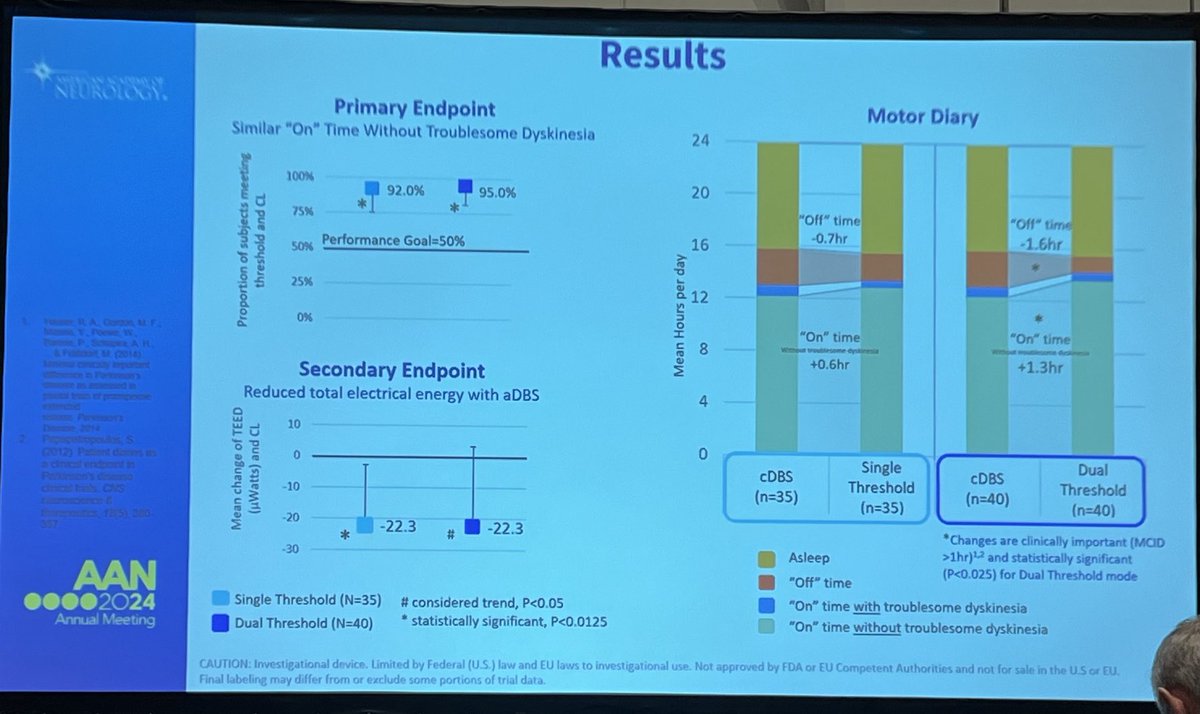
ADAPT DBS closed loop Parkinson trial results announced today by presentation @AANmember by Helen Brontë-Stewart. It was a positive trial and met pre-specified FDA outcomes. Will it be heading to the clinic soon. Next steps will be a full publication and submission to FDA
Delighted to share a case of iatrogenic, neurosurgery-associated, histologically proven CAA in a young patient that was treated with taxifolin and monitored with serial PiB-PET scans!
Grateful to Dr. Peter Woo and Prof. Vincent Mok for their supervision and mentorship!
(1/2)
New Research: Case Report: Taxifolin for neurosurgery-associated early-onset cerebral amyloid angiopathy: Cases of iatrogenic cerebral amyloid angiopathy (CAA) have been increasingly reported recently, particularly those associated with… https://t.co/q42auhATre #Neurology
Bradykinesia severity correlates with the degree of ventral nigral cell loss but not with Lewy pathology so how can synuclein measurement be considered the lynchpin for a biological definition of maladie de Parkinson?
Alone it is not even enough for a pathological definition
Five people with Parkinson’s – Five songs created using their tremors & personal stories. Each is unique, like Parkinson’s itself, that affects people in different ways.
Listen to their tracks & find out more here: https://t.co/hbpgw9jJfp
#tremorsvstremors#parkinsons
Woke up to hear my song on the radio 🎶😊 @BBCr4today I was lucky enough to be 1 of 5 participants to take part in this rather unique research project highlighting the individuality of #Parkinsons. Listen to the songs and read about it here 👉🏼 https://t.co/Hd8nSVcP0x
Patients with #Alzheimer’s have areas of brain atrophy, but could they have areas of brain growth? New paper in @ANA_journals says yes w implications for resilience. Collaboration @Brain_Circuits @BWHNeurology @VUMChealth https://t.co/KP2G5k0607