Important: my account was hacked into & all content shifted.
Please disregard any tweets/messages from the account "Constantinoeth_" below which I do not control.
Have reported this and trying to regain access. I am on Twitter only here with my original username: @constantinox
@PKugiel Thanks Patryk! I first coined this term to make the case for limited NATO-India engagement back in 2012, on the Azores islands. Article here: https://t.co/WDYKUeM6xH
More recently here also focused on Africa: https://t.co/1aqyz69rm0
"Trade is never free. It is either more or less open. Free trade is not dead, it was never born."
"Becoming more competitive will not solve our China trade problem, given its magnitude and the threat it represents to the survival of some of our production systems."
Superb takes in here by Pascal Lamy, reflective of a European strategic awakening. Music to Indian ears. https://t.co/sYfsxbr5bP
Always insightful to engage in a frank discussion with @SwarnimWagle who launched our #Sambandh connectivity initiative in 2020 — and shares a vision for regional economic integration.
Inspiring example of a stellar academic joining politics to serve his country.
Lots cooking on India-Nepal transport and energy connectivity. New window of opportunity for implementation. Important that the current political momentum — expected PM Balen visit in November — is sustained.
Shared a few ideas at this RIS conference on Saturday.
1. Leaderships need to ensure that bilateral bureaucratic mechanisms continue, whether there is political momentum or not. Developmental pressure rising, Ktm and Del can’t afford to let mechanisms go dormant again. Political lows and irritants will re-emerge, sooner or later. Economic interdependence remains and can mitigate such crises.
2. Potential for greater involvement by private sector. Huge industrialisation opportunity for Nepal, esp across Terai, to cater to growth hubs across the border in UP, Bihar, West Bengal — just half a billion people! Need to accelerate cross-border transportation and energy infrastructure as an enabler for trade facilitation — Indian investments will follow.
𝐒𝐞𝐬𝐬𝐢𝐨𝐧 | 𝐑𝐞𝐢𝐦𝐚𝐠𝐢𝐧𝐢𝐧𝐠 𝐈𝐧𝐝𝐢𝐚-𝐍𝐞𝐩𝐚𝐥 𝐑𝐞𝐥𝐚𝐭𝐢𝐨𝐧𝐬: 𝐁𝐮𝐢𝐥𝐝𝐢𝐧𝐠 𝐚 𝐅𝐨𝐫𝐰𝐚𝐫𝐝-𝐋𝐨𝐨𝐤𝐢𝐧𝐠 𝐏𝐚𝐫𝐭𝐧𝐞𝐫𝐬𝐡𝐢𝐩
Dr. Rajan Sudesh Ratna (@RajanRatna), Coordinator,
@DakshinNews, RIS chaired the session '𝑅𝑒𝑖𝑚𝑎𝑔𝑖𝑛𝑖𝑛𝑔 𝐼𝑛𝑑𝑖𝑎-𝑁𝑒𝑝𝑎𝑙 𝑅𝑒𝑙𝑎𝑡𝑖𝑜𝑛𝑠: 𝐵𝑢𝑖𝑙𝑑𝑖𝑛𝑔 𝑎 𝐹𝑜𝑟𝑤𝑎𝑟𝑑-����𝑜𝑜𝑘𝑖𝑛𝑔 𝑃𝑎𝑟𝑡𝑛𝑒𝑟𝑠ℎ𝑖𝑝' during @RIS_NewDelhi-@DelhiSchoolOfEC International Seminar. He emphasised the need to focus on how existing goodwill and commitments can be translated into outcomes that directly benefit people, businesses and communities of both countries.
🔹 Prof. Nisha Taneja (@NishaTaneja20), Professor,
@ICRIER, highlighted the need to deepen economic engagement by moving beyond tariff arbitrage towards greater value addition and stronger production linkages. She identified opportunities in textiles, pharmaceuticals and information technology, alongside greater digital cooperation and skills development.
🔹 Dr. Constantino Xavier (@ConstantinoX), Senior Fellow, @CSEP_Org, emphasised that connectivity must be at the heart of India-Nepal economic cooperation. He highlighted the need for better roads, railways, integrated check posts, multimodal connectivity, aviation, waterways, pipelines and energy infrastructure.
🔹 Dr. Pankaj Vashisht (@PV_Chat), Associate Professor, RIS, emphasised the potential of shared production networks, supported by easier access to raw materials and intermediate goods. He identified hydropower, food processing and traditional medicine as areas for greater investment cooperation.
The session underlined the importance of strengthening economic linkages, connectivity, production partnerships and skills to build a more forward-looking India-Nepal partnership.
@MEAIndia | @SwarnimWagle | @IndiaInNepal | @EONIndia | @AmbMunu | @aparnaray_ifs | @SKSharma_World | @RamSinghEcon | @seshadrichari | @psbirthal | @Prabir_India | @Abhijit_trade | @gsachdevajnu | @ProfShahidAhma1 | @surjitbhalla |
@tkarun | @horror06 | @TheAtulKaushik | @sujeetsamaddar | @sabya_saha | @pdash76 | @AmitK_PhD | @susheco | @GaurPankhuri | @monika_koc56097 | @SarinNS1 | @amitdasvaranasi | @AIC_aseanindia | @cmec_ris | @fitm14 | @fisd19 | @FIDC_NewDelhi
#IndiaNepal #SouthAsia #GlobalSouth #EconomicDiplomacy #DevelopmentCooperation #Connectivity #DAKSHIN #RIS
South Asia's rivers breathe with the monsoon. Before the rains the combined flow to the sea sits near 9,000 m3/s; at the August peak it reaches roughly 209,000, a 23-fold swing in a single year.
#rivers#monsoon#dataviz
Since India is being fingered here, I will just say again what I said many times last year when Peter Navarro ridiculously (and perversely) called Ukraine "Modi's war."
The reality is, India doesn't think this war is a problem of its own creation. So this particular American narrative is viewed in New Delhi as blunt coercion, gross interference in Indian foreign policy, impractical given India’s economic needs (and it has been reducing oil purchases from Russia, in any case), and a cynical effort to “blame India” for the West’s (and Trump’s) collective failure to get Moscow to stop its war on Ukraine.
In strategic terms, if you value U.S.-India relations, this is not going to be a winning message for the United States. Nor is lumping India in with China.
Broadly speaking, the last year-and-a-half has tanked 25 years of bipartisan work to build the U.S.-India relationship, including in Trump's own first term. We have succeeded in repoliticizing what had been a depoliticized relationship in both New Delhi and Washington. And we had hitherto avoided allowing our respective objections to third-country relationships to bleed back into bilateral relations in this way. I experienced that firsthand when, for example, I worked on U.S.-India relations under President George W. Bush, including deep involvement with the civil nuclear deal.
At this point, this isn't even the biggest problem in U.S.-India relations but adds fuel to a lot of underlying problems. Putin was literally in New Delhi last week. And the week before that, Putin and Modi were smiling with one another at a prior summit in Bishkek. So I have a hard time believing the government of India will make any Russian oil-related commitment explicit. India has deep historical and sentimental ties to Russia that it will not simply ditch under American pressure.
Viewed through another lens, maintaining the symbolic hedge that it "can" purchase Russian oil if it so chooses speaks both to Indian foreign policy autonomy and to its ability to resist American coercion, both of which are important factors in India’s domestic politics. And having worked on the civil nuclear deal, it is quite clear to me that American coercion has been and remains a major factor in India's foreign policy psychology.
The fact is, India had already been reducing its imports of Russian crude. But threatening India by demanding that it publicly rebuke Russia—as so many in the administration and Congress are doing, now on an entirely bipartisan basis—was always a nonstarter for Prime Minister Narendra Modi, who, from my experience, just isn't going to humiliate one of India’s most important defense partners.
Here's a warning shot I wrote on the relationship from a year ago: https://t.co/9ImufcXVTh
Where I argued that India's "situationships" are something that Europe might need to get a little more comfortable with.
#BRICS at 20 and Beyond:
A Multipolar World Order in the Making?
Thanks @ManishaReuter for bringing it all together!
https://t.co/KV0lkOWZy0
@dasguptadeb7 Thanks, and yes, on some accounts (think tank engagements), we might have gone backward, maybe bc of a shift from impactful research to mere convening? Re sub-national engagements, more difficult... but some hope. See @BorahObja 's book on Assam, also work by @AsianConfluence
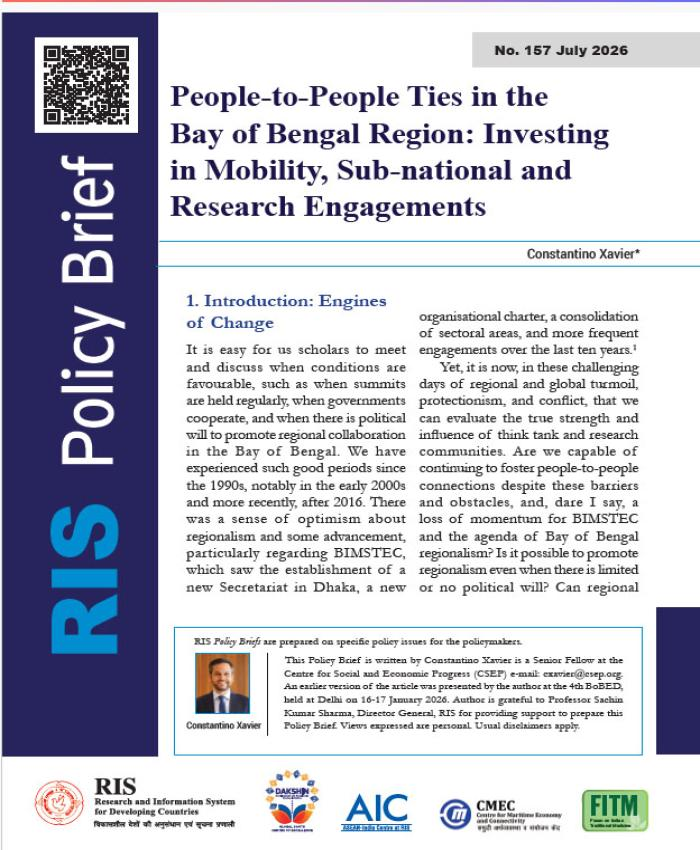
1. BIMSTEC has been in the news again during the BRICS summit, and not for any good reasons. Very limited progress since Bangladesh took over chairship. 2027 summit in Dhaka is looking either unlikely or, at best, a political/protocolar affair as part of an India-Bangladesh normalization: this is a low bar for an organization that saw ten years of fast growth and cannot afford further delays and doubts if it is to bridge the Bay of Bengal, one of the world's most important geoeconomic and security gaps between South and Southeast Asia.
2. What can be done in the meantime to produce long-term change and new linkages for regionalism? Not so much at G2G levels with some exceptions (connectivity and recent maritime transportation agreement, Security Chiefs track, first Home ministerial soon).
3. But if there is political will, here I suggest three ways to deepen People-to-People ties in the Bay of Bengal region with catalytic impact:
a. Reduce visa barriers to enhance mobility
b. Start sub-national track of policy engagements
c. Fund higher education exchanges, joint R&D projects
Thanks @Prabir_India@SKSharma_World for the opportunity. @BimstecInDhaka@IndraManiPR
https://t.co/OniqsTv7Ng
Bottom line for this weekend's BRICS fiesta:
Somewhere closer to 0 than 1, but also a little closer to 1 than last year. As elaborated here by @MalikAshok:
On what utility #BRICS has for India, the truth is probably somewhere in the middle of two extreme readings, between 0 and 1 (closer to but not 0).
Not 0: Utility for Delhi to signal (bluff?) to US/West that it has alternatives. However difficult/adversarial bedfellows, both Moscow/Beijing are today rare poles of predictability. Forum for political consultations; measure temperatures. Platform to engage in Global South coalition-building (to balance RU-CH).
Not 1: No appetite in Delhi to deepen or invest in any new, substantive, sectoral cooperation: a litmus test that reflects India's overall distrust (esp re China) to use BRICS as an "ordering" device to build new norms, governance, institutional cooperation -- from trade to tech, data, energy, finance, security. Concerns about RU-CH predominance and anti-US/West tilt.
Good move by India with long-term, mutual connectivity benefits.
Also a good example of why "equidistance" between India and China isn't (yet, never?) a realistic policy principle for Nepal. Especially in times of crisis, most support and solutions (still) come from the South.
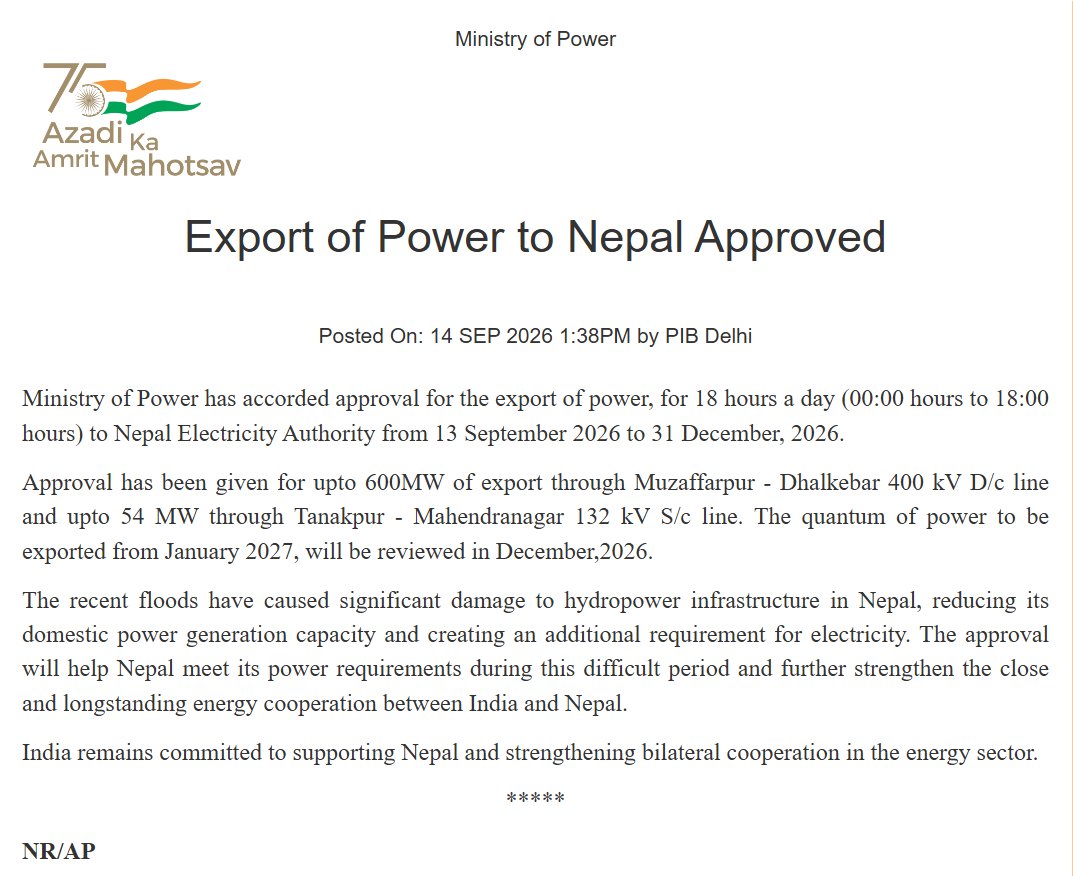
Breaking: India will export power to Nepal for 18 hours every single day until 31 December 2026 after Nepal floods damaged the country's power generation capacity
Bangladesh PM Rahman’s decision not to attend BRICS summit in Delhi shows a few possible things:
1. He doesn’t have (difficult to believe) or does not (yet) want to invest necessary political capital to normalize relations with India, and is waiting for something more from for a big bilateral settlement (and separate visit to Delhi).
2. The anti-India sentiment in Bangladesh is still so strong that the mere optics of a Delhi multilateral visit right now would carry significant political costs for the PM and BNP.
3. Bangladesh has chosen to let a bilateral issue with India override its duties as BIMSTEC chair, affecting interests of other member countries. As some in Dhaka have rightly argued, could have sent a minister or other high-level rep.
4. In line with Dhaka’s overall disinterest and neglect of BIMSTEC in the last two years — with a radical slowdown in activities compared to Thailand’s chairmanship. Contrast with political signals re SAARC revival.
5. Rising challenges for India’s bridging power in the neighbourhood — compare with 2016 BRICS-BIMSTEC outreach summit, where Delhi helped connect the world’s emerging economies to the region’s top leaders.
Next stop: the @EUCouncil 🇪🇺
We've taken the next step to get our trade deal with India over the line.
Once in force, it's expected to:
📈boost EU goods exports to 🇮🇳
💶 save EU exporters around €4 billion in duties every year
Get the facts: https://t.co/Fgb09Y67iL
#EUTrade
Beyond SAARC, BIMSTEC and other old-style regional organizations — what new forms of cooperation in & around the Indian subcontinent?
Delhi experimenting with “à la carte” models to foster economic & security ties, eg CSC.
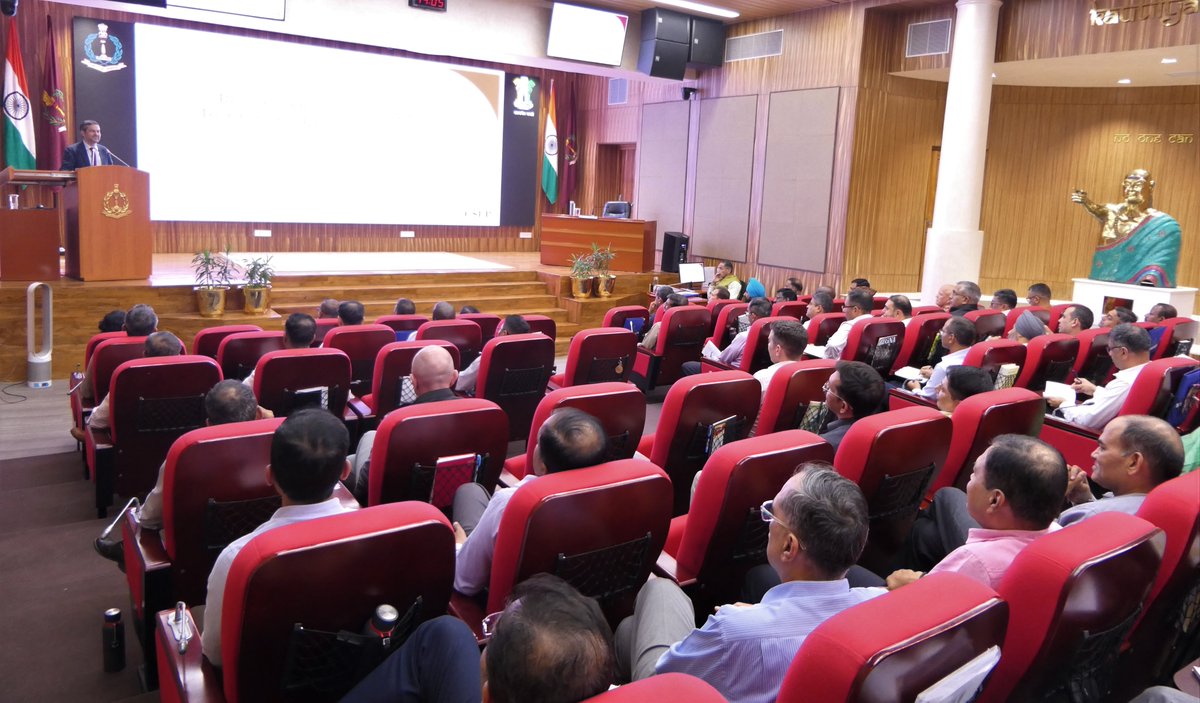
Honoured to share my research and discuss this at NDC.
Dr. Constantino Xavier, Sr. Fellow @CSEP_Org delivered a talk at NDC on the topic ‘Regional Organisations & Global Institutions: Relevance in South Asia’. He highlighted the challenges & reasons for Regional organisations, Institutions failure in South Asia & Way ahead for India.
@VatsRishap Yes, that’s another possible motivation (utility) shaping Delhi’s decision for cautious yet continued engagement with BRICS.
Though many argue Beijing has not made (and will not make) any significant ordering investment. Xi’s eventual absence this weekend a point in case.
On what utility #BRICS has for India, the truth is probably somewhere in the middle of two extreme readings, between 0 and 1 (closer to but not 0).
Not 0: Utility for Delhi to signal (bluff?) to US/West that it has alternatives. However difficult/adversarial bedfellows, both Moscow/Beijing are today rare poles of predictability. Forum for political consultations; measure temperatures. Platform to engage in Global South coalition-building (to balance RU-CH).
Not 1: No appetite in Delhi to deepen or invest in any new, substantive, sectoral cooperation: a litmus test that reflects India's overall distrust (esp re China) to use BRICS as an "ordering" device to build new norms, governance, institutional cooperation -- from trade to tech, data, energy, finance, security. Concerns about RU-CH predominance and anti-US/West tilt.