The danger of artificial intelligence isn't that it's going to rebel against us, but that it's going to do exactly what we ask it to do, says AI researcher Janelle Shane. https://t.co/YQNSL8ueCE
AI without generic intelligence is not real AI
@WiringTheBrain Homeostasis? And the ability to learn what caused a homestatic deficit, and what fixed the deficit even when the world model gets complex? And the fact that solving self-generated deficits - can feel good! This along with reflexes and phobias basically provide intentions..?
@Grady_Booch The Gartner path, AGI version
1) AGI is here by doing "<this>"!!!!!
2) early offering wizardry.
3) "WOW" factor monetisation.
3) cracks appear.
4) potential G are scratched off 1 by 1
5) turns out "<this>" is only good for a bunch of narrow-AI niches.
LLMs. Same old same old.
@interintel That's interesting. A simplified data structure for representation of connections could mitigate the hardware bottlenecks. For a basic "brain server" with several hundred connections, it costs me fixed $42 per month even if it is always-on. Keen to share more to you soon!
@interintel I'll email you more info later this month on how to use it on any cloud provider( I use Aws fargate), will be glad to collaborate on this 🙂
@interintel Sounds exciting! I wonder if you can utilize my software where user can run a "brain server" on a container in the cloud, and load custom neural circuits to it. The hardware spec can be set on demand and computing cost is based on per-second usage, cheap/powerful than Ras.Pis.
No, we are not even close. AGI would require systems that
👉essentially never hallucinate
👉reliably reason over abstractions
👉can form long term plans
👉understand causality
👉reliably maintain models of the world
👉reliably handle outliers
We currently have none of that.
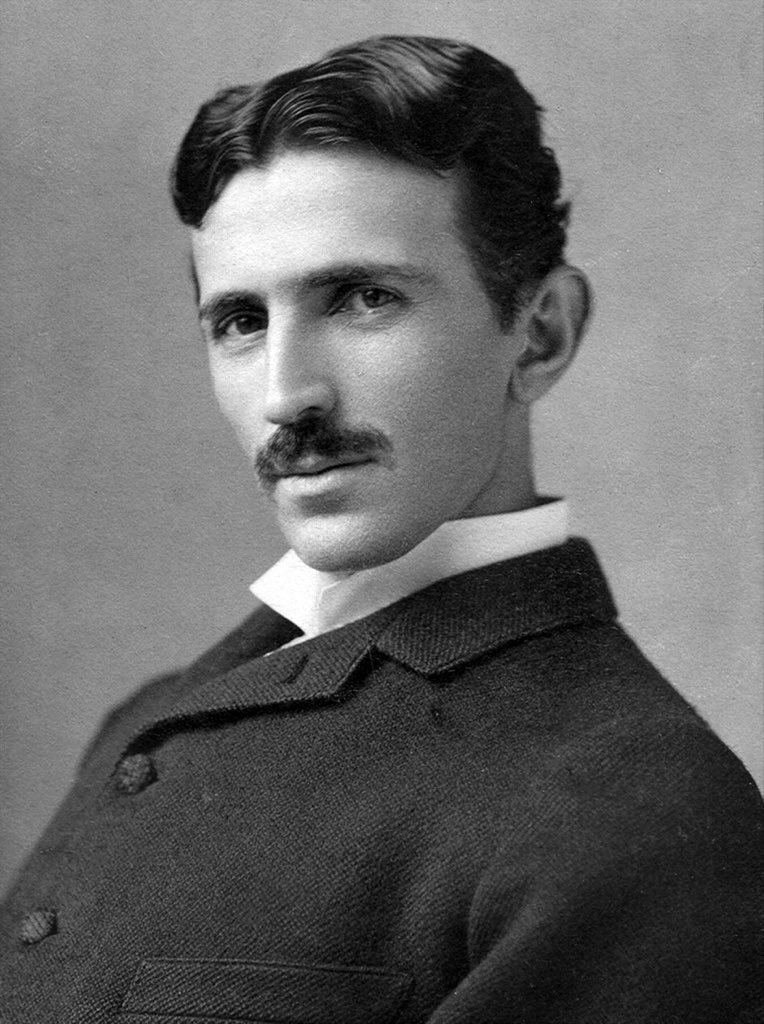
“The scientific man does not aim at an immediate result. He does not expect that his advanced ideas will be readily taken up. His work is like that of the planter - for the future. His duty is to lay the foundation for those who are to come, and point the way.”
- Nikola Tesla
Therefore content creators must have the right to consent to having their materials added/removed from the ML training datasets.
If AI companies can just take someones work without prior consent then that is going to destroy creative ecosystems, it must not be allowed.
@xzistor Contemporary AI developments implement, to put it mildly, a different approach - they start with texts, which ultimately leads to the inability to self-learn through observations and experiments in the real world.
Pub thoughts: a loose analogy for the "unrestricted, highly capable AGI for everyone" debate is energy. Imagine if energy costs dropped to zero for every human. There would clearly be downsides and a reduction of barriers for bad actors, but the net result is probably ultimately positive. Maybe it's the same for AGI, maybe not - but I wish this was unpacked a bit more.
I think the issue with the discourse around frontier model access is that it's not just overly simplistic, categorizing views as 'pro' or 'anti' open source, but it also muddies various concerns and intentions. Some are worried about biological risks, others about censorship, others about representational harms etc. This is a trap and muddles the debate, leading to positions driven more by end goals than reasoned arguments.
It's no surprise that people often don't argue in good faith, cheering instead for positions that align with their end goals. Ultimately I think like anything else, the optimal policy is somewhere in between. Makes more sense to clearly separate issues (speech, risk etc), tackle them individually, consider trade-offs, and then try to find the optimal balance. Annoyingly doing so is dry and boring, so it's often more exciting to resort to radical or extreme narratives.
"AI is only as good as the data that fuels it" (IBM),
Not really, because AI entails "understanding", and understanding requires information that cannot be extracted from data alone.
Science fiction no more - autonomous killer robots are here
“Ukraine is using AI drones that can identify and attack targets without any human control, in the first battlefield use of autonomous weapons or ‘killer robots’”
What happens next?
“A year from now these drones will be running open source multimodal models that can navigate complex environments, recognize faces, and think step-by-step about how to cause the most damage.
The era of asymmetric warfare has barely begun.”
- @hamandcheese
Since AI outperforms human pilots now in drone racing, autonomous drone swarms will radically change the balance of power in conflicts everywhere.
History shows that when the balance of power changes suddenly, chaos ensues - wars become much more likely.
Remember, open source means irreversible proliferation. We’re giving our enemies weapons we can never take back.
Open source means no kill switch. If bad actors create a superweapon, or a supervirus, we can’t turn it off.
When OpenAI releases Autonomous Agents, it will be like an intelligent swarm of bees clicking around on the internet.
Sending emails, negotiating, making products, purchases, fulfilling orders, etc.
It will fundamentally change the internet, and this cannot be overstated.