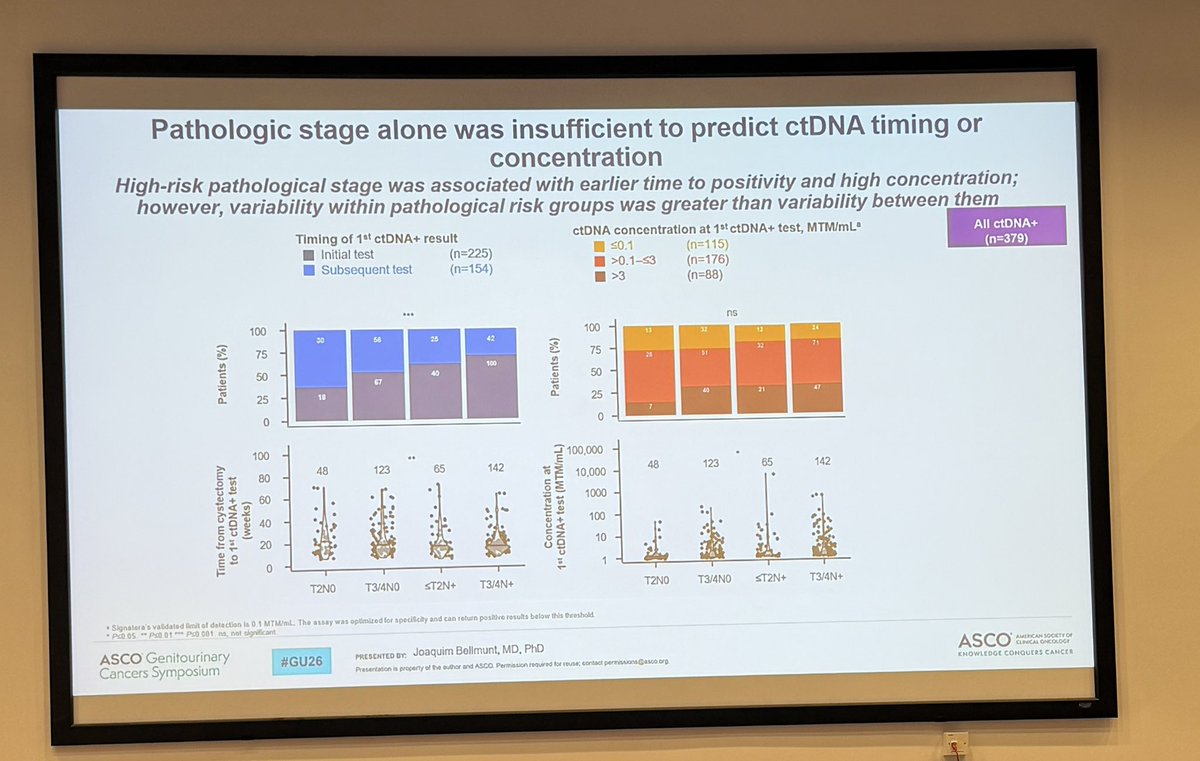
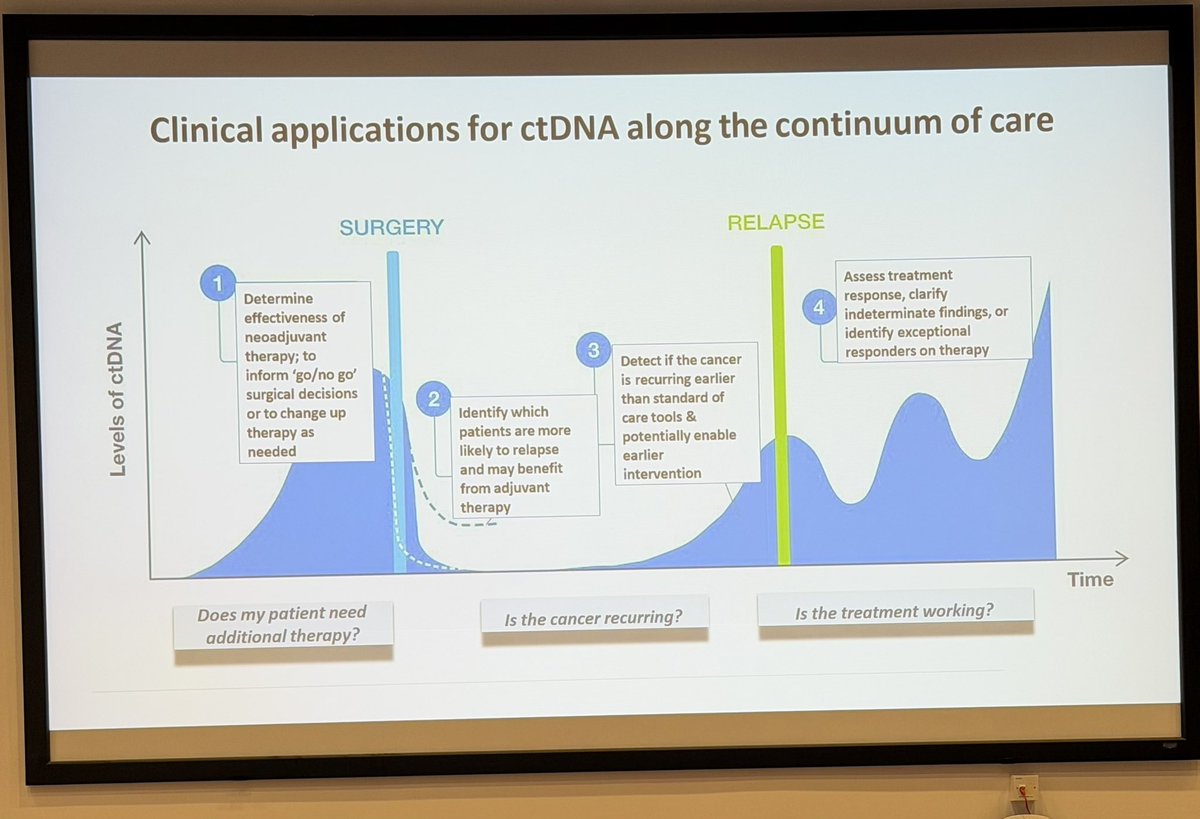
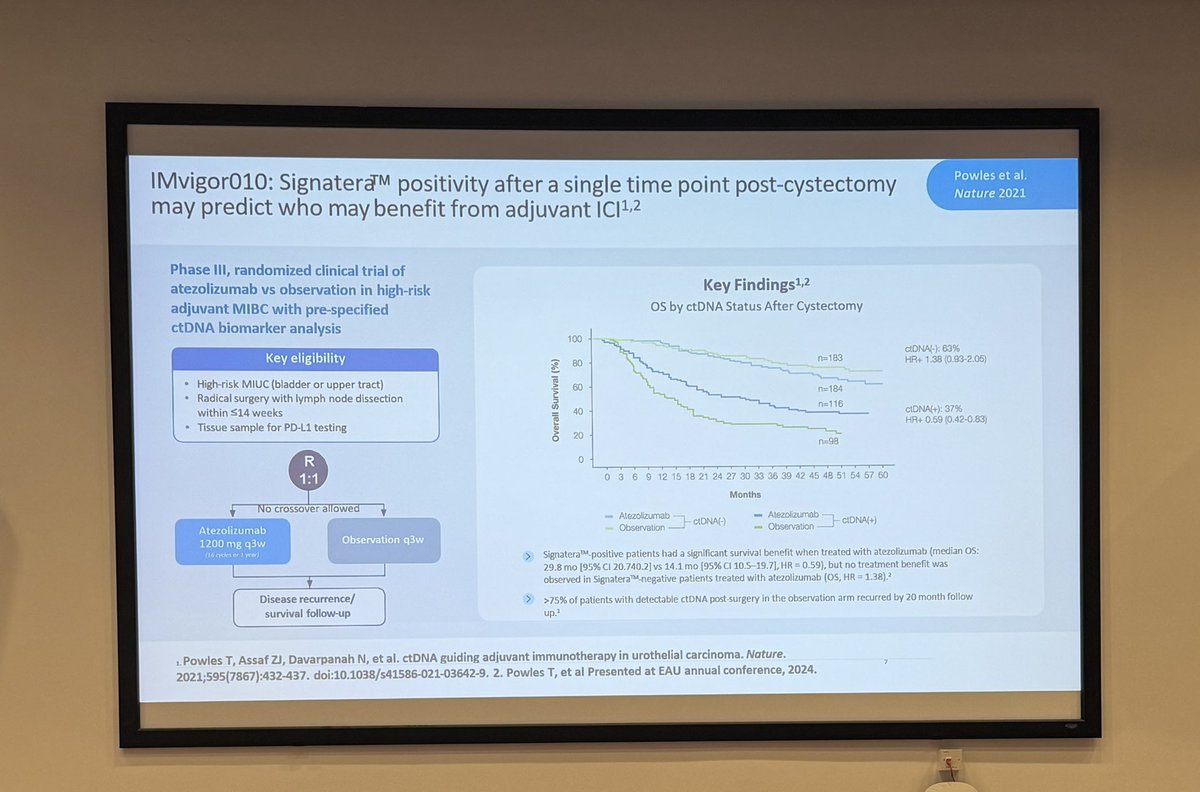
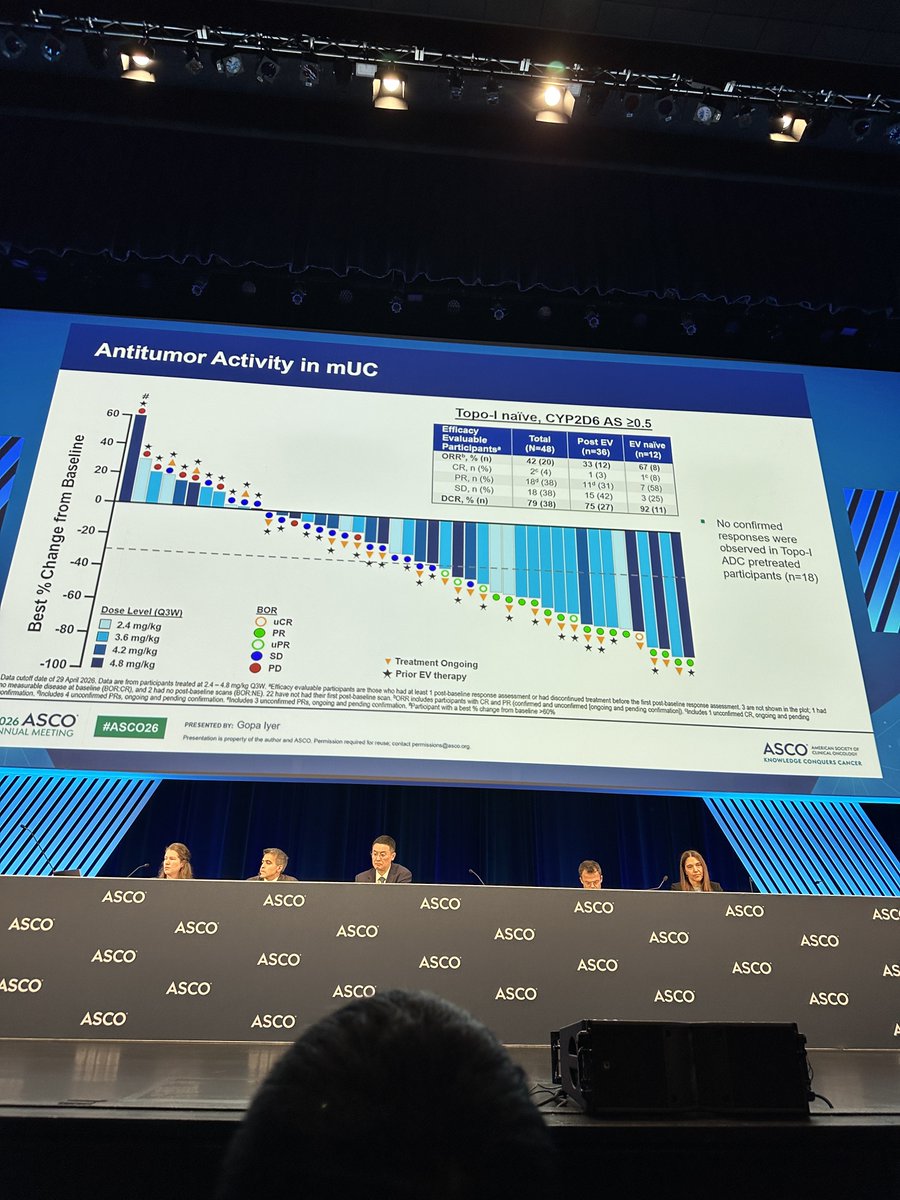
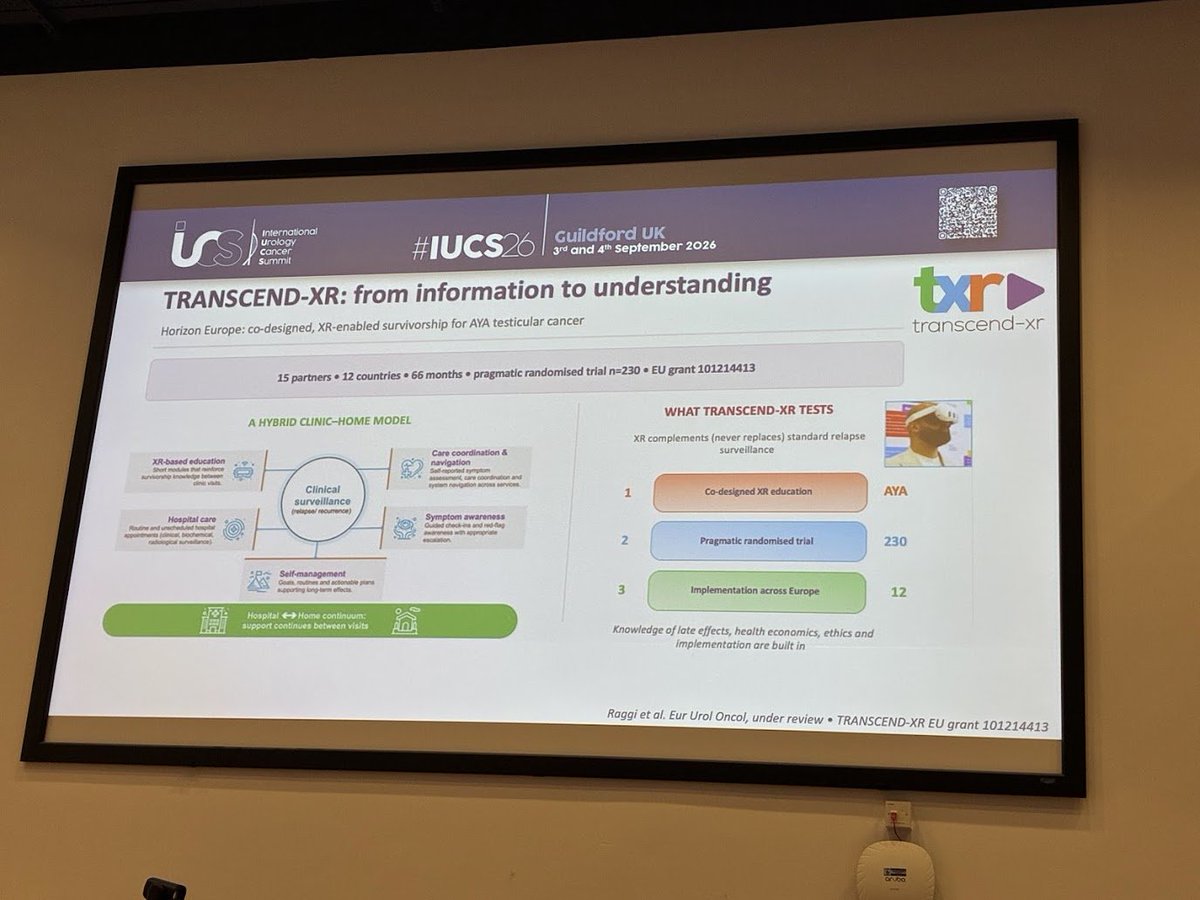
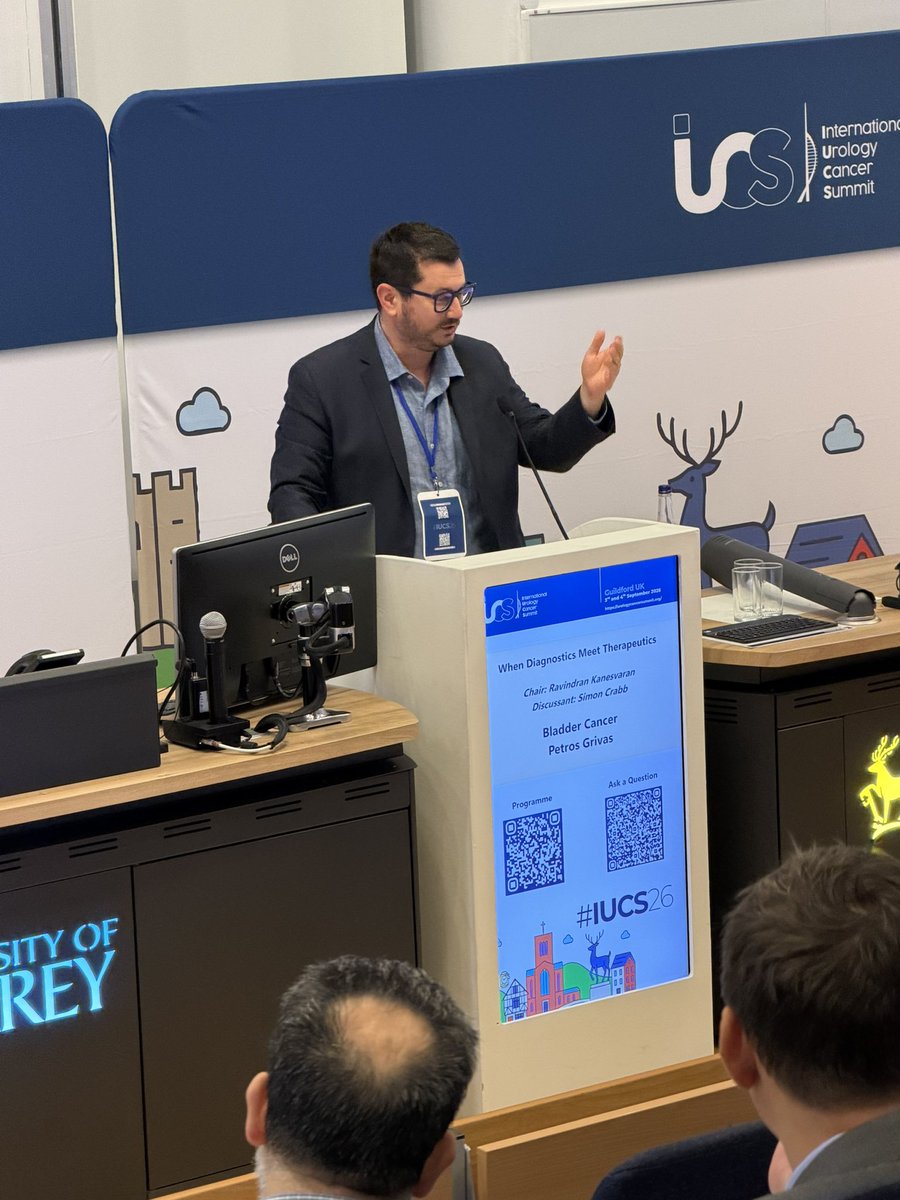
Great talk @urologysummit by @DanieleRaggi83@royalmarsdenNHS on germ cell tumours. Who needs more treatment? Who needs less? Can we stratify and minimise follow up scans after completing the OTIS-S trial? #IUCS26
🚨 Out now in European Urology Oncology: our real-world landscape of actionable alterations in advanced urothelial carcinoma. Open access. 🔬
Short version: actionable findings are the rule. Acting on them is the exception.
📊 MIER cohort (n=233 MIBC/mUC, TSO500, expert-annotated):
🧬 97% carried at least one pathogenic or likely pathogenic variant (226/233).
🎯 Actionable FGFR3 alterations in 11%, mostly S249/R248 hotspots, all PCR-confirmed.
🧪 40% harboured alterations in 24 biomarkers linked to FDA-approved therapies. PIK3CA 20%, ATM 6.4%, KRAS 5.2%.
📈 ERBB2 amplification in 15% (36/233), HER2 IHC 3+ in 15 patients.
⚠️ MSI-high by NGS in 4.2%, but only 4 of 9 showed MMR protein loss on IHC. Orthogonal validation is not optional.
🧩 Pathway level: cell cycle 82% (TP53 73%, RB1 25%), RTK/Ras/PI3K 42%, histone modifiers 47% (KDM6A 25%), SWI/SNF 27%.
📉 Then the MTB cohort (n=40, routine diagnostics, CCC Erlangen-EMN):
55% had actionable alterations. 5% on-label, 50% off-label.
One patient received the recommended therapy. 🩺
ERBB2 amplification plus PIK3CA mutation, off-label alpelisib, stable disease and pain improvement for 4 months, then progression and skin toxicity. A second patient qualified for trastuzumab deruxtecan on cooccurring ERBB2 amplification and IHC 3+, but died before treatment could start.
Retrospectively, 80% of the MIER cohort would have had an indication. 10% on-label, 70% off-label.
That gap is the finding. 🧠
Four things I take from it:
1️⃣ The bottleneck has moved. We are no longer short of targets. We are short of access, evidence, and workable pathways. Cost coverage, comorbidity, and patient deterioration between recommendation and administration prevented most indications. Discovery papers keep counting alterations; almost nobody counts what happens next.
2️⃣ Off-label is not a free option. Seventy percent theoretical eligibility sounds impressive until you ask what the evidence behind each recommendation actually is. Much of it is early-phase or preclinical. Advancing those cautiously is not timidity, it is the correct reading of the data.
3️⃣ Genomics without protein-level validation has limits. Not every alteration translates into an expressed, targetable protein on the cell surface. For ADCs that distinction is everything, which is why membranous target assessment belongs alongside sequencing rather than after it.
4️⃣ Timing decides relevance. In Germany, MTB referral typically happens after progression on EV(P) and, per FDA label, trastuzumab deruxtecan. By then Nectin-4 and HER2 testing no longer changes anything. That pushes interest toward TROP2, HER3/EGFR and newer constructs. Most of these agents are inaccessible outside trials, which makes trial referral one of the most valuable things an MTB can offer.
Our turnaround is 6 to 40 days, median 11 to 18. That is fast enough. The delay is not analytical. It is structural. 🔬
With the German Model Project Genome Sequencing now underway, this is exactly the moment to measure implementation, not just actionability.
Huge credit to first author Maria Giulia Carta and to Fulvia Ferrazzi, co-senior with me, and to the whole Erlangen team. @FulviaFerrazzi
🔗 https://t.co/nOaujvVIle
@Uroweb@AmerUrological@ASCO@PathSoc@OncoAlert@Histo_Journal@niklas_kluemper@andreanecchi@emanuele_crupi@danieleraggi83@raffcolo@Dr_Aggen@DrRosenbergMSK@h_alahmadie@PGrivasMDPhD@shilpaonc@drenriquegrande@amerseburger@brookmans76@DrYukselUrun@onkowissen@imedverse@UroDocAsh@IBCG_BladderCA@AndreaNecchi@apolo_andrea@PGrivasMDPhD
#Uropathology #urothelial #BladderCancer #PrecisionOncology #pathtwitter
Congratulations to Drs. Emanuele Crupi, @emanuele_crupi Daniele Raggi @DanieleRaggi83 and colleagues on the publication of this timely article last month in Nature Reviews Urology @NatRevUrol
HER2-directed antibody - drug conjugates (ADCs) are rapidly transforming the treatment landscape of urothelial carcinoma. Landmark clinical trials have established HER2-targeted therapy as a new therapeutic pillar. However, there is urgent need for urothelial carcinoma–specific HER2 testing and interpretation criteria. Current HER2 scoring systems are largely adapted from breast and gastroesophageal cancers, despite important differences in tumor biology, staining patterns, specimen types, and intratumoral heterogeneity. These limitations can substantially influence HER2 classification, patient selection, clinical trial eligibility, and ultimately access to life-extending therapies.
The authors provide a compelling framework highlighting the need for standardized HER2 assessment, consideration of spatial and temporal heterogeneity, and future integration of dynamic biomarkers such as liquid biopsy. As HER2 ADCs become increasingly central to precision medicine in bladder cancer, achieving diagnostic clarity will be essential to fully unlocking the potential of these breakthrough therapies.
Full article link: https://t.co/dp8R3LALM6
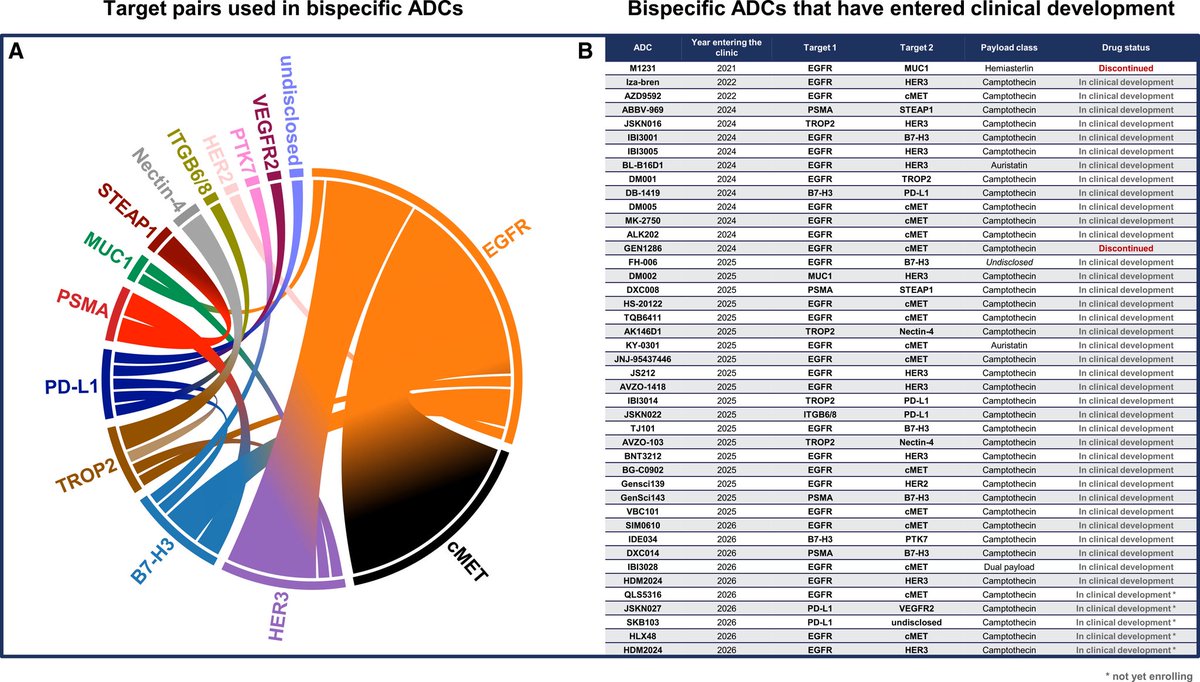
More than 40 bispecific ADCs in the clinic!
Figure from https://t.co/Ajv7tjT2EF
@BarbaraPistill2@FerMosele
1 now approved by China NMPA
7 with reported clinical data thus far
3 discontinued (one more after publication)
3 additional in clinical development (not in the table)
Another win for precision medicine in prostate cancer ! Molecular / Genomic testing is a requirement for good clinical practice !
No excuses no delays and no patient left behind.
It takes a lot of such wins to stack and move the needle in our field and they are coming🙌🏻 @oncodaily@neerajaiims@scserendipity1@OncoAlert #prostatecancer #precisionmedicine
1/ Thrilled to share our new paper, out today in @ScienceMagazine! We built a pan-cancer spatial atlas of tertiary lymphoid structures (TLSs) and developed computation and AI frameworks to study TLS biology at scale.
https://t.co/zgcBnnm7Rl