Applying the method across 105 complex traits, we find substantial SV heritability contributions for a number of traits, with consistent results across independent SV reference panels and cross-ancestry replication.
In this study, we introduce MiXeR-SV, a method for quantifying the contribution and enrichment of structural variants (SVs) to the genetic architecture of complex traits.
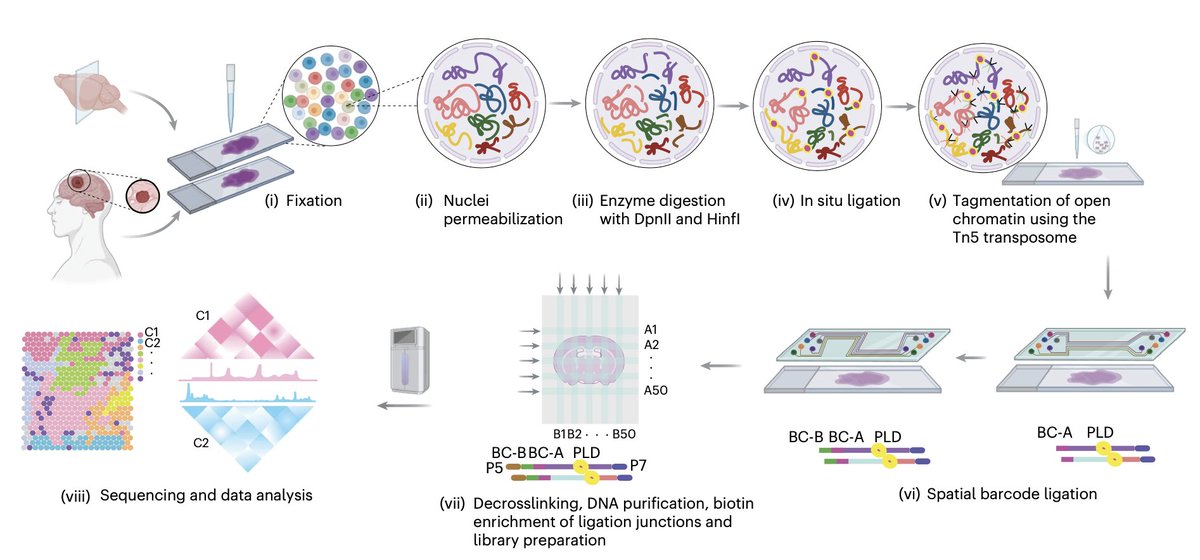
Excited to share Spatial-ATAC-Hi-C @naturemethods, spatial profiling of 3D genome organization + chromatin accessibility in tissue. Excitingly, it detects CNVs and SVs in tumors and reveals spatial heterogeneity.
Great collaboration with @RongFan8.
https://t.co/XO0FhoZepO
In @ScienceMagazine, Zhou and team mapped 3D genome organization and DNA methylation across 86,689 nuclei from 16 human tissues, resolving 35 cell types and 206 subtypes. In the brain, every epigenetic layer agrees. In the body, it’s a different story.
https://t.co/qZzvUrsR4C
I'm very excited to share the preprint of the central project of my postdoc, titled "Sequence-to-function deep learning decodes human cis-regulatory evolution" available today on BioRxiv. Link below
@anshulkundaje This should work, but first one would want to see proof-of-concept concordance between trans effects in eQTL and CRISPR data. But these data don't align so easily, e.g. see here (this is focus on cis, but we looked at trans too): https://t.co/paGvHXSoBm
CIGMA is out in Nature — A linear mixed model to unbiasedly characterize cell-type-specific eQTLs. Work advised by @andywdahl and a lot of help from @xinpei_w
https://t.co/uT8Ot6mnzs
The ToolUniverse plugin for Claude Code is here: 2,000+ life-science tools and 120+ research skills, with a real source on every answer, installed with one prompt.
ToolUniverse already powers a range of AI agents. This plugin brings its full toolset and skill library into Claude Code. What it does:
→ Claude Code automatically reaches for the right tools and skills to run a full life-science analysis end to end: variant interpretation, RNA-seq differential expression, drug and target lookups, rare-disease workups. Every claim comes back with a real source, instead of from memory.
→ When accuracy is critical, dedicated commands add discipline:
• cross-validate a claim across 3+ independent sources
• literature-sweep, a graded review across 15+ indexes (PubMed, EuropePMC, OpenAlex, and more)
• compare, side-by-side tables for drugs, targets, diseases, or variants
• research, a step-by-step multi-source investigation
• translate-id, resolve an ID across every namespace
Install in one step. Paste this into Claude Code and it sets itself up:
Read https://t.co/Ja5m97nXx0 and install the ToolUniverse Claude Code plugin for me.
Blog post 👇
https://t.co/vPICA4vcrH
@marinkazitnik@ScientistTools@KempnerInst@HarvardDBMI
Refining Sequence-to-Expression Modelling with Chromatin Accessibility
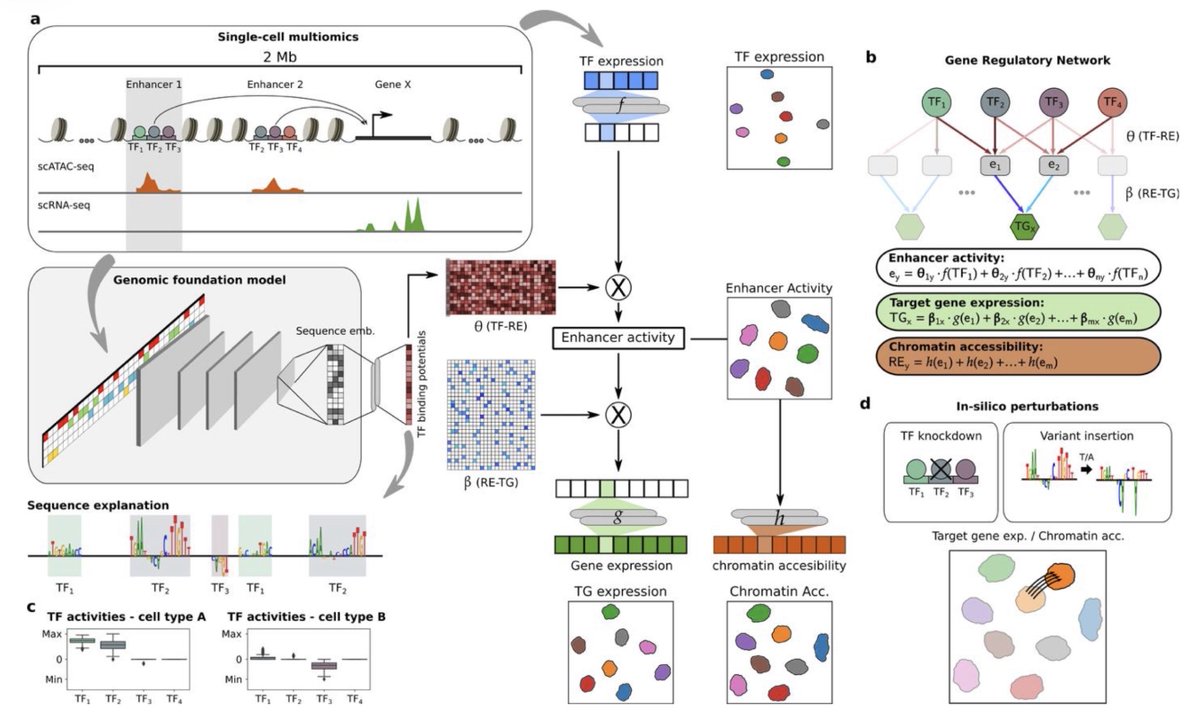
1. The paper tests a simple but broadly compatible idea: add a cell type-specific ATAC-seq accessibility track as an extra input channel to a promoter sequence CNN, so the model can condition sequence-to-expression prediction on which bases are actually accessible in that context.
2. Using human single-cell multiome data (PBMC, brain, jejunum; 12 cell types total), they predict a probabilistic expression phenotype per gene per cell type: GEx = fraction of cells in that cell type with nonzero UMI for the gene, yielding targets in [0,1] that are comparable across cell types.
3. Architecture: an Xpresso-like 1D CNN on ±1 kb around TSS (2 kb total). Inputs are either DNA-only (4 one-hot channels), ATAC-only (1 channel), or DNA+ATAC (5 channels). Models are matched in architecture/size, enabling clean ablations.
4. Main result: DNA+ATAC consistently outperforms DNA-only and ATAC-only across datasets and cell types. In PBMC, mean Pearson r improves from ~0.37 (DNA) and ~0.49 (ATAC) to ~0.53 (DNA+ATAC), with similar gains in Spearman, MSE, and R2; improvements are statistically supported via paired Wilcoxon tests across CV folds.
5. Scrambling experiments show both modalities matter: if DNA is scrambled during training, performance drops to ATAC-only levels; if ATAC is scrambled, it drops to DNA-only levels. Scrambling both collapses performance near zero, supporting that the combined model leverages complementary sequence-accessibility information rather than just one dominating.
6. A key evaluation angle: highly variable genes. All models struggle more on these genes, but the relative gain from adding ATAC is larger for highly variable genes than for the full gene set, suggesting the augmented model is less driven by low-variance/housekeeping signal.
7. Cross-cell-type generalization: models trained in one cell type perform similarly when tested on other cell types within the same dataset (noting that true GEx correlations across cell types are already high). The augmented model maintains its advantage in these cross-cell-type tests, including on highly variable genes.
8. Interpretation: SHAP DeepExplainer attributions show ATAC attributions peak around promoter-proximal regions (slightly upstream of TSS), and—importantly—DNA channel attributions in the DNA+ATAC model become more correlated with accessibility across positions. This suggests accessibility guides the model to focus sequence learning on open regulatory DNA.
9. Sequence pattern findings: k-mer attribution analyses indicate the augmented model is less reliant on CpG dinucleotides than DNA-only, and 6-mer importance becomes more cell type-consistent with lineage relationships (e.g., CD4 vs CD8 T cells). TF-MoDISco + motif matching identifies motifs that become detectable with ATAC conditioning, including cell type-specific factors (e.g., RXRA in monocytes; ETS1 in CD4 T cells) and pioneer-factor-like signals (e.g., GATA2) that may act partially independently of accessibility.
10. Practical notes and limitations: fine-tuning helps—pretrain DNA-only, then initialize DNA+ATAC and fine-tune, improving performance and balancing modality reliance. Sequencing depth strongly affects results; using a more deeply sequenced scRNA dataset improves performance. Variant-effect prediction on a GTEx promoter eQTL benchmark is poor here, likely due to (i) predicting expression probability rather than abundance, (ii) short 2 kb inputs, and (iii) cell-type-specific training vs heterogeneous benchmark; longer inputs up to 13.5 kb improve all models but do not remove the DNA+ATAC advantage.
💻Code: https://t.co/Btk3IjbYq9
📜Paper: https://t.co/9miOQ7qMIe
#computationalbiology #bioinformatics #genomics #deepLearning #singlecell #ATACseq #RNAseq #geneRegulation #interpretableML #CNN
Our Human Multiomic Development Atlas paper is out in Nature today! A heart-felt "thank you" to all co-authors for their tireless work on this complex yet exciting project! Congrats all! https://t.co/iUiZz00KOt
Single-nucleus multiome analysis in the human prefrontal cortex identifies gene expression and cis-regulatory elements associated with aging https://t.co/1XYTk8DKgX
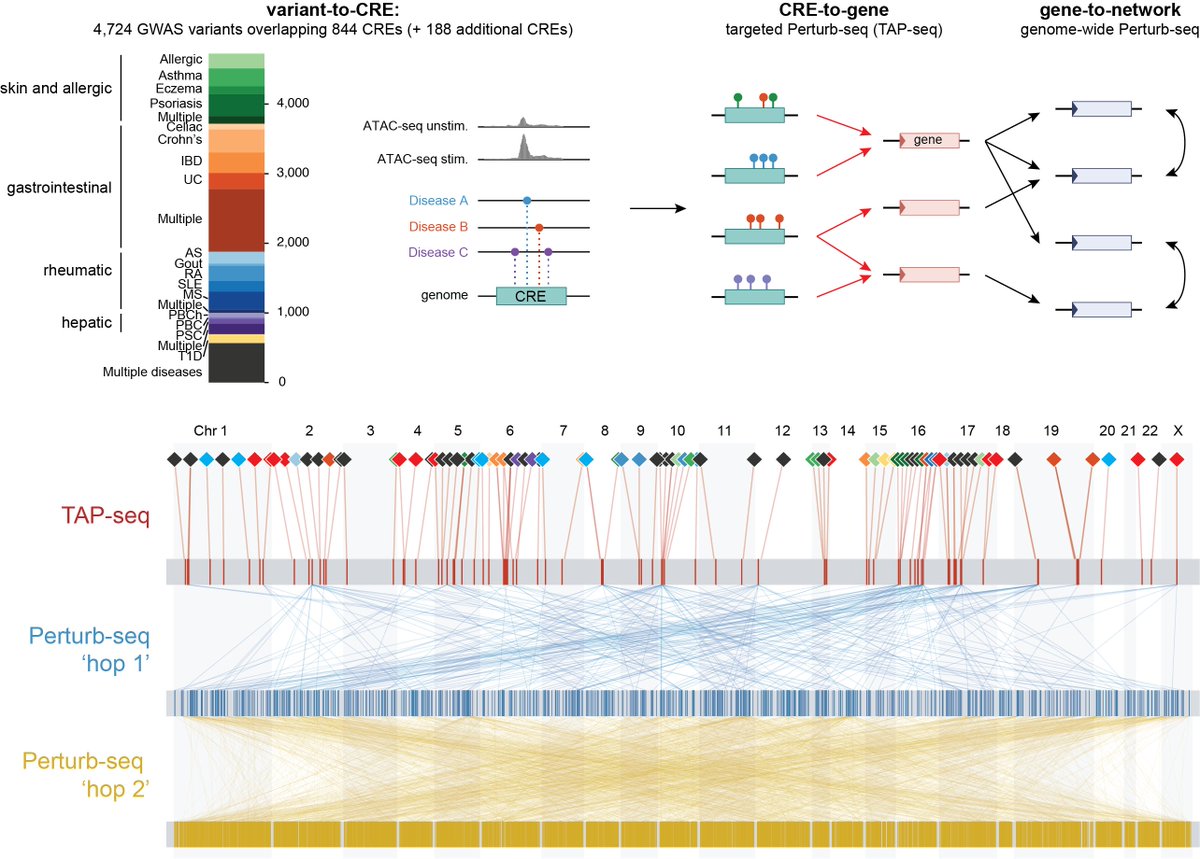
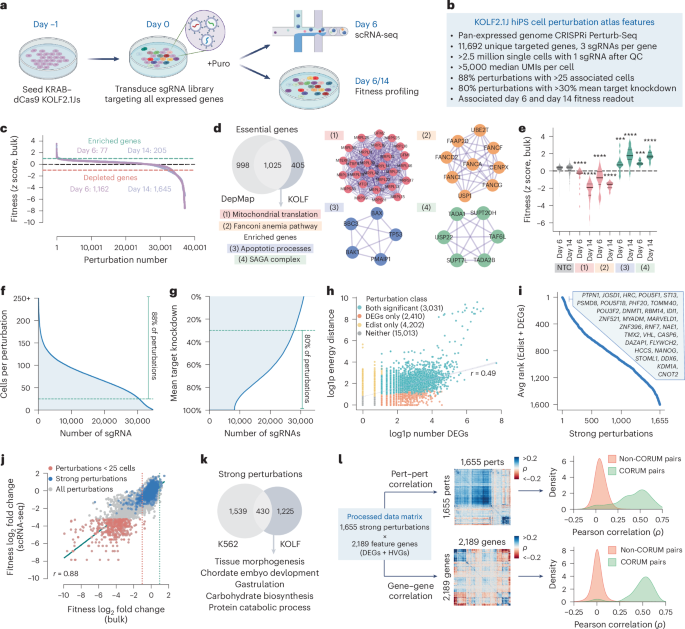
🧬 How do immune disease-relevant variants affect gene regulatory networks in CD4+ T cells?
🧪🖥️ We coupled two large-scale CRISPRi screens (>4M cells) to map the downstream cascades of thousands of SNPs
More details below 🧵👇 or in the preprint 📖 https://t.co/1J3XEqgFMN
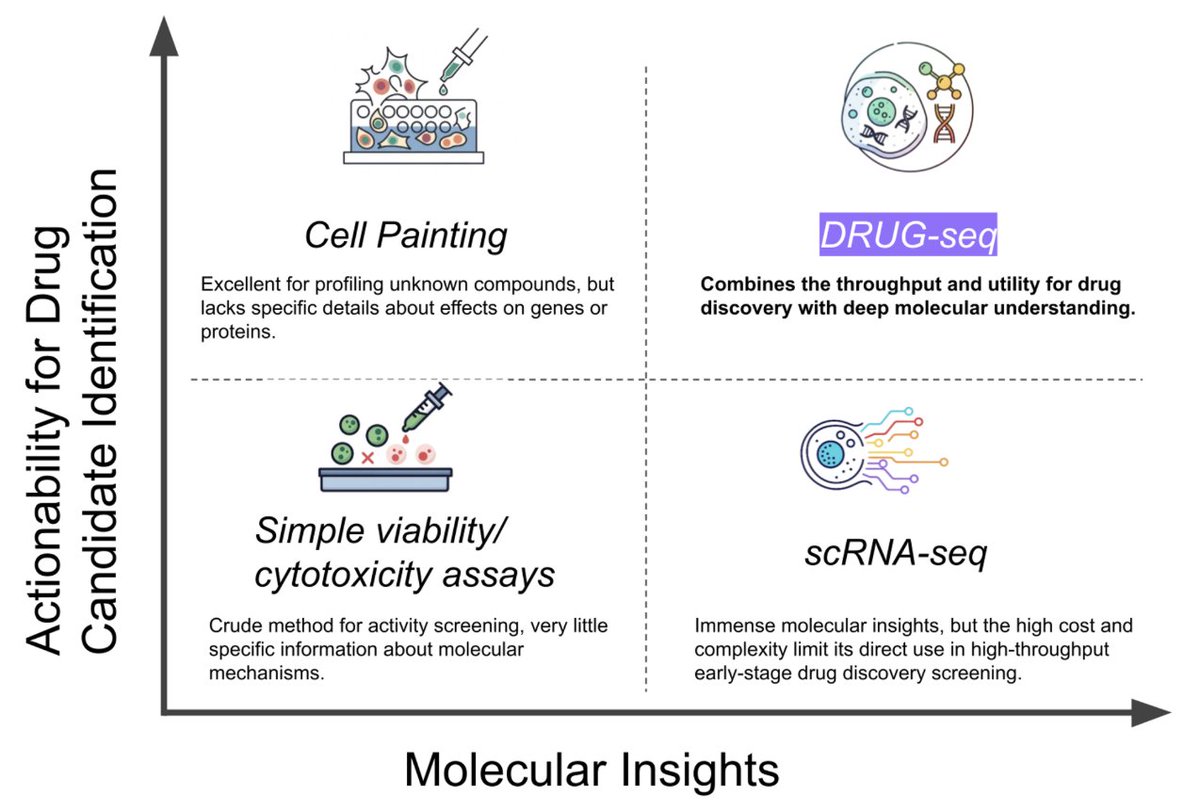
💊💊💊 @Ginkgo just dropped GDPx4 💊💊💊
29.9 MILLION rows of DRUG-seq data, perfect for benchmarking + large-scale perturbation modeling
critical for anyone who can't afford their own high-throughput lab
a little more in 🧵
Very pleased to announce our paper—Long-read genome sequencing improves detection and functional interpretation of structural and repeat variants in autism— is now published in Cell Genomics https://t.co/YttpySiyNt
Using this new tool, We show that larger SVs explain an important share of the genetic influence on common traits and diseases, beyond what we see with standard SNPs. This suggests that to fully understand genetic risk, we need to measure and model SVs much more carefully.
Here, we introduce MiXeR-SV, a tool that integrates long-read-derived SVs from existing reference catalogs with genome-wide association summary statistics to quantify SV heritability and enrichment.





![BiologyAIDaily's tweet photo. Refining Sequence-to-Expression Modelling with Chromatin Accessibility
1. The paper tests a simple but broadly compatible idea: add a cell type-specific ATAC-seq accessibility track as an extra input channel to a promoter sequence CNN, so the model can condition sequence-to-expression prediction on which bases are actually accessible in that context.
2. Using human single-cell multiome data (PBMC, brain, jejunum; 12 cell types total), they predict a probabilistic expression phenotype per gene per cell type: GEx = fraction of cells in that cell type with nonzero UMI for the gene, yielding targets in [0,1] that are comparable across cell types.
3. Architecture: an Xpresso-like 1D CNN on ±1 kb around TSS (2 kb total). Inputs are either DNA-only (4 one-hot channels), ATAC-only (1 channel), or DNA+ATAC (5 channels). Models are matched in architecture/size, enabling clean ablations.
4. Main result: DNA+ATAC consistently outperforms DNA-only and ATAC-only across datasets and cell types. In PBMC, mean Pearson r improves from ~0.37 (DNA) and ~0.49 (ATAC) to ~0.53 (DNA+ATAC), with similar gains in Spearman, MSE, and R2; improvements are statistically supported via paired Wilcoxon tests across CV folds.
5. Scrambling experiments show both modalities matter: if DNA is scrambled during training, performance drops to ATAC-only levels; if ATAC is scrambled, it drops to DNA-only levels. Scrambling both collapses performance near zero, supporting that the combined model leverages complementary sequence-accessibility information rather than just one dominating.
6. A key evaluation angle: highly variable genes. All models struggle more on these genes, but the relative gain from adding ATAC is larger for highly variable genes than for the full gene set, suggesting the augmented model is less driven by low-variance/housekeeping signal.
7. Cross-cell-type generalization: models trained in one cell type perform similarly when tested on other cell types within the same dataset (noting that true GEx correlations across cell types are already high). The augmented model maintains its advantage in these cross-cell-type tests, including on highly variable genes.
8. Interpretation: SHAP DeepExplainer attributions show ATAC attributions peak around promoter-proximal regions (slightly upstream of TSS), and—importantly—DNA channel attributions in the DNA+ATAC model become more correlated with accessibility across positions. This suggests accessibility guides the model to focus sequence learning on open regulatory DNA.
9. Sequence pattern findings: k-mer attribution analyses indicate the augmented model is less reliant on CpG dinucleotides than DNA-only, and 6-mer importance becomes more cell type-consistent with lineage relationships (e.g., CD4 vs CD8 T cells). TF-MoDISco + motif matching identifies motifs that become detectable with ATAC conditioning, including cell type-specific factors (e.g., RXRA in monocytes; ETS1 in CD4 T cells) and pioneer-factor-like signals (e.g., GATA2) that may act partially independently of accessibility.
10. Practical notes and limitations: fine-tuning helps—pretrain DNA-only, then initialize DNA+ATAC and fine-tune, improving performance and balancing modality reliance. Sequencing depth strongly affects results; using a more deeply sequenced scRNA dataset improves performance. Variant-effect prediction on a GTEx promoter eQTL benchmark is poor here, likely due to (i) predicting expression probability rather than abundance, (ii) short 2 kb inputs, and (iii) cell-type-specific training vs heterogeneous benchmark; longer inputs up to 13.5 kb improve all models but do not remove the DNA+ATAC advantage.
💻Code: https://t.co/Btk3IjbYq9
📜Paper: https://t.co/9miOQ7qMIe
#computationalbiology #bioinformatics #genomics #deepLearning #singlecell #ATACseq #RNAseq #geneRegulation #interpretableML #CNN](https://pbs.twimg.com/media/HG7CUOtbYAAEhjd.png)