#GopherDay TW 2024! #Golang
Submission link: https://t.co/6Xe2QQZnk8
1. Submission deadline: March 24, 2024
2. Conference date: May 25, 2024
Location:
Institute for Information Industry Living Lab+ (4F., No.133, Sec. 4 Minsheng E. Rd., Songshan District, Taipei City 105, TW)
If you think OpenAI Sora is a creative toy like DALLE, ... think again. Sora is a data-driven physics engine. It is a simulation of many worlds, real or fantastical. The simulator learns intricate rendering, "intuitive" physics, long-horizon reasoning, and semantic grounding, all by some denoising and gradient maths.
I won't be surprised if Sora is trained on lots of synthetic data using Unreal Engine 5. It has to be!
Let's breakdown the following video. Prompt: "Photorealistic closeup video of two pirate ships battling each other as they sail inside a cup of coffee."
- The simulator instantiates two exquisite 3D assets: pirate ships with different decorations. Sora has to solve text-to-3D implicitly in its latent space.
- The 3D objects are consistently animated as they sail and avoid each other's paths.
- Fluid dynamics of the coffee, even the foams that form around the ships. Fluid simulation is an entire sub-field of computer graphics, which traditionally requires very complex algorithms and equations.
- Photorealism, almost like rendering with raytracing.
- The simulator takes into account the small size of the cup compared to oceans, and applies tilt-shift photography to give a "minuscule" vibe.
- The semantics of the scene does not exist in the real world, but the engine still implements the correct physical rules that we expect.
Next up: add more modalities and conditioning, then we have a full data-driven UE that will replace all the hand-engineered graphics pipelines.
https://t.co/7BikSgE7iN
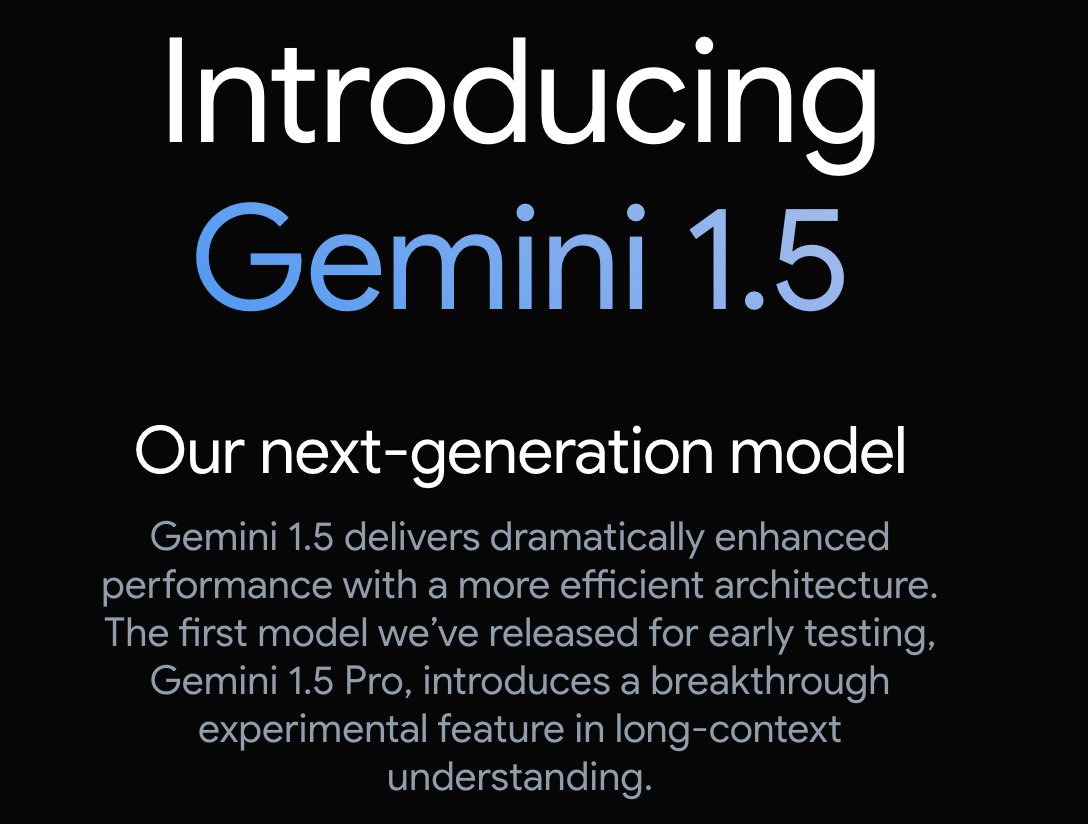
Gemini 1.5 Pro - A highly capable multimodal model with a 10M token context length
Today we are releasing the first demonstrations of the capabilities of the Gemini 1.5 series, with the Gemini 1.5 Pro model. One of the key differentiators of this model is its incredibly long context capabilities, supporting millions of tokens of multimodal input. The multimodal capabilities of the model means you can interact in sophisticated ways with entire books, very long document collections, codebases of hundreds of thousands of lines across hundreds of files, full movies, entire podcast series, and more.
Gemini 1.5 was built by an amazing team of people from @GoogleDeepMind, @GoogleResearch, and elsewhere at @Google. @OriolVinyals (my co-technical lead for the project) and I are incredibly proud of the whole team, and we’re so excited to be sharing this work and what long context and in-context learning can mean for you today!
There’s lots of material about this, some of which are linked to below.
Main blog post:
https://t.co/QAsDKXBdao
Technical report:
“Gemini 1.5: Unlocking multimodal understanding across millions of tokens of context”
https://t.co/CTzTHNDCdo
Videos of interactions with the model that highlight its long context abilities:
Understanding the three.js codebase: https://t.co/yq7d6OSD6c
Analyzing a 45 minute Buster Keaton movie: https://t.co/adyMgDYHoK
Apollo 11 transcript interaction: https://t.co/Pqvq3Eac1R
Starting today, we’re offering a limited preview of 1.5 Pro to developers and enterprise customers via AI Studio and Vertex AI. Read more about this on these blogs:
Google for Developers blog:
https://t.co/x73Vun0kVS
Google Cloud blog:
https://t.co/OlaTW6PYGn
We’ll also introduce 1.5 Pro with a standard 128,000 token context window when the model is ready for a wider release. Coming soon, we plan to introduce pricing tiers that start at the standard 128,000 context window and scale up to 1 million tokens, as we improve the model.
Early testers can try the 1 million token context window at no cost during the testing period. We’re excited to see what developer’s creativity unlocks with a very long context window.
Let me walk you through the capabilities of the model and what I’m excited about!
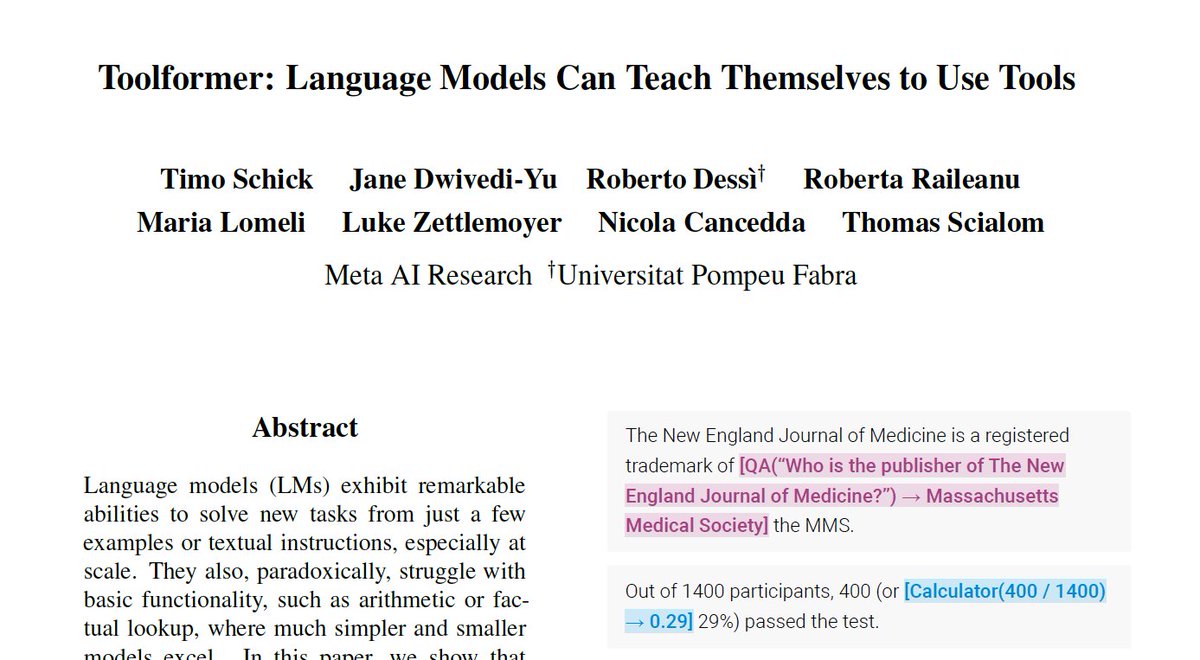
@mitchellh One of the fun things about ChatGPT plugins is that the prompts for all of those are public - I collected a few of them here: https://t.co/svPtPPl1rT
In #Golang 1.20 the Go team introduced an experimental new method of memory management called Go arenas.
In this blog post we show how we combined continuous profiling with memory arenas to improve performance of one of our cloud services by ~8% !
https://t.co/0diYIUH9hc