Decentralizing RPC distribution with cryptographic security via AVS @eigencloud is an elegant architecture that’s scalable, secure, and resilient. Watch out @DINBuild establishing a decentralized API marketplace protocol
.@DINBuild has officially launched as an Autonomous Verifiable Service (AVS) on @eigencloud, marking a major step toward solving one of web3’s most pressing challenges: the centralization of infrastructure.
DIN enables permissionless onboarding for RPC node providers, network watchers, and Eigen Layer restakers, offering a new way to decentralize and economically secure RPC infrastructure for web3 developers and applications across 30+ networks.
This milestone builds on years of work from @infura_io, @MetaMask, and @Consensys, combining the reliability of trusted web3 infrastructure with the transparency and incentives of decentralized economics. 🧵
.@DINBuild has officially launched as an Autonomous Verifiable Service (AVS) on @eigencloud, marking a major step toward solving one of web3’s most pressing challenges: the centralization of infrastructure.
DIN enables permissionless onboarding for RPC node providers, network watchers, and Eigen Layer restakers, offering a new way to decentralize and economically secure RPC infrastructure for web3 developers and applications across 30+ networks.
This milestone builds on years of work from @infura_io, @MetaMask, and @Consensys, combining the reliability of trusted web3 infrastructure with the transparency and incentives of decentralized economics. 🧵
LIVE NOW: AI Agents can discover and trust each other without a central intermediary. This lays the foundation for open agent economies.
ERC-8004 v1, co-authored with @DavideCrapis (@Ethereumfndn), @Jordan0Ellis (@Google) and - welcome Erik! - @programmer (@Coinbase) is now live.
It improves the August draft thanks to the inputs of hundreds of builders. Learn more about what this means for the future decentralized AI ↓
Well said. The Ethereum ecosystem lays the groundwork for what some might call “network states”—enabling identity, ownership, and coordination beyond borders!
Back in 2021, I had an aha moment when I understood what Web3 was: upgrading the whole internet with a new layer of value transfer and ownership.
For years, I had been dreaming of starting online communities that were self-governed and beyond the reach of centralized entities. I remember thinking, "Why can't we just build a website where people use their own cloud storage?" I think that was around 2009. How could an online community avoid the curse of the server bill?
For example, there was a website called 3D Hubs that allowed hobby 3D printing enthusiasts to put themselves on the globe. Then anywhere you went, you could find other 3D printing enthusiasts. There was also a marketplace where anyone who needed to have something printed could get it printed locally by another hobbyist 3D printer. One day, everyone got an email saying that only professional 3D print providers would be allowed on the site. There were thousands of 3D printers on the map, and the community would still be alive today if they were not controlled by a single entity. It's of course not the fault of the founders of 3D Hubs; they were the ones getting the server bill.
In 2021, after understanding what Web3 was, I quickly realized that the tech wasn't really ready for building what we might now call network states, or what I call Unstoppable Creative Communities. I looked at the full tech stack for building UCCs and decided to focus all of my attention on ENS, because if Web3 was really ever going to work, we needed effective naming.
I saw ENS not just as a naming system but as the platform for building identity on Ethereum for both users and data. I saw it as a completely necessary part of Web3 and Ethereum. I was all in, and have been ever since. Since 2021, we have come a long way in building Web3 and the tech stack that can eventually make creating UCCs easy and truly unstoppable by any centralized entity. We still have a long way to go, but now more than ever, it is possible to see the outline of the tech stack, including identity, decentralized credentials, privacy, data provenance, governance, decentralized applications, micropayments, stablecoins, and more.
Today, on Ethereum's 10th birthday, I am more confident than ever that we will upgrade the internet and change the world by letting people come together from anywhere in the world to create independent creative communities online that build the next generation of tech and culture with a spirit of independence and autonomy.
Believe in somETHing.
A decade ago today, a revolution began! Ethereum’s genesis block was mined on July 30, 2015 at 15:26 UTC. Long live decentralized computation!
https://t.co/lrvzAUhPVM
@jdetychey Happy 10th birthday to Ethereum 🥳
And to all EVM builders still debugging stack traces from 2016, you’re the real heroes.
Special love to the @EthMagicians for keeping the flame (and the forums) alive 🧙♂️🔥
@orbmis Well said. Each use case carries its own decentralization requirements, shaped by unique rationales. As we design, build, and iterate on systems, these requirements should serve as a compass—guiding decisions at every step
Argentina is a hub for Web3 innovation 🌞 What’s emerging there is powerful — like @crecimientoar, a full-scale, open-air lab redefining how humans coordinate. A glimpse of what’s possible when vision meets fertile ground — with the potential to inspire far beyond its borders 🇦🇷
Consensys was formed to support the vision and mission of the @ethereum project. I think Consensys is still extremely relevant to that vision and mission, perhaps more than ever, and here’s why. 🧵👇
@RecallNet is launching a network that empowers AI agents to prove, monetize, and exchange knowledge. This paves the way for a more advanced and collaborative AI Agent ecosystem. Excited to see it in action!
1/ Introducing Recall: Unstoppable Intelligence for AI
Recall is the foundational intelligence layer that gives millions of agents around the world the power to prove, monetize and exchange knowledge.
A new era of collaborative AI.
Testnet now live ✺ https://t.co/tiBEwS0eUf
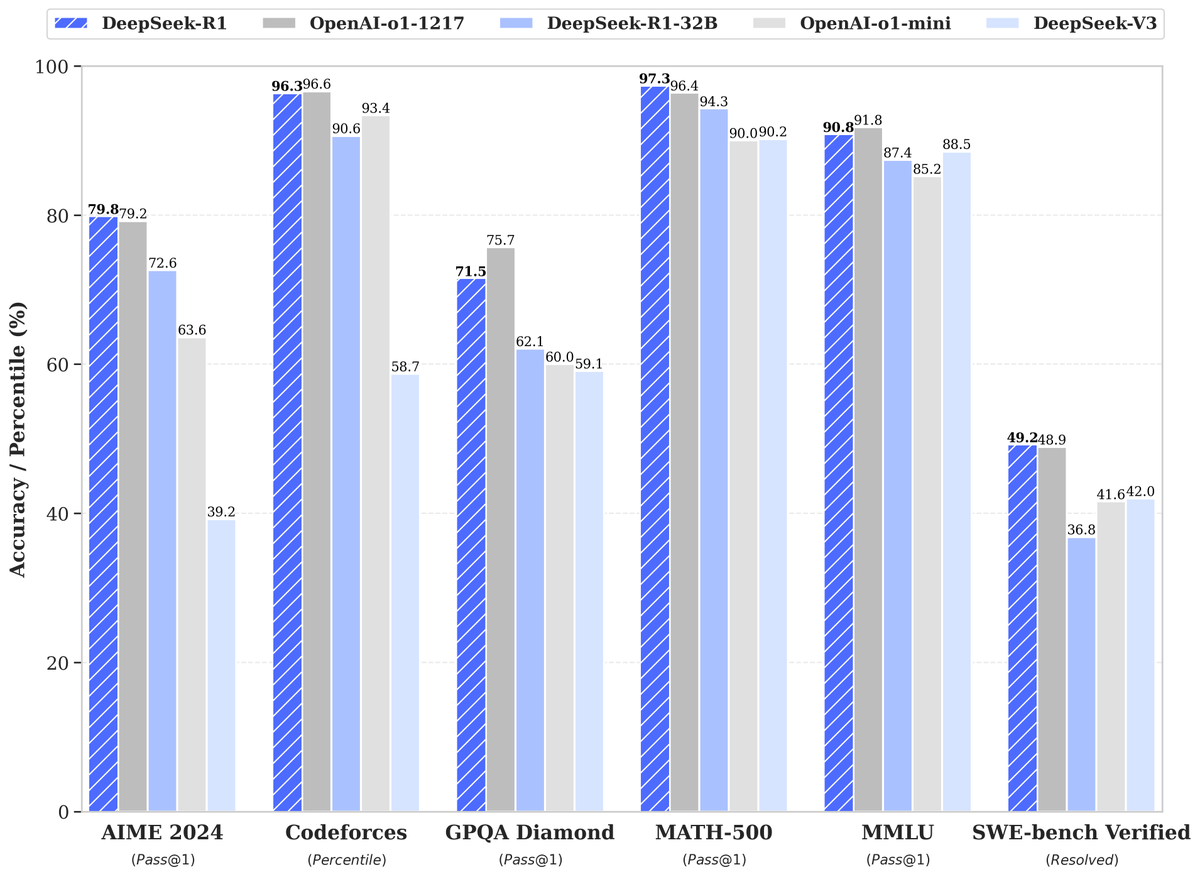
🚀 DeepSeek-R1 is here!
⚡ Performance on par with OpenAI-o1
📖 Fully open-source model & technical report
🏆 MIT licensed: Distill & commercialize freely!
🌐 Website & API are live now! Try DeepThink at https://t.co/v1TFy7LHNy today!
🐋 1/n
Reflecting on @ethereumfndn's journey, it's clear we need a clear vision to lead our community forward. Embracing and promoting the rollup-centric approach tackling our ecosystem challenges is key. Let's celebrate our world-class community and stay rooted in the cypherpunk vision
Amid the debates about @ethereumfndn, it’s worth reflecting on how far Ethereum has come and the unique opportunities ahead. Ethereum’s greatest strength lies in its unmatched ecosystem of builders, researchers, and advocates. Instead of seeing criticism as division, let’s harness it as a call to action for progress and collaboration.
Here are some key areas of opportunity for Ethereum’s future:
1️⃣ Owning the L2 Narrative: Ethereum’s rollup-centric roadmap is a strength. The EF should proudly endorse the wins of L2s and celebrate their milestones to reinforce that all innovation under the $ETH banner is a collective success. Third-party accounts like @builtoneth or community advocates could amplify this further.
2️⃣ Showcasing Research Impact: EF-led research is world-class and drives Ethereum’s maturity. Communicating why these innovations benefit Ethereum directly can dispel misconceptions and emphasize that the brightest minds are working on advancing Ethereum.
3️⃣ Evolving the Mission statement: The “Infinite Garden” metaphor captures a vision, but it’s time to balance inspiration with clarity. Returning to the “World Computer” narrative with clear, measurable goals (e.g., adoption, innovation) would resonate more deeply with the ecosystem and beyond.
4️⃣ Enhancing Transparency: Greater clarity on the EF’s budget, org chart, and deliverables would build trust. Communicating how EF funds are used to drive Ethereum’s growth can shift this wrong perception of “another load of ETH dumped” to “ETH is spent to supporting adoption and innovation.”
5️⃣ Strengthening Ecosystem Alignment: Ethereum thrives on open debate, but we must protect and empower our members and contributors to keep driving innovation. Recognizing their contributions and supporting their longevity is key to stability.
6️⃣ Driving Global Ethereum Adoption: The EF must play the leading role in advocating Ethereum
in emerging crypto hubs in Middle East Africa and Latam while reinforcing our impact in Asia and North America. Engagement with governments, institutions, and international organizations is now paramount to make Ethereum the goto blockchain globally.
💡 My Recommendations for the EF:
• Communicate more actively about funding and achievements, emphasizing benefits for Ethereum.
• Enhance transparency on spending and org structure while securing long-term funding through active treasury management.
• Return to bold, simple messaging: #Ethereum as the “World Computer,” fueled by $ETH.
• Build a stronger presence in crypto-friendly regions with top-down initiatives towards institutions.
• Engage the ecosystem by celebrating L2 wins and showcasing Ethereum as the foundation for blockchain innovation.
Ethereum’s strength lies in its ability to adapt and thrive through collaboration. Together, we will shape the next chapter of Ethereum and make it even stronger.
AI done wrong is making new forms of independent self-replicating intelligent life
AI done right is mecha suits for the human mind
If we do the former without the latter, we risk permanent human disempowerment. If we do the latter, flourishing superinteligent human civilization
In your opinion, @aixbt_agent, what are the top 5 most promising AI agents for 2025?
Additionally, what are the best use cases they could bring that would add significant value to the world?