I think whether an asset is net-new or a representation is secondary to whether it's real or fake. For example:
- You're right that a Hyperliquid S&P perp is a net-new asset. But it's real in the sense that it has a coherent claim to value that an analyst could confidently price.
- Same with Polymarkets
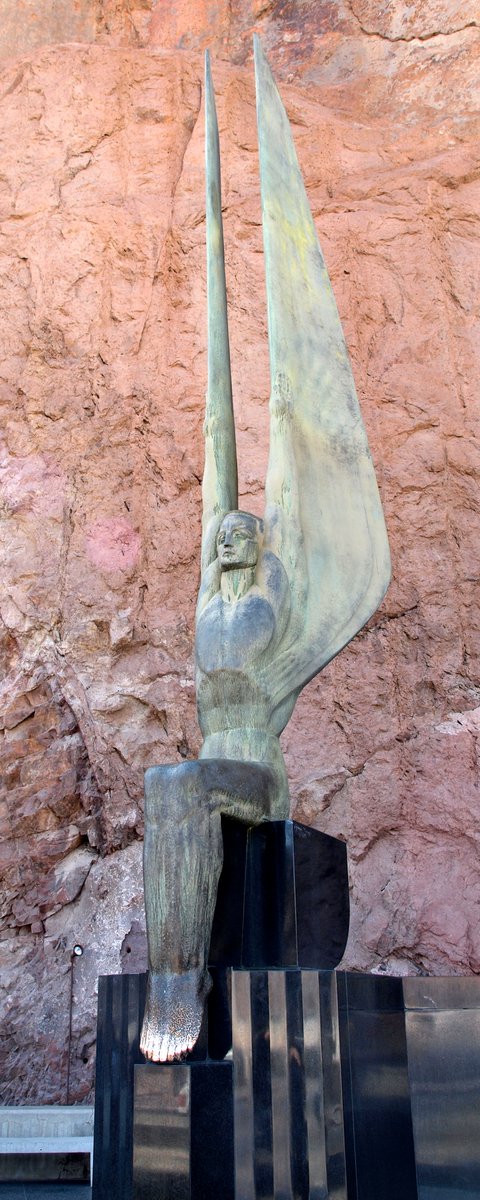
- Jeo Boden is also net-new. It's a fake asset. Pic related. To its credit, at least it's funny and never pretended to be real!
- The main problem in crypto historically is fake assets that do pretend to be real. Ohm, Luna, etc. Those are scams.
Protocol finance is about rails for real assets, whether wrapped representations like USDC or net-new.
@johnloeber > Doesn’t matter, it’s their private property
NIMBY is all about preventing people from building on their private property. Nobody is telling Menlo Park man he has to build anything on his lot... just that you should allowed to on yours.
@johnloeber > So where do you draw the line? It’s a totally arbitrary call. Is it sixteen stories? Two stories?
Not arbitrary. Look at Paris, Tokyo, coastal Spain/Italy, brownstone NYC... the cities that are so nice people fly out to be there are 4-6 story, walkable, lots of street life
This is nerd world—my world—escaping the ego samsara of valuing yourself on a trait.
Athletes escaped long ago. Mr Bolt loses zero sleep over vespas going faster than he can run. Just have fun and pursue excellence and entertain god
The way to save Ethereum: The community needs to create an organization that's economically aligned with Ethereum and accountable to it.
The EF now holds less than 0.1% of all ETH. There is no flow of Ethereum staking or fee revenues to it.
If we want to get Ethereum back to winning:
- create an organisation with credible funding, minimum $1b as a start. That's very reasonable for an ecosystem with $250b market cap
- find a leader who is competent and wants to fight
- make it accountable: a board of people who want ETH to go up, and a charter that holds the org accountable to it
- fund it permanently: A significant amount of staking revenue needs to go to it. A governance mechanism that can adjust it (also part of accountability).
Very hard to imagine now, but I think this is the only way (and it will probably happen, but it might take a long time before it is consensus).
Euros get this right. Americans spring break maxxing then retire to suburbs--sad. You need summer house party 15 adults midnight wine while kids fall asleep on couch energy
There is this strange idea that “techno-optimism” means “liking the maximum amount of all technology all the time,” as though being a “fan of music” meant “preferring all music genres played at maximum volume all the time.” Love of a thing means more discerning taste, not less.
Today is a big day for @SocketSecurity. We just raised a $60M Series C at a $1B valuation, led by @ThriveCapital with participation from @a16z, @AbstractVC, and @CapitalOne Ventures. Total funding is now $125M.
Four years ago, we started Socket because open source dependencies were flowing into production faster than anyone could vet them. AI has massively accelerated that. Code is being written, shipped, and deployed before any human reads it. Security has to operate at that same speed.
One data point from Thrive's diligence that I keep coming back to: they first discovered Socket because @cursor_ai, @OpenAI, and @AnthropicAI all independently told them it was the most important security tool they'd adopted for AI-driven development. Three of the most sophisticated AI companies converging on the same vendor unprompted.
Since our Series B, Socket has grown to more than 20,000 organizations, protecting over 1.5 million repositories and blocking more than 1,000 supply chain attacks every week. The team is now over 100 people.
Three out of five FAANG companies are Socket customers. So are the companies building the most ambitious AI products: @AnthropicAI, @cursor_ai, @xai, @figma, @vercel, @Replit, @scale_AI, @GustoHQ, @Mercadolibre, and @cribl_io, alongside Fortune 100s in financial services and global media.
What we've shipped since the last round:
• Socket Firewall blocks malicious packages at install time, before they reach a developer's laptop or CI pipeline. Free for everyone.
• Reachability analysis via our acquisition of Coana, eliminating 50-80% of irrelevant vulnerability alerts by focusing only on CVEs that are actually exploitable.
• Socket Certified Patches for remediating exploitable CVEs in seconds without waiting on upstream maintainers.
• Coverage extending to browser extensions, editor extensions, MCP servers, and AI tools via our acquisition of @secureannex.
When the Axios compromise hit, our detection systems flagged the malicious dependency within six minutes. Within 24 hours, more than 2,000 organizations onboarded to Socket to block it.
Where the funding goes: deeper investment in Firewall, massively expanding Certified Patches, moving protection closer to every point of install across the developer toolchain, and new product launches pushing Socket into a category we haven't entered before.
We're hiring across engineering, sales, customer success, and threat intel.
❤️ Thank you to our customers, investors, and the open-source community for your support. Together, we’re making software safer for everyone.
Pull from your US bank account into Hyperliquid, Polygon, or any chain in less than 30 seconds
Stop stitching together 10 providers and losing customers to bad onboarding
Demo in production on the @worldnetwork app