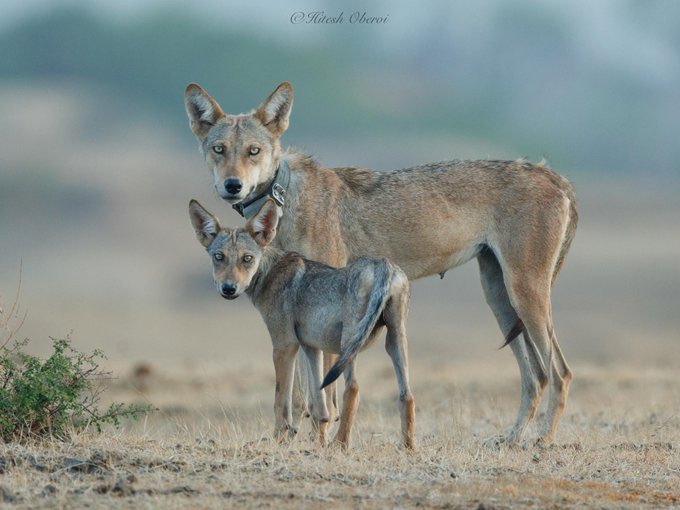
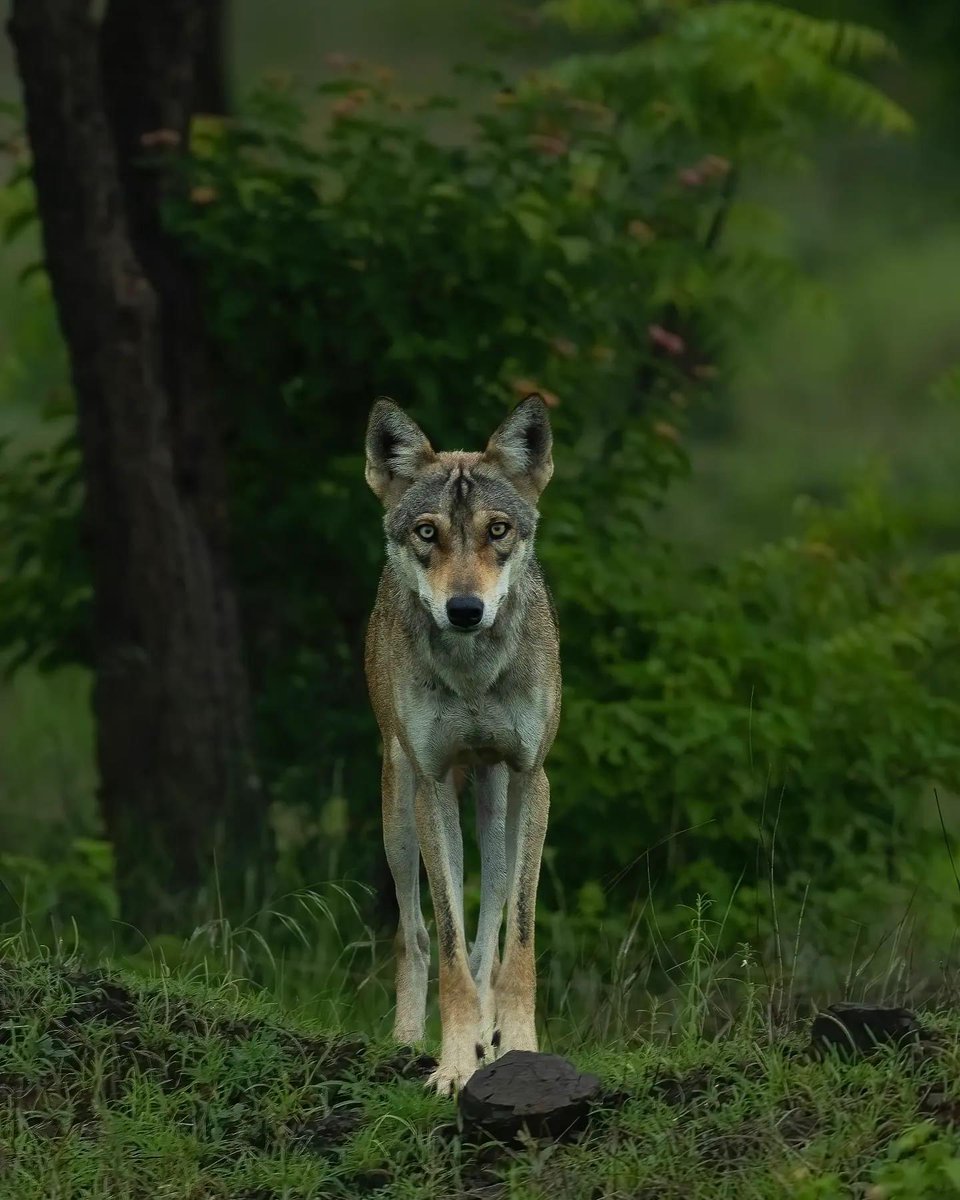
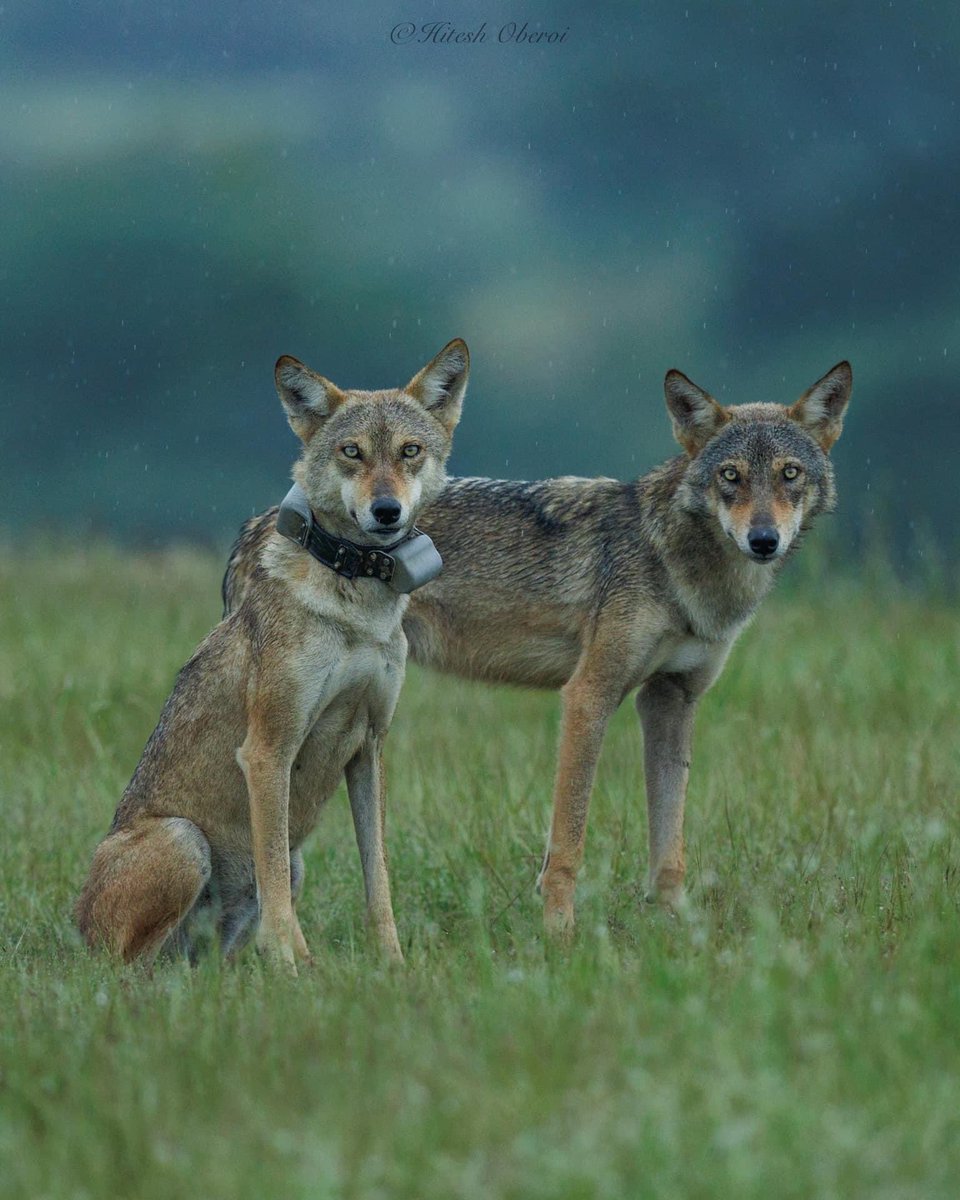
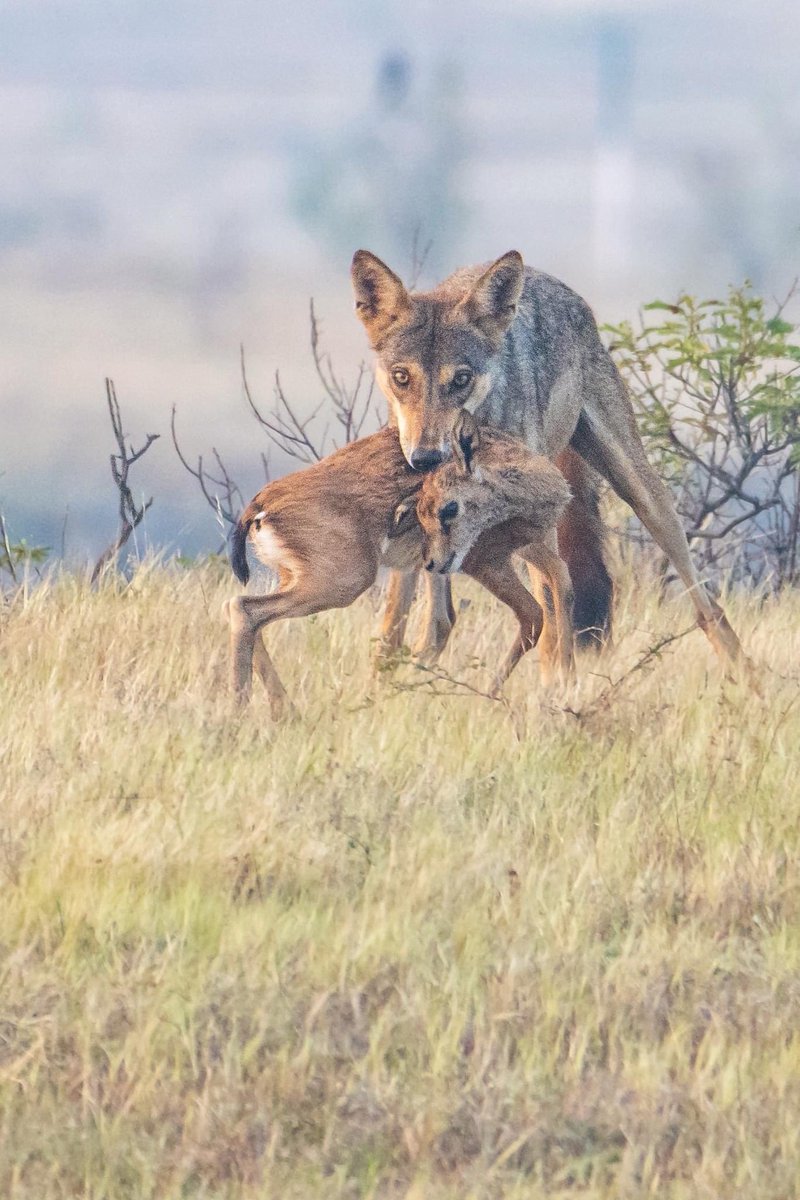
The study underscores the influence of human infrastructure, viz., roads and villages, on mesocarnivore presence and highlights the need for targeted conservation in the ravines.
🚨🐺🦊New Publication Alert!🐆🦨
Our latest research, “Factors determining the occurrence and spatial-association of mesocarnivores in the semi-arid landscape of Madhya Pradesh, India,” is now published in Mammal Research (2026). Led by @nature_wayfarer
https://t.co/JEX3cFqslo
Despite differences in body size and diet, mesocarnivores showed positive associations. Interactions with leopards and hyenas were mostly neutral or positive, except for jackals, which showed negative association with leopards.
🌍🦴 New Publication Alert! 🍪
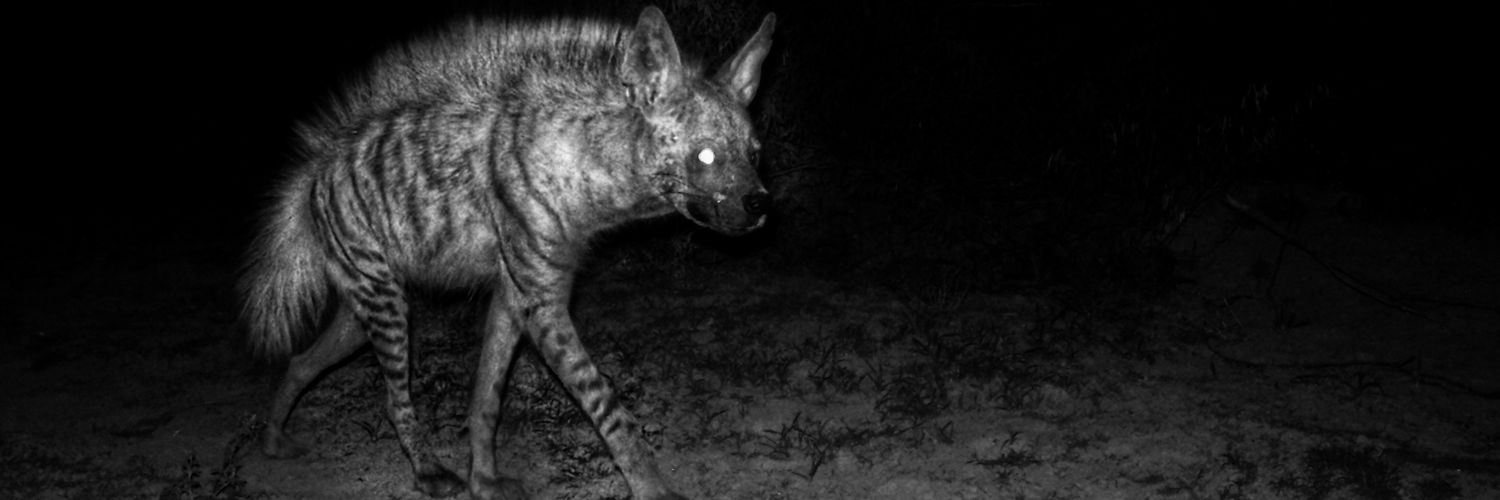
#Hyenas: from fossil giants to misunderstood carnivores. Explore their #evolution & ties to humanity—ecology, culture, & more.
Tribute to Björn Kurtén's legacy! 🐾@annzoolfenn
🔗 https://t.co/2aSfUlA92F
@GCCGtweet@HELICS_Lab
📸New paper alert📸
Interested in investigating how animal diel activity patterns vary along anthropogenic and environmental gradients? Check out our how-to guide on estimating activity using hierarchical models @FiebergJohn @science_action and John Erb
https://t.co/xD6mJdCa4x
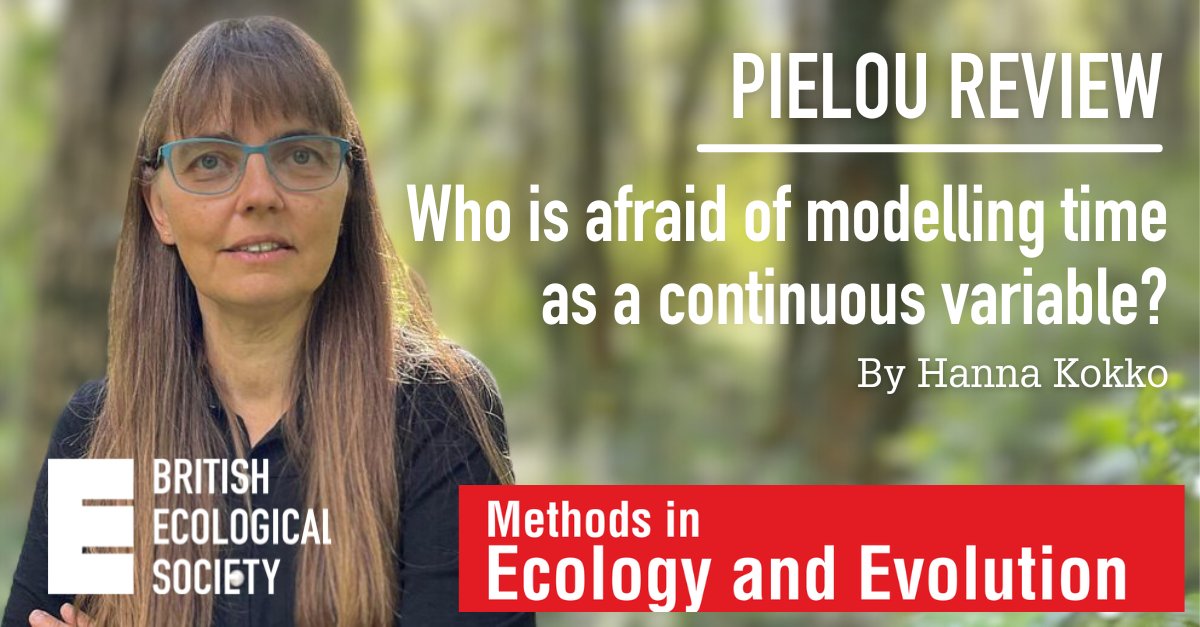
We are very excited about the new Pielou Review recently published in @MethodsEcolEvol
Check out @kokkonutter, Hanna Kokko’s ‘Who is afraid of modelling time as a continuous variable?’ here 👉 https://t.co/coHxktSQwa
Swiss Government Excellence Scholarships at Doctoral and Post Doctoral Levels for research or study at Swiss universities and research/ techology institutes. - Details at https://t.co/pSZyIQD7Px.
Apply in India up to 11th November 2024
The cover of @ESAEcosphere's August issue has landed! With a dramatic shot by Pilar Oliva-Vidal of a bearded vulture, from a study of how these bone-eating birds find their next meal
Find the issue's #OpenAccess research here: https://t.co/xEMNIPNWk4
Now available at https://t.co/RCVt648teE: 'The World of Zero-Inflated Models - Volume 2: Using GLMM.
Although this book is published under the umbrella of 'The World of Zero-Inflated Models', it also provides a good introduction to ordinary linear mixed-effects models and GLMMs.
Chapter 11 contains an extensive explanation of linear mixed-effects models. Originally, we used a dataset of bears and ants, but after discovering that the covariates only explained 2% of the variation, we decided to completely rewrite this chapter with a different dataset on painted turtles. At that point, we had forgotten that the chapter on zero-inflated binomial GLMMs also uses painted turtle data. So, we hope you like turtles. In Chapter 12, we first introduce Poisson GLMM using a squirrel dataset and discuss marginal and conditional predicted values. The chapter also covers zero-inflated Poisson and generalised Poisson GLMMs. A zero-inflated Poisson GLMM is applied to a humphead fisheries dataset in Chapter 13.
In Chapter 14, we discuss how to handle nested and crossed random effects, as well as auto-correlation, using a dataset on zero-inflated tree hyrax count data. A detailed explanation of zero-inflated binomial GLMMs is provided in Chapter 15. We use a dataset on painted turtles and also touch upon beta-binomial models. In contrast, Chapter 16 utilises beta GLMMs, zero-inflated beta GLMMs, zero-altered beta GLMMs, and ordered beta GLMMs for the analysis of zero-inflated caribou data. Finally, Chapter Chap17 presents an application of the Tweedie GLMM to zero-inflated biomass data.
#ProcB Special Feature - The other 1%: Showcasing #science and #scientists from the #GlobalSouth and #indigenous communities - find out more on how to send us your proposal https://t.co/ATNFr6ppg5