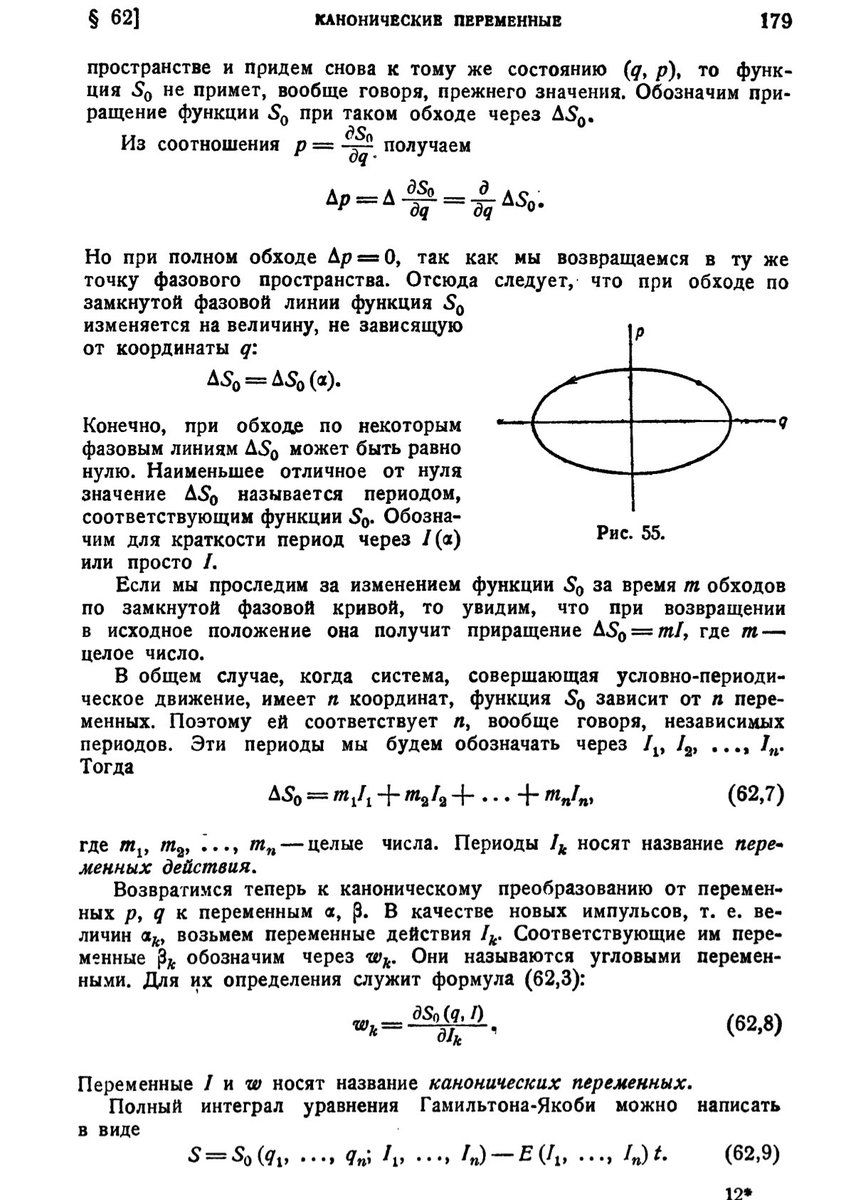
I have long heard about the first edition of Landau and Lifshitz volume 1 containing a serious error concerning integrability but had never seen it in print. ChatGPT dug it up for me and it's interesting to see that the mistake was worse than I thought - it wasn't just that Landau and Pyatigorsky assumed convergence of canonical perturbation theory, they somehow just assumed that the locally straightened-up canonical coordinate system can be extended globally to tori. The error was so embarrassing that Pyatigorsky was replaced as an author in the second edition. Ouch.
I want to clarify my thoughts on problem-solving in mathematics, and the potential consequences of AI for the field. For context, I’m quoting here my post in reply to Daniel Litt (who, echoing others, I find very clear, grounded, and insightful in his thinking).
The claim
The short version is that I think problem-solving is an immense, and pervasive part of modern mathematical research. Consequently, if human problem-solving disappears by virtue of the AIs becoming strictly and substantially better at it, then most of the time currently spent by modern mathematical researchers will have to be spent on an activity that is altogether pretty different. Whether such an activity is viable as a professional endeavour is something I am unsure of, but strongly encourage others to think about and try to envision, so that if/when the time comes, we can steer such a future into being.
Allow me to make this somewhat concrete: by problem-solving I mean questions of the form “is T true? If so find a proof. If not, find a disproof.” where T is a precise mathematical statement. I’ll also include “find an example of S, if there is one” where S is some structure (variety/category/property/isomorphism/….).
The argument
Ok. Now as I said (and some have echoed) I spend ~all of my time problem-solving as my primary goal. This has sub-goals, but my entire main research field disappears if someone solves the Zilber-Pink Conjecture in its more general form. This is a single conjecture (precisely stated!) and lots of mathematicians, postdocs, and graduate students are engaged in picking apart special cases of it, trying strategies, finding analogies to develop intuition, etc.. Of course, lots of motivation and intuition and analogizing and understanding have gone into deciding to make the ZP conjecture a focus! But the fact remains that this is now what is being worked on ~all of the time by this community. This is true of many mathematicians. They have a problem (or ten) and spend most of their time doing it. If someone solves it, they have to find a different problem. This can be a big, disorienting process involving a lot of energy, and is neither trivial nor always fun (though often rewarding in the end).
People have written a lot about Theory building vs. Problem-solving, and I want to first of all clarify I have nothing against theory building or theory builders! It is a valuable part of mathematics, and while there are differences in perspective between the “camps�� there is way more mutual respect and agreement.
However, I gather there is a perception that theory-builders spend most of their time not-problem-solving, and I think this is largely untrue. Now I’m not a theory-builder primarily (though I’ve partaken a LITTLE BIT by necessity) so I am outside of my comfort zone. As such, I apologize for mistakes and welcome corrections!
But theory-building constantly runs through problem-solving. Let’s say you want to define the right notion of a cohomology theory. Of course you must make candidate definitions. But then what does it mean for it to be the right one? Well, you start asking if it has natural properties. These are T statements. Does it satisfy a Kunneth formula? Is it functorial in the right way? When you have the wrong one you have to find the properties it’s missing, and when you have the right one you have to prove that it indeed has those properties.
Again, I am not saying nor do I believe that this makes problem-solving “real math” and theory-building lesser. I am just trying to draw attention to the way I think research mathematicians operate, and mathematics is practiced.
To put all this a different way, imagine you had access to an AI oracle that could resolve statements T, but somehow lacked any creativity to build technology or make definitions (I think this is unlikely, but for the purpose of this thought experiment lets imagine it). How would your mathematics change, if you were a theory builder? Well, you make a definition, and want to know if it’s the right one. You immediately ask your oracle a thousand questions. From “are these basic properties true” to “ooh, so is this deep conjecture true?” and start getting back answers, and amending your definitions. You could invent and resolve entire research directions in days. But the confusion you would have had to push through to flesh out your theory would largely (probably not entirely) be instantly resolved and the whole process sped up tremendously by your oracle. A big part of the process would be gone. This is very very different to modern mathematics.
One more thought
This post is too long already, but I’ve seen some people say that they only do mathematics to find truth and others valourize that as the only virtuous way to be. I do not do mathematics only to find truth. I do it largely because I enjoy it and I am good at it. I also find it beautiful and am grateful I get to spend my days understanding beautiful things. But I enjoy the challenge, the process, resolving confusions, finding strategies, grappling with problems. I would like to push for this being de-stigmatized. Mathematicians are people who need money, housing, food, love, exercise, and a great deal of other stuff including various forms of meaning.
There are many people whose primary enjoyment of math comes through problem solving in one of its incarnations. If that disappears, that is not a trivial issue and many of them might not want to do it anymore (even if there were some way to proceed).
This is quite a remarkable result:
Posed in 1939, the Jacobian conjecture is one of the central open problems in algebraic geometry, but was just disproved by Alpoge, Matthew, and Claude Fable 5.
The Jacobian conjecture roughly says that a multivariable polynomial F has an inverse function (made out of polynomials) provided the Jacobian is non-singular (i.e. matrix of partial derivatives has non-zero determinant). This condition is neccessary by the Inverse Function Theorem from multivariable calculus. The hard question is whether it is also sufficient.
Evidently, Fable found that
F(x,y,z) = ((1+xy)^3 z + y^2 (1+xy) (4+3xy), y + 3 x (1+xy)^2 z + 3 x y^2 (4+3xy), 2 x - 3 x^2 y - x^3 z)
has det(J_F) = -2 non-zero. However F is not invertible, since F sends three different pts (0, 0, -1/4), (1, -3/2, 13/2), and (-1, 3/2, 13/2) to the same image (-1/4, 0, 0).
Beyond the disproof itself, it would be value to know if a suitably refined conjecture is recoverable. Per @Acer, GPT5.6 has proposed:
"A constant-Jacobian polynomial local biholomorphism with no loss of sheets at infinity—e.g. a proper Keller map—is an automorphism."
I would be interested to know if any algebraists (e.g. @levent@littmath) have a reaction to this...
A further twist to the story:
Not only was the Jacobian conjecture one of the central open problems in algebraic geometry, it was (a special case of) Yitang Zhang's PhD problem!
The catch was that Zhang's advisor had him solve it, assuming a lemma of his advisor. But that lemma turned out to be false! As a result, Zhang's thesis crumbled and he then struggled to get recommendation letters and a permanent academic position. Despite all this, Zhang went on to prove bounded gaps between primes!
This is one of the most inspiring stories in modern mathematics, and was a motivation for me to work in the same area for my doctorate.
The nabla symbol, commonly used in math to represent the gradient of a function ∇f, is so-called because it looks like a harp and the Greek word for the Hebrew or Egyptian form of a harp is "nabla".
Ein echtes Kunstwerk bleibt, wie ein Naturwerk,
für unsern Verstand immer unendlich:
es wird angeschaut, empfunden;
es wirkt, es kann aber nicht eigentlich erkannt,
viel weniger sein Wesen, sein Verdienst
mit Worten ausgesprochen werden.
▪️Goethe
But if AI mathematics continues to progress at anything like its current rate -- which is what I expect to happen -- then we will face a crisis very soon, and mathematics departments, who owe a duty of care to their students, should be urgently preparing for it.
In the late 1830s, Karl Weierstrass dropped out of university. He is said to have spent his school years drinking and fencing. Decades later, he published a function that threatened everything mathematicians thought they understood about calculus. https://t.co/tMXyKuJIrC
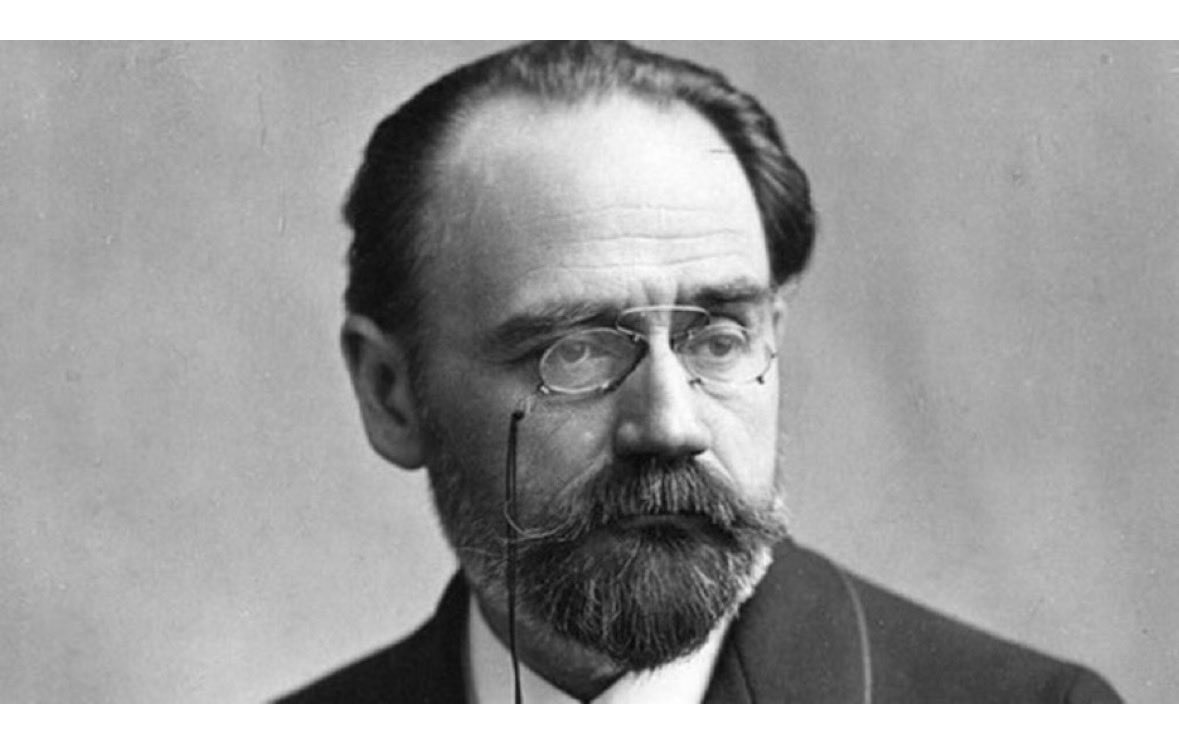
„Wir brauchen Bücher, immer mehr Bücher! Durch das Buch, nicht durch das Schwert, wird die Menschheit die Lüge und die Ungerechtigkeit besiegen, den endgültigen Bruderfrieden unter den Völkern erobern." Émile Zola
2. April 1840 - 29. September 1902
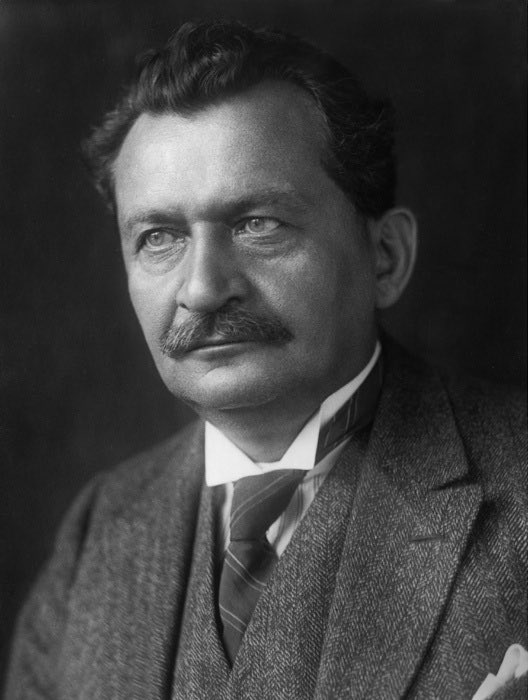
»Freiheit und Leben kann man uns nehmen, die Ehre nicht.. Kein Ermächtigungsgesetz gibt Ihnen die Macht, Ideen, die ewig und unzerstörbar sind, zu vernichten.«
SPD-Vorsitzende Otto Wels in seiner Rede gegen das »Ermächtigungsgesetz« 1933. Am 15. September 1873 wurde er geboren.
„Man sollte alle Tage wenigstens ein kleines Lied hören, ein gutes Gedicht lesen, ein treffliches Gemälde sehen und, wenn es möglich zu machen wäre, ein vernünftiges Wort sprechen.“
Johann Wolfgang Goethe,
geboren am 28. August 1749 in Frankfurt am Main.
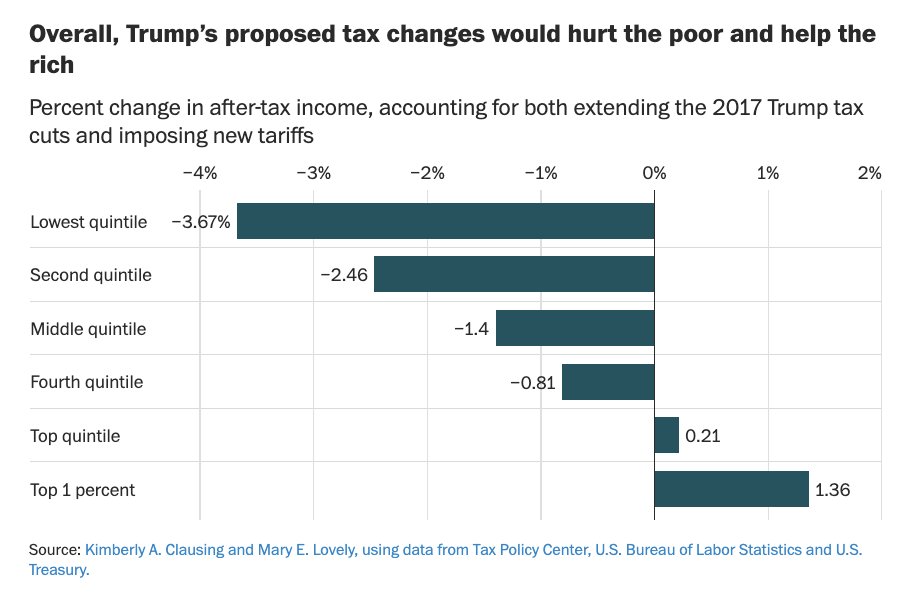
Trump's tax agenda would *raise* taxes on the poor & middle class, cut them for the wealthy.
Why is this not a bigger story?
https://t.co/5sTOYHnSAH
"Many seem persuaded that only a criminal jury verdict that Trump engaged in an insurrection beyond a reasonable doubt could legally keep him from applying for the job as president...This is another political argument rather than a serious legal one." https://t.co/3YLKLfRBNF
@RobertTalbert@AndrewENZ Also, sometimes the reason SETs are used even at teaching-centered institutions is because they may be required to be a part of faculty evaluation by either administration or even statute-in the case of public universities.
@RobertTalbert@AndrewENZ Robert, agreed. One reason why SETs are so widespread is because they are easy to administer. And being able to reify teaching into a single number give them an air of scientific objectivity that facillitate understanding of external "stakeholders".