It has been a pleasure connecting with you here, but this account is now inactive. But don't worry! We’ll still be sharing awesome NASA #CitizenScience news and opportunities on our new official account: @NASAScience_.
You can also keep in touch and stay in-the-know about all things NASA #CitizenScience by signing up for our #DoNASAScience newsletter. Sign-up instructions: https://t.co/L38pmhwSmE.
Can’t wait to continue connecting with you!
Just one week left until this account is sunset!
We encourage you to keep in touch and stay in-the-know with all things NASA #CitizenScience by signing up for our newsletter at https://t.co/L38pmhwSmE.
#DoNASAScience will continue making appearances on all our other awe-inspiring NASA accounts. Can't wait to see you there!
@Honey_Beat6 Hey there! That is definitely not the case. Just reorganizing a bit. We're excited to keep sharing awesome news with you, especially with regard to doing #NASAScience. 😃
Exciting changes ahead! We’ll be sunsetting this account over the coming weeks as we do some consolidating, but NASA #CitizenScience isn’t going anywhere! For continued access to our latest news, important announcements, and resources, please find the sign up link for our DoNASAScience newsletter here: https://t.co/L38pmhxqcc
Also, keep your eyes peeled! #DoNASAScience will continue making appearances on all our other awe-inspiring @NASA accounts. See you there!
We often ask the age-old question … what came first, the chicken or the egg? Regarding the cosmos, astronomers often wonder which objects formed first: galaxies or their central supermassive black hole.
Telescopes in Arizona and Hawaii are scanning the sky in search of small, rocky objects left over from the formation of our solar system – asteroids!
As part of the International Astronomical Search Collaboration, you’ll search fresh, time-lapse images from these telescopes to help search for moving objects.
Register to begin your asteroid-hunting adventure: https://t.co/JPp3Mz8fTM
These high school and college students collected/analyzed space weather data using a DIY radio telescope and presented at major conferences! Their work complements the SunRISE mission, which seeks to decode solar radio bursts – the intense solar emissions that disrupt technology here on Earth.
The project offers free training in radio astronomy, free or low-cost DIY telescope kits, and webinars with space science experts. Learn more: https://t.co/dSvtnURzJM
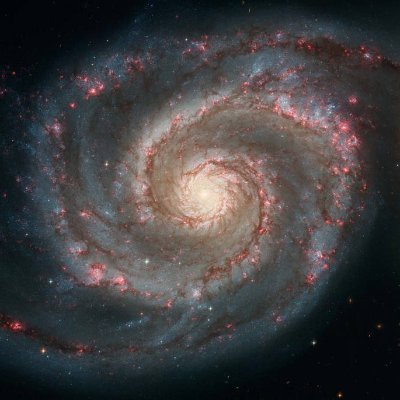
Making weekend plans? Put some science on your to-do list with the Galaxy Zoo project!🌌
Be among the first to glimpse galaxies from the early universe & help scientists classify galaxy shapes in @NASAWebb images.
Learn how you can @DoNASAScience: https://t.co/EDIN7zPFOQ
Ever find yourself gazing up at the blue sky and the clouds passing by – sometimes thin and wispy, other times thick and puffy, maybe in the shape of a duck, or a dragon, or a rocket ship?! Ever imagine lying down in your astronaut suit on the surface of Mars to do the same?
We’re not quite ready to make the trip, but thanks to Cloudspotting on Mars: Shapes, you can admire Martian clouds from here on Earth. Join the Cloudspotting on Mars: Shapes project, and you can help scientists identify distinct cloud shapes in the Martian atmosphere: https://t.co/zvH0NEJJsh
Join us in 1 week for the next GLOBE Observer Connect event, on 22 May 2025 at 12 PM ET (16:00 UTC). The conversation, led by Holli Kohl, GLOBE Observer coordinator and Kristen Weaver, GLOBE Observer deputy coordinator, will focus on the amazing impacts of the GLOBE Observer over the last 10 years. Learn more and register at https://t.co/j37llPK2r7!
Do THESE look familiar? 👇
If so, you could help @DoNASAScience!
Noctilucent, or night-shining, clouds are the world’s highest clouds, forming between about 47 to 53 miles up in Earth’s mesosphere. Their high altitude (and their ice-crystal composition) allows them to reflect sunlight from beyond the horizon, so they “shine” at night!
These exotic clouds usually form near Earth’s polar regions, but they're increasingly being spotted at midlatitudes. You could help us figure out why!
If you’ve captured photos of noctilucent clouds, share your photos with the new NASA-funded Space Cloud Watch project and help us crack this case: https://t.co/uMP7iAv2WD
Ever been sky-gazing just before dawn/after sunset and noticed a cloud that seems to shine with its own light? Launching today: NASA's Space Cloud Watch #CitizenScience project invites you to help reveal key insights about these rare night-shining clouds: https://t.co/Cq3DMhX7Ri
Attention 6th-12th grade teachers: You can #DoNASAScience with your students! As part of Growing Beyond Earth, your students will grow plants just like astronauts, and the data they collect will help future space travelers!
Info session: May 21st, 5pm ET. https://t.co/6IuKBcG7Rx
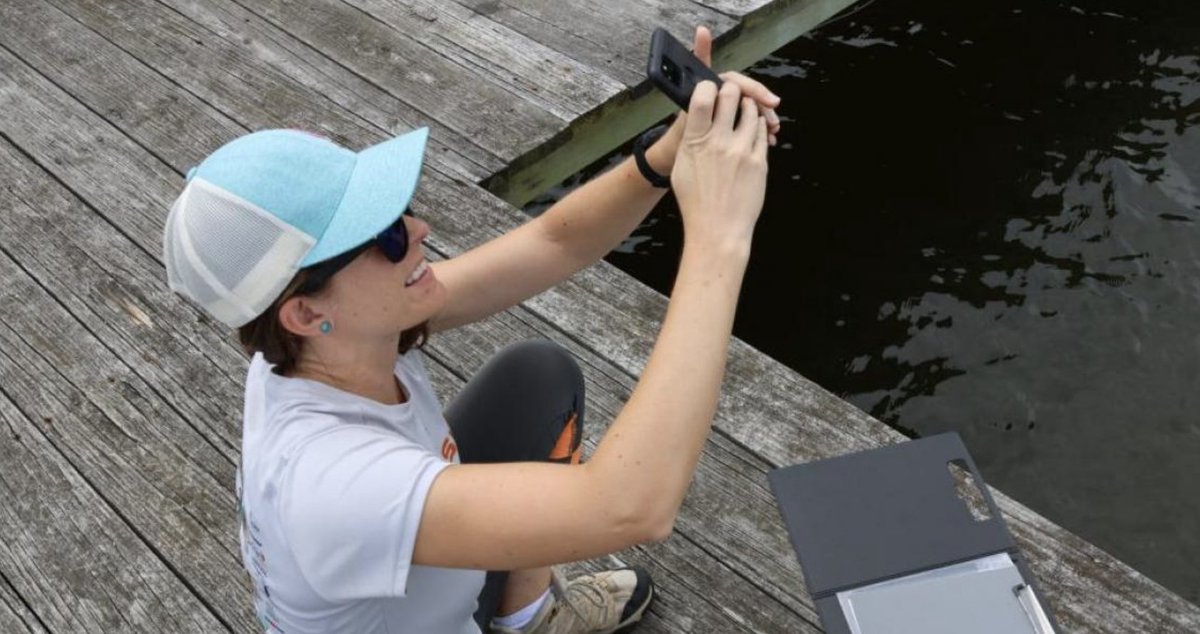
Need some outside time?☀️ With Chesapeake Water Watch, you can use your smartphone to collect water quality data on the #ChesapeakeBay. Your observations will complement NASA satellite data and help researchers monitoring the Bay's health. https://t.co/43A3y81Fsl
In the aurora chasing community, we celebrate how this beautiful phenomenon brings us together. Participants in this year's Winter Field School felt the same! Read their moving epiphanies in our latest blog post:
https://t.co/bjKYIfLrlR
How do wildlife respond to eclipses?
@DoNASAScience and the Eclipse Soundscapes project now have some answers! They’ll be sharing their findings in a free webinar tomorrow, May 7, at 2pm ET.
Register here: https://t.co/eHeRtMFZ15
During the April 8, 2024, total solar eclipse, citizen scientists across the country recorded bird sounds in their natural environment before, during, and after the total solar eclipse.
Together, participants:
- placed 383 audio recording devices
- recorded 45,960 total hours of audio
- collected 25 terabytes (!) of data
Can you guess some of their results? Try out the polls below – answers revealed after the seminar!
Some of NASA's groundbreaking research can only be done with the help of volunteers – like YOU!
A cell phone or computer, and your curiosity, are all you need to become a NASA citizen scientist.
Check out these volunteer success stories and learn more: https://t.co/jEg2BXcfO6 ✨
This NYC math teacher helped her students measure tree heights with the @GLOBEProgram GLOBE Observer app and became a published scientist along the way. 🌳📏 Read more about how she’s making a difference and inspiring the next generation of scientists: https://t.co/NmRB5gI0R2
From space weather to solar eclipses, ham radio operators are advancing science! 🎙️ The HamSCI community gathered in March for “HamSCI’s Big Year”, sharing research from around the world. Learn more & explore the talks + posters: https://t.co/Xv0x0mWV43