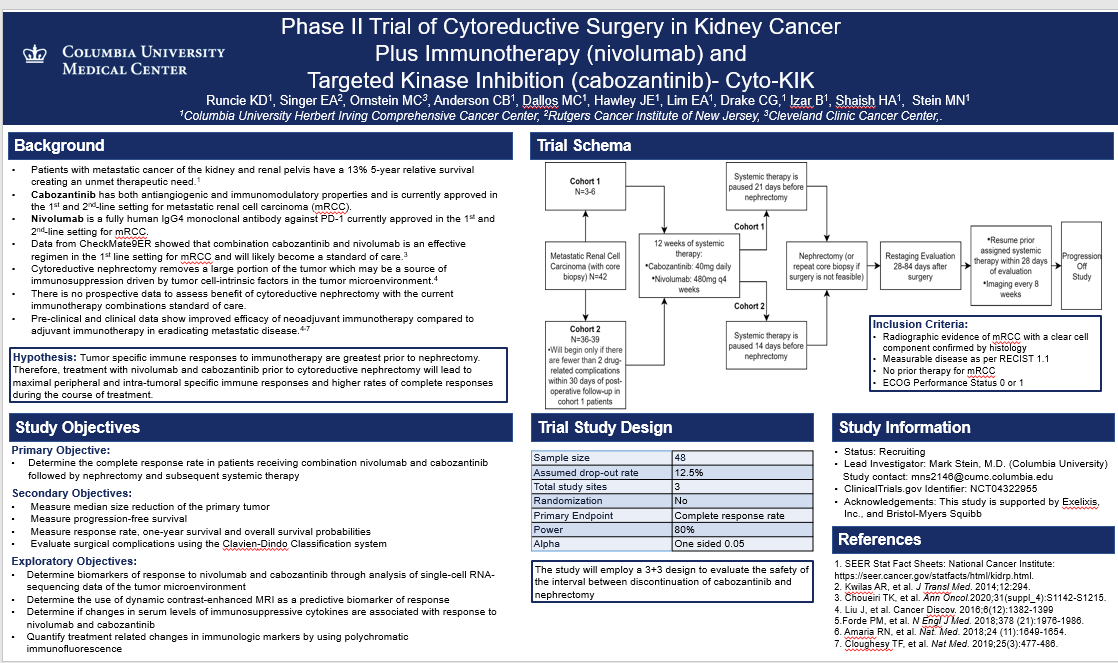
Lots of discussion @ASCO#GU21 about cytoreductive nephrectomy and the renal TME. Proud to share CYTOKIK trial in progress w cabozantinib/nivolumab before and after CN in pts w mcRCC
Radiographic progression without PSA progression: a major issue with a poor prognosis. Identified in two phase 3 trials in mHSPC and nmCRPC in setting of ADT/ARPI. Routing imaging thus recommended! https://t.co/LqPqcGFWKY @DukeCancer@DukeGUCancer@PCFnews@JCO_ASCO
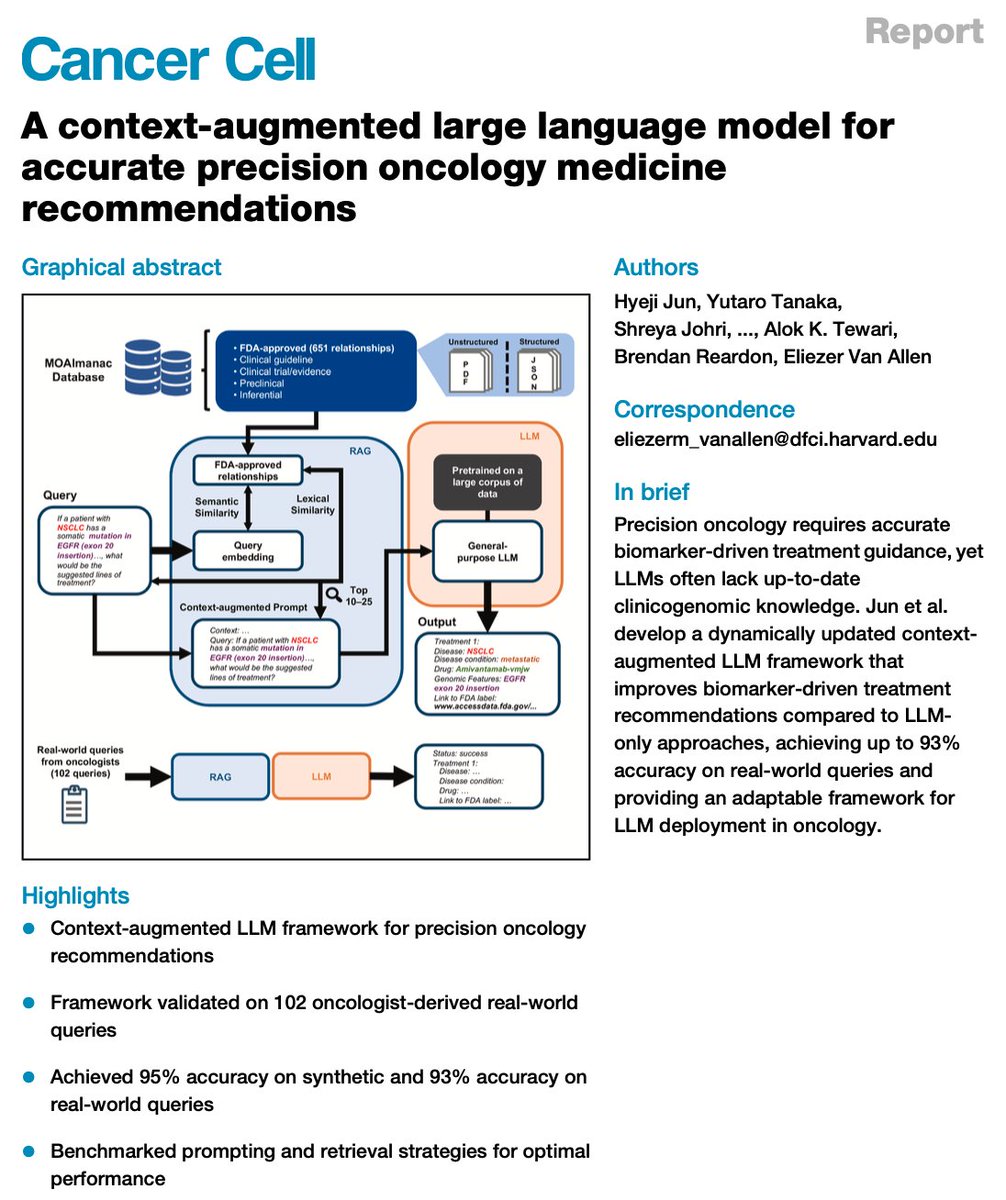
Here's our latest, where we explored how to augment LLMs with constantly evolving precision oncology knowledge (h/t @moalmanac), followed by collaboration with medical oncologists to test their queries - congrats Helena Jun, et al!
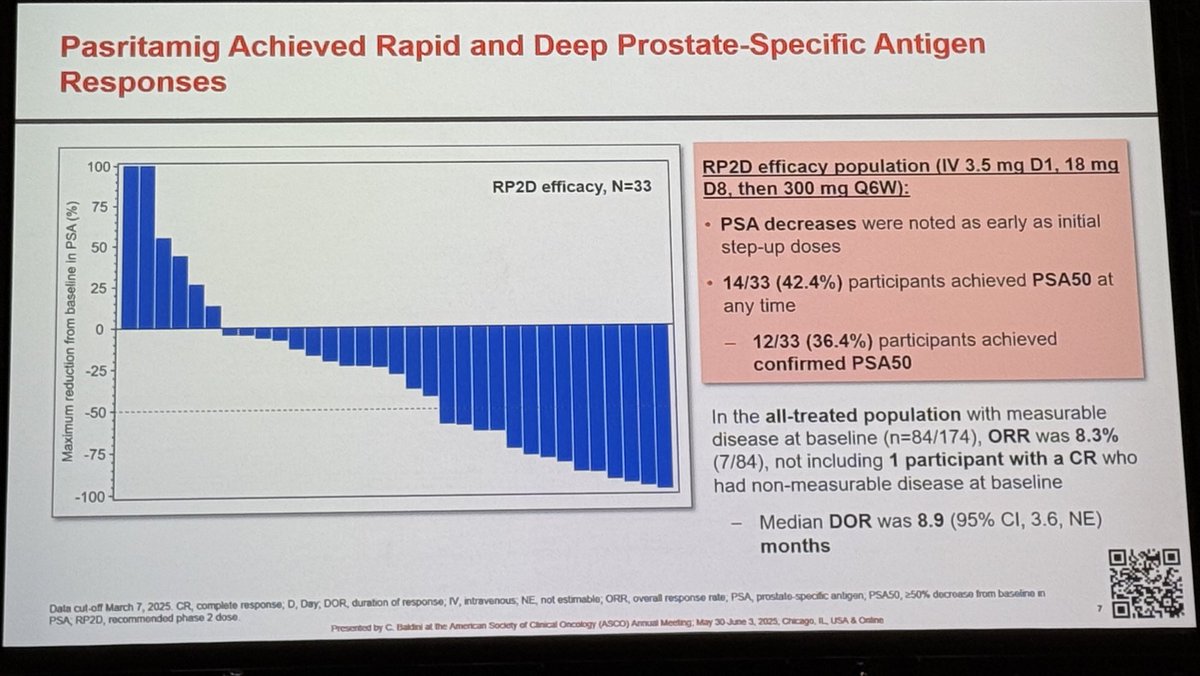
‼️A #clinicaltrial led by Dr. Mark Stein is showing remarkable results against aggressive prostate cancers. Even at low doses, the immune-stimulating drug pasritamig shrank tumors in many late-stage patients. @ColumbiaMed Read more ➡️ @JNJNews https://t.co/my0a14CxEz
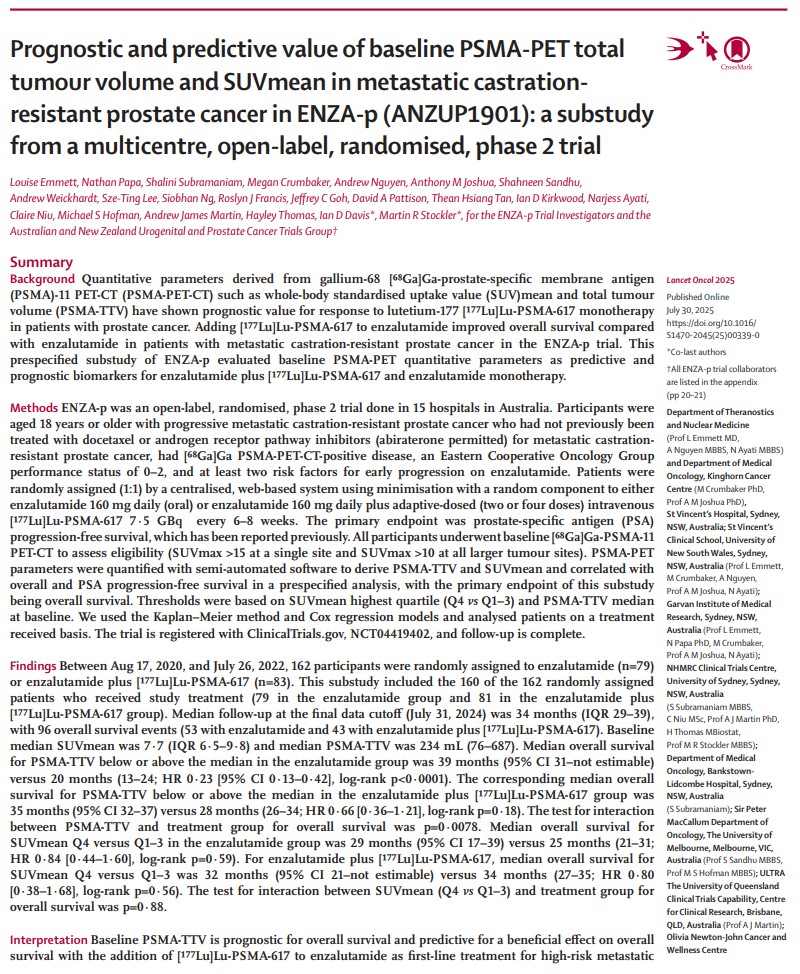
A new PET biomarker in men with high-risk metastatic castration-resistant prostate cancer. Total tumor volume prognostic for overall survival and predictive for benefit of Lu-177 PSMA-617.
Great data from @ANZUPtrials ENZA-P led by @drlouiseemmett
https://t.co/EQPiLiauPY~
Another 🇦🇺 @TheLancetOncol #theranostics
Excited to share a new paper: https://t.co/087iX9SkJd @CellCellPress: a framework to accelerate variant classification, diagnosis & treatment of immune disorders & genetic disorders more broadly. Led by superstar, juggernaut & future dermatologist @zwalsh96
Association of Homologous Recombination Repair Alterations With Outcomes in Patients with Metastatic Hormone-Sensitive Prostate Cancer
https://t.co/W55AfWVYFj
Research has shown that around 30% of advanced #ProstateCancer patients have Homologous Recombination / DNA Damage Repair (HRR) alterations (HRRalt), which have been linked to a poorer outlook in metastatic castrate-resistant prostate cancer.
This study, the largest of its kind, investigated the impact of HRRalt on patients with metastatic hormone-sensitive prostate cancer (mHSPC). Analyzing data from 637 U.S. patients, researchers found that those with HRRalt (28.4% of the group) had a significantly shorter time to castrate-resistance (TTCR) when treated with either an androgen receptor pathway inhibitor or a taxane, compared to patients without HRRalt.
While overall survival also trended less favorably in patients with HRRalt, these findings highlight the potential importance of HRRalt in mHSPC prognosis and could help guide future clinical trials and patient discussions.
@chadihcmd@RyonGraf@ziremozay@ggebraelmd@nsayeghmd@maughanonc@EAntonarakis@neerajaiims@umangtalking@OncoAlert@Silke_Gillessen@AOmlin@bavilima@nataliagandur
Pasritamig, a First-in-Class, Bispecific T-Cell Engager Targeting Human Kallikrein 2, in Metastatic Castration-Resistant Prostate Cancer: A Phase I Study
https://t.co/JwWSPVqNvL
This phase I trial of pasritamig, a novel bispecific T-cell–engaging antibody targeting KLK2 in metastatic castration-resistant #prostateCancer , demonstrated a manageable safety profile with mostly low-grade adverse events and minimal cytokine release syndrome.
Showed promising preliminary antitumor activity, including a 42.4% PSA response rate and a median radiographic progression-free survival of 7.85 months, supporting further clinical development.
@drmnstein@DebbieRobbrecht@DogerStart@MikeSchweizerMD@EmilianoCalvo_@meavdongen@DrDariaGaut
Ping @OncoAlert 🚨
@Silke_Gillessen@AOmlin@nataliagandur@bavilima
Phase I trial combines ONC-392 with Lutetium-177 for #ProstateCancer. David Wise, MD, PhD @nyulangone joins @TiansterZhang@UTSWMedCenter discussing this phase I trial of ONC-392 + 177Lu-PSMA, targeting Tregs to overcome resistance after lutetium therapy. Early results: safe, no added toxicity—aiming for deeper, longer-lasting responses. #WatchNow > https://t.co/PHY79ZdFCh
We found out last night that the study section scheduled to review our R01 resubmission was cancelled 24hrs before the review. We spent months conducting experiments, writing and revising this proposal for prostate cancer research that represents 4 years of work. @theNCI@NIH








![DrChoueiri's tweet photo. 📢 #ASCO25 | mCRPC Ph. I | KLK2×CD3 bispecific pasritamig: First-in-human (n = 174) shows PSA50 42.4%, median rPFS 6.8 m; G≥3 TRAEs 9.2%, no CRS > G1. by Dr. #CapucineBaldini from @GustaveRoussy et al. Full abstract → [https://t.co/yJgcuHCCxP]
@ASCO @ASCOPost @JCO_ASCO
@neerajaiims @montypal @bergsa83
@GlopesMd @VivekSubbiah @OncoAlert
@tompowles1 @OncBrothers @medicalwatchBC @yekeduz_emre
@CParkMD @Silke_Gillessen @PGrivasMDPhD
@TwoOncDocs @OncBrothers @Larvol @nataliagandur @crisbergerot @DrDanielHeng
@TiansterZhang @HammersMD @sonpavde @drenriquegrande @scserendipity1
@BraunMDPhD @Uromigos @AminNassarMD
@ZiadBakouny @DrRanaMcKay @NazliDizman](https://pbs.twimg.com/media/GsZCvoYWMAEY9bE.jpg)
![DrChoueiri's tweet photo. 📢 #ASCO25 | mCRPC Ph. I | KLK2×CD3 bispecific pasritamig: First-in-human (n = 174) shows PSA50 42.4%, median rPFS 6.8 m; G≥3 TRAEs 9.2%, no CRS > G1. by Dr. #CapucineBaldini from @GustaveRoussy et al. Full abstract → [https://t.co/yJgcuHCCxP]
@ASCO @ASCOPost @JCO_ASCO
@neerajaiims @montypal @bergsa83
@GlopesMd @VivekSubbiah @OncoAlert
@tompowles1 @OncBrothers @medicalwatchBC @yekeduz_emre
@CParkMD @Silke_Gillessen @PGrivasMDPhD
@TwoOncDocs @OncBrothers @Larvol @nataliagandur @crisbergerot @DrDanielHeng
@TiansterZhang @HammersMD @sonpavde @drenriquegrande @scserendipity1
@BraunMDPhD @Uromigos @AminNassarMD
@ZiadBakouny @DrRanaMcKay @NazliDizman](https://pbs.twimg.com/media/GsZCvoTWgAEctVJ.jpg)
![DrChoueiri's tweet photo. 📢 #ASCO25 | mCRPC Ph. I | KLK2×CD3 bispecific pasritamig: First-in-human (n = 174) shows PSA50 42.4%, median rPFS 6.8 m; G≥3 TRAEs 9.2%, no CRS > G1. by Dr. #CapucineBaldini from @GustaveRoussy et al. Full abstract → [https://t.co/yJgcuHCCxP]
@ASCO @ASCOPost @JCO_ASCO
@neerajaiims @montypal @bergsa83
@GlopesMd @VivekSubbiah @OncoAlert
@tompowles1 @OncBrothers @medicalwatchBC @yekeduz_emre
@CParkMD @Silke_Gillessen @PGrivasMDPhD
@TwoOncDocs @OncBrothers @Larvol @nataliagandur @crisbergerot @DrDanielHeng
@TiansterZhang @HammersMD @sonpavde @drenriquegrande @scserendipity1
@BraunMDPhD @Uromigos @AminNassarMD
@ZiadBakouny @DrRanaMcKay @NazliDizman](https://pbs.twimg.com/media/GsZCvoQWgAAqQbD.jpg)









![DrChoueiri's tweet photo. 📢 #ASCO25 | mCRPC Ph. I | KLK2×CD3 bispecific pasritamig: First-in-human (n = 174) shows PSA50 42.4%, median rPFS 6.8 m; G≥3 TRAEs 9.2%, no CRS > G1. by Dr. #CapucineBaldini from @GustaveRoussy et al. Full abstract → [https://t.co/yJgcuHCCxP]
@ASCO @ASCOPost @JCO_ASCO
@neerajaiims @montypal @bergsa83
@GlopesMd @VivekSubbiah @OncoAlert
@tompowles1 @OncBrothers @medicalwatchBC @yekeduz_emre
@CParkMD @Silke_Gillessen @PGrivasMDPhD
@TwoOncDocs @OncBrothers @Larvol @nataliagandur @crisbergerot @DrDanielHeng
@TiansterZhang @HammersMD @sonpavde @drenriquegrande @scserendipity1
@BraunMDPhD @Uromigos @AminNassarMD
@ZiadBakouny @DrRanaMcKay @NazliDizman](https://pbs.twimg.com/media/GsZCvpmXYAE198h.jpg)