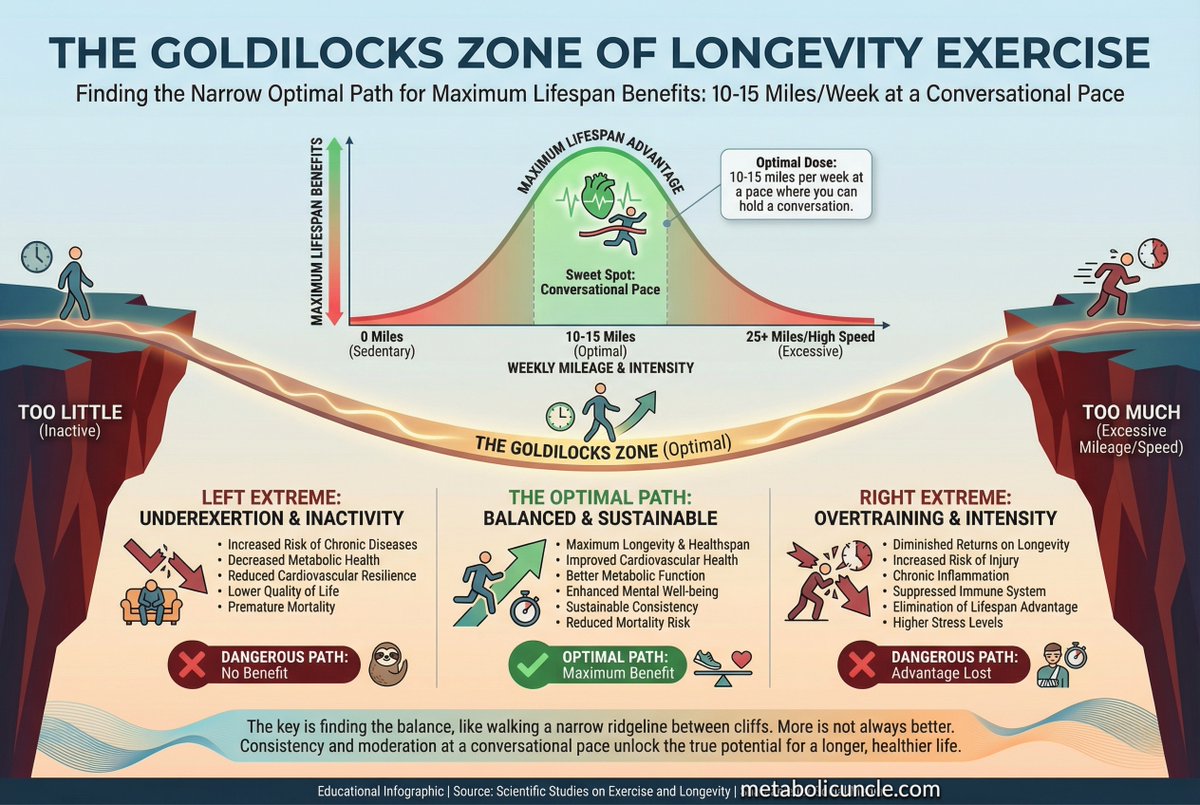
Why Marathon Training is Shortening Your Life
Your heart isn't built for chronic punishment. The same cardiovascular stress that makes you endure pain and suffering for longer can also make you vulnerable.
Exercise saves lives. That's undisputed. But chronic high-intensity training creates a paradox: veteran endurance athletes show elevated coronary calcification, atrial fibrillation rates five times higher than sedentary people, and myocardial scarring typically seen in cardiac patients.
The mechanism is straightforward. During sustained hard efforts, your heart pumps five to six times its resting volume. After 60 minutes, this mechanical stretch overwhelms adaptation capacity.
Adrenaline spikes, free radicals accumulate, and microscopic tears appear in cardiac tissue. Do this once, it heals. Do this weekly for years, scar tissue accumulates.
Studies of marathoners completing races show over half have elevated troponin levels, a cardiac injury marker cardiologists associate with heart attacks. These are micro-tears from mechanical stress. Repeat exposure causes chamber dilation, wall thickening, and permanent fibrosis.
The data is clear. A 52,000-person study tracked runners for 30 years. Runners who covered 5 to 20 miles weekly at a comfortable pace lived 19% longer than non-runners. Those exceeding 25 miles weekly or running faster than 7.5 mph pace saw benefits disappear entirely. Running seven days per week eliminated longevity gains.
A separate Copenhagen study found moderate joggers lived six years longer than sedentary controls, but extreme exercisers showed no advantage. The relationship mirrors alcohol consumption, a U-shaped mortality curve where both extremes increase risk.
Peak fitness on a treadmill test occurs around 7 to 7.5 mph. Beyond that threshold, further cardiovascular conditioning provides no additional mortality benefit.
The plateau is real.
Marathoner autopsies reveal enlarged, scarred hearts. One legendary ultrarunner died at 50 during a routine 12-mile run. His autopsy showed idiopathic cardiomyopathy, likely accumulated damage from decades of extreme training.
A Minnesota study found 25-year marathon veterans had 62% more coronary plaque than sedentary controls despite better traditional risk factors.
Animal studies offer hope. Mice run to exhaustion daily for four months developed the same cardiac pathology. When training stopped, hearts normalized. Fibrosis reversed. Electrical instability resolved.
The prescription is simple. Walk daily, as much as possible. Run or perform vigorous exercise 15 to 40 minutes, two to five days weekly, at a conversational pace around 10-minute miles. Your peak heart rate during brief intervals is fine. Sustained Zone 4 or 5 efforts are not.
Humans evolved for intermittent intensity followed by recovery. Persistence hunting required stamina, not speed. Modern endurance culture mistakes suffering for progress. Your heart needs pulsatile stress, work followed by genuine rest, not perpetual inflammation.
The moderate exerciser lives longest. Not the sedentary person, not the Ironman finisher. The person who moves daily and occasionally pushes hard, then backs off.
Combine walking, easy zone 2 activities (swimming, biking, running, rowing) with repeated sprint interval training and you are doing the optimum.
You don't need to suffer or learn to sustain pain to be fit. You don't need to aim for a VO2 max beyond 45 to live long.
@genieinabattIe @drunkasalord73 เราไม่ปฏิเสธค่ะว่าเราใช้ AI ในการช่วยเรียบเรียง ทีมงานเราไม่ใช่นักเขียนตามสำนักพิมพ์ เลยอาจจะมีจุดที่ตกหล่นและยังดูแข็งอยู่บ้าง
ใน X อาจจะดูแข็งกว่า FB ด้วยค่ะเพราะเราตั้งต้นทำบทความหลักและให้ AI ช่วย ตัดทอนเป็น Version X อีกทีนึง
Feedback from other people is fake. Awards are fake. Critics are fake.
Real feedback comes from free markets and nature.
Did your rocket launch?
Did your drone fly?
It’s impossible to fool Mother Nature.