2022 update:
1. Python Django (APIs and monolithics)
2. Node.js (APIs, Scripts)
3. Hugo (Static Websites)
4. React and Next.js (Frontends)
5. Vue.js (quick interactive frontends on top of static/Django sites)
6. Bootstrap and Tailwind for CSS
7. PostgreSQL and MySQL.
Faith in eventually.
Making something new takes patience. But it also takes faith. Faith that everything will work out in the end.
During the development of most any product, there are always times when things aren’t quite right. Times when you feel like you may be going backwards a bit. Times where it’s almost there, but you can’t yet figure out why it isn’t. Times when you hate the thing today that you loved yesterday. Times when what you had in your head isn’t quite what you’re seeing in front of you. Yet. That’s when you need to have faith.
There are designs that are close, but not there yet. There are obvious conflicts that will need to be resolved. There are lingering things that confound you, confuse you, or upset you, but you know that eventually they’ll work themselves out. Eventually you’ll find the right way to do something you’ve been struggling with.
It’s hard to live with something that isn’t quite right yet – especially when it’s your job to get it right. It’s important to know when to say “it’s fine for now, but it won’t be fine for later.” Because moving forward is critical to getting somewhere. And, eventually, you’ll figure it all out. It’ll all work out in the end.
This is what I’ve always believed, and have always tried to practice. A dedicated faith in the eventual resolution of a problem, the eventual execution of a concept, and the eventual realization of the right design. Even when something’s poking out you don’t like, or something isn’t aligning quite right, or the words aren’t as elegant as you’d hoped, or something just isn’t easy enough yet, you need to have confidence it’ll all come together eventually.
Remember that what you’re making is in a perpetual state of almost right up until the end. And it's never right even after.
In the meantime, you just press on and keep making things, trying things, and getting closer and closer to the time when you can tie the loose ends into a perfect bow and present it to the world. What fun it is!
At this point, this is just irresponsible.
Yes, coding agents are leading to an increase of software production, but we are not seeing a similar push or increase in software quality.
If Anthropic focuses on safety and it believes software engineering is going away, then it needs to be doing much more to improve how we design, build, test, and maintain software (aka software engineering). Increasing the production of unreliable, poorly designed, and unverified software directly undermines safety.
Claude Code is claimed to be "fully written by AI". In the last two months, it took three separate postmortem-worthy failures and user complaints to surface what their own testing missed. Yesterday users were being over billed by hundreds of dollars. Software engineering isn't ready to go away and there is not enough progress to argue that case.
I am certain Anthropic would argue that AI progress in other domains is strongly dependent on having proper safeguards in place. I can't wrap my head around the cognitive dissonance when it comes to software.
PS: Mythos (may) improve software security, but that is only a subset of safety.
Zed has raised a $32M Series B, led by @Sequoia.
We’re full speed ahead making a great editor, but there’s a bigger picture: we're building DeltaDB, a new kind of database for collaborative coding.
Early days, but the vision is clear: https://t.co/flEYYMxwWh
Proving that @elonmusk 's theory that Stealth Fighters can be tracked with cheap cameras is correct by using a brand new technique that I made to detect asteroids by precisely tracking planes better than any current radar with just three $30 web cams.
Five neural nets, achieving completely local voice AI, no internet, on an M1 with only 16GB ram.
Neural-based voice activity detection and turn detection means it's interruptible, but never interrupts me, and is able to sit idle and waiting. It's been flawless so far.
12B parameters is definitely smart enough for some very cool use-cases (will share more later).
Computers that can "think" feel strangely alive compared to dumb or networked hardware.
Fast? No. But crazy that it works at all on such a modest machine.
The stack:
- Silero VAD voice activity detection
- Whisper Large v3 turbo
- Smart Turn v2 by @trydaily
- Kokoro_tts
- Gemma_3_12B_it_QAT_Q4 rock-solid on @lmstudio
- vision easily removed thx to gguf @ggerganov
- @pipecat_ai integration by @kwindla
We've just delivered a 100x write performance bump with our latest release of Electric. How? We threw away our storage engine and built a new one designed for sync 🧵
https://t.co/TJg3ypAG0y
Long-lived environments like Dev, QA, or Staging are the *opposite* of continuous delivery.
These environments lead to batching work, create coordination overhead, delay inspection, and slow the path to prod.
Solution: Shift left. Test & approve code *before* merge, not after.
Meet Google Sans Code — the new font meticulously crafted for coders, made by @Google! It blends geometric precision with a touch of calligraphic flair in a fixed-width design that's super easy to read, even at tiny code editor sizes. Say goodbye to squinting and hello to clear, beautiful code! ✨
How does GLM-4.5's agentic coding stack up?
We benchmarked it against Claude Sonnet 4, Kimi K2, and Qwen3-Coder across 52 real-world tasks using multi-round human evaluation. We're also open-sourcing all 52 task trajectories for community review. Dive into the data: https://t.co/PX5WoWzo22
Start building with GLM now: https://t.co/dBJ9KU9Kyk
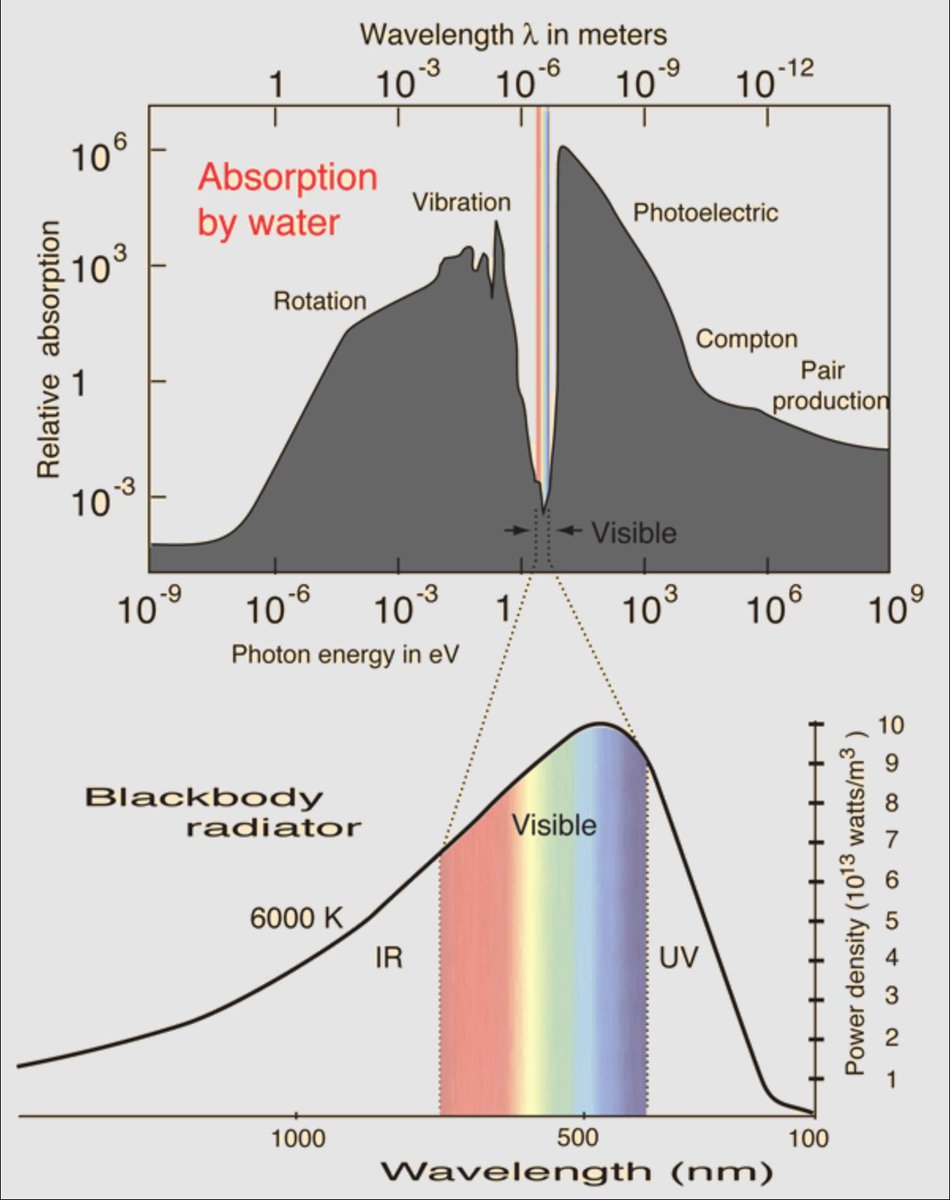
'water is transparent only within a very narrow band of the electromagnetic spectrum,
so living organisms evolved sensitivity to that band, and that's what we now call "visible light". '
(found via HN)