Assoc prof. @Yale_LabMed, @YaleIBIO, @YaleMed. Studying host-virus interactions, human immunology for better diagnosis, treatment, prevention. Opinions my own.
Rhinoviruses cause common colds & asthma attacks but are also often benign. Our latest paper delves into why--check it out at https://t.co/FapOsIrYcE Kudos to first author Bao Wang and team members @JulienAmat1, Valia Mihaylova, Yong Kong, & Guilin Wang @YaleMed@Yale_LabMed@YaleIBIO
Many thanks to Jeff Meeusen, PhD, of @MayoClinic & @MayoClinicLabs, for presenting today’s Laboratory Medicine Grand Rounds. Here is Dr. Meeusen, right, with his host, @ClinChemJoe, Professor of Laboratory Medicine @YaleMed
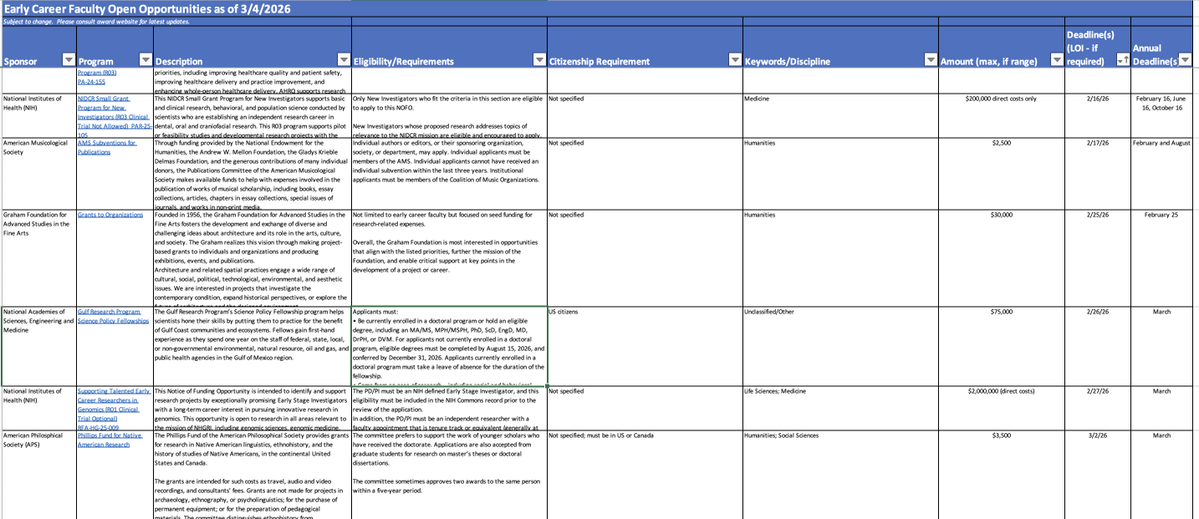
Here is our updated database of grants for early careers researchers in all fields.
It goes way beyond traditional NIH and NSF funding opportunities. We list 428 types of grants.
Download it here: https://t.co/RGXGrdp2uf
Featured Article: Microbiome signature of health
Global analysis of 11,000 microbiomes reveals uncultured bacteria as markers of gut health. Uncultured genus CAG-170 linked to low dysbiosis & vitamin B12 production & plays ecological roles in healthy gut
https://t.co/BAPQtqvPUA
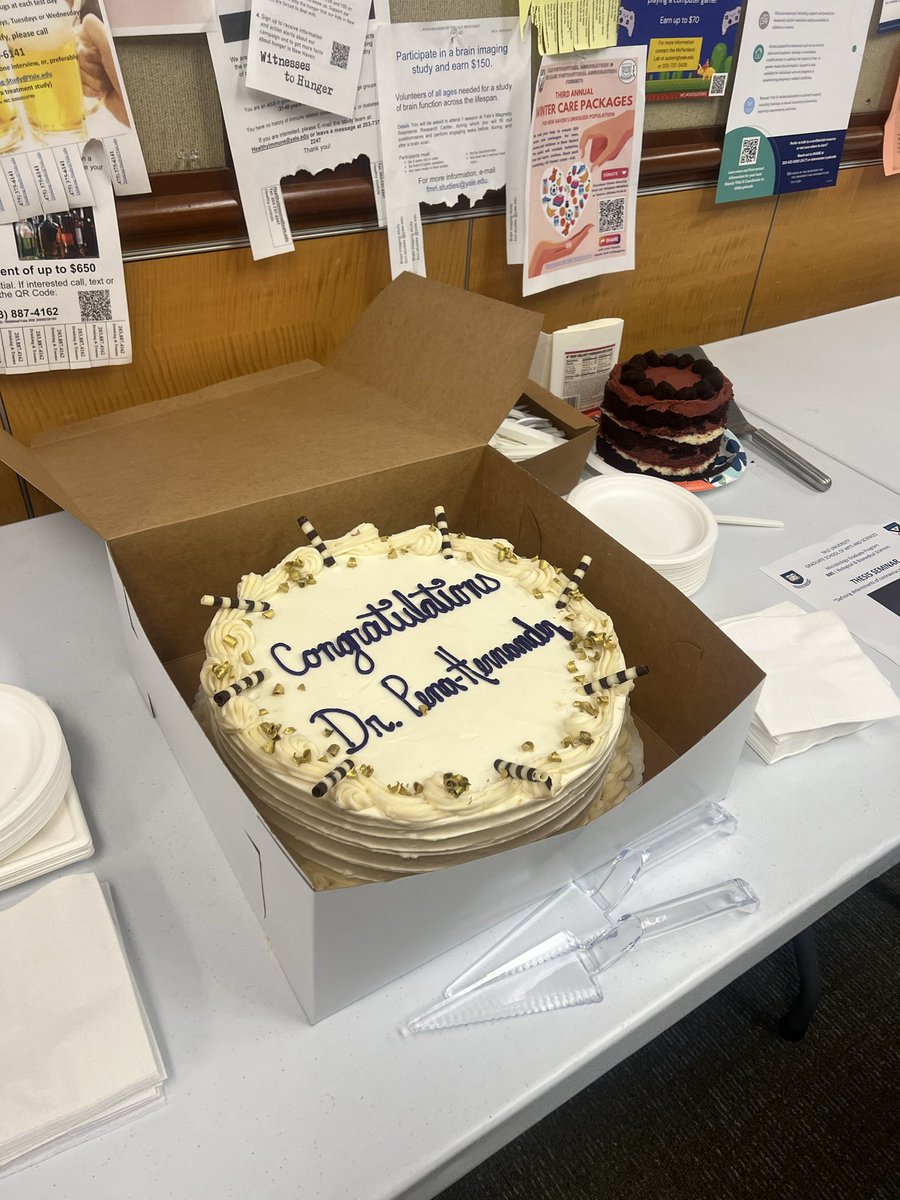
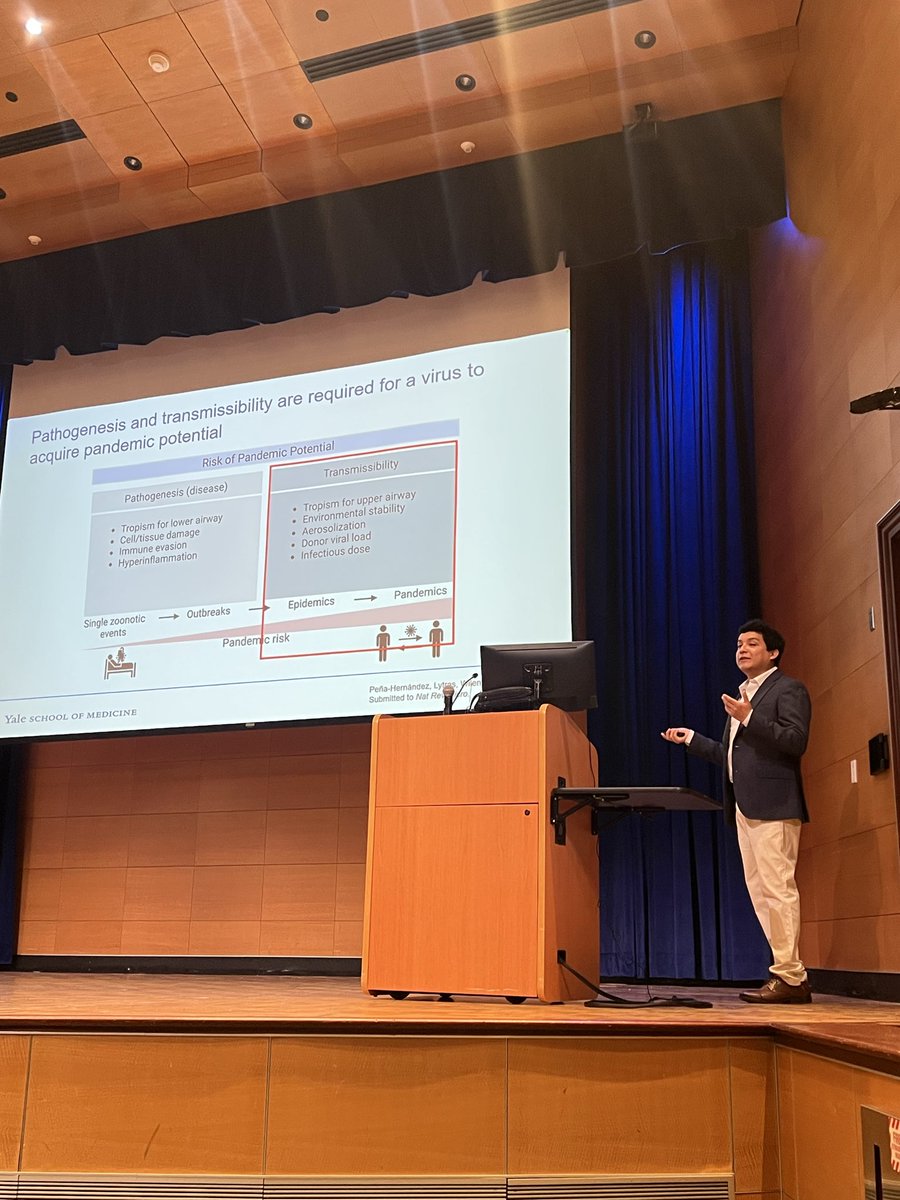
Congratulations to Dr. Pena-Hernandez @marioph13 on his outstanding thesis defense today! We couldn’t be more proud! Both the Wilen and Iwasaki labs will miss you. @VirusesImmunity@Yale_LabMed@YaleIBIO
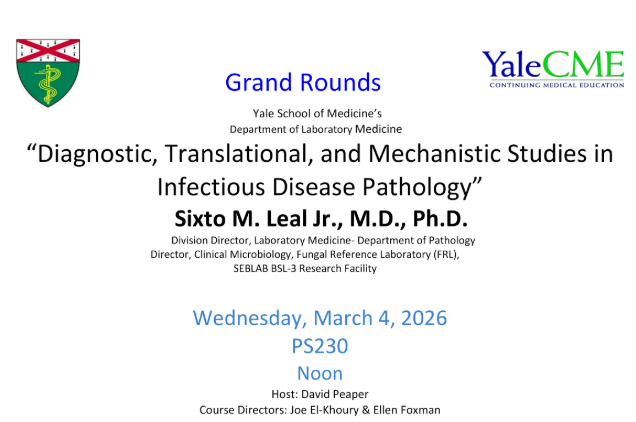
Join us for Lab Med Grand Rounds @YaleMed on Wed., March 4 at 12 PM ET as Sixto Leal, Jr, MD, PhD, Division Director, Laboratory Medicine @UABPathology, presents on “Diagnostic, Translational & Mechanistic Studies in Infectious Disease Pathology" https://t.co/g14TAcfChW
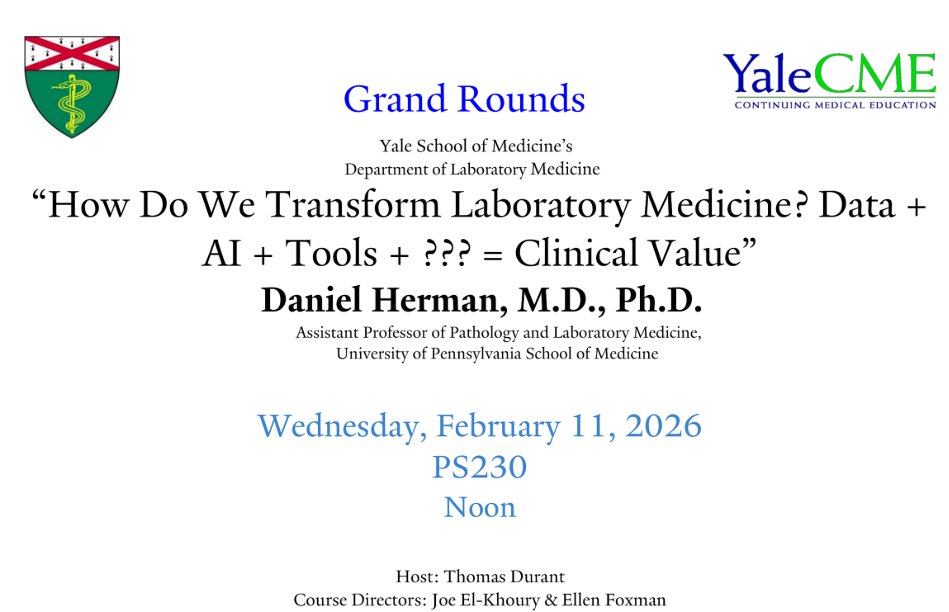
Join us for Laboratory Medicine Grand Rounds on Wed. Feb. 11, 2026 at 12 PM ET as Daniel Herman, MD, PhD of @PennPathLabMed presents on, “How Do We Transform Laboratory Medicine? Data + AI + Tools + ??? = Clinical Value” @YaleMed https://t.co/FfaKtbKTE7
A new infographic describes how NIAID CEIRR-funded investigators conduct multidisciplinary & collaborative research surveillance projects to assess risk and investigate how influenza viruses infect, evolve, and spread in humans and animals. Read more here: https://t.co/8OEr0cu5Pu
Dr. Diane Krause @Krauselab_Yale was presented with the @YaleCancer Basic Science Research Award for her research identifying new and promising targets for future treatments in patients with acute megakaryoblastic leukemia. #AMKL https://t.co/wJgTDnHo5n @BloodPortfolio
Many thanks to Brad R. Rosenberg, MD, PhD, Associate Professor in the Department of #Microbiology at @IcahnMountSinai, for presenting today’s Lab Med Grand Rounds. Here is Dr. Rosenberg, right, with his host Craig Wilen, MD, PhD, of @WilenLab & @YaleMed
Emily Siniscalco, Courtney Fisher, Meng-Ping Lu, @StephanieEisen, @UGowthaman83 et al. reveal that DOCK8 and STAT3 cooperate in CD4⁺ T cells to restrain Tfh13 differentiation and prevent food-specific IgE. https://t.co/kfURYe7NtP
#LymphocyteBiology#MucosalImmunology
Thank you to Bob McDonald for hosting me on @CBCRadioCanada to discuss our work @YaleMed@Yale_LabMed on reasons for variation in common cold virus infections and how we studied this using nasal organoids. Listen here: https://t.co/NxuunpB1vV
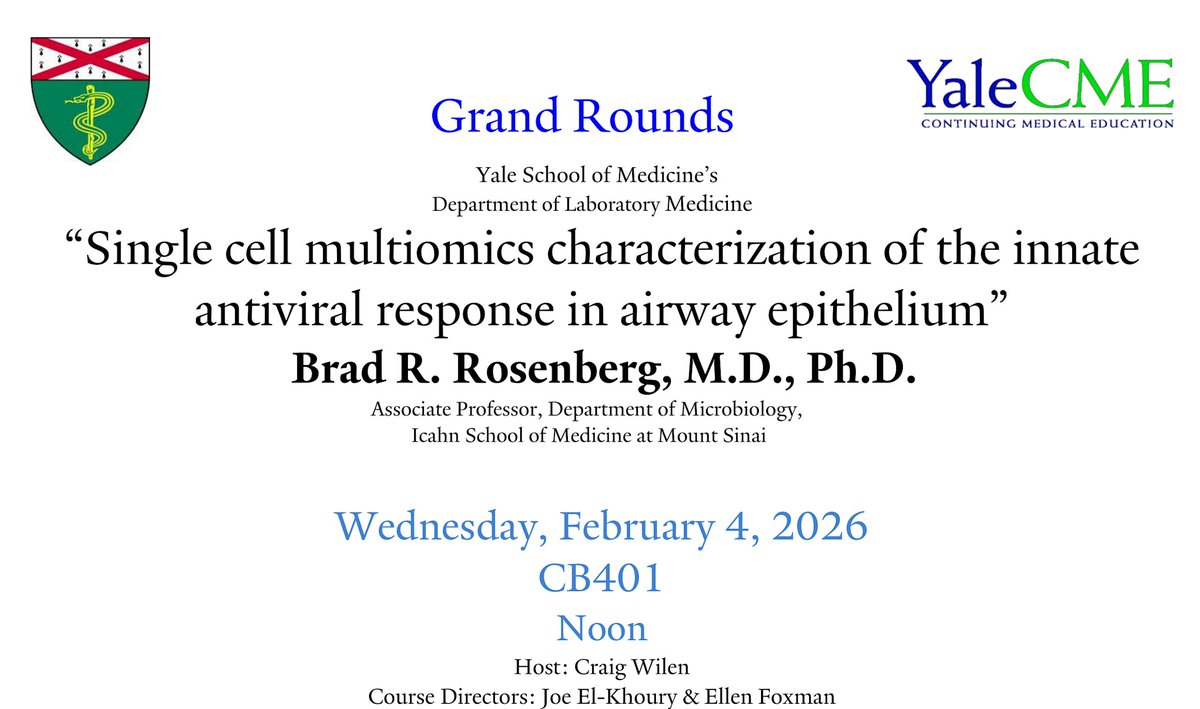
Join us for Laboratory Medicine Grand Rounds on Wednesday, Feb. 4 at 12 PM ET as Brad R. Rosenberg, MD, PhD, Associate Professor in the Department of Microbiology @IcahnMountSinai, presents. @YaleMed https://t.co/QxTs4OpsPS
Excited to see this beautiful image of human nasal organoids from @JulienAmat1 and Bao Wang featured as biomedical image of the day from @CellPressNews
Response to rhinovirus depends on levels of interferon production & viral load – differences revealed using a nasal organoid
📷 Julien Amat & Bao Wang, relating to Bao Wang et al article @YaleMed in @CellPressNews Blue
➡️ https://t.co/eBqZJU0KiW with @rooph
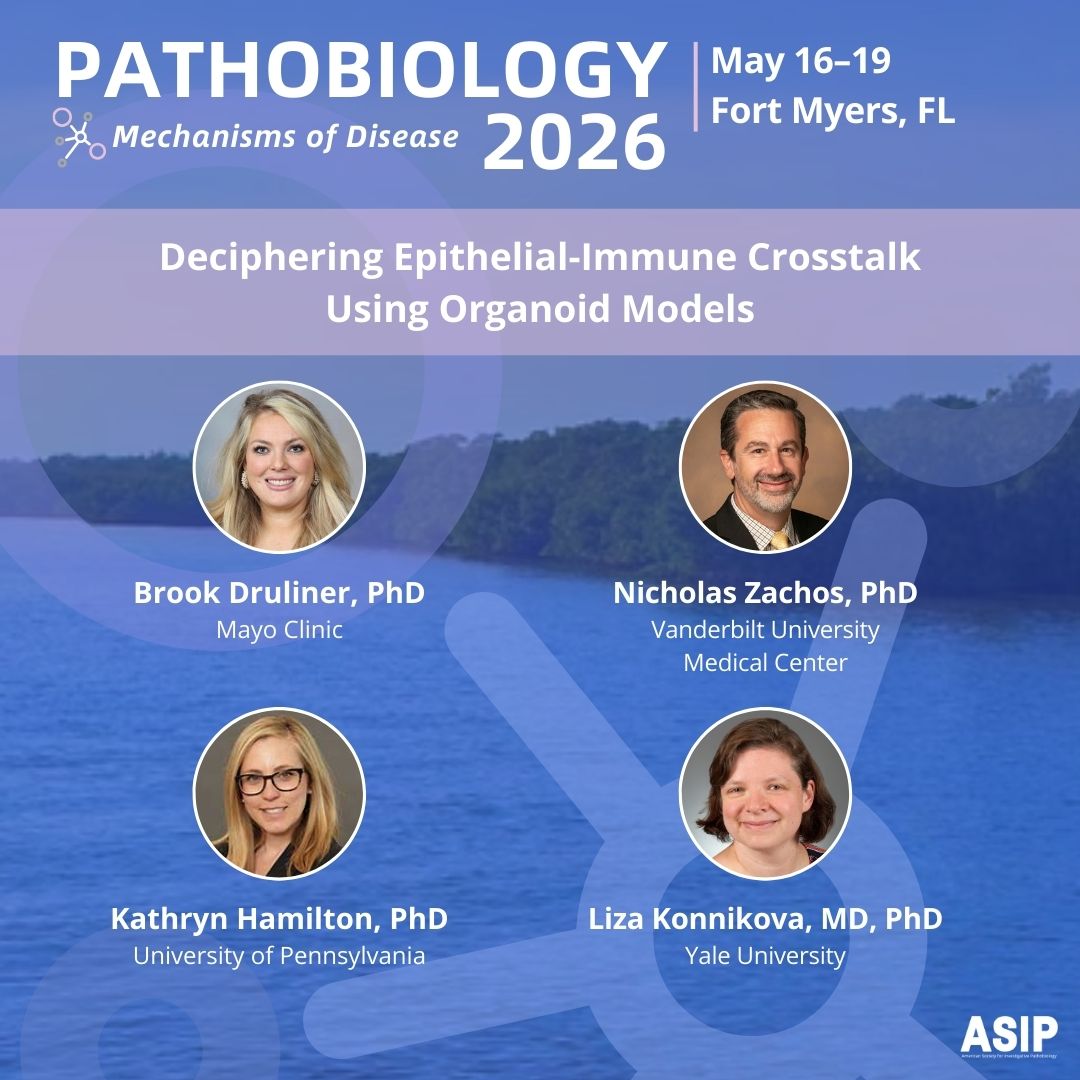
I am excited to be speaking at #Pathobiology2026, hosted by the ASIP this spring in Fort Myers, FL! If you have new research to share, there is still time to submit an abstract https://t.co/U3iQxi6D5I
#InterferonFriendsOrFoes? Another cool one @EllenFoxman &friends out @PLOSBiology about how excessive #IFNs delay repair by activating LATS & degrading YAP/TAZ in the Hippo 🦛 pathway! https://t.co/TxDXxNbYU7 👇👇👇
Happy to share our new paper @PLOSBiology on crosstalk between interferons and tissue repair. IFNs are critical for antiviral defense but excessive production is linked to delayed recovery. We found that at high concentrations, IFNs co-opt the downstream portion of the Hippo developmental signaling pathway to curtail epithelial repair and regeneration. Huge congrats to first author @krupa_subs and co-authors @YaleMed@Yale_LabMed@YaleIBIO
https://t.co/BxxW62kOKg