It was a special day to finally meet everyone at the Centre! I look forward to starting more interdisciplinary RNA+neurodev research with my sponsors and collaborators!
Congratulations Flora Lee on being awarded a 5 year @wellcometrust Early Career Award! Today is her first day at the CDN. She will be working with @L_andreae looking at synaptic mRNA dysregulation in neurodevelopmental disorders.
Our paper on the origin and properties of elusive 3' UTR-derived capped mRNA fragments is out.
Great work by @NejcHaberman in collaboration with @AidaMartinezS, @TheSibleyLab, @GroupLenhard .
https://t.co/GuH5hfQsVh
🎉Excited to announce that our paper on the blueprint of the human spliceosome is now out in @ScienceMagazine ! A decade of work with Juan Valcárcel and the incredible team at @CRGenomica to uncover the intricate roles of this essential RNA machinery.https://t.co/azZ4aSlD3s
Excited to report our study in @NEJM on the discovery of deletions in a long noncoding RNA gene 🧬 (𝘊𝘏𝘈𝘚𝘌𝘙𝘙) as the cause of a newly defined human neurodevelopmental disorder 🧠. 🧵1/10 https://t.co/a0V99Xqjaw
Thrilled to share our latest manuscript on smOOPs, a highly interconnected class of condensation-prone mRNAs with signs of coordinated regulation, encoding functionally related proteins. Shoutout to the incredible team @IraIosub, Jona & @KlobucarTajda. https://t.co/7m80OqIVTl
📣 If you are interested in #RNA#Splicing using long or short #RNASeq check out our recent paper on combining and contrasting short and long reads for this https://t.co/zDsTkkDk1a - we think there are some important lessons for where/how you invest time/💰 🧐and...
🚨 Check out our new preprint “An intrinsically disordered RNA-binding region provides local target selectivity and is essential for LARP6 function”, out now on bioRxiv:
https://t.co/NXqwRlASVD
A fun joint project with Conte’s lab @KingsCollegeLon.
@QMBCI@BiochemOxford (1/10)
Our review discussing the diversity of RNA types that localise to different parts of the neuronal periphery and the local regulation they undergo has just been published! 😃😃 @nikolas_neuro
https://t.co/vlgnI9V7Fu
We are hiring! If you are looking for a PhD position and are interested in cellular and molecular neuroscience, consider applying! @FGA_lab@VUamsterdam@ERC_Research Please share 🙏
https://t.co/aPRYKEnNGH
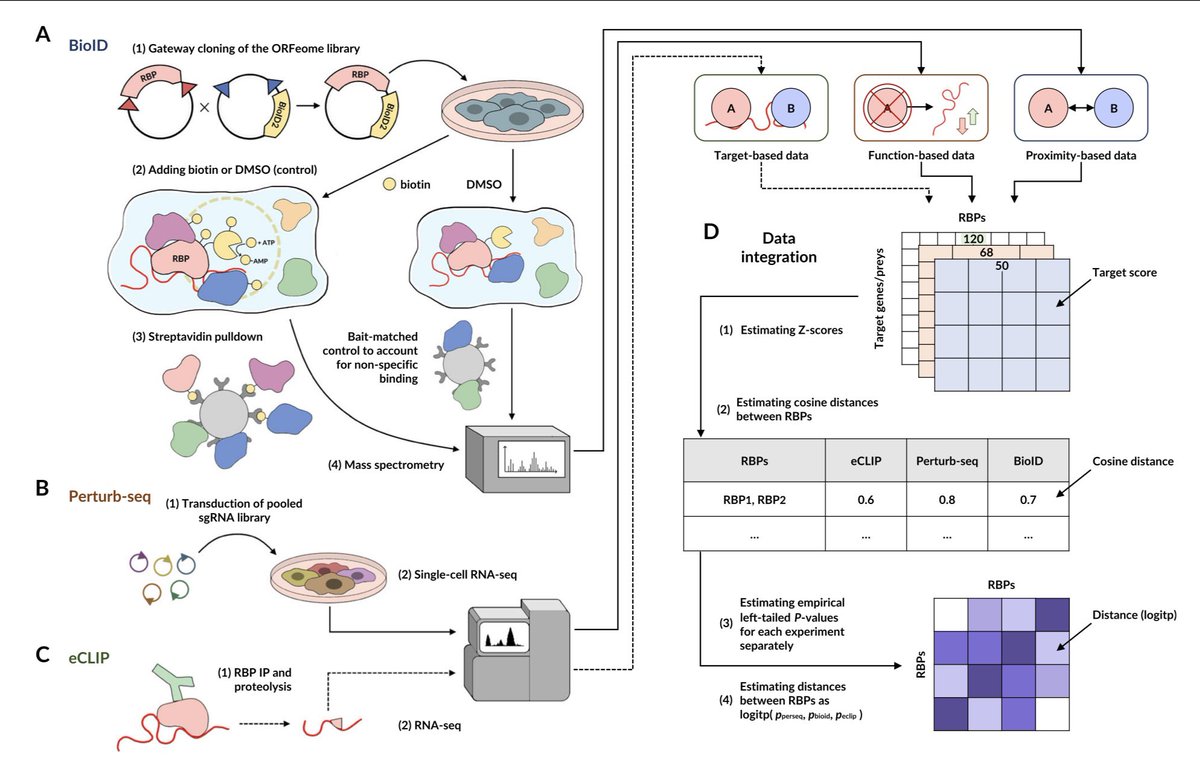
Delighted to see this study on systematic identification of RBP networks out in @NatureComms! A fun collaboration between the labs of @genophoria, @halfacrocodile, and us!
Massive congratulations to @khorms57 and other authors (including Martin)! 🎉
https://t.co/9ihiWpe7Tf
1/9
We show that Human ribosomes have different rRNA sequences, predominantly indels. These include abundant variants such as GGC indels, which form different structures. We visualize variants in single cells and associate them with development and cancer.
https://t.co/J9jP2ISxsK
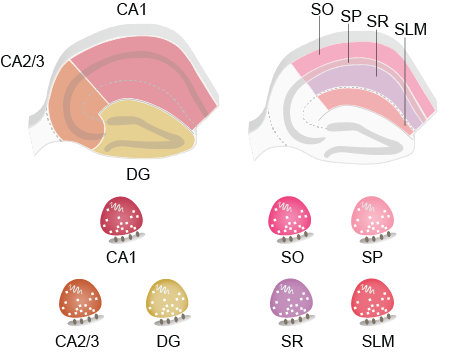
How do different neuronal populations and compartments determine molecular and synaptic diversity? Check out our collaborative effort for parallel transcriptomic and proteomic profiling of the hippocampus! @erin_schuman Lab at @MpiBrain@biorxiv_neursci
Out now: Using highly sensitive luminescence splicing reporters, we screened ~95,000 small-molecule compounds for modulators of neuronal microexons, a class of highly conserved alternative splicing misregulated in #autism & #NeuroendocrineCancer. 1/4 https://t.co/o1vmQunLRn
It took more than a DECADE... but finally it’s published!!! It started as a CRAZY idea but after tons of hard work we built it: We hijacked the endogenous secretion systems of Toxoplasma gondii, a brain parasite, to deliver active proteins to neurons 👇
https://t.co/I2j2pAel69
A heads up to all post-docs - the Genome Biology dept @EMBL is recruiting - independent group leader (PI) position. Outstanding colleagues, students, world-leading core facilities in a very supportive, collaborative and family environment, #jobs. Ad will be posted in next days
RNAs are spliced, translated, and degraded in cells.
How do we identify the cellular factors that control these RNA metabolic events in human cells?
To tackle this question, grad student Patrick Nugent has developed an RNA-linked CRISPR screening technology called ReLiC. 1/
How can cellular signalling swiftly & selectively remodel the transcriptome to drive biological transition? How this switch is orchestrated has been a mystery... 🧵
https://t.co/3z4dcVoztD
Postdoctoral position open in Barcelona!! The @mele_lab is looking for computational biologists interested in large-scale transcriptome data analysis. Check out our website https://t.co/x3ucohWPnv & e-mail me with a CV and a motivation letter before August 31st!
And it’s out!! Check out the newest paper from our lab on how chromatin plasticity predetermines neuronal selection for memory trace formation | https://t.co/n2nL8nojSC 🧵