A plausible and frightening vision of Europe's near future, ending in economic collapse and vassal status under the US or China. Enjoyed reading it, although I feel a little depressed now.
https://t.co/Pe3ddlUBtS
Episode 5 of Memo to File is out now!
Retired Garda Detective Chief Superintendent Pat Byrne discusses the Criminal Assets Bureau from his experience as CAB's first Detective Inspector and later its Chief Bureau Officer.
https://t.co/T4KWCEktGk
This has quietly been a miracle month in medicine.
In the last 5 weeks we’ve got news on:
- retatrutide, the triple agonist GLP-1 from Lilly, basically melting fat and body-wide inflammation at record levels
- RevMed’s new pancreatic cancer drug showing unprecedented abilities to extend life
- small trial of a one-and-done PCSK9 gene editing therapy for slashing LDL cholesterol
- Mayo’s AI-assisted radiology showing vastly improved cancer detection
- this new therapy for metastatic solid tumors
This stuff is at varying levels of evidence. Retatrutide is ~100% on its way, other stuff needs more clinical trial data. But put it together and we’re maybe on the verge of majorly reducing the mortality of heart disease and cancer, the two leading causes of death in America.
New blog post: The third wave of American philanthropy
Hundreds of billions of dollars in new philanthropic capital will soon become liquid. The OpenAI Foundation holds 26% of OpenAI, worth about $220B at today’s valuation. Anthropic’s seven co-founders have pledged to give away 80% of their wealth and have instituted the most aggressive donor matching program for employees in tech history.
How much does this all add up to? And how meaningful is that in the context of philanthropy today?
I was doing some simple napkin math to wrap my head around the scale of what’s coming, and radicalized myself in the process. I had dramatically underappreciated the scale of the philanthropic capital that’s about to become available and the corresponding gap in talent and organizations that will be needed to make the most of it.
This piece aims to directionally sketch the scale of what’s coming, the gap in operational capacity needed to absorb it, and what we can do to fill it.
(Link to full post in reply)
Brian Chesky shares why the saddest day of his life happened the day after Airbnb went public at $100B:
"We go public, we have a hundred billion dollar valuation. It's one of the best days of my life. The next day, I go on a Zoom meeting, and it was like it never happened."
"It became like the saddest day of my life. Because I realized, I got all this adulation, and I don't feel any different."
"Adulation is like a cup with a hole at the bottom. You keep filling it in, thinking it's love, except it just keeps coming out the bottom."
"That made me reevaluate what I'm doing this for. I want to do things for pure intrinsic reasons. Do the work like you used to do, like when you were a kid. It was light. Just make stuff. Make it for yourself."
"So many entrepreneurs focus on what they want to be. "I want to be a giant tech founder. I want to run a billion-dollar company." Instead of focusing on, "What do I want to make."
There's no way to fail if you're making what you love."
The Memo to File podcast launches today! @fehelium and I have been working on this project to explore Irish public projects with those central to their delivery.
On Ep. 1, Frank Allen discusses Luas light rail in Dublin.
Memo to File drops Thursdays and is available below.
Launching the Memo to File podcast!!
I've learned so much speaking to the people that made Ireland better about doing good work, lessons learned, and the institutional memory often lost over time.
On Episode 1, Frank Allen discusses building Luas.
Link in bio!
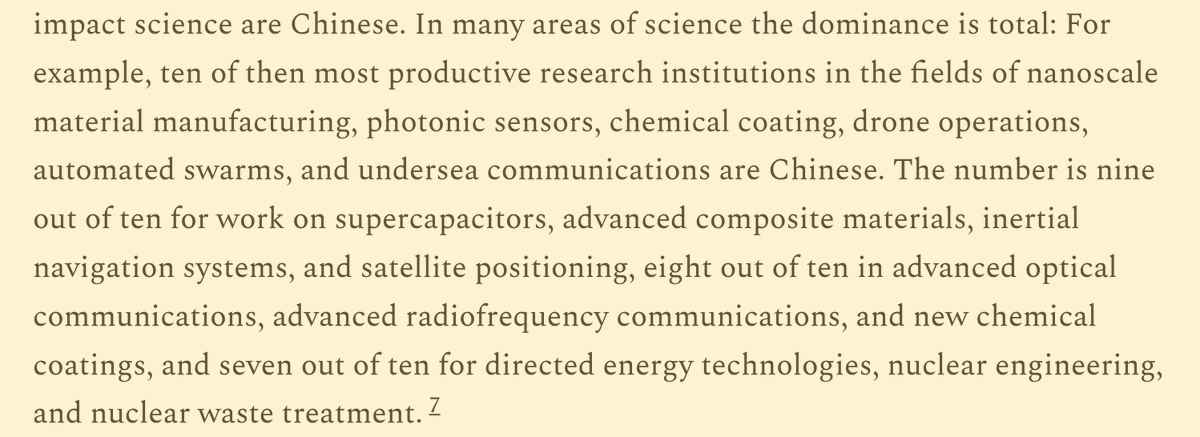
One noteworthy point (among many!) is that when you read this list of topics:
1. They are pretty clearly important for the future
2. They are absent from priority areas for most western research support which generally sounds like "quantum, AI, health, climate, etc."
By far my biggest advice to anyone trying to adopt AI properly:
1. Pay a little bit of money to Anthropic
2. Download Claude Code
3. Open Claude Code
4. Press 'Shift-Tab' until it says 'plan mode on'
5. Open Voice Memo on your iPhone. Just talk about all the things you want to accomplish. When you think you are done, just keep talking. Make sure it is at least 10 minutes, hopefully longer
6. Send this Voice Memo to your computer
7. Download MacWhisper and use it to transcribe this voice memo. Trust me, you will want MacWhisper and will use it later a lot
8. Type into Claude Code: "I have never used you before but I talked about some things. I will paste those things in below. Please read the things and ask me any questions you need to in order to help me figure out how to use you to be awesome. Ask me lots of questions until I tell you I am done"
9. Then paste in the transcript
10. Then press enter
Then just let Claude take the wheel, and them please send me a DM if this works.
Also, if this just sounds crazy, just literally take this entire message and paste it into whatever AI you are using and say 'some weird person told me to paste this into you, I want to use it, but I don't know how. What should I do?'
I am just trying to help you get started. Curiosity and persistence are the most important things.
We’re thrilled to open-source LabClaw — the Skill Operating Layer for LabOS by Stanford-Princeton Team
One command turns any OpenClaw agent into a full AI Co-Scientist.
Demo: https://t.co/TgGtKO2lxQ
Dragon Shrimp Army reporting for duty 🦞🔬
#AIforScience#OpenClaw
Three days ago I left autoresearch tuning nanochat for ~2 days on depth=12 model. It found ~20 changes that improved the validation loss. I tested these changes yesterday and all of them were additive and transferred to larger (depth=24) models. Stacking up all of these changes, today I measured that the leaderboard's "Time to GPT-2" drops from 2.02 hours to 1.80 hours (~11% improvement), this will be the new leaderboard entry. So yes, these are real improvements and they make an actual difference. I am mildly surprised that my very first naive attempt already worked this well on top of what I thought was already a fairly manually well-tuned project.
This is a first for me because I am very used to doing the iterative optimization of neural network training manually. You come up with ideas, you implement them, you check if they work (better validation loss), you come up with new ideas based on that, you read some papers for inspiration, etc etc. This is the bread and butter of what I do daily for 2 decades. Seeing the agent do this entire workflow end-to-end and all by itself as it worked through approx. 700 changes autonomously is wild. It really looked at the sequence of results of experiments and used that to plan the next ones. It's not novel, ground-breaking "research" (yet), but all the adjustments are "real", I didn't find them manually previously, and they stack up and actually improved nanochat. Among the bigger things e.g.:
- It noticed an oversight that my parameterless QKnorm didn't have a scaler multiplier attached, so my attention was too diffuse. The agent found multipliers to sharpen it, pointing to future work.
- It found that the Value Embeddings really like regularization and I wasn't applying any (oops).
- It found that my banded attention was too conservative (i forgot to tune it).
- It found that AdamW betas were all messed up.
- It tuned the weight decay schedule.
- It tuned the network initialization.
This is on top of all the tuning I've already done over a good amount of time. The exact commit is here, from this "round 1" of autoresearch. I am going to kick off "round 2", and in parallel I am looking at how multiple agents can collaborate to unlock parallelism.
https://t.co/WAz8aIztKT
All LLM frontier labs will do this. It's the final boss battle. It's a lot more complex at scale of course - you don't just have a single train. py file to tune. But doing it is "just engineering" and it's going to work. You spin up a swarm of agents, you have them collaborate to tune smaller models, you promote the most promising ideas to increasingly larger scales, and humans (optionally) contribute on the edges.
And more generally, *any* metric you care about that is reasonably efficient to evaluate (or that has more efficient proxy metrics such as training a smaller network) can be autoresearched by an agent swarm. It's worth thinking about whether your problem falls into this bucket too.
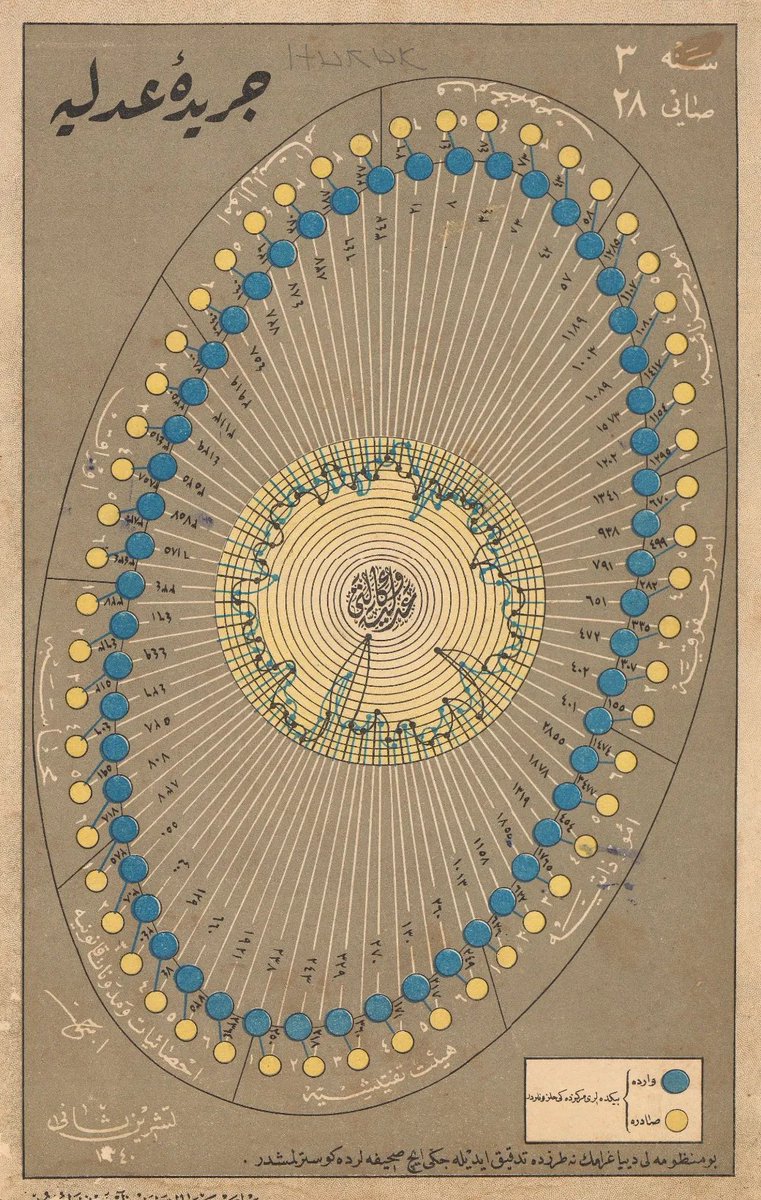
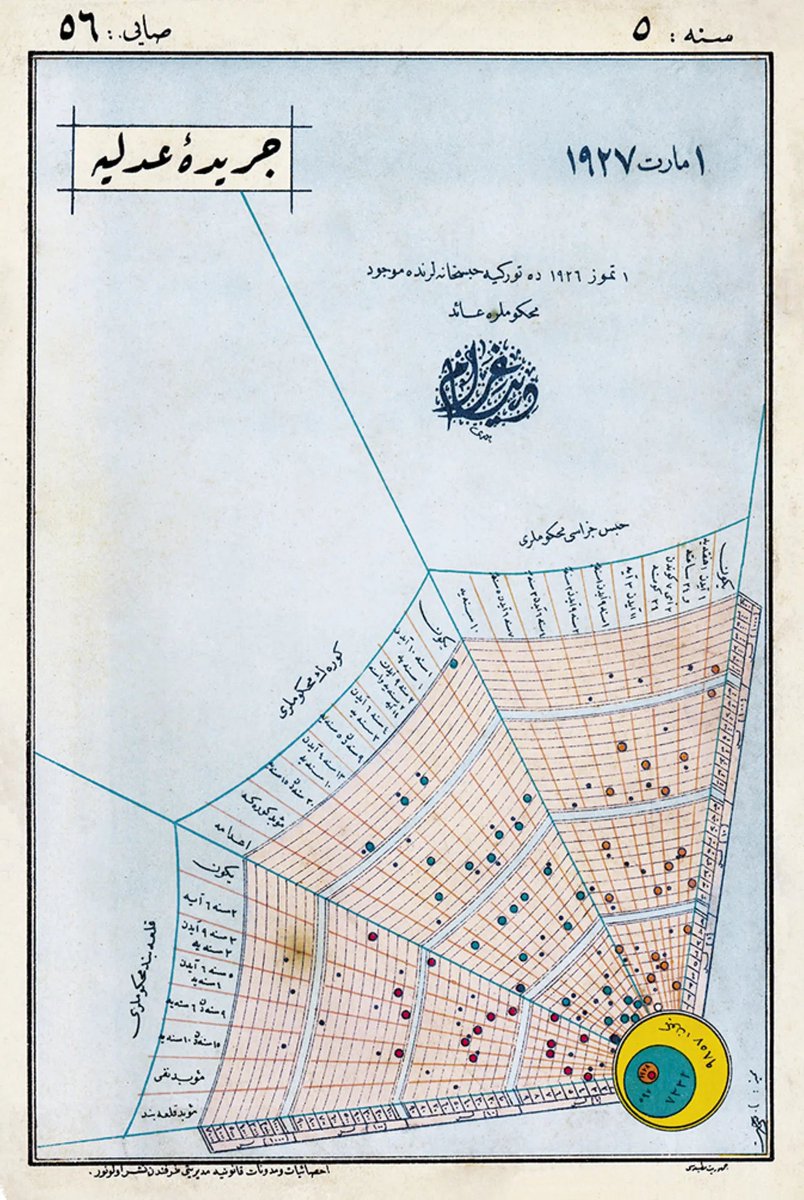
My new obsession: Ottoman-era data visualizations from Cerîde-i Adliyye, “The Justice Gazette,” a Ministry of Justice publication printed in Türkiye in the mid-1920s https://t.co/XfFmJBryJI
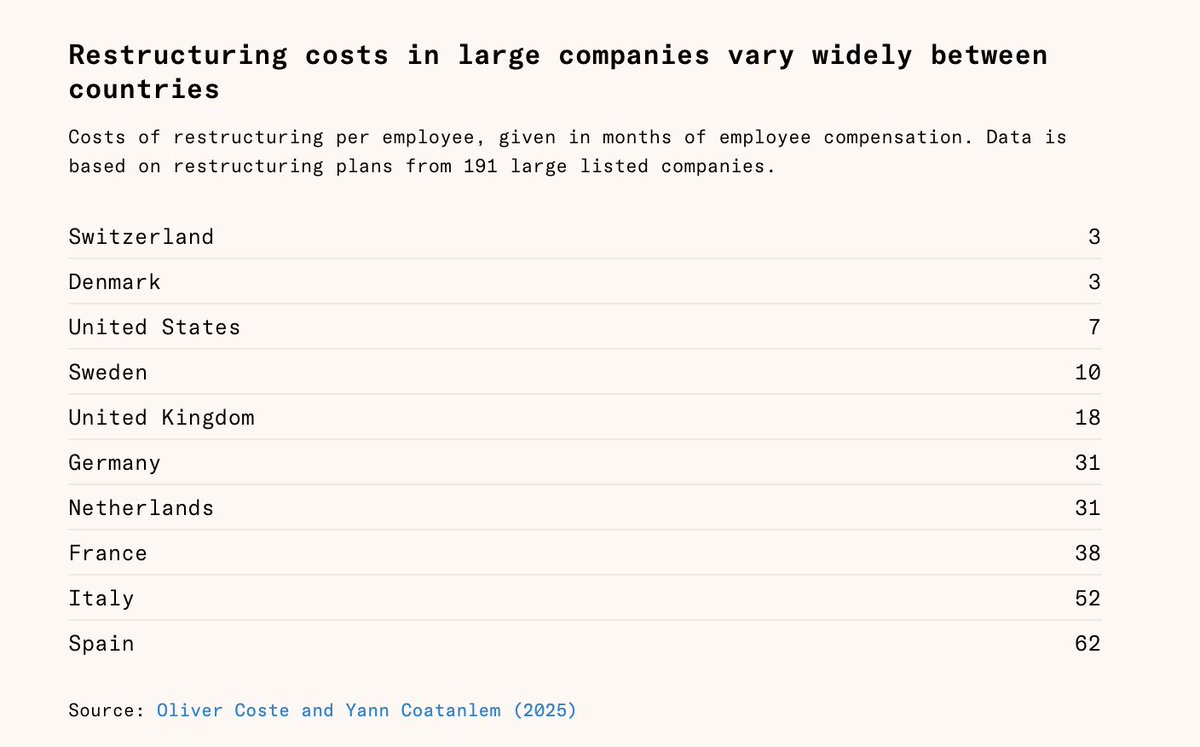
Why don't European companies innovate? It is common to blame expensive energy, high taxes, anti-growth politicians, interest groups, and green regulations.
But California has the same problems, and has created the world's most innovative companies.
Europe's problem is labor law. Compared with America, it's far harder to let workers go when a business doesn't work out.
https://t.co/YXV8X1Va8x
- It costs a large company roughly four times more to fire a worker in Germany or France than the US.
- German law requires employers to consider age, years of service, family obligations, and disability status when deciding who to lay off. Employees who would be least impacted by losing their job are prioritized for dismissal.
- German employees who take on a caregiving role are fully protected from dismissal for two years from the date they begin caregiving.
- Factory closures in Germany regularly lead to payments of over €200,000 per employee.
- French companies must be prepared to show a court that their financial results are struggling enough to make layoffs necessary.
- To avoid the difficulties of formal dismissals, many European companies entice workers to depart voluntarily, with payouts of up to four years' salary.
Taken together, a German worker is ten times less likely to be fired in a given year than an American worker. This high cost of firing makes failures more expensive. It pushes big European companies away from taking risks and leads them to concentrate on safe, unchanging areas.
Europe has the ingredients needed to succeed. Its citizens are educated and inventive; it has excellent infrastructure and the rule of law; and its culture is not that different from the one it had fifty years ago, when its companies were world-beating. If Europe wants to a Tesla or a Google, it only needs to make it cheaper for companies to fail. My new piece for @WorksInProgMag.
Hollywood gatekeeping is dying.
Very soon, blockbuster-level films will come from tiny teams of obsessed hobby directors armed with AI, taste, and zero permission.
Big budgets won’t matter.
Gatekeepers won’t matter.
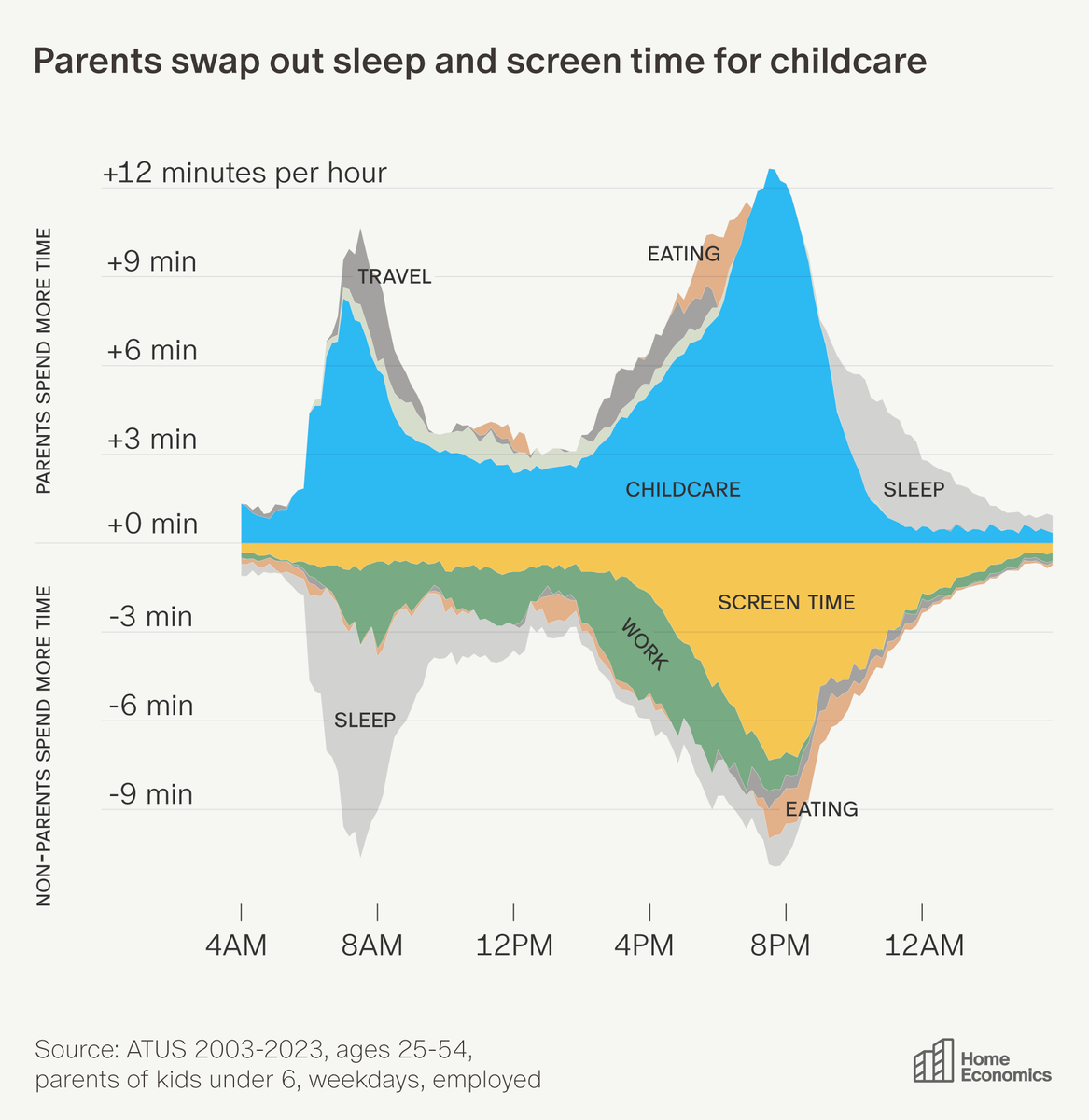
As a new parent, I spend a lot of time changing diapers and feeding the baby. 15 months ago I wasn't doing any of this. I felt busy then too, so where did all this childcare time come from? I analyzed the Census Bureau's American Time Use Survey to find out how most parents do it. The answer: less sleep and less screen time. The funny thing is, parents report being pretty happy about this tradeoff.