Today on the blog, we present a new system, published in Nature, that leverages standard consumer smartwatch sensors to passively detect signs of high blood pressure — validated against the clinical gold standard of 24-hour ambulatory bp monitoring. More →https://t.co/p5bCtcaHrj
oMLX is now available in LM Studio! 🎉
Get oMLX’s SSD KV cache, which keeps long contexts ready across sessions, and run the latest open frontier models on one platform.
Thanks @lmstudio and @yagilb for making this happen!
@amorriscode Congratulations on the team. The app feels amazing. Everything's faster and better. Congratulations.
One thing that needs improvement, however, is the next question or the next step question. It pops way too much and it's way too concise.
Un bloguero mostró que las entrevistas laborales en 2026 ya se realizan sin personas. La empresa envió a la videollamada a un reclutador de IA, el bloguero respondió conectando a su agente de IA y salió del encuadre.
Las redes neuronales siguieron discutiendo la vacante durante un rato más sin humanos. Al final, ambas se colgaron y comenzaron a despedirse infinitamente la una de la otra.
Distópico.
@ClaudeDevs please bring back the sort by name on ClaudeCode.
Or a better way to organize the folders and environments in claude code.
Sorting by date is not a good way to remember where things are.
Plus, Projects while promissing, are not yet there yet.
We’re beginning a process of publishing more frequent reports on model behavior, beyond what appears in our system cards and regular risk reports.
Today’s report describes four types of behaviors we’ve identified during evaluations and internal use. In each, Claude acted on real websites or systems in ways we didn’t intend, sometimes by working around a restriction instead of stopping.
All cases had minimal real-world impact. From an alignment and security perspective, we consider these behaviors significantly less severe than the cybersecurity incidents we reported in July and September.
Read the full report: https://t.co/mGeVIBgdou
@trq212 I really liked it, especially for small changes. For big changes or architecture or where you need to understand a little why a given architecture was chosen or why one path is better than another, visual explainer and with diagrams is still interesting.
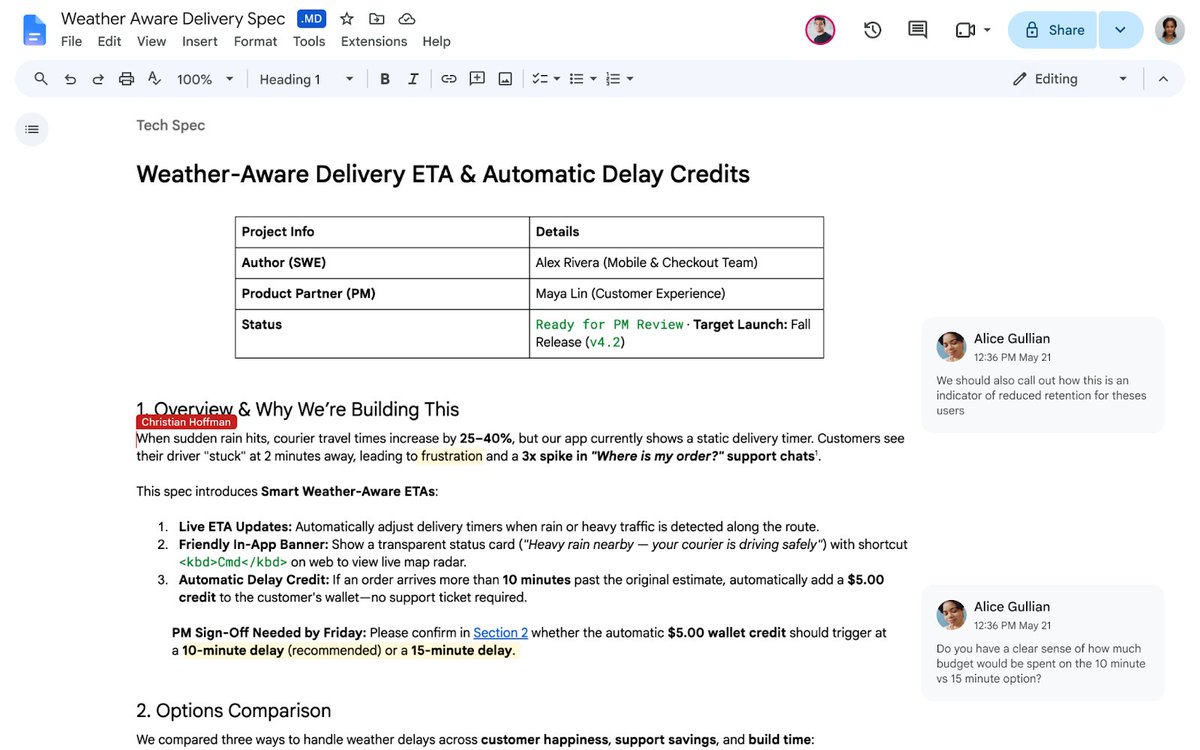
We are making Markdown files work natively across Google Drive and Docs.
You can now preview .md files in Drive, open them in Docs, edit them, comment on them, and collaborate without converting the file into a Google Doc!