You can’t outwork the whole world. There’s always going to be someone somewhere willing to work as hard as you. Someone just as hungry. Or hungrier.
Assuming you can work harder and longer than someone else is giving yourself too much credit for your effort and not enough for theirs. Putting in 1,001 hours to someone else’s 1,000 isn’t going to tip the scale in your favor.
What’s worse is when management holds up certain people as having a great “work ethic” because they’re always around, always available, always working. That’s a terrible example of a work ethic and a great example of someone who’s overworked.
A great work ethic isn’t about working whenever you’re called upon. It’s about doing what you say you’re going to do, putting in a fair day’s work, respecting the work, respecting the customer, respecting coworkers, not wasting time, not creating unnecessary work for other people, and not being a bottleneck. Work ethic is about being a fundamentally good person that others can count on and enjoy working with.
So how do people get ahead if it’s not about outworking everyone else?
People make it because they’re talented, they’re lucky, they’re in the right place at the right time, they know how to work with other people, they know how to sell an idea, they know what moves people, they can tell a story, they know which details matter and which don’t, they can see the big and small pictures in every situation, and they know how to do something with an opportunity. And for so many other reasons.
So get the outwork myth out of your head. Stop equating work ethic with excessive work hours. Neither is going to get you ahead or help you find calm.
[The Outwork Myth — It Doesn't Have To Be Crazy At Work, 2018]
@levelsio Can people just go anywhere nice and not talk or post about it? The only reason these places are ruined are crowds . Keep posting about Cyprus and in 2 years you’ll be looking for another place
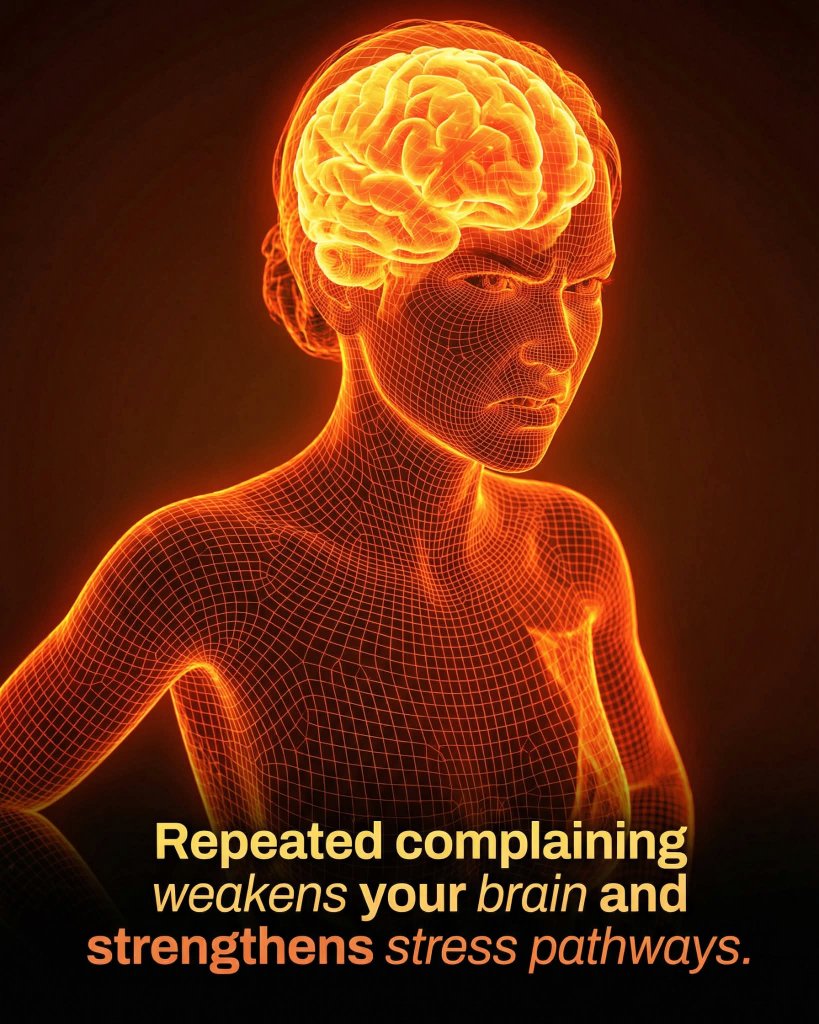
🚨 Research shows repeated complaining physically rewires your brain to prioritize stress and negativity.
The way we speak about our daily challenges does more than just vent frustration; it physically alters the architecture of the brain.
When we engage in chronic complaining, we repeatedly activate neural networks responsible for detecting threats and processing stress.
Through the biological process of neuroplasticity, these circuits become stronger and more efficient every time they are used. Essentially, the brain learns to become more adept at finding things to be unhappy about, turning a temporary mood into a permanent biological predisposition toward negativity and fear-based thinking.
As these negative pathways become the brain's default setting, individuals often experience a measurable increase in baseline stress levels and emotional volatility. This heightened sensitivity means that even minor inconveniences can trigger an intense stress response because the brain has been conditioned to interpret the world through a lens of threat. Findings discussed by the Stanford University School of Medicine emphasize that while this mechanism is powerful, understanding the science of affective neuroscience is the first step in consciously redirecting those pathways toward more resilient emotional patterns.
Source: Stanford University School of Medicine. (2023). Neural Plasticity and the Impact of Negative Thought Patterns on Emotional Regulation. Stanford Medicine News.
The best combo on a flight. Map and book.
5-6 hours is just enough time to finish an entire book on a trans-atlantic flight
Look up after a few pages to ponder the geography of the world and marvel in the wonder of flight
Your anxiety and depression get worse the less you act on your ideas.
Mental illness is metabolic stagnation—energy that wants to move through you but can’t.
Every idea that lights you up is your brain is trying to tell you "there's something here worth moving toward."
When you ignore that signal, when you postpone or overthink, the energy behind that idea has nowhere to go. So it turns inward and builds pressure.
Over time your nervous system adapts to that stagnation. Dopamine decreases and cortisol increases. Your body starts believing that staying stuck = safety.
And the longer you suppress your creative ideas and insights, the more restless, emotional, and ADHD you’ll feel. The mind becomes scattered because the energy meant for creation gets trapped inside it.
Eventually you realise your ideas aren’t random. They’re precise instructions from your intuition, each one designed to grow you into the next version of yourself.
When you act on them, you let your higher self move through your body. You literally feel lighter day to day.
So the next time you get an idea and it feels good, trust it. Because action is how you metabolise inspiration. This is how you dissolve negative thinking and self doubt.
Have the courage to let what needs to come out of you, finally come out.
99% of people are too inflamed know what their deeper purpose is. Ideas come to you when your body supports your mind. Going back to the basics ie; sunlight, 9hrs sleep, eating only whole foods, will give you the energy to find what your next move in life is
The test of intelligence is whether you are using your imagination to worry about everything that could go wrong, or whether you are using it to become who you want to be and to build the life you want.