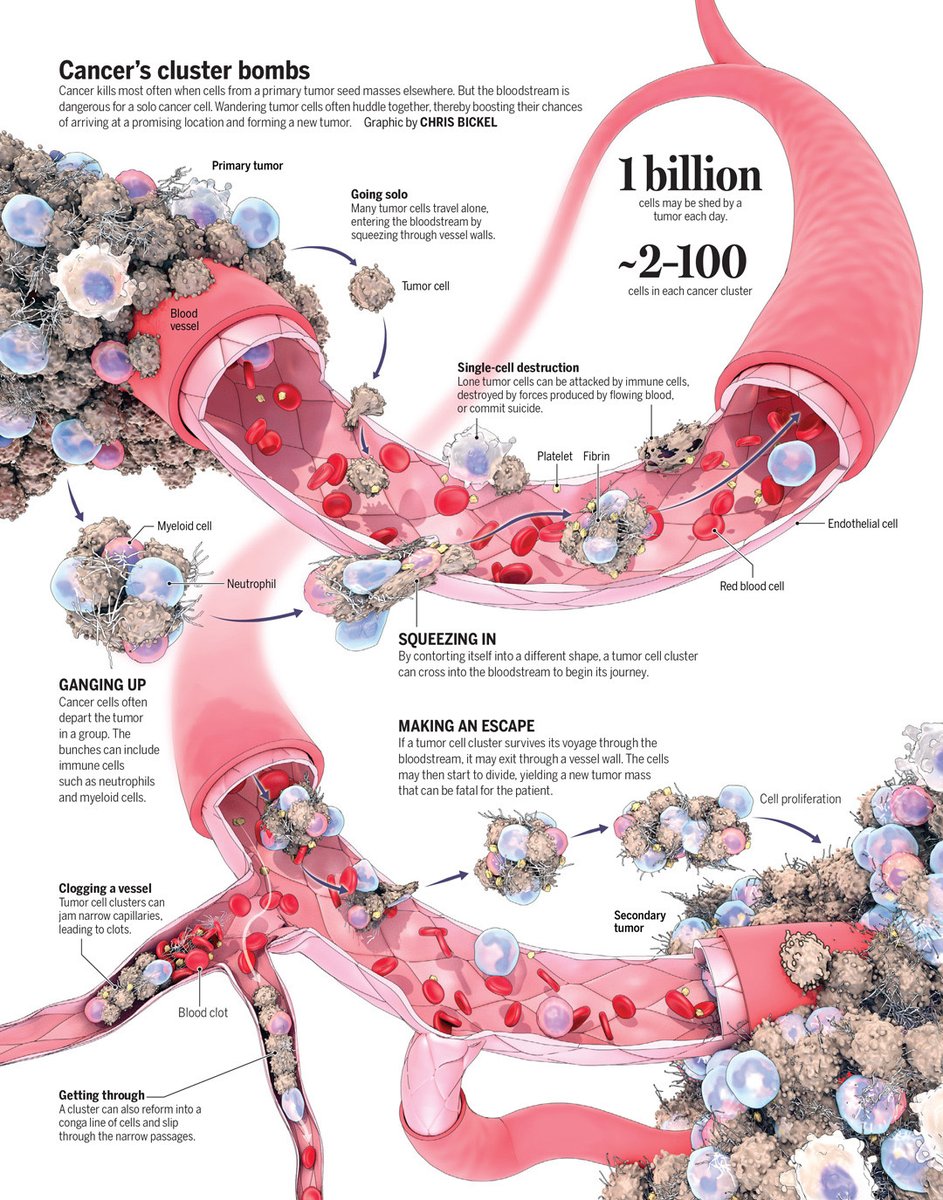
Tumor cells often metastasize in clusters with other cells, offering novel targets for treatments.
Learn more: https://t.co/yr1ikJmy3Z @NewsfromScience
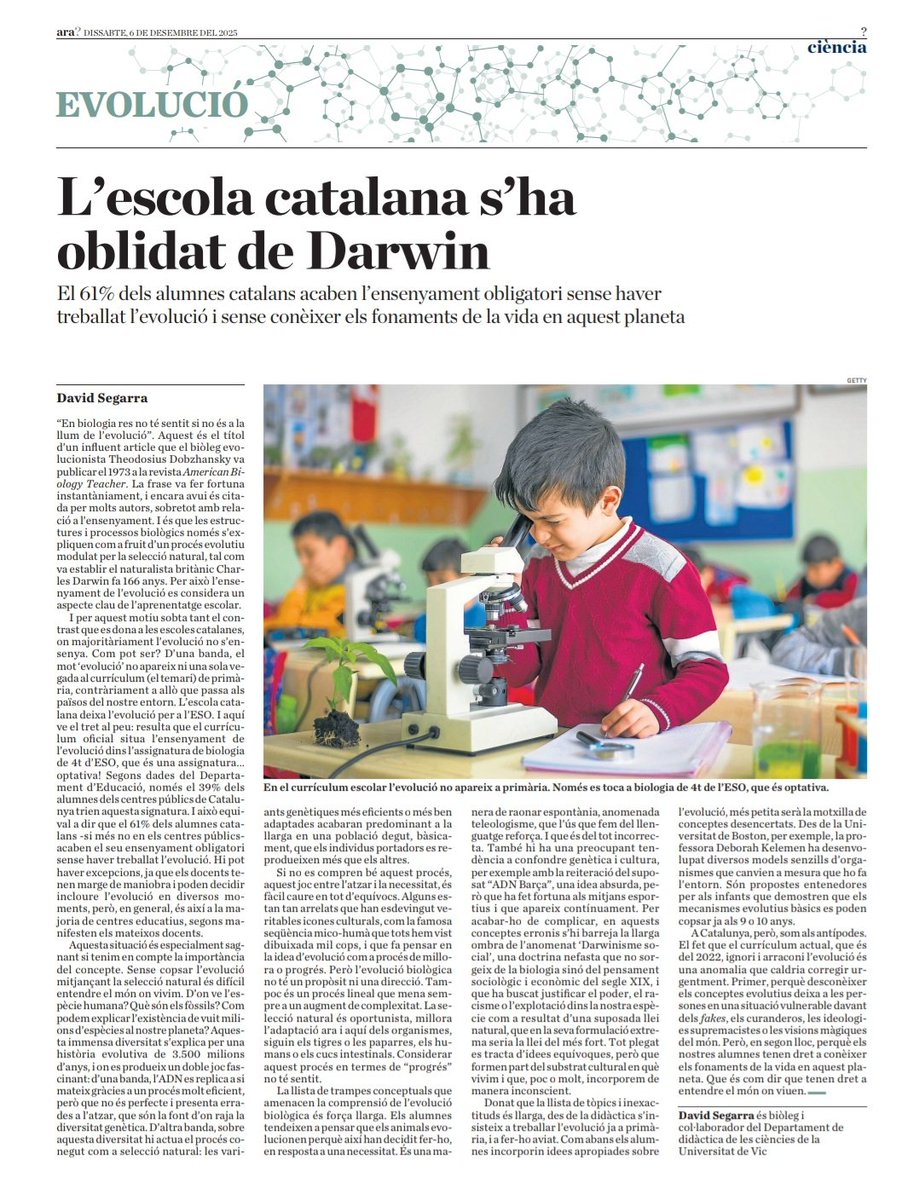
Som la comunitat autònoma amb menys hores de ciències a l’ESO.
I a 4t d’ESO les ciències ni tan sols són obligatòries.
I ara, a sobre, volen retallar-les al batxillerat.
Gràcies, David Segarra per posar dades i paraules a aquest despropòsit!
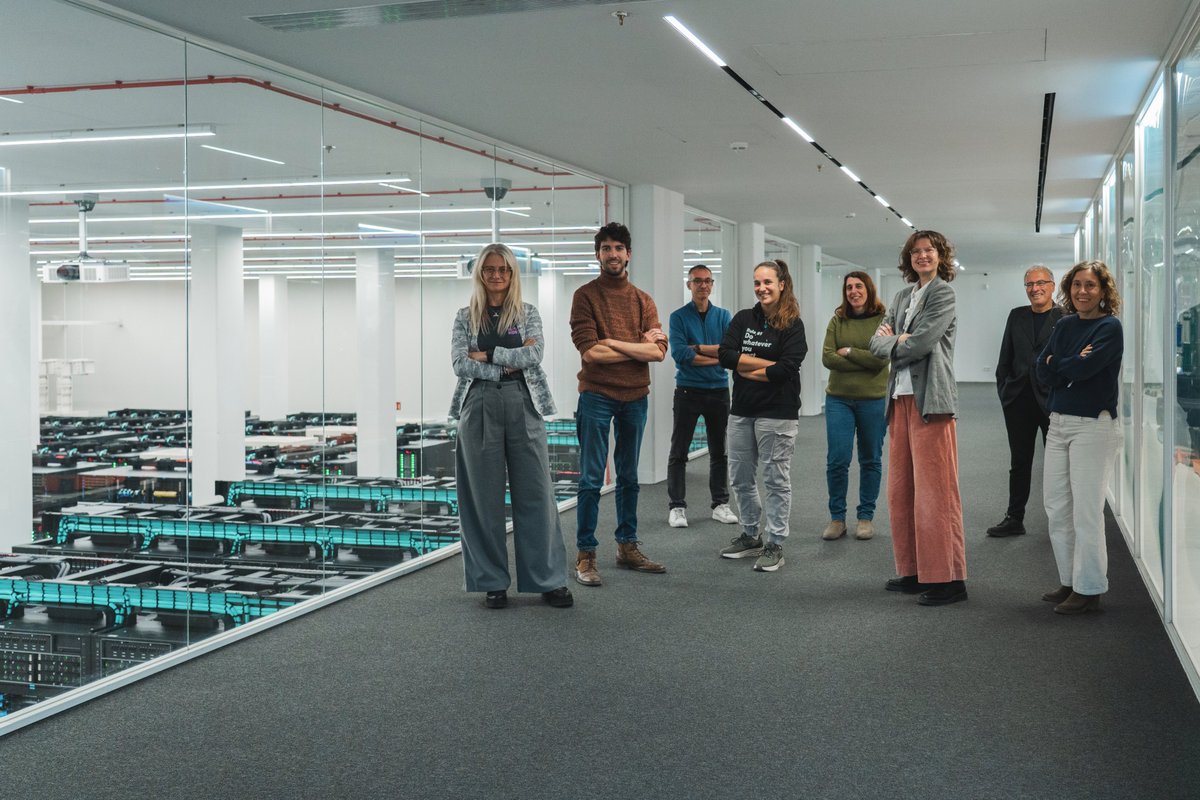
🧬A study by BSC and @CRGenomica reveals for the 𝗳𝗶𝗿𝘀𝘁 time that human gene maps are biased towards European ancestry.
🌍💻Thanks to the use of #MareNostrum5, over 800 million molecule sequences from 8 different global populations, belonging to various genetic ancestries, have been analyzed.
"𝗪𝗲 𝗳𝗶𝗿𝗺𝗹𝘆 𝗯𝗲𝗹𝗶𝗲𝘃𝗲 𝘁𝗵𝗮𝘁 𝗮𝗻𝘆𝘁𝗵𝗶𝗻𝗴 𝘄𝗲 𝗵𝗮𝘃𝗲 𝗳𝗼𝘂𝗻𝗱 𝗵𝗲𝗿𝗲 𝗶𝘀 𝗷𝘂𝘀𝘁 𝘁𝗵𝗲 𝘁𝗶𝗽 𝗼𝗳 𝘁𝗵𝗲 𝗶𝗰𝗲𝗯𝗲𝗿𝗴".
➡ https://t.co/O0kdLWMITI
@mele_lab@marta_mele_m@RodericGuigo@FairlieReese@NatureComms@EuroHPC_JU
#MareNostrum5
After two years of work, we’ve made an AI Scientist that runs for days and makes genuine discoveries. Working with external collaborators, we report seven externally validated discoveries across multiple fields. It is available right now for anyone to use. 1/5
New study in @NatureMedicine from @LabLigorio
Macrovascular tumor infiltration and circulating tumor cell cluster dynamics in patients with cancer approaching the end of life
https://t.co/OazsCFbhSV
Addressing the fundamental question of why patients with advanced cancers die...
We are delighted to share our lab's latest paper on the RAS GTPase RIT1 just published @CR_AACR!!
In this work, we explored the role of the RIT1 oncoprotein in lung cancer and propose different therapeutic strategies to inhibit downstream signaling and RIT1 directly.
Please RT: We are still looking for computational and/or hybrid candidates to join the lab as PhD students. Topics on Alzheimer's Diseases, cell communication and aging. e-mail me if you are interested #joboffer#PhDposition#BCN#scRNAseq
Successful test in #Breast#Cancer patients: the active agent digoxin, a cardiac #Medication, dissolves clusters of circulating breast cancer cells in the blood, thus reducing the risk of #Metastases formation. https://t.co/u4YiK7Lmza
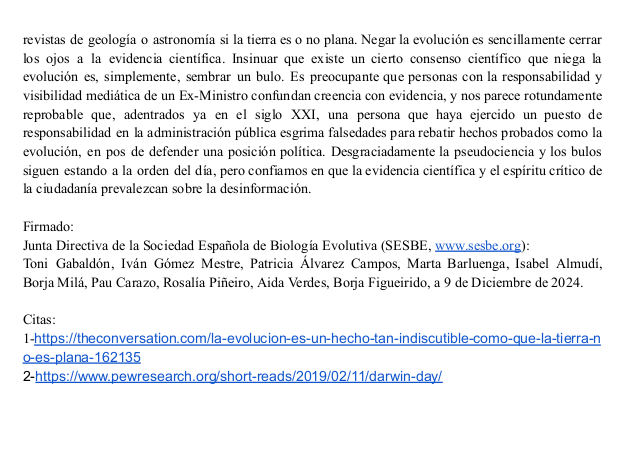
En respuesta a las recientes declaraciones antievolucionistas de Jaime Mayor Oreja, desde la Junta Directiva de la @sesbe_org hemos escrito esta carta abierta. #evolución
👇
https://t.co/9LOpqaUMkz
Our perspective on Hsp90 as a global modifier of the genotype-phenotype-fitness map and its implications for evolution in nature and the clinic is now out in JMB! We review the literature, identify open questions, and share new analyses. https://t.co/8HFJzi2Xho
📢📢 Very excited to announce that the Evolutionary Microbiology group is moving to @IBE_Barcelona in September! We are looking for a postdoctoral resarcher and a lab manager (https://t.co/idDvb19R0Y), come and join our team🧫🧪🔬💻! Please RT
📢 WE ARE HIRING! 📢
🧪 🦠 Lab Manager/Lab Technician position to join the #Evolutionary Microbiology Lab at @IBE_Barcelona led by Macarena Toll-Riera.
✍️ Applications until 31st July. Check out and #JoinOurTeam!
➡️https://t.co/JyhuG0vtPv
People are asking why this is a bad thing to do.
Tumors are heterogeneous entities. What makes them different is also what makes them so adaptable, which is what makes them so aggressive.
Striping away the differences between patients as "batches" removes valuable biology.
Too many scRNAseq lab analysis pipelines include integration (e.g. Harmony) as first step, after QC and normalization. It's a basic step that analysts don't question. People don't go back to look at the raw data, either counts or log-transformed. All downstream analyses are happening on the batch-corrected data.
This is plain wrong. One needs to at least look at the data before/after doing batch-correction, and to understand what the batch correction algorithm has done. One should check what variability has been lost by batch correction. Is that more likely to be technical, or is it biological? This is a difficult question to answer, but even just plotting the data and looking at marker genes/signatures goes a long way. Most people do absolutely none of those.
People also "fear" a Fig. 1 UMAP of a cancer genomics paper in which patient clusters are "separated", because it looks "messy". A fake standard exists, of the perfect UMAP with perfectly separated cell types, and no "batch effect". Batches are not necessary always bad, and sometimes they are indicative of true biological differences.
There are situations in which batches are not desirable. For example, the immune system is known to be really well conserved across individuals, so cells sequenced from multiple people are expected to have quite similar expression profiles.
But human tumors are the opposite of that.
I wrote about this on Twitter 2 years ago, and I am quite sad to write the same thing today. On one hand, we've progressed so much in methodology/AI etc. On the other hand, there's still a bulk of "obvious" methodology knowledge (such as don't batch-correct tumor tissues, as you might end up stripping away the very thing you are trying to observe) that we, as a comp bio community, still didn't manage to properly pass on to the entire cancer genomics community.
https://t.co/8Fue7frec6