🚨 Getty Images is down -99.95% in the last four years as AI kills its business.
It is now filing for bankruptcy as part of a restructuring deal and going private.
Getty was one of the world's biggest stock photo companies. It charged businesses and media for photos and videos from its huge library.
In 2022, it went public at a $4.8 billion valuation.
Then AI image generators arrived. They make the same images in seconds, and Getty's stock photo sites, Agency and iStock, came under pressure.
Getty went to court. It sued Stability AI, the maker of Stable Diffusion, over its images being used to train the AI. A UK High Court judge largely ruled against it.
Its planned merger with its rival Shutterstock then collapsed, leaving Getty alone with heavy debt and growing competition from AI.
By August, Getty pulled its financial guidance. Its debt was $2.1 billion, and its market value is now just $20.74 million.
Now the Getty family and Koch Equity Development will own 100% of what is left.
Getty spent decades making billions by selling images.
AI made it possible to create similar images in seconds. And now a company once worth $4.8 billion has lost almost its entire value.
This is how fast AI can destroy an established business.
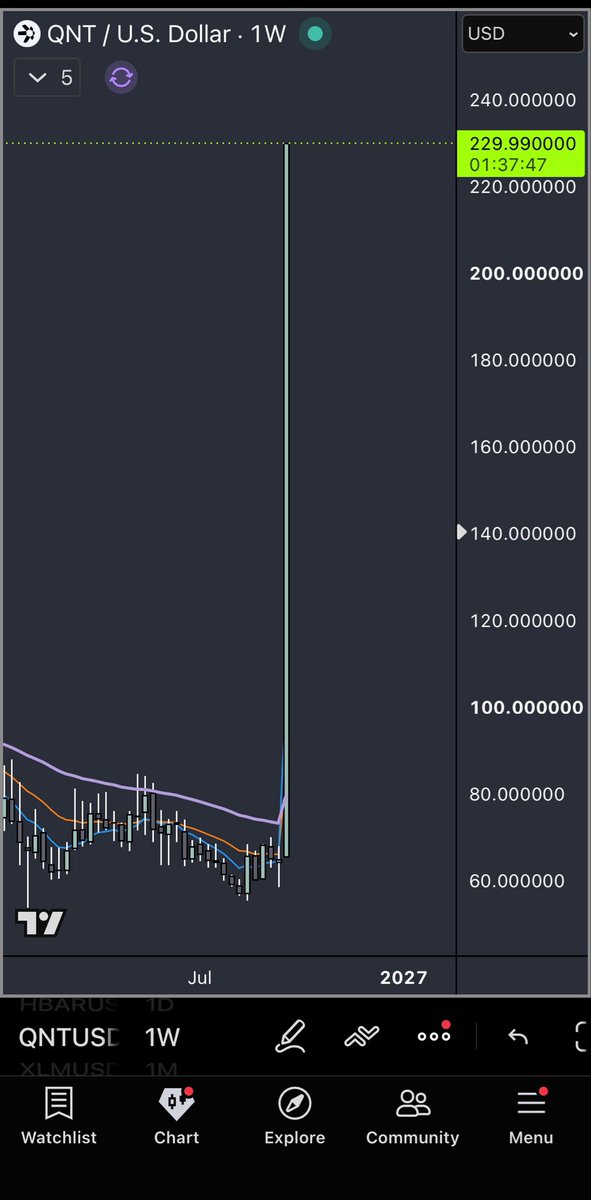
7 days ago 100 $QNT cost $5,300
Today at time of writing 100 $QNT now cost $22,900
The average retail trader just got priced out from owning 100 tokens
Institutions will slowly price retail out of other major projects in the coming months ahead 👀
PLAN ACCORDINGLY 🚀
THIS IS JUST THE BEGINNING
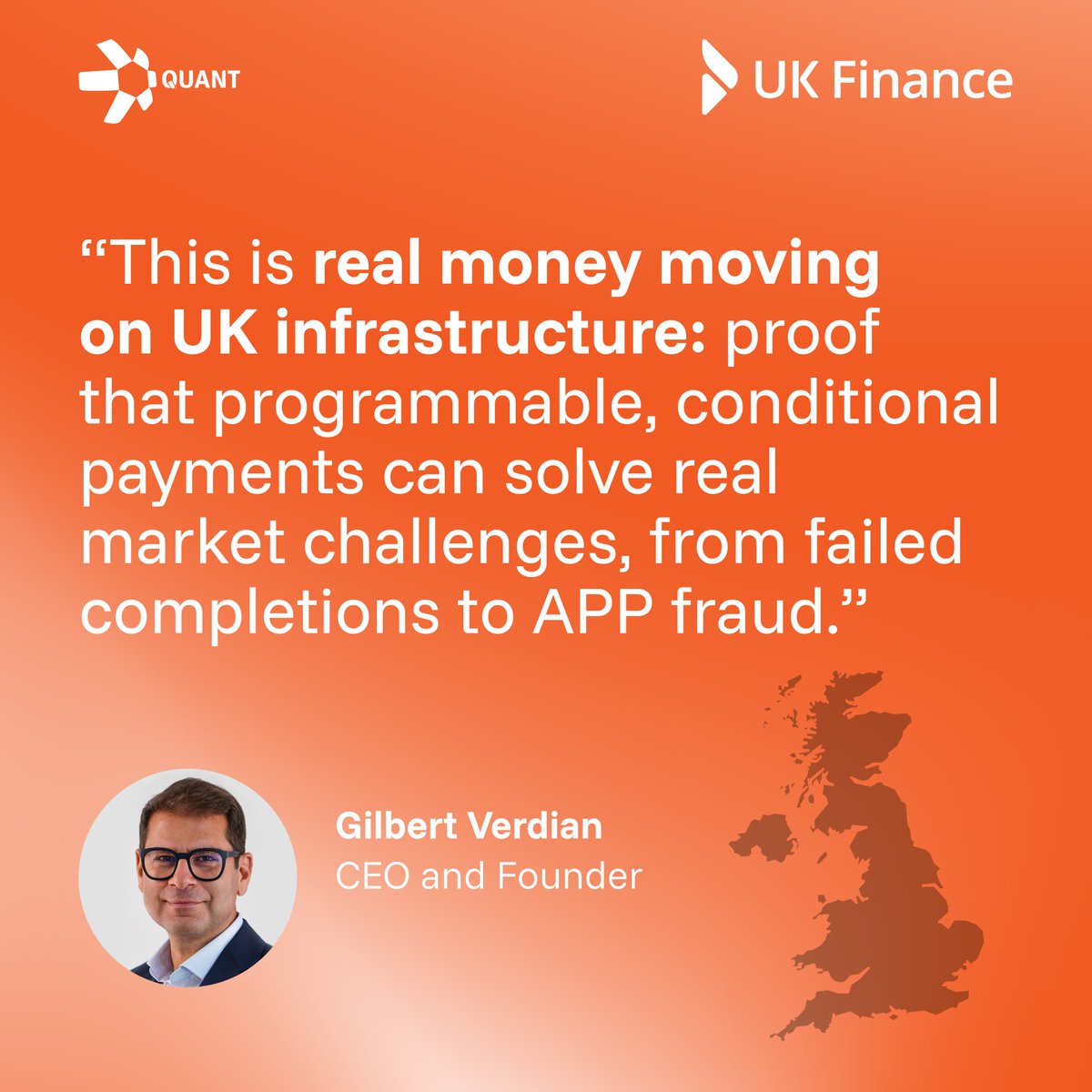
UK banks have completed the first live customer transactions using tokenised sterling deposits, and they ran on the #GBTD platform built by Quant.
Delivered through the Great British Tokenised Deposit initiative, convened by @UKFtweets with @Barclays, @HSBC_UK, @LloydsBank, @monzo, @Nationwide, @NatWestGroup and @santanderuk, the transactions included:
➡️ Two remortgage completions, with funds locked and released automatically at completion
➡️ A marketplace purchase from a private seller, with payment released only once the goods were exchanged
Payments that execute the moment agreed conditions are met give customers more control and can help reduce fraud. More pilots are expected in the coming months, including digital asset settlement.
We're proud to have built the shared infrastructure behind this milestone, alongside @UKFtweets, the participating banks, @EYnews and Linklaters.
Read the full announcement: https://t.co/WaycMtvjCq
#TokenisedDeposits #ProgrammableMoney #Payments
The state of California wants to send this man to prison for refusing to pay for the chemical and physical castration of his own son whom his ex-wife is trying to turn into a girl.
This is too shocking and strange.
As a father will you pay for such procedure that will destroy your son's life, or you will go to jail just to save him from that?
GOLD HAS ENTERED THE SAME ZONE WHERE EVERY MAJOR BULL RUN HAS HISTORICALLY ENDED.
Last month, Gold just hit a new cycle high near $5,600, and is still up +427% in this 2016 → 2026 run.
Now zoom out on what this chart is really showing:
1) Gold moves in decade long super runs
1970 → 1980: +2,403%
2001 → 2011: +655%
2016 → 2026: +427% (so far)
Different decades. Same pattern: gold doesn’t trend up forever. It tends to run hard for 9-10 years, then cool off for years and sometime decades.
BUT WHAT USUALLY ENDS A GOLD SUPER RUN?
It’s usually a mix of:
- Inflation finally cooling
- Real rates moving up
- The Fed getting tighter for longer
- The dollar stabilizing
- Tisk appetite coming back
That’s why gold peaks often show up around major policy shifts.
When gold topped in 1980, it wasn’t the end of markets. It was the start of a long rotation: gold cooled off, stocks entered a long uptrend that lasted for 20 years.
When gold topped again in 2011, we saw a similar shift: gold went sideways/down for years, stocks went into a long bull trend through the 2010s and beyond.
So the historical pattern looks like this:
Gold super run ends → capital rotates back into growth assets → equities get a long runway.
Currently gold recently pushing to a new high area ($5.6k) after a strong multi year climb. That doesn’t confirm a top by itself.
But it does tell you something important: We are no longer early in this move.
THE BIG DIFFERENCE THIS TIME: In 1980, there was no crypto. In 2011, Bitcoin was still tiny and ignored. In 2026, crypto is a real market with: institutional participation, ETFs and big platforms, public companies holding BTC, a much bigger investor base than any prior cycle.
So if the classic post gold rotation happens again…
This time it may not be: Gold → Stocks only
It could be: Gold → Stocks + Bitcoin + high beta crypto
Because crypto is now part of the risk-on world.
Gold has a history of 10 year super trends, When those trends mature, stocks often get a long runway.
This cycle is now in the same late stage decade window. And crypto is the new player that could absorb part of the next rotation.
⚡ In December, @BitGo, a Hedera Council member, gained full approval from the @USOCC to convert into a federally chartered national trust bank with BitGo Bank & Trust.
$HBAR
BREAKING: The United States Just Ended the Offshore Crypto Era
December 4, 2025.
The CFTC has authorized spot Bitcoin and cryptocurrency trading on federally regulated exchanges for the first time in American history.
Read that again.
For fifteen years, the agency refused to provide regulatory clarity. Americans were forced offshore. They traded on platforms with no customer protections. FTX collapsed. Billions vanished. Retail investors were decimated.
That era is over.
Acting Chairman Caroline Pham invoked existing Commodity Exchange Act authority requiring leveraged retail commodity trading occur only on futures exchanges. No new legislation. No Congressional delay. Immediate implementation.
Bitnomial goes live December 9. Leveraged spot. Perpetuals. Futures. Options. Portfolio margining. One venue. Full federal oversight.
The structural implications are staggering.
Cross margining between spot and derivatives could compress capital requirements by 30 to 50 percent. Institutional barriers dissolve overnight. Pension funds. Banks. Sovereign wealth. All now have compliant access to spot crypto on platforms that have operated as the gold standard for nearly a century.
Pham stated the goal explicitly: Make America the crypto capital of the world.
This is not rhetoric. This is infrastructure.
The SEC and CFTC issued joint guidance in September. The President’s Working Group on Digital Asset Markets provided the roadmap. Tokenized collateral including stablecoins is next. Blockchain settlement frameworks are in development.
Watch for Bitnomial volumes exceeding one billion monthly by Q1 2026. Watch for CME integration announcements. Watch for offshore exchange user migration accelerating through H1.
The question is no longer whether America leads digital asset markets.
The question is how fast capital repositions.
Fifteen years of regulatory ambiguity.
Resolved in one announcement.
The new financial architecture has begun.