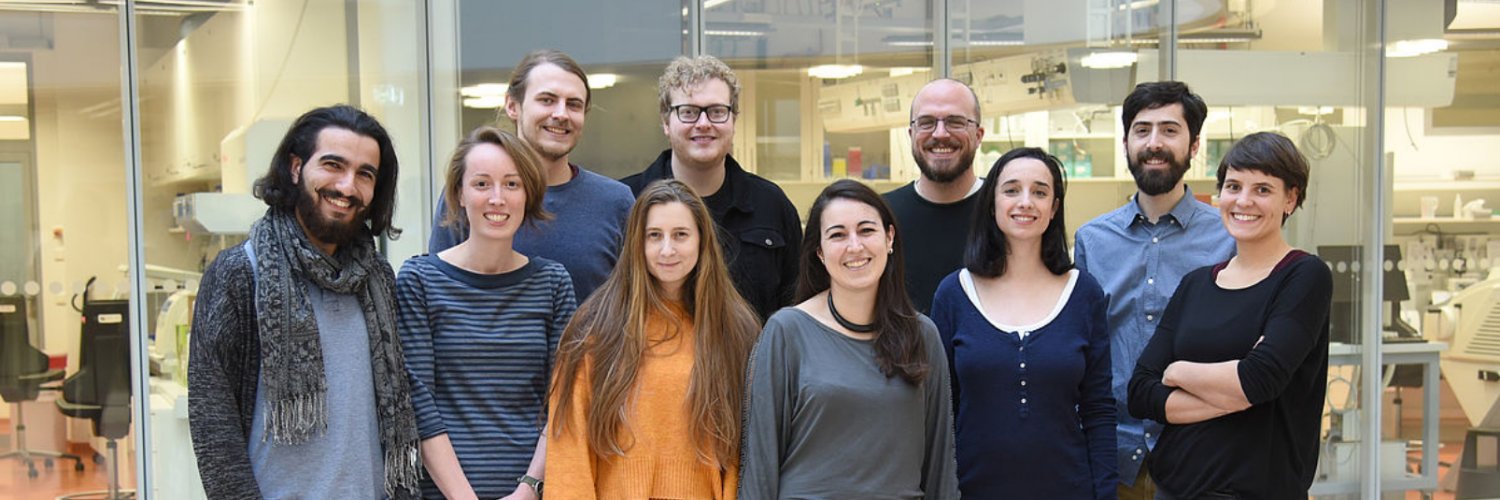
Excited to start this new adventure with fantastic colleagues! If you are interested in working on the molecular mechanisms of autophagy and cellular ageing, please contact me!
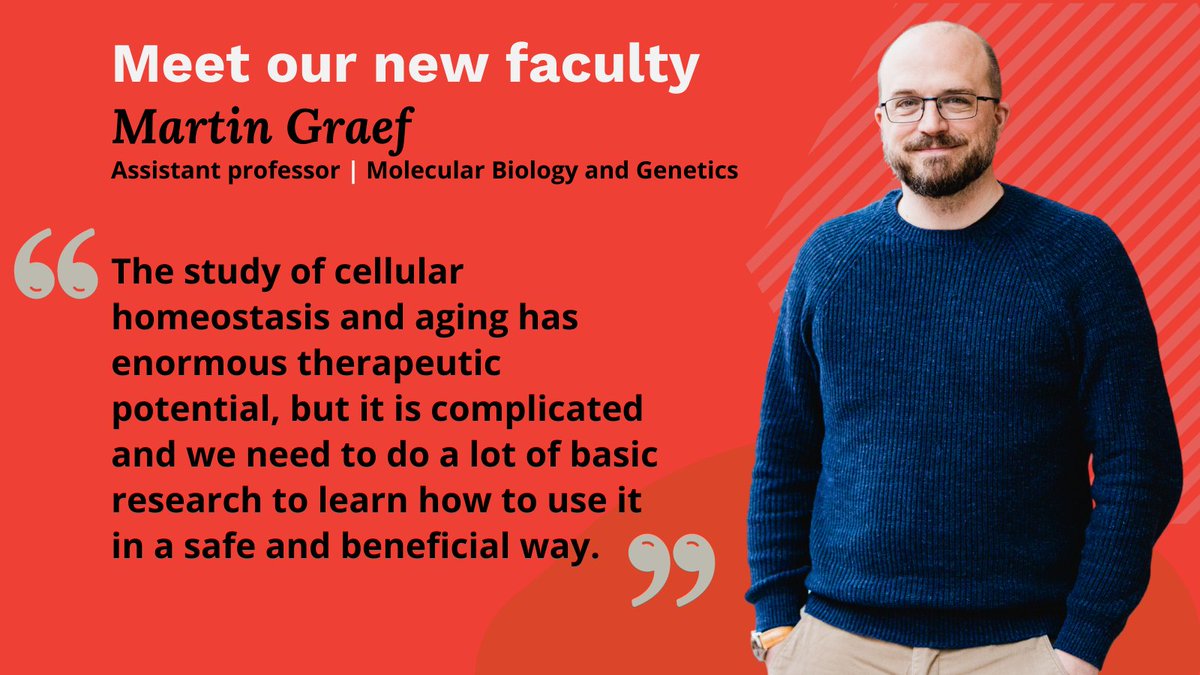
Martin Graef (@GraefLab), new assistant professor in our Department of Molecular Biology and Genetics, joined CALS this spring to study how cells maintain their homeostasis and function under diverse stresses. Welcome Martin! @CornellMBG https://t.co/EnOvk19fSf
Proud of new work https://t.co/VVD4eyFOlc from the lab by Zhicheng (Chen) Cui @Chen3dem using single-particle cryo-EM on liposomes to show how mTORC1 integrates nutrient and growth factor signaling at lysosomes, collab. w/ @G__Napolitano, A. Esposito, and A. Ballabio.
🎉 We're thrilled to share that our former colleague, @_mariyalicheva, now with the @GraefLab, received the prestigious Hans-Grisebach-Preis from @UniFreiburg for her dissertation! 🏅Congrats on this great achievement, Mariya!
Photo credit: Universität Freiburg / Jürgen Gocke
📢 I am so incredibly happy and proud about this one!
🔟+ years in the making, 2,5 years since first submission, 1⃣ year since we posted it @biorxivpreprint, it finally found it’s home @NatureCellBio!
Open access 👇
https://t.co/IWJTxkvmIv
Detailed 🧵down below ⏬
Our work on the biochemical reconstitution of mitophagy initiation led by @Devika_An has been updated on bioRxiv. You can check it out at https://t.co/zcWQSHK28n
Excited to announce an MBG faculty search for two assistant professor positions in collaboration with the Weill Institute for Cell and Molecular Biology, @weillinstitute.
Please share and apply!
https://t.co/2I7vUskmFF
🚀Excited to share our latest paper, where we explore dynamic changes in mtDNA heteroplasmy in living cells! Discover how asymmetric partitioning and mitochondrial dynamics drive mtDNA variant segregation! 🔬https://t.co/2jDc93D4Sr #Mitochondria#microscopy#microfluidics#mtDNA
Eat less to live longer? #Autophagy degrades damaged or toxic cellular material to keep cells in good shape. We discovered how #ATG16L1 shapes phagophores. Our article was published today in @NatureSMB ! thanks to all the authors !! Check it out:
https://t.co/kJddgm4yY1
From MBoC
Temporal control of contact site formation reveals a relationship between mitochondrial division and Num1-mediated mitochondrial tethering. @LLLackner developed systems to control the formation and depletion of mitochondria-PM contact sites.
https://t.co/uDPdeQA9fq
🚨The Weill Institute is hiring a new faculty member!🚨
Assistant Professor position is now open in @weillinstitute, joint with @CornellMBG. This is an open search in all areas of molecular and cell biology; application deadline is 3/20.
More info: https://t.co/8EWawI3NEq
We are happy to share the publication below, which sheds light on the role of Atg1, Atg11 and Atg13 in bulk autophagy initiation. You can find the paper in the following link 👇
https://t.co/RHQglNtLkp
I am thrilled to see our work on the #Vacuole#LipidDroplet#MembraneContactSite vCLIP published in @Dev_Cell! Fantastic collaboration with @ruferbus and @schmidtlabIBK. Huge thanks to the whole team, I am so proud of you all!
https://t.co/UySVXlrKvT
The human prohibitin complex forms a bell-shaped structure in the inner mitochondrial membrane. Check out our #preprint together with @ratz_michael below 👇
https://t.co/6epzBg7Nio
What do you think it looks like? Like a bundt cake? A jellyfish? Vanilla pudding?😉