My wife had been told not to eat after midnight because she was scheduled for surgery in the morning.
She was hungry, nervous, and exhausted.
Around 7 a.m., a nurse came in and said the procedure would happen soon.
So we waited.
Then we waited some more.
By 10 a.m., nothing.
My wife looked at me and whispered, “I can’t do this much longer.”
I reminded her what the doctor had said about not eating or drinking before surgery.
She nodded.
Around noon, a different nurse came in and asked:
“When was the last time you ate?”
“My last meal was yesterday evening.”
The nurse looked at the chart.
Then she left.
Twenty minutes later, a doctor came in.
“We’re going to have to postpone the surgery.”…
In 1879, a simple Egyptian peasant woman named Mubarka Khafaji from a village in Kafr El-Sheikh married a farmer, Ibrahim Atta, who worked for daily wages. Due to financial hardship, he divorced her even though she was in the final months of her pregnancy.
Mubarka moved with her mother and brother to Alexandria, where she gave birth to her son, Ali Ibrahim Atta. She made a firm decision to do everything possible to raise and educate him in the best way.
She had countless reasons to despair and grow bitter toward men, but she did not. She could have forced her son into child labor selling tissues at traffic lights, but instead she worked as a cheese seller in the streets of Alexandria to support him.
She enrolled her son Ali in the Ras El-Tin Primary School. After he completed primary education, his father came to take him away to make him work with only a basic certificate.
But Mubarka’s dreams were much greater. She secretly moved her son from the roof of her house to the neighboring roof and fled with him to Cairo, enrolling him in the Khedivial School in Darb El-Gamamiz. She worked for a family in order to fund his education.
Ali excelled in his studies and was admitted to medical school in 1897, graduating in 1901.
Fifteen years later, Sultan Hussein Kamel fell seriously ill, and doctors were unable to diagnose his condition. Dr. Othman Ghaleb suggested the name of Dr. Ali Ibrahim. He successfully performed a critical surgery, after which he was appointed as the Sultan’s chief surgical consultant and personal physician, receiving the title of "Bey."
In 1922, King Fouad I granted him the title of "Pasha."
In 1929, Dr. Ali Pasha Ibrahim became the first Egyptian dean of the Faculty of Medicine at Fouad I University (Cairo University). He later became the university’s president.
In 1940, he was appointed Minister of Health. In the same year, he founded the Egyptian Medical Syndicate and became its first president. He also served as a member of the Egyptian Parliament.
His mother was: An uneducated, rural, divorced peasant woman.
Yet she raised a son who changed history.
The reform of any society begins with a mother.
Salute to every mother who is a true school of life.
That pinecone in your bathroom is completely dead. Not a single cell in the whole thing is alive. And yet, the moment your shower fills the room with steam, it closes up on its own. Dead wood, reacting to moisture, all by itself.
Each of those little wooden scales has two layers inside. The bottom layer soaks up water and swells by about 20%. The top layer barely moves. So when one side gets bigger and the other stays put, the whole scale bends upward and curls shut, same way a piece of paper curls when one side gets wet. Air dries out, bottom layer shrinks, scale drops open again. Pine trees have been running this exact design for about 390 million years, more than 150 million years before the first dinosaurs showed up.
It does all of this for one reason: seeds. If seeds fell during rain, they'd just land right next to the parent tree and fight for the same sunlight. So the cone seals shut and waits. When conditions turn dry and windy, scales open and lightweight seeds catch the breeze and travel way farther from home. Look closely and the scales sit in spirals, 8 going one way and 13 the other. Same pattern you see in sunflower heads.
I had to read this next part twice. In the 1960s, German coal miners pulled a few pinecones out of a coal deposit. Nobody thought much of it at the time. Decades later, a research team at the University of Freiburg got hold of them and figured out one was about 120,000 years old. Another was roughly 15 million years old. They soaked them in water. Both still closed up. Moved about half as much as a fresh pinecone, but after 15 million years underground with zero maintenance, the mechanism still worked. The coal had kept the wood flexible instead of turning it to stone.
Engineers looked at this and started copying it. A team at the Universities of Stuttgart and Freiburg made 424 tiny panels out of wood fiber, designed to change shape on their own when humidity shifts, copying the pinecone's two-layer trick. They stuck them on a building's south-facing window. In winter, the panels curled open on their own to let sunlight warm the inside. Come summer, they flattened and blocked it. The whole system runs without electricity, motors, or wiring, just wood fiber reacting to weather the same way it has for 390 million years. They published the results in Nature Communications after a full year of testing. Every panel still worked.
Your bathroom pinecone is a humidity sensor that predates dinosaurs by 150 million years, runs on dead wood and physics, and engineers are still trying to copy its homework.
Prince Adewale, you are making a massive error in your judgment. You assume that because she is covered outdoors, she has abandoned her culture or her fashion.
The reality is that the sister in the second frame likely owns the same Aso-Oke, the same expensive lace, and the same jewelry as the woman in the first frame. The "7th-century tradition" you mock does not forbid beauty; it strictly defines who deserves to see it.
She wears that elegance inside her home, for her husband and her family. She has chosen exclusivity. You are angry because you want accessibility. You want her to perform her beauty for the public eye.
Because you cannot see it, you call it brainwashing. But she is just as Yoruba, just as stylish, and just as regal. She just doesn't need your validation to prove it.
Do I also forget to tell you that we are Muslims? We are proud of our identity.
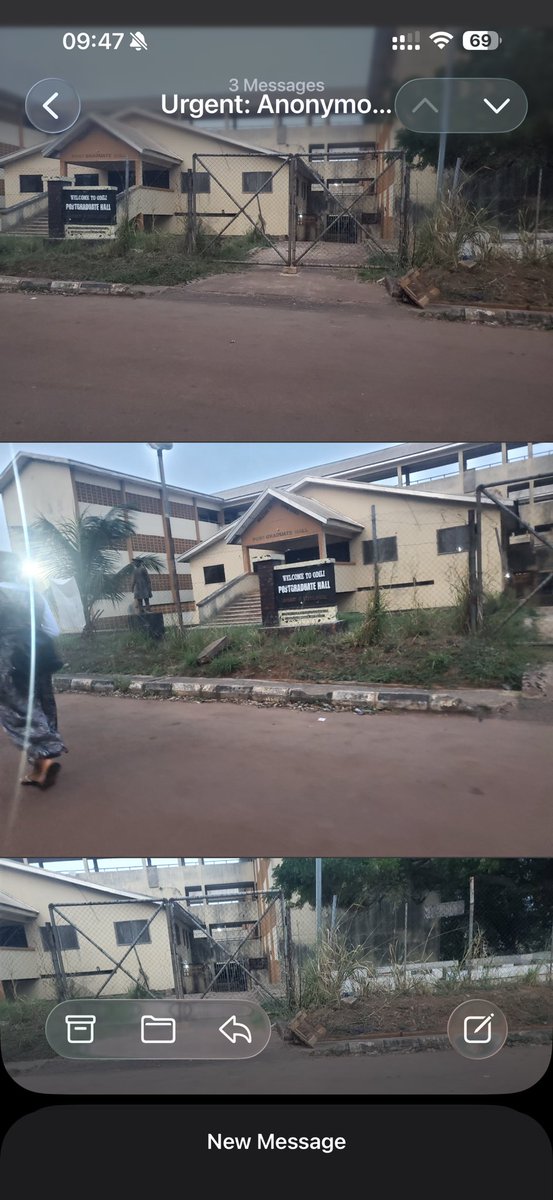
I am writing to you anonymously as a currently enrolled postgraduate student at the University of Nigeria, Nsukka (UNN), to bring to public attention a serious and prolonged welfare crisis affecting dozens, if not hundreds, of postgraduate students, including newly admitted ones from distant parts of Nigeria and beyond.
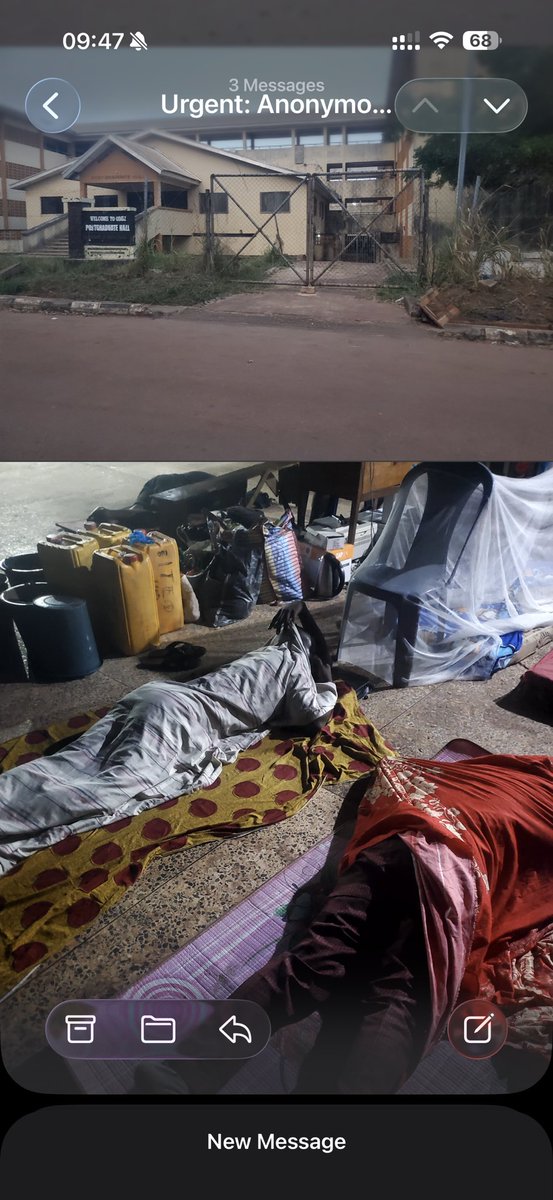
Since November last year, the university administration closed the postgraduate hostels, citing the need for urgent renovation works. No meaningful renovation has taken place in the intervening months. The hostels remain locked and inaccessible, with no visible construction activity, equipment, or workers on site. Despite repeated informal inquiries from affected students, the university management has provided zero official communication no updates, no timelines, no alternative arrangements, and no explanation for the delay.
Meanwhile, academic activities have continued without interruption. Postgraduate students are still required to attend lectures, participate in seminars, sit for examinations, present proposals, and defend theses as scheduled. The university demands full academic engagement and compliance, yet it has completely abdicated its responsibility to provide even the most basic living conditions.
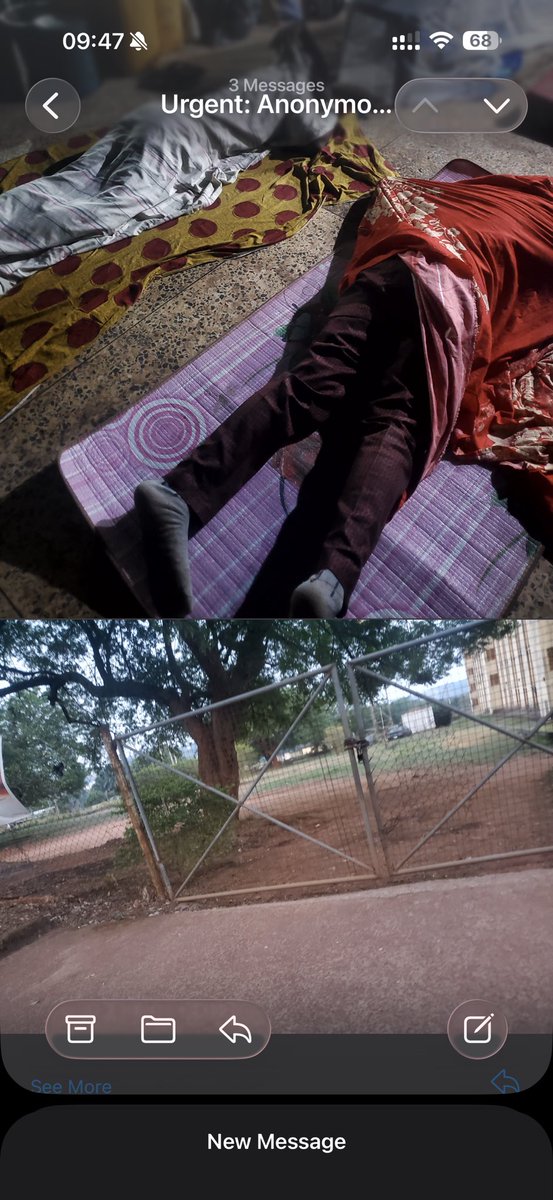
Many of us, myself included, have been displaced for over three months now. We are forced to seek makeshift accommodation in the following inadequate and often exploitative conditions:
1. Open spaces/ abandoned buildings were we have to wake up before it's day so we can have our bathe outside and relieve ourselves in bushes.
2. Overcrowded off-campus rooms, where landlords charge exorbitant rents (frequently 2–3 times the normal rate due to sudden demand).
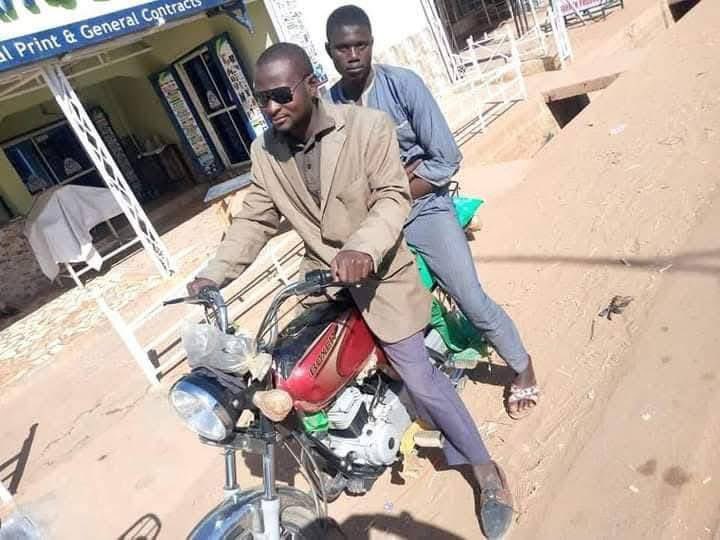
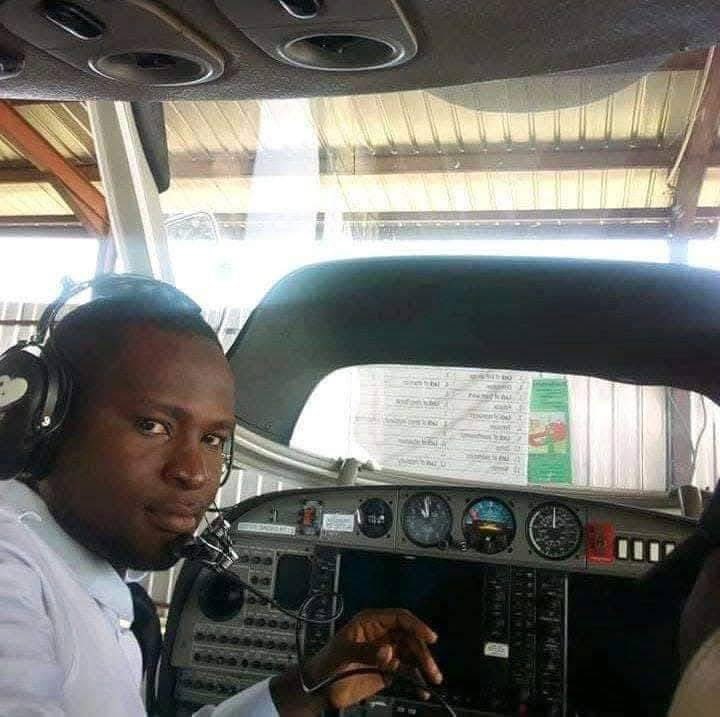
A 2018 Student Pilot Has Become an Okada Rider 😭😭
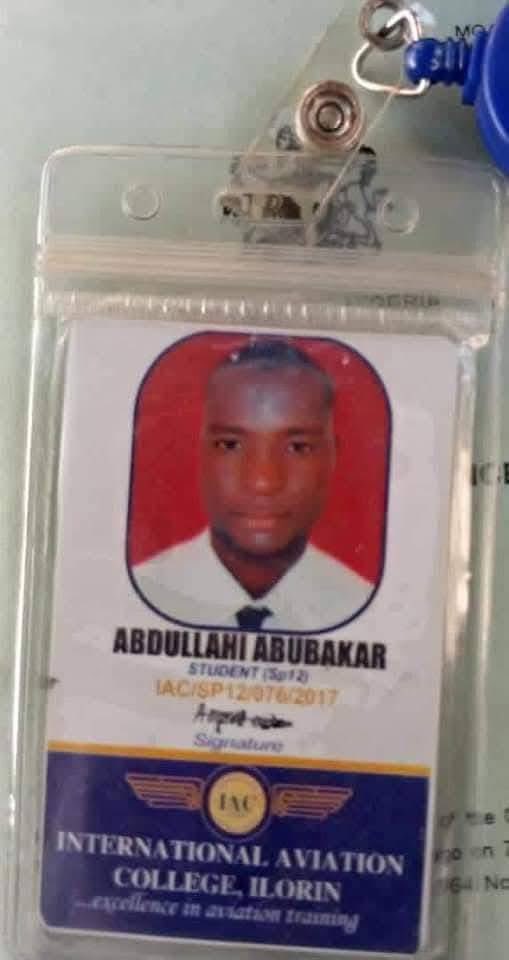
A brilliant and hardworking young man, Abdullahi Abubakar, who was previously a student pilot, has now resorted to working as an okada (commercial motorcycle) rider due to lack of financial support and inability to pay his school fees.
At the beginning of his journey, Abdullahi Abubakar was given the opportunity to study at the International Aviation College, Ilorin (IAC). The Kebbi State Government sponsored part of his training by paying a portion of the fees amounting to two million naira (₦2,000,000). This support enabled him to complete one year of training for the Private Pilot License (PPL).
Abdullahi Abubakar underwent several aviation training programs and sat for the Ground School Examination, where he performed excellently. He also passed the Nigerian Civil Aviation Authority (NCAA) examinations with very good results.
However, when he reached the Circuit and Landing stage of his training, the funds provided by the Kebbi State Government were exhausted. This forced him to return home in search of means to continue the training, which requires ₦1.8 million. Since 2019, Abdullahi has written to apply for a scholarship through the Office of the Executive Secretary of the Kebbi State Scholarship Board, but up till now, he has received no response.
Therefore, I am appealing to the Kebbi State Government to come to the aid of this young aviation student, considering that the ₦2 million already invested will go to waste if the training is not completed. Indeed, this is a great opportunity for Kebbi State to produce a talented and skilled young professional like Abdullahi Abubakar, who is determined to achieve his dream.
I also call on key stakeholders in Kebbi State, including businesspeople and politicians, to support and sponsor the remaining ₦1.8 million needed to enable this young man to become a qualified pilot.
In conclusion, Abdullahi Abubakar is an indigene of Kebbi State, from Birnin Kebbi Local Government Area, with license number 7468(A).
Aliko Dangote started a telecommunication company and failed.
He also started a textile company and failed terribly.
He started a Dangote Airlines and failed a few months later.
He then started a tomato sauce factory that also failed after a few months of operation.
Aliko Dangote this time started Dangote Millers which he failed to maintain and ended up selling it to South African company for $200m before buying it back at half the price he sold it.
This time Dangote started Dangote cement which became his first successful business. Sugar business followed and so did oil refinery.
Failing doesn't mean you won't succeed, it means you're learning.
A Chinese couple in Jiangsu gave birth to a fair-haired, blue-eyed baby girl, which has attracted widespread attention.
Initially, the family thought the baby might have been "switched at birth," but a paternity test later confirmed the child was biologically theirs.
After tracing their family history, it was discovered that the baby's great-grandfather was of Slavic descent (ethnic Russian). However, the family had given birth to several generations of boys, and this genetic trait remained hidden until it suddenly manifested in this baby girl. Some netizens commented that it was like a "genetic blind box with a hidden surprise."
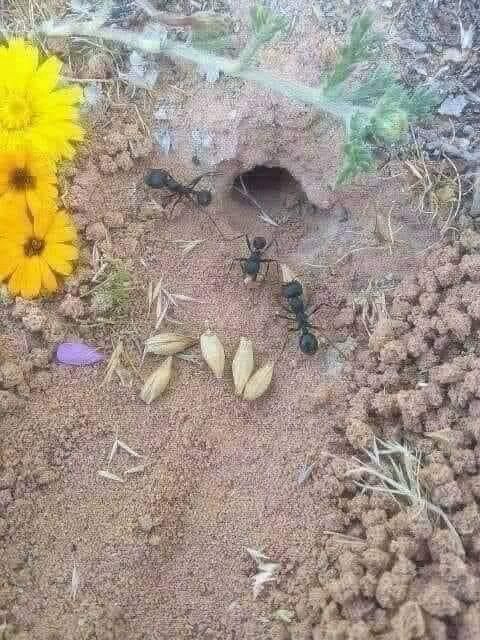
Scientists have discovered that ants, after collecting grains and seeds which they need to store for the winter, actually break them into halves before storing in their nests. This is because by breaking the seeds into half, it stops them from germinating despite the most perfect conditions.
But here comes the even more interesting part.
Scientists were stunned when they discovered that coriander seeds stored in the ant nest were always broken down into 4 pieces instead of 2 pieces.
After some lab research, scientists discovered that a coriander seed is the only seed that can germinate even after being divided into two, but can not germinate after it’s divided into four parts.