Here is my AI investing guide.
Sitting here August 2026, my current best thoughts are as follows:
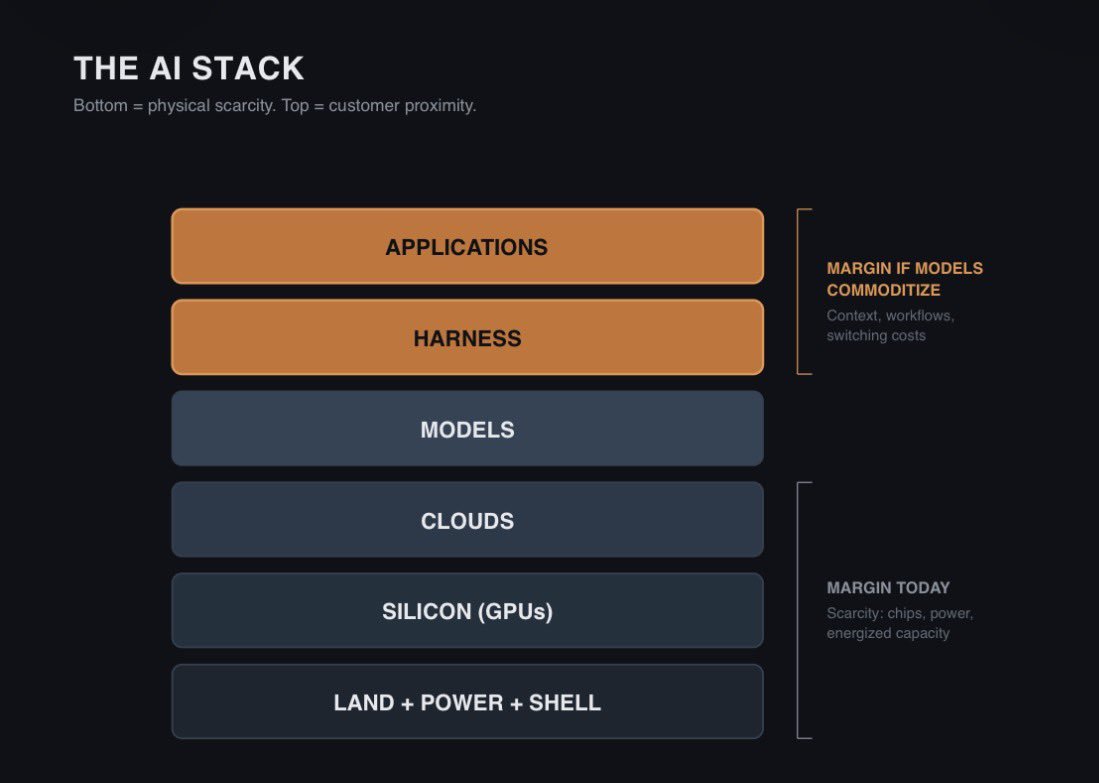
1. LPS (Land Power Shell) is still the most obvious and fastest path to cash on cash returns. Lots of value can be assembled and traded quickly at this layer. And as data centers get more pushback, energized land can explode in value. Very bullish here.
I’ve stepped into this layer very aggressively. My partner @anitavlallian and I have acquired almost 6GW coming online in a ramp from today thru 2029 of grid power and behind the meter.
2. Silicon - I helped get @GroqInc off the ground in 2015 and we licensed it to @nvidia for $20B Dec2025. I won’t invest or incubate anything in this layer now. The perf demands of the chips are too high, manufacturing precision is too complex and supply chain influence to get adjacent components like memory isn’t possible for a startup anymore. Lots of capital will be wasted here chasing Groq and Cerebras’ success. Note that both startups made sense a decade ago when these constraints were much more modest.
3. Clouds - Clouds are very very lucrative but very hard to build and very expensive and technically complicated to maintain. And as alignment becomes a more important issue, I expect the clouds will be asked to build robust KYC and attest to it. This makes the risk:reward ratio skewed. I don’t want to be responsible when the USG says a cloud allowed a bad actor to do something bad because of poor KYC.
4. Models are complicated. The big open question is how much of the revenue being generated by them today is because of tokenmaxxing and poor model behavior. If it’s a lot, then the annualized revenues will diminish meaningfully even as token consumption inflects upwards. This is the big economic question at this layer.
5. Harnesses are where the action is and why I started @8090solutions two years ago. In a nutshell, the harness helps enterprises owns their proprietary context (what Alex Karp calls their ‘alpha’). This is an enterprise’s data, workflows, evals, and business rules. A harness that gives this to an enterprise is what creates very low model-agnostic switching costs, which further reinforces my views of #4 above.
6. Applications will be another long term winner along with harnesses. This is where the differentiation between “off the shelf” and “custom time and materials” melts away. Every company, with the right harness, can now imbue their alpha into the software that runs their company. I expect this to mean that “off the shelf” is largely replaced with custom software creating a huge opportunity to write these solutions for companies. Build once and sell repeatedly is a laggard GTM motion for a SaaS world that isn’t needed here. Think custom by design, alpha embedded, proprietary by nature.
Fin.
Good luck to all the players!
The impressive part is not the apology. It’s the willingness to admit that the fund came close to blowing up.
Now the real question: what structural risk controls change after this? 🧐
Breaking: Leopold's full letter sent to his LPs last night
Leopold Aschenbrenner’s fund fell 67% in July but remains up 80% YTD and he announced he'll keep investing in public equities
We’ve decided to open-source a multi-agent harness we use internally at YC.
We call it “QM” and it’s meant to be easy to customize, like Hermes or OpenClaw, but useful for a whole company. We use it across accounting, legal, events, and engineering (including building QM itself!).
The whole project is under an MIT license. It is cloud-first and has Slack and web UI natively.
We’ve decided to open-source a multi-agent harness we use internally at YC.
We call it “QM” and it’s meant to be easy to customize, like Hermes or OpenClaw, but useful for a whole company. We use it across accounting, legal, events, and engineering (including building QM itself!).
The whole project is under an MIT license. It is cloud-first and has Slack and web UI natively.
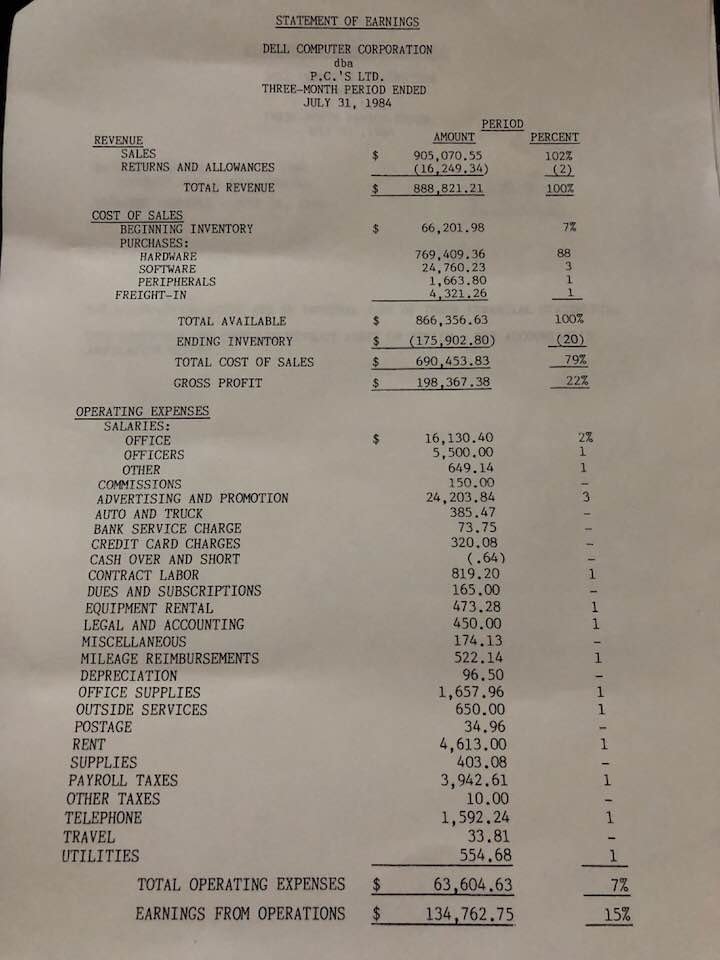
This one page changed my life.
42 years ago today, it convinced my parents I shouldn't go back to college.
I started by upgrading PCs from a dorm room.
Today @Dell is helping build the infrastructure that powers AI, from the edge to some of the world's largest AI factories.
You never know which small decision will change everything.
Keep building🚀🙏 #PlayNiceButWin
One thing the market teaches through experience: even the best information edge is only half the battle. Knowing how much to bet, when to press an advantage, how to manage risk, and how to construct a portfolio ultimately determines whether that edge compounds.
a 24-year-old ex-openai researcher ran a fund to $45 billion with eight people, was up 439% net through june, and by the end of july had sold his entire public stock portfolio to ken griffin in a single block trade.
griffin described this exact failure mode two years ago, asked why portfolio managers wash out at citadel:
"you have a portfolio that is extraordinarily highly concentrated, you have large positions, you cannot demonstrate a clear and concise competitive advantage in why you own those positions."
"and there are some people that just, with full information, are unable to help themselves and get to a better portfolio construction."
he was also asked the opposite question in the same interview, why citadel keeps working, his third and final answer was this:
"it's experience. it's the price paid in losses and pain that converts into wisdom. my leadership team, we've been through a lot of very difficult moments of the markets together. we've learned some very bitter lessons. but it makes us much more effective as investors in periods of turmoil and crisis."
citadel started in november 1990. situational awareness started in 2024, long AI infrastructure and short software at roughly 4x leverage. both legs went against it in the same three weeks.
there was no bitter lesson priced into that book yet.
that's what got bought.
he wasn't wrong about AI. he was wrong about the construction of his book.
Today, roughly the same amount of basic research is done in industry as in academia. It’s time our doctoral training reflected that.
@NSF is launching a first-of-its-kind 4-year PhD program at more than 30 universities. Students will spend a year+ embedded with industry partners doing research that informs their dissertation.
We've already accepted 2,000+ more OSS maintainers since expanding the program 🥰
If you're a maintainer and haven't applied yet (or applied before we expanded eligibility), please do!
Depends on what the harness is doing. If it tries to dictate how the model works, it fights the model and you get brittleness. If it defines what the task is and evaluates the result, that matters a lot for long horizon tasks. The how belongs to the model, the what and the grading belong to the harness. That's roughly what let us get complicated things done e2e.
Video Podcast is live.
Turn any doc, link, or idea into a two-host video show with studio scenes, multi-cam cuts, and B-roll. Ready in minutes.
Everyone else stops at audio. This is a show you can publish.
Try it: https://t.co/mwV67pFCDT