🇺🇸 En Estados Unidos: ↓
Tu hijo dice que le gusta el fútbol.
Lo apuntas a un equipo.
A las tres semanas alguien menciona un “travel team”.
Preguntas qué es.
Error.
Ahora entrenáis tres días por semana.
El sábado hay partido.
El domingo también.
Pero a 180 km.
Reservas hotel.
Compras otra equipación.
Botas nuevas.
Bolsa nueva.
Cuotas del club.
Torneo de primavera.
Torneo de verano.
Campamento de tecnificación.
Entrenador privado.
Alguien habla de “exposure”.
Tu hijo tiene 11 años.
Hay vídeos de sus partidos.
Estadísticas.
Rankings.
Otro padre te pregunta si habéis pensado en becas universitarias.
Tu hijo sigue teniendo 11 años.
El calendario familiar gira alrededor del deporte.
Tú ya conoces hoteles de carretera de cinco estados.
El coche huele permanentemente a césped artificial.
Domingo por la noche.
Llegáis a casa.
Tu hijo pregunta:
—¿Puedo salir a jugar al fútbol con mis amigos?
Solo querías que hiciera un poco de deporte.
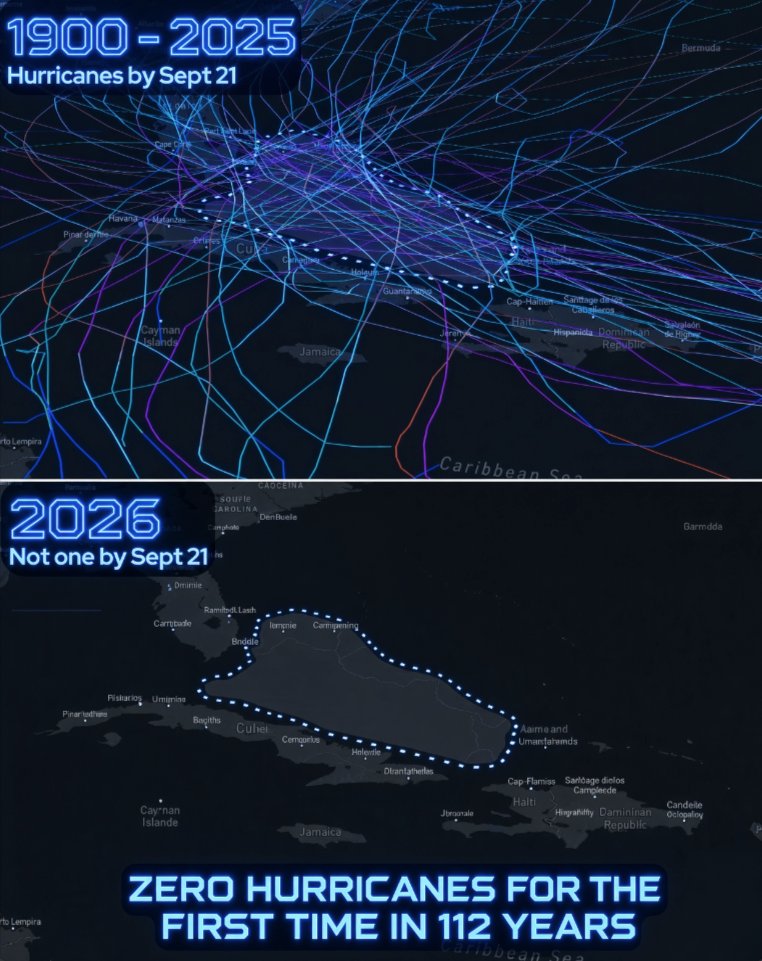
For the first time in 112 years, the Atlantic basin has reached late September without producing a single hurricane.
The 2026 Atlantic hurricane season is rewriting the record books for its unmatched quiet. Although several named tropical storms formed earlier in the year, not one system has grown into a hurricane by late September, which sets a mark for the latest start to hurricane formation since satellite monitoring began in 1966.
Meteorologists point to a mix of hostile atmospheric conditions that hold storm growth down. In particular, a powerful Super El Niño in the Pacific is producing intense vertical wind shear across the Atlantic basin, tearing tropical waves apart before they can organise into stronger systems.
Adding to that wind shear is an unusually dry and stable atmosphere. Plumes of dry air from the Sahara Desert have cut off the moisture tropical storms need in order to intensify.
This sharp lack of storm development has produced the lowest Accumulated Cyclone Energy (ACE) index recorded for this point in the year in decades. Coastal residents in the United States are seeing a welcome pause in major landfalls, while the unusual weather pattern has also deepened severe drought across several Caribbean islands that ordinarily depend on seasonal tropical rain.
@PaulSaladino7@USAEnergyNatGas Almost all that new supply/demand is baseload demand. It hasn’t increased the differential in seasonal demand from summer to winter. Still 2Tcf withdrawals/injections every season. Rarely lack of storage space or gas from it. Only in crazy cold days and only bc deliverability
One of the broader lessons from commodities is that every market participant sees the same price signal at the same time and responds in the same way. That collective response is what creates the inevitable boom/bust cycle. AI compute might not be immune to the same dynamic.
Overheard in Colorado from a guy talking about his job at ski rental shop:
"It's a bunch of high-end people from Texas, but they're not bad. They're very 'Yes, sir,' 'No, ma'am.' The kids are all very polite. I'll compliment the parents who just say, 'That's how we raised them'"
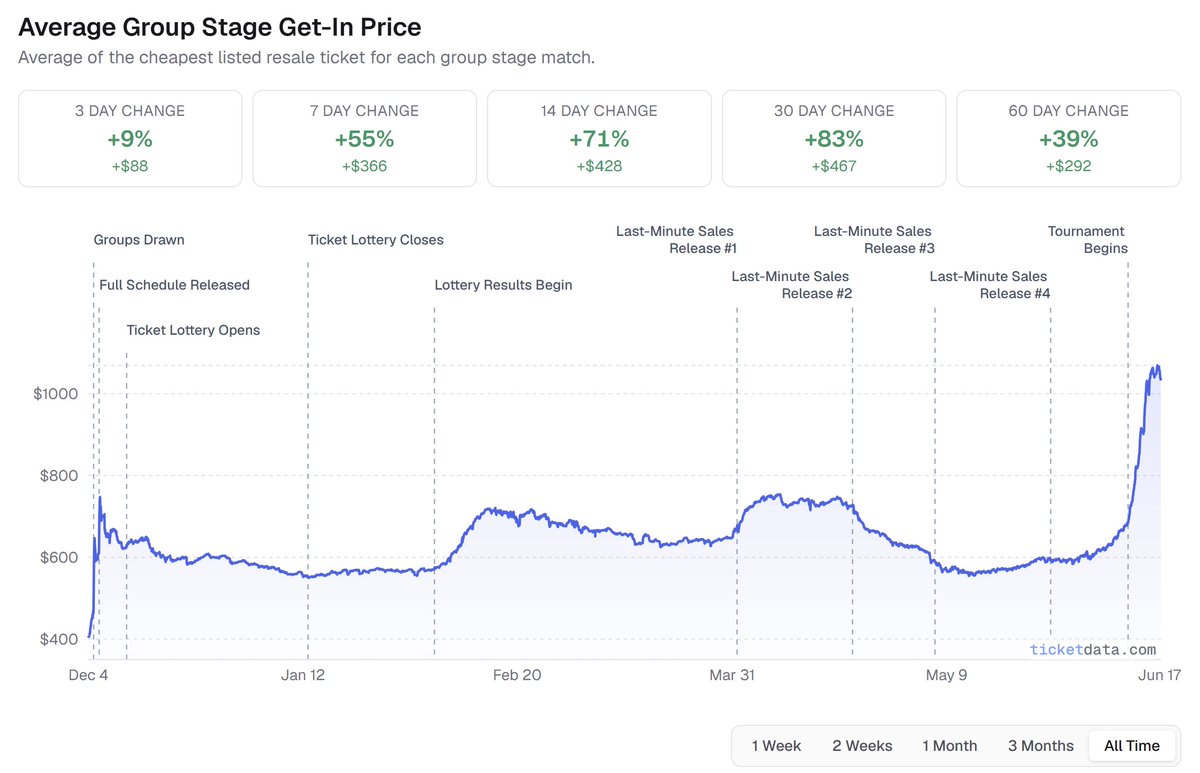
So many articles about World Cup tickets criticized high prices, unsold tickets, and dynamic pricing. The reality is every game in the US is sold out, tickets are trading at material premiums in secondary market, and more $ is flowing to national federations than ticket brokers.
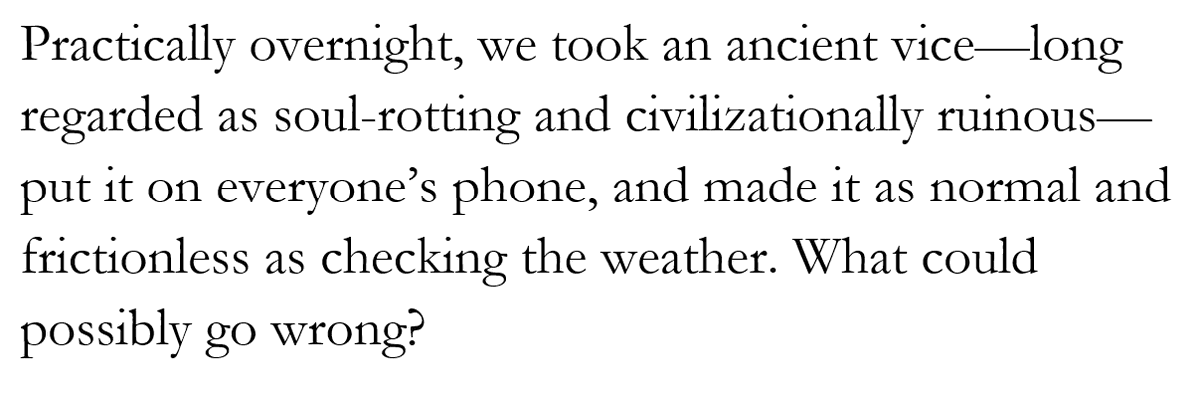
The Atlantic has a sobering, first-person look at the ramifications of legalized online sports betting. Here are a few of the more telling passages.
1/5
@ira_joseph@ColumbiaUEnergy Gas at Henry hub for the weekend is been quoted around $18/mmbtu. That’s well higher than LNG but as we know its still hard to cancel cargoes. But some deals will be negotiated
@aeberman12 My apologies. I was sending my response to a guy that said they were up 95% instead of just sending a reply on it to you.
My point is that prices have been basically flat for 2 decades (on average) and future prices are in backwardartion. Cal 29 futures are 3.68
@RichardMeyerDC Natural Gas prices are no up 95%. Here’s a 10yr graph of Henry hub inflation adjusted.
Electricity prices are not up because of NG prices, they are up because of a lack of electricity generation from natural gas.
@RichardMeyerDC Natural Gas prices are no up 95%. Here’s a 10yr graph of Henry hub inflation adjusted.
Electricity prices are not up because of NG prices, they are up because of a lack of electricity generation from natural gas.