⚡ Fuel Crisis Hits Khulna’s Power Supply
• Several power plants—including the Rampal Thermal Power Plant — are partially or fully shut due to fuel shortages
• 🔻 Power generation capacity has dropped by nearly 50%
Rising Demand, Falling Supply
• Summer demand: ~1,600 MW
• Daily 3–5 hours of load-shedding in both urban and rural areas
Public Impact
• Frequent blackouts disrupting daily life
• Businesses facing losses
• Heat making conditions increasingly difficult
Experts Suggest a Way Forward
• Fossil fuel power costs: ~18 taka/unit
• Solar power: ~9 taka/unit
• ⚡ Shift to renewable energy seen as key solution
📢 The Bottom Line
Fuel shortages are exposing vulnerabilities in the power system—
A faster transition to clean, reliable energy may be crucial for the future.
#Bangladesh #BangladeshCrisis #PowerCut #PowerCrisis #Khulna
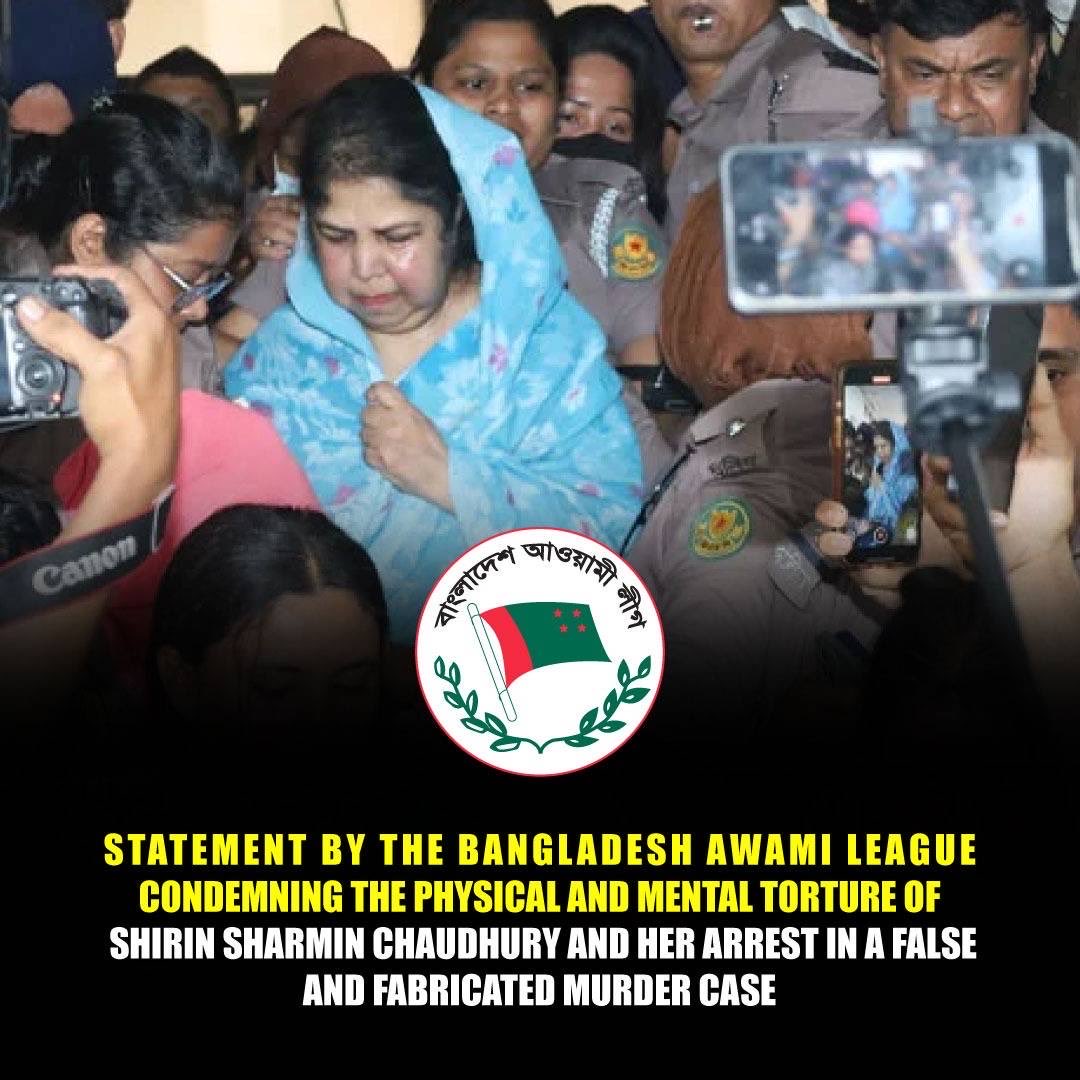
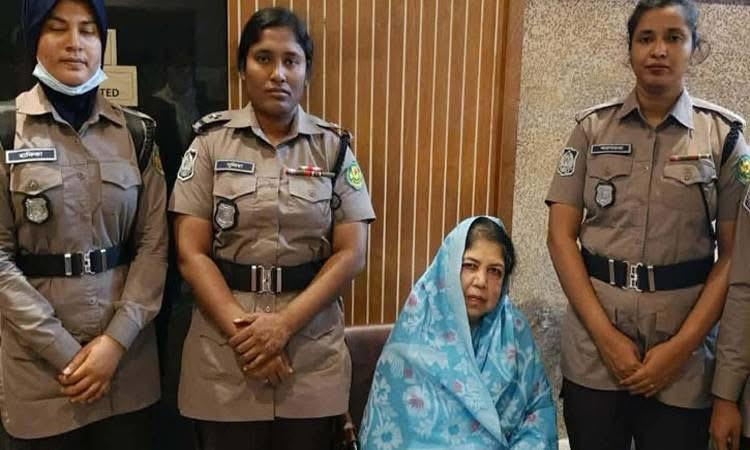
Bangladesh Awami League expresses deep concern, strong condemnation, and protest over the physical and mental abuse inflicted on former Speaker of the National Parliament, Dr. Shirin Sharmin Chaudhury, and her arrest in a completely baseless and fabricated case.
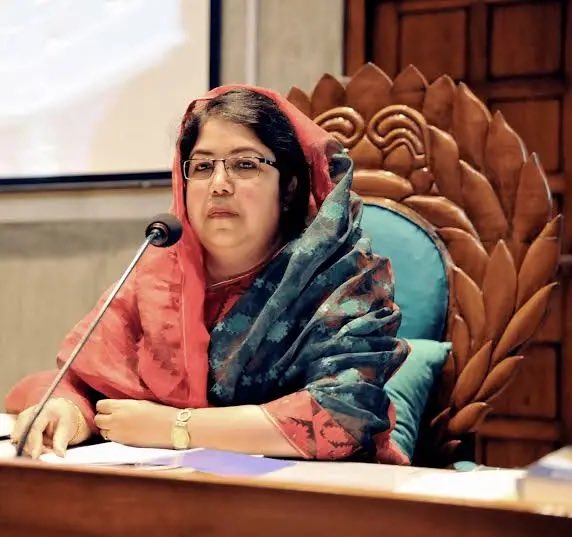
Dr. Shirin Sharmin Chaudhury held a constitutionally mandated position in the National Parliament and was the country’s first female Speaker. Such inhumane treatment toward a competent, refined, and humane woman politician is contrary to democratic culture and the rule of law, and constitutes a grave violation of human rights.
This kind of behavior toward an individual who served in a constitutional position of the state and played a vital role in upholding the dignity of the country’s democratic institutions is not only disgraceful but will stand as a deplorable example.
The Bangladesh Awami League firmly believes that such false cases and acts of repression, carried out to satisfy political vendetta, have endangered the democratic environment of the country. This is against the principles of justice and represents a heinous misuse of the law.
We demand the immediate and unconditional release of Dr. Shirin Sharmin Chaudhury. At the same time, we call for the withdrawal of all false and harassing cases filed against national leaders and people from all walks of life, and for the release of all political prisoners. There is no alternative to this if Bangladesh is to be built as a fair and democratic state.
Joy Bangla
Joy Bangabandhu
Long live Bangladesh.
#Bangladesh #BangladeshCrisis
Shirin Sharmin, the Speaker, has been arrested in a fabricated July case.
According to the case statement, on August 5 she was also on the streets alongside the police against the July militants. Then what about the incident where the army rescued her from inside Parliament at 2:30 a.m.?
When a country no longer has laws or the rule of law, it descends into extreme disorder. Bangladesh is being deliberately pushed in that direction.
Today, this drama has been staged to divert attention from the public’s outcry over fuel, gas, electricity, fertilizer, and essential commodities. The media is busy covering Shirin Sharmin’s arrest, as if everything in the country is normal.
The people will respond to all of this very soon.
Repression and oppression cannot keep people subdued for long.
#Bangladesh #BangladeshCrisis
#Bangladesh’s first female Speaker arrested by the #BNP Govt in a trumped-up, politically motivated case stemming from the events of July–August 2024.
Dr. Shirin Sharmin Chaudhury, the first woman to serve as Speaker of the National #Parliament, was detained earlier today by the Detective Branch of Police in connection with a “attempted murder” case filed at Lalbagh Police Station in #Dhaka. The case relates to the violence during the Anti-Quota Movement of July–August 2024.
DB claims they are examining her alleged “involvement” in incidents of violence and vandalism during that period, an assertion that is as laughable as it is sad. News:
https://t.co/z7lD9YKWdU
In Bangladesh, arrests of this scale rarely occur without approval from the highest levels of government. It is therefore reasonable to conclude that the current administration led by #TariqueRahman played a decisive role in this action. Notably, under the previous #Yunus-led Interim Govt, former Deputy Speaker Shamsul Haque was also arrested in October 2024 under a similar wholesale criminal case tied to the same events.
Dr. Chaudhury served as Speaker from April 30, 2013, until her forced resignation on September 2, 2024. A top constitutional lawyer, she also served as Chairperson of the Commonwealth Parliamentary Association from 2014 to 2017, the first ever Bangladeshi to hold the position.
This arrest highlights three troubling realities:
First, Tarique Rahman’s stated commitment to the rule of law appears increasingly questionable;
Second, the pattern of political targeting initiated under the Yunus regime is not only continuing but intensifying under the BNP Govt;
Third, Bangladesh risks entering another prolonged cycle of political retaliation that could destabilize the nation for years to come.
….
#BangladeshCrisis @commonwealthsec@IPUparliament@hrw@amnestysasia@meeganguly@PearsonElaine@ESandersFCDO@volker_turk@UNHumanRights@StateDRL@AgnesCallamard@justiceinfonet@IBAHRI@forum_asia@article19org@FortifyRights@BonaveroIHR@IHRF_English
A formal UN communication has raised serious concerns over the political and human rights situation in Bangladesh, particularly the ban on the Awami League and the use of anti-terror and tribunal laws against its members. The UN flagged issues including mass arrests, restrictions on political speech and assembly, and alleged violations of fair trial rights. These developments point to a shrinking democratic space, where opposition voices are being sidelined and due process is increasingly questioned. As the country approaches a critical political juncture, the international community is being urged to closely monitor the situation and ensure that fundamental rights and democratic principles are upheld.
https://t.co/XzU0jqIG4A
#AwamiLeague #Bangladesh #HumanRights
https://t.co/hrGAz6jZjQ
The individuals shown in the image have all passed away. They were affiliated with the Awami League as leaders and activists at different levels. During the tenure of the @Yunus_Centre administration, they were arrested and detained. In many cases, their families have alleged, and available evidence indicates that they were subjected to physical abuse and denied proper medical care, leading to their deaths, which are being described as instances of extrajudicial killing.
Among them, several had participated in the Liberation War and contributed to the birth of Bangladesh. Yet, in that very Bangladesh, they were deprived of legal rights and denied the right to bail.
At least 526 people have reportedly been killed under the government led by Yunus. According to human rights organizations, 128 people were killed through mob violence in 2024, and 166 in 2025. Law enforcement agencies under Yunus carried out extrajudicial killings of 45 individuals. During Yunus’s rule, 187 people died in prison, most of whom were Awami League leaders and activists.
After the interim government led by Yunus took power, there was a surge in widespread killings and the filing of fabricated cases to suppress dissenting voices in Bangladesh. Not only Awami League leaders and activists, but also innocent people with even distant connections to the party were arrested and imprisoned. With direct intervention from the Yunus government, these individuals were deprived of their right to bail.
The record of those killed during their tenure is enough to understand what the rule of NGO figures and so-called civil society representatives—who often speak about human rights—actually looked like. Many people question the number of deaths during Yunus’s tenure. Therefore, this effort has been made to publish a list with photos. Today’s first installment includes the names and images of 42 individuals, along with the prisons where they were held.
The list was compiled by journalist @TaimurTusher who himself became a target of the Yunus administration and was forced to leave the country. It is important for the world to recognize the true nature of Yunus and his associates, who have long relied on rhetoric about human rights and the rule of law as a foundation for their NGO activities.
#HumanRightsCrisis
@AgnesCallamard@IHRF_English@IHumanRightsC@IhrcE@FCDOHumanRights@RapporteurUn@FranceskAlbs@Kennedy_HRC@SouthAsiaHudson@EUAmbBangladesh@CWhiteleyEU@USAmbBangladesh@StateDRL@DRL_AS@LisaCurtisDC@State_SCA@SergioGor@BobBlackman@usembassydhaka@AyorkorBotchwey@husainhaqqani@DerekJGrossman@MichaelKugelman@dhume@CJBdingo25@Chellaney@mrubin1971@ChathamHouse@kajakallas@bronwenmaddox@lelispatricia@patlakath
“Many innocent people have been arrested and detained in jails. If you go to any jail in Bangladesh, you will see they are filled with the activists of one particular political party. Even supporters of the party are being detained, people who have held no formal political positions. I shared the cell with one young man who has been slapped with five cases. After getting bail in those cases, he was then “shown arrested” in two fresh cases to prevent his release”.
- Anis Alamgir (15 March, 2026)
Senior journalist Anis Alamgir was arrested by the #Yunus-led Interim Govt on 14 December 2025 under the controversial amendment to the Anti-Terrorism Act 2009.
He was subsequently “shown arrested” in another case filed by the Anti-Corruption Commission (ACC) on 28 January 2026, deliberately prolonging his detention.
Alamgir was finally released from Kashimpur Central Jail in Keraniganj, #Dhaka, on 14 March 2026 after securing bail in both cases.
Following his release, he shared the above remarks with the media over the phone, describing his experience in prison and the widespread use of the practice of “shown arrested” to keep detainees incarcerated even after courts grant bail.
The political party he refers to in his comments, if it was not already obvious, is the #AwamiLeague.
Interview:
https://t.co/ViSRYJRbEH
…
#BangladeshCrisis #PressFreedom @CPJAsia@RSF_inter@ifjasiapacific@MediaFreedomC@StateDRL@amnesty@hrw@Irenekhan@volker_turk@UNHumanRights@UN_HRC@ESandersFCDO@TheDavidBergman@PearsonElaine@hrw@EURightsAgency@Ginitastar@MujMash@guardian
“If July 24 had not happened, someone like me could not have come from a death-row cell to Parliament.”
— This statement was made by ATM Azharul Islam, a man who opposed Bangladesh’s independence in 1971 and was sentenced to death for war crimes. His words reveal a deeper truth: who stood behind the July conspiracy and what July has ultimately brought to the country.
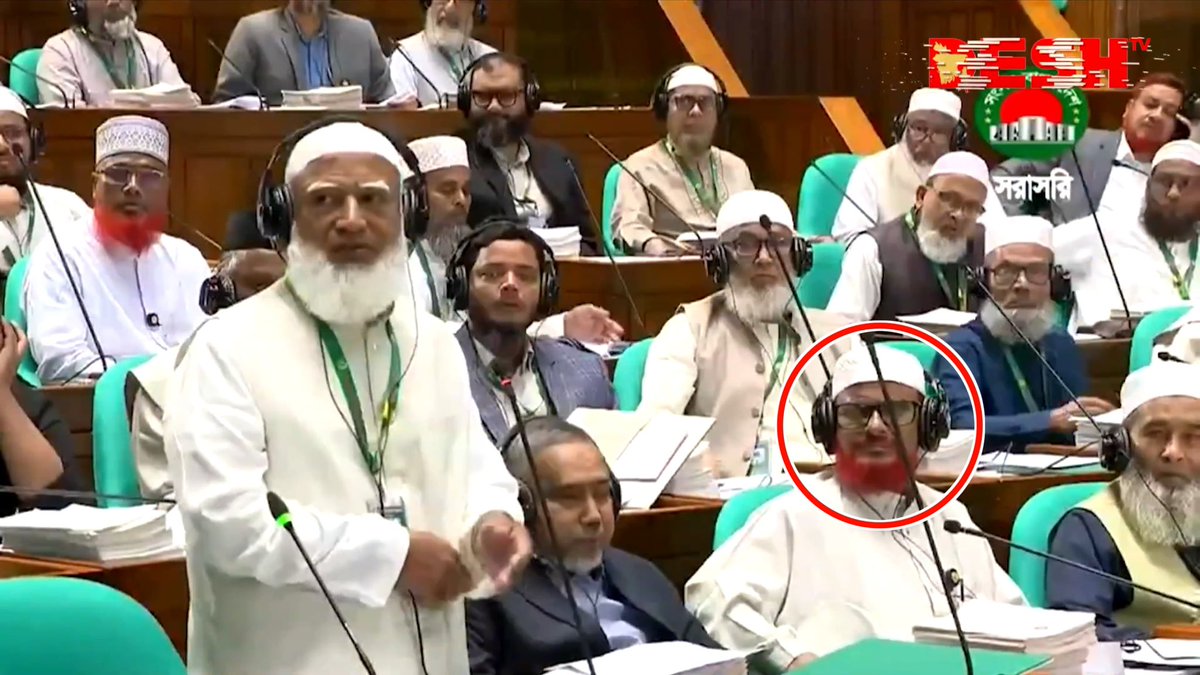
The person marked in the red circle in the image is war criminal A. T. M. Azharul Islam. Today, he has participated in a parliamentary session—despite being convicted for his role in the killing of 1,400 unarmed Bengalis during the 1971 Liberation War.
On April 17, 1971, Jamaat leader Azharul Islam collaborated with the Pakistani army in carrying out mass killings in several villages in Rangpur, where around 1,400 unarmed Bengalis were murdered. He also assisted the Pakistani military in other locations and took part in numerous acts of violence and killing.
Key incidents include:
• April 16, 1971 – Azharul Islam, along with Pakistani soldiers and Jamaat members, attacked Mokshedpur village. Homes were looted and burned, and many unarmed civilians were brutally killed.
• April 17, 1971 – He took part in a coordinated attack on several Hindu-majority villages near Jharuar Bil in Rangpur. Approximately 1,200 people were killed, and more than 200 others were abducted and later murdered. Azharul Islam was convicted under the doctrine of Joint Criminal Enterprise (JCE) for these crimes.
• April 30, 1971 – Azharul Islam abducted four Hindu professors and the wife of one professor from Carmichael College in Rangpur. They were later killed. Evidence presented in court established beyond doubt that he directly participated in these abductions and murders.
Today stands as a dark and shameful chapter in history. A convicted war criminal, an opponent of Bangladesh’s independence, and a death-row prisoner has taken part in Parliament.
It signals the beginning of a path that undermines democracy, the rule of law, human rights, and the values of a civilized society.
This is what is being called the “New Bangladesh.”
The Narrative of So-Called “Indian Hegemony” by the Pro-Pakistani Razakar Group vs. the Actual Reality
In my previous writing, I mentioned that during the Liberation War, the Pro-Pakistani Razakar group constructed a narrative of so-called “Indian hegemony,” and even today they continue to promote that same narrative. They label the friendship between pro-Liberation forces of Bangladesh under the leadership of Sheikh Hasina and India—built on the basis of equality—as “Indian hegemony.”
This is because their mentality is still trapped in subservience to pro-Pakistani ideals. To those who are mentally subservient to Pakistan, even a friendship with India based on equality appears to be “Indian hegemony.” This is nothing new; it has been their habit for a long time. If one examines history, evidence of this can easily be found.
They spread countless stories about Indian hegemony during Sheikh Hasina’s tenure in power. Yet in reality, they have never been able to show a single agreement made with India during her time that went against Bangladesh’s interests.
On the contrary, during Sheikh Hasina’s tenure Bangladesh secured many important benefits from its neighboring country India. Through relations with India based on equality and friendship, she implemented many initiatives beneficial to the people of both countries. But the Razakars’ “Pakistani mindset” could not view those initiatives positively.
At a time when the entire world is facing an energy crisis, let me give one example. Prime Minister Sheikh Hasina arranged for Bangladesh to import diesel from India through a pipeline at a lower cost and with lower carbon emissions. This initiative will play a significant role in the progress of Bangladesh’s agriculture and industry. On the day of the inauguration, nearly 9 million liters of diesel arrived at Bangladesh’s Parbatipur depot through the pipeline from Numaligarh in India.
You can see the news at the link below:
https://t.co/dd4cMWLTPR
The pipeline shown in the attached image is that very pipeline. It starts from the Numaligarh refinery near Siliguri in India and extends to the Parbatipur railhead depot in Dinajpur, Bangladesh. Even during the construction of this pipeline, Sheikh Hasina was falsely accused by BNP-Jamaat of selling the country to India. They claimed that the project was part of selling out national interests. She had to endure countless criticisms and accusations.
And now, diesel is being imported from India through that very pipeline, which has helped make the country’s fuel supply somewhat easier and more stable.
During her time in power, Sheikh Hasina undertook numerous projects, most of which were aimed at strengthening the country’s infrastructure and economy. This pipeline is just one small example among them.
The more the country faces crises, the more clearly people will recognize the importance of the work Sheikh Hasina carried out. Ultimately, those initiatives will benefit ordinary people. Sadly, many of the very beneficiaries of those initiatives have often criticized her work by mixing truth with falsehood.
—Mohammad Ali Arafat
March 1971: The Month That Changed a Nation 🇧🇩
From mass protests to the historic 7 March Speech, and the brutal crackdown of Operation Searchlight, March 1971 reshaped the destiny of Bangladesh.
What began with a political crisis soon turned into a fight for freedom - igniting the Bangladesh Liberation War that led to the birth of a new nation.
A story of resistance, sacrifice, and independence that still defines Bangladesh today. 🇧🇩
#March1971 #BangladeshHistory #LiberationWar #Bangladesh
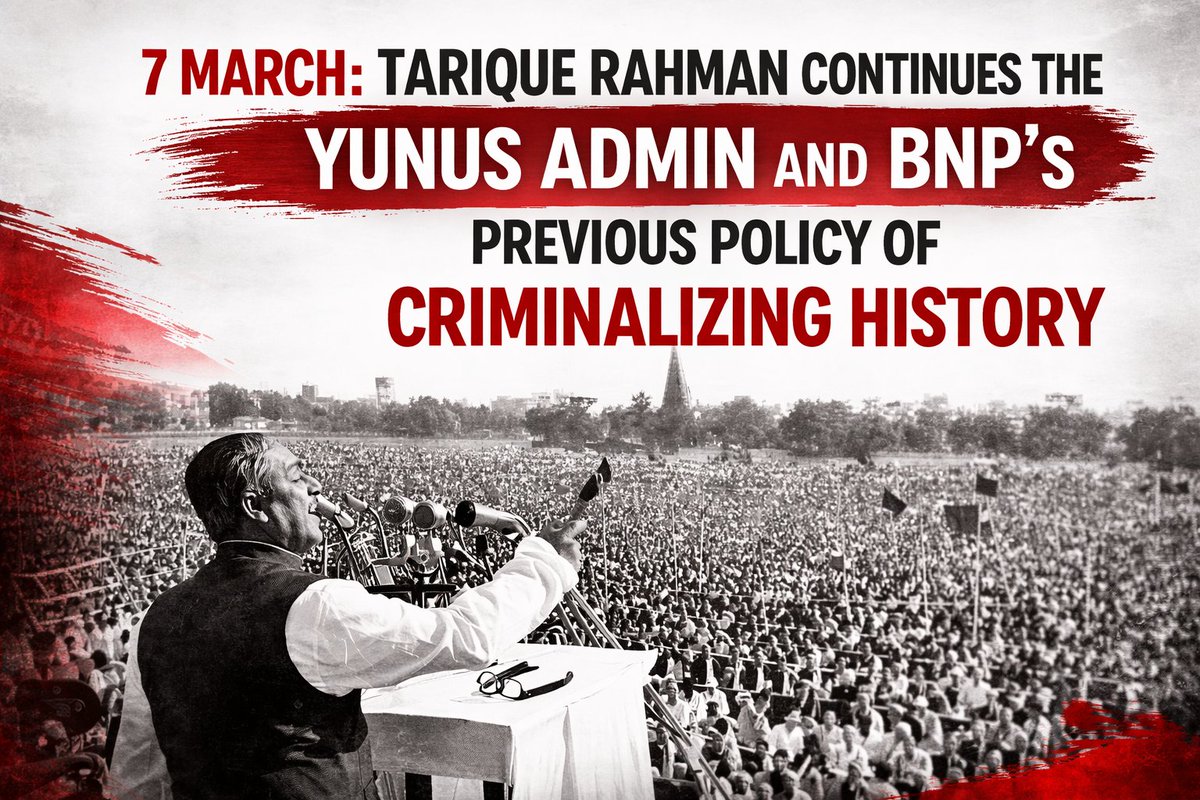
It appears that the government led by #TariqueRahman is poised to continue the troubling legacy of censorship and historical erasure that characterized the #Yunus-led Interim Govt, as well as earlier #BNP governments under #KhaledaZia and #ZiaurRahman. Recent events surrounding the historic 7 March observance make this trajectory alarmingly clear.
Several incidents from yesterday illustrate a pattern that raises serious concerns about civil liberties, freedom of expression, and the politicization of national #history:
• Four individuals, including three #women, were arrested under the Anti-#Terrorism Act simply for laying floral tributes at the ruins of the Bangabandhu Memorial Museum in Dhanmondi, Dhaka. See:
https://t.co/WYlmLGL5kA
• A former Dhaka University student was detained under the same anti terror law after playing Bangabandhu Sheikh Mujibur Rahman’s historic 7 March speech over a loudspeaker in the Chankharpul area of Dhaka. See:
https://t.co/EeLSdksKxR
• Three more Dhaka University students, including a female political activist, were arrested near #Shahbagh Police Station while protesting the detention of their former classmate. A court subsequently sent them to jail under the Anti-Terrorism Act. See:
https://t.co/1gDnvP8T5r
• In a separate incident, another Dhaka University student was reportedly assaulted by activists affiliated with the #NCP-linked Jatiya Chhatra Shakti and left injured near Shahbagh Police Station, allegedly for posting on social media about the historic significance of 7 March 1971. See:
https://t.co/ZBZ43FlHkU
Taken together, these incidents suggest a deeply troubling trend: criminalization of remembrance and the suppression of historical expression. The use of anti-terror legislation against individuals whose actions consist of paying tribute, playing a historic speech, or voicing opinions about a foundational moment in the country’s liberation struggle raises serious questions about proportionality, legality, and democratic norms.
This pattern echoes earlier periods in #Bangladesh’s political history. Between 1975 and 1996, successive BNP governments under Ziaur Rahman and Khaleda Zia were widely criticized for marginalizing or censoring commemorations associated with Bangabandhu Sheikh Mujibur Rahman and key moments of the Liberation War. Such policies not only polarized society but also fostered a culture in which historical narratives became tools of political exclusion.
Today, the continued siege-like situation surrounding the ruins of the Bangabandhu Memorial Museum, combined with arrests under anti-terror laws for acts of symbolic remembrance, sends a powerful and unsettling signal.
It suggests that the current BNP leadership is all too happy to continue a strategy of controlling historical discourse rather than allowing open engagement with the nation’s past.
History cannot be erased through intimidation, nor can collective memory be governed through criminal law.
A confident and democratic state should allow its citizens to remember, debate, and interpret their history freely, without fear of arrest, violence, or legal persecution.
...
#BangladeshCrisis #History #HistoryUnderAttack #7March
Within a week of leaving office, advisers of the former interim government led by Muhammad Yunus are facing an unprecedented wave of complaints at the Anti-Corruption Commission (ACC).
Allegations against Yunus include misappropriation of funds from Grameen Telecom and Grameen Bank, tax evasion through trusts, and money laundering. Former Law Adviser Asif Nazrul faces claims of influencing bail, case filings, and judicial appointments, including one allegation involving a 200 million taka bribe.
Complaints have also been filed against former advisers for environment, energy, health, student affairs, and information, with accusations ranging from tender irregularities to multi-billion taka corruption and bribery linked to TV licenses.
Transparency International Bangladesh says no one should be above the law if evidence supports the claims. The ACC is now reviewing the submissions.
#YunusRegime #Corruption #CorruptYunus
The Speech That Awakened a Nation
March 7 is more than a date in history. It is the moment a nation found its voice.
On this day in 1971, Bangabandhu Sheikh Mujibur Rahman stood before millions at the Racecourse Ground in Dhaka and delivered a speech that changed the course of history. In just 18 minutes, he united a people who had endured decades of political exclusion, economic exploitation, and cultural repression.
With remarkable courage and strategic wisdom, Bangabandhu inspired a nation to prepare for its struggle for freedom while avoiding immediate repression from the regime. His words mobilized millions and laid the foundation for Bangladesh’s Liberation War.
In 2017, the historic speech was recognized by UNESCO and added to the Memory of the World Register.
March 7 was not just a speech. It was the awakening of a nation.
Joy Bangla. 🇧🇩
#Bangladesh #7March #March1971 #Bangabandhu
On 12 February 2026, Bangladesh’s promised return to democracy under the interim administration of Muhammad Yunus instead sparked controversy. While the Election Commission reported 59.4% turnout, independent accounts described empty polling centres and estimated participation as low as 10–13%, raising serious questions about legitimacy and public mandate.
👉 https://t.co/myMobpZ09c
#BangladeshElections2026