1/8 ✨Thrilled to share that our paper is now online
@NatureBiotech
“Single-cell spatial pharmacobiology identifies conserved stromal barriers to therapeutic antibody delivery in human solid tumors”
https://t.co/Gm5vVtduHT
(open access): https://t.co/UuxG8JJC2M
1/ Thrilled to share our new paper, out today in @ScienceMagazine! We built a pan-cancer spatial atlas of tertiary lymphoid structures (TLSs) and developed computation and AI frameworks to study TLS biology at scale.
https://t.co/zgcBnnm7Rl
🧬GWAS is fundamental in drug discovery, linking disease to genetic variants. However, studying rare and uncommon diseases with GWAS is hard due to the huge sample sizes required. How can we use AI to help GWAS with small cohorts?
In a multi-year collaboration @GSK@StanfordAILab@StanfordMed@SCSatCMU, we are thrilled to share Knowledge Graph GWAS (KGWAS), the largest AI model that integrates >10 millions of multi-modal and multi-scale functional genomics data to improve GWAS power by 100% while discovering novel disease-critical variants, genes, cells, and networks!
A huge shoutout to our stellar team of AI, statistics, and human genetics scientists: @tkyzeng Soner Koc, Alexandra Pettet @zhou_jingtian@MikaSarkinJain Dongbo @_camiloruiz@ren_hongyu@laurencejmshowe Tom Richardson, Adrián Cortés, Katie Aiello, Kim Branson, @apfenning@jengreitz@martinjzhang@jure
Paper: https://t.co/t0tAratBZI
1/15🧵
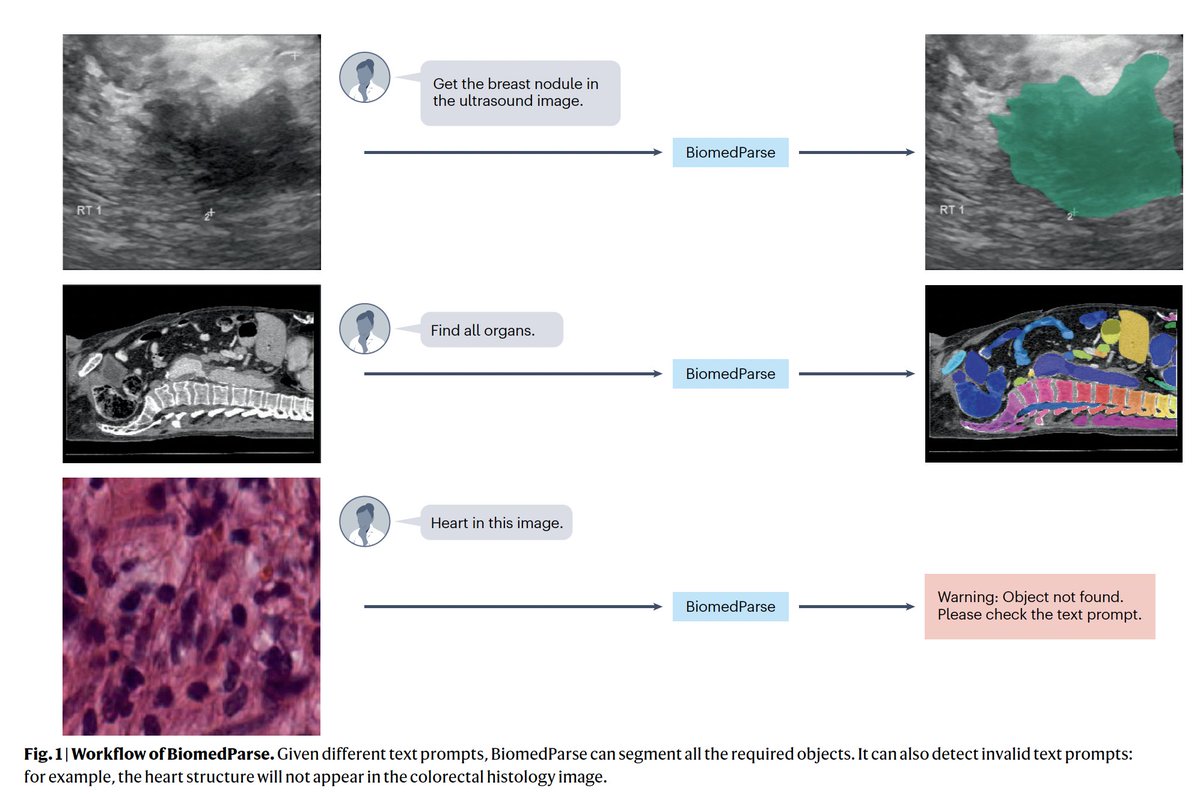
External validation of BiomedParse foundation #AI model across 9 types of medical images, automatically identifying all objects at once and saving hours of manual work, reducing errors
https://t.co/xCv910TbOB
@NatureMethods
"The implications of BiomedParse are profound"
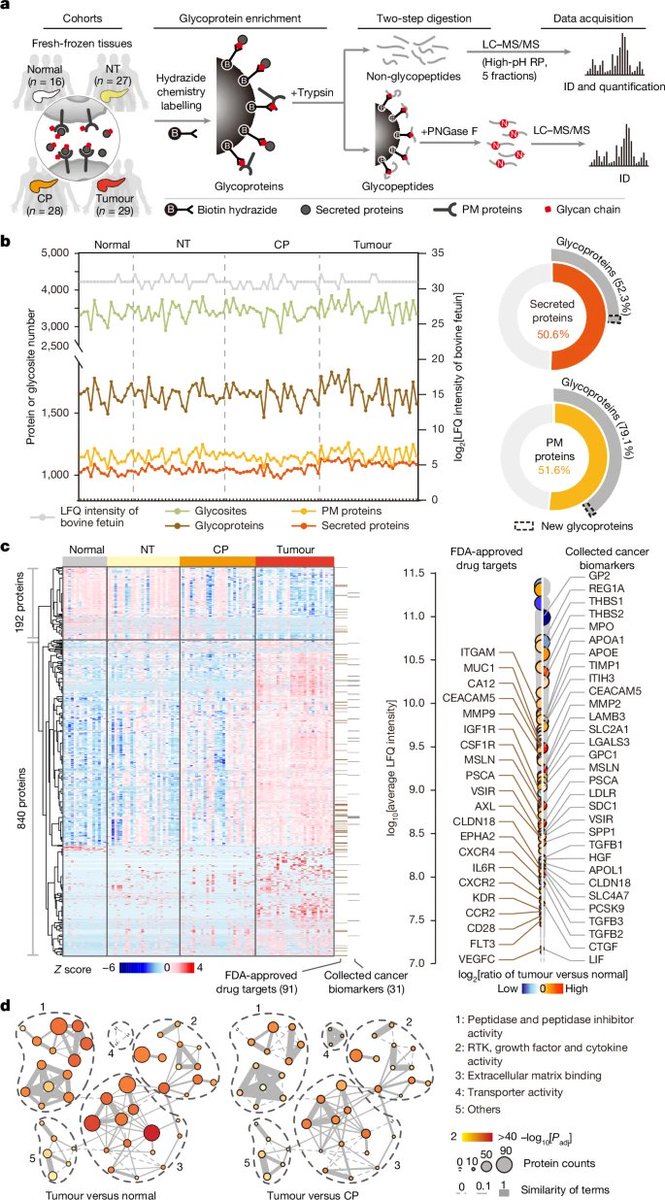
New study in @Nature today:
Clinical functional proteomics of intercellular signalling in #PancreaticCancer
https://t.co/elwY6dxnB7
Absolutely stunning amount of cross species spatially and temporally resolved proteomics data in pancreatic cancer. What a resource!
We are thrilled to share that our first paper from my new lab, Spateo (https://t.co/a0BC0Cf3Ec) for spatiotemporal modeling of molecular holograms, is now online in Cell: https://t.co/UUZkyXYJtG. Spateo is a comprehensive analytical framework for 3D whole-embryo spatiotemporal modeling. Its advanced features include:
• 3D alignment and reconstruction at the whole-mouse-embryo scale (see the animation).
• 3D spatial domain digitization and cell-cell communication analysis to understand spatial gene expression gradients and both inter- and intracellular communication.
• 3D morphometric and volumetric analyses along with 3D morphogenesis vector field modeling to quantify dynamics such as surface area, volume, and cell density across organs, and to dissect the interplay between morphogenesis factors and cell migration.
• A “Google Earth”-like browser, Spateo-viewer (https://t.co/s33SS7jvYL and https://t.co/BbY6bIJtS0), for interactive and intuitive exploration of 3D spatial data.
• Additional features, such as RNA signal-based single-cell segmentation.
We are also honored that Nature “News and Views” has highlighted this work as well: https://t.co/8F4s6GJeBY.
This is really an amazing outcome after two years' heroic revision process that rewrite the entire paper using a new data (https://t.co/xbahWSeGgx) for whole mouse embryos.
New preprint from Matthew Iyer @@umichmedicine with @timofran1@ArulChinnaiyan
Spatial Transcriptomics of IPMN Reveals Divergent Indolent and Malignant Lineages
https://t.co/bQYnmnmLSx
What are the transcriptomic states that define high & low risk biological potential in these #PancreaticCancer precursor lesions.
Three studies showing the difficulty of predicting personalized sequence→expression using genomic deep learning models:
@sara_mostafavi@ChikinaLab https://t.co/IQPXCcuqiI
Nilah Ioannidis lab's https://t.co/wnqoCylVsl
Katie Pollard lab's https://t.co/pTX5N3kWxR
#MLCB2024