Reintervention Through Five Years After Prostatic Artery Embolization … https://t.co/WCjaadfjBD
Another paper out of @ColumbiaVIR comparing reintervention rates after PAE. Great work by our colleague Dr. Tarub Mabud! @DrSteveReis@AbinSajanMD
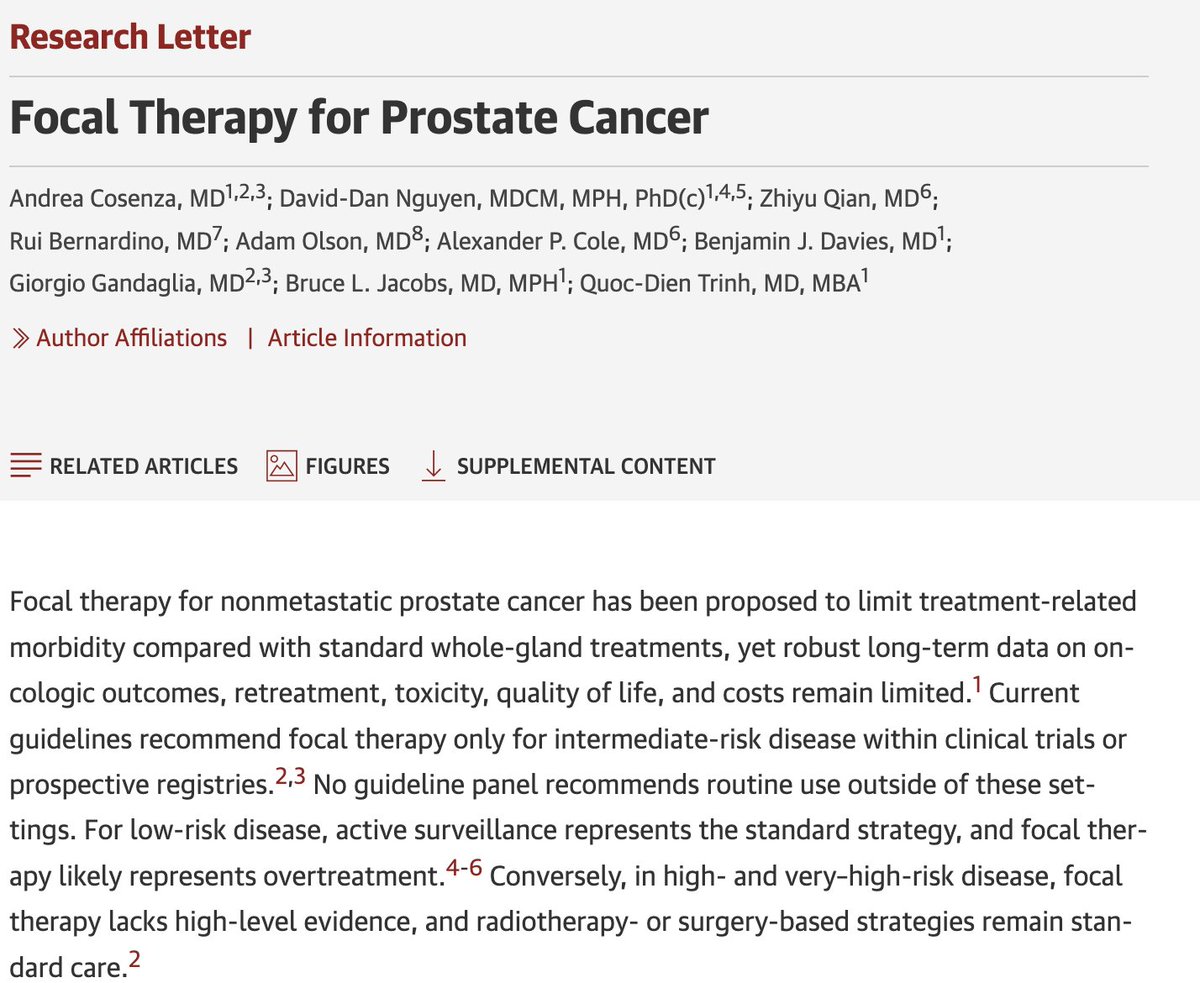
Among patients with nonmetastatic #ProstateCancer, 51% of focal therapy procedures occurred in low-, high-, or very–high-risk disease, settings in which routine use is not supported by current guidelines. https://t.co/P3QOjQ41uT
Spotlight: Epidemiology of Renal Cancer: Incidence, Mortality, Survival, Genetic Predisposition, and Risk Factors by Alessandro Larcher et al
#Spotlight#Medtwitter#UroSoMe#RenalCancer
✨ In high-risk localized #ProstateCancer, the question is no longer simply whether to use ADT — but who needs it, for how long, and who should receive more.
Excellent #IUCS26 discussion by @alison_tree on integrating loco-regional and systemic approaches.
🔵 STAMPEDE / abiraterone and ENZARAD / enzalutamide reinforce the role of systemic intensification in selected higher-risk patients, including cN1 disease.
🔵 In PROTEUS, perioperative apalutamide + ADT improved pathological response:
• pCR/MRD: 8.9% vs 1.0%
• Fewer positive surgical margins
• 5-year MFS: 78.2% vs 73.5% in the data presented
But the message is not “more treatment for everyone.”
The real questions are:
➡️ Who can avoid ADT?
➡️ Who needs standard or longer-course ADT?
➡️ Who derives enough absolute benefit to justify AR-pathway intensification?
🎯 Clinical takeaway: localized high-risk prostate cancer is moving toward risk-adapted selective intensification, balancing disease control against the long-term burden of systemic therapy.
@neerajaiims@gbanna74@Sebastiano_Buti@CinziaConted@dralishadamani@amg120395@PGrivasMDPhD@ravikanesvaran@koshkin85@MicheleMaffezz@ManiamAkash@ParamMariappan@dmukherji@VanitaNoronha@montypal@DanieleRaggi83@PasRescigno@jteoh_hk@DrYukselUrun@yekeduz_emre
#pcsm #Radiotherapy #ADT #GUOncology #UroOnc
🔍 Are We Changing Bladder Cancer Detection?
Urine Tumor DNA (utDNA) testing predicts recurrence and tracks therapy in high-risk bladder cancer patients on BCG treatment.
🔬 Early Detection - utDNA finds recurrence months ahead of clinical diagnosis
🔗 Personalized Care - Identifies need for intensified or reduced therapies
📈 High Sensitivity - Detects 67% recurrences with 94% specificity
#BladderCancer #utDNA #BCG https://t.co/X8PK8ji55i
🔬 Can we preserve the kidney in UTUC without compromising long term cancer control?
Important new data from @Pietro9609 , @FZorzi , @candela_luigi , @OTRAXER and our Tenon team in European Urology Oncology. @EurUrolOncol
📊 254 patients treated with endoscopic kidney sparing surgery
⏱️ Median follow up: 67 months
At 7 years:
🔹 UTUC recurrence: 55%
🔹 Only 22% ultimately required radical nephroureterectomy
🔹 High risk disease had higher RNU risk: 35% vs 13%
🔹 Metastatic progression: 17% vs 5%
🔹 Cancer specific mortality: 23% vs 11%
🔹 Median eGFR decline: 9 mL/min/1.73 m²
Importantly, recurrence did not differ significantly between low and high risk disease, and patients classified as high risk based only on weaker risk factors showed outcomes comparable to low risk patients.
Take home message: recurrence after eKSS is common, but recurrence does not necessarily equal treatment failure. With careful patient selection, rigorous second look ureteroscopy and prolonged surveillance, many patients can achieve durable cancer control while preserving renal function.
Link🔗: https://t.co/TcBJeJkB2k
#UTUC #Urology #Endourology #UroOncology #KidneySparing
🚨IMPACT trial 5y results
3063 participants in 20 countries. Median age 54y
2 cohorts: BRCA1/2+ vs age-matched BRCA1/2-
Annual PSA. Biopsy if >3 ng/ml
⬆️ csPC (GG>=2) in BRCA2+
⬆️ % of cancers NCCN unfav/high if BRCA2+ or BRCA1+
@OncoAlert@urotoday@PCF_Science
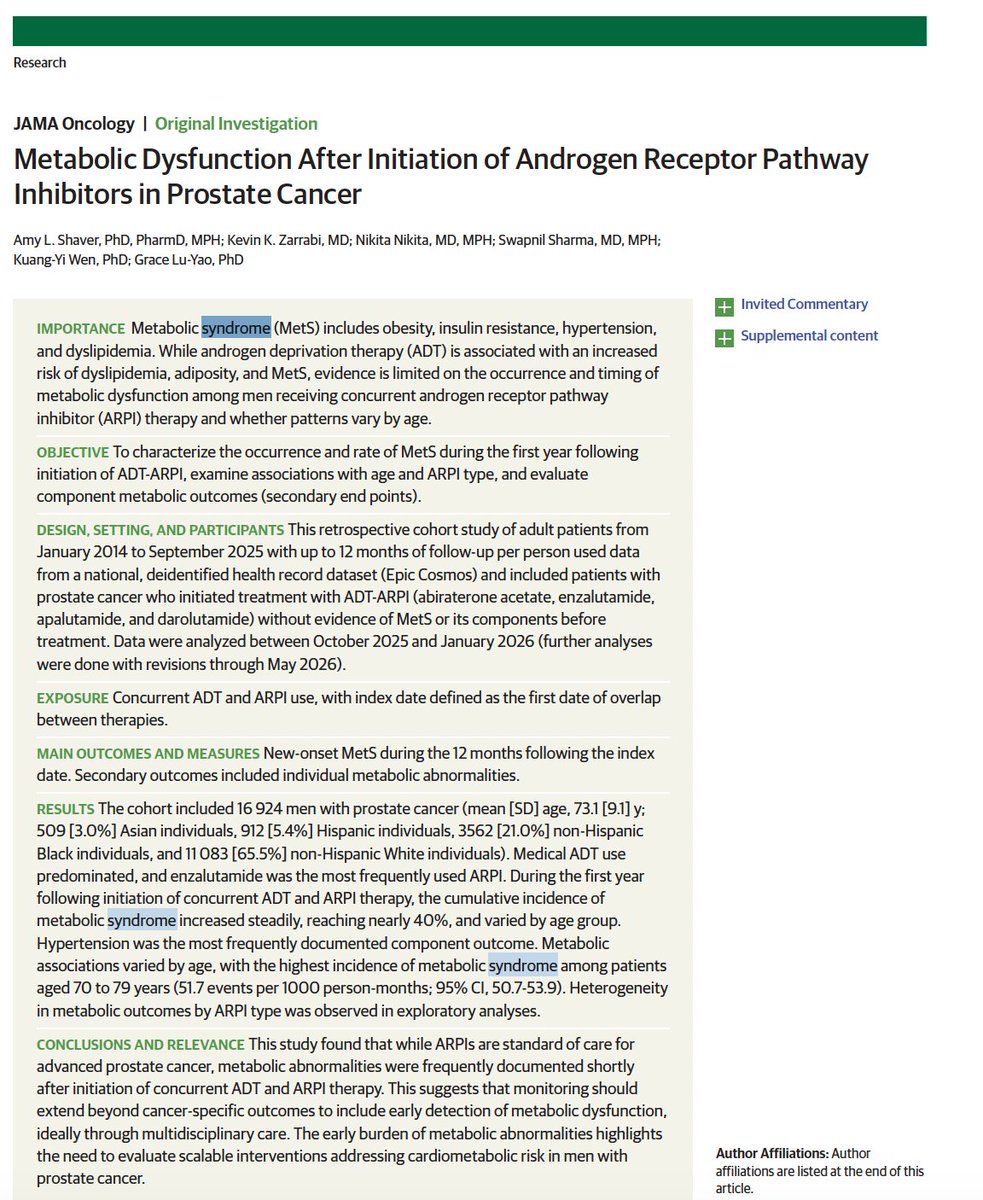
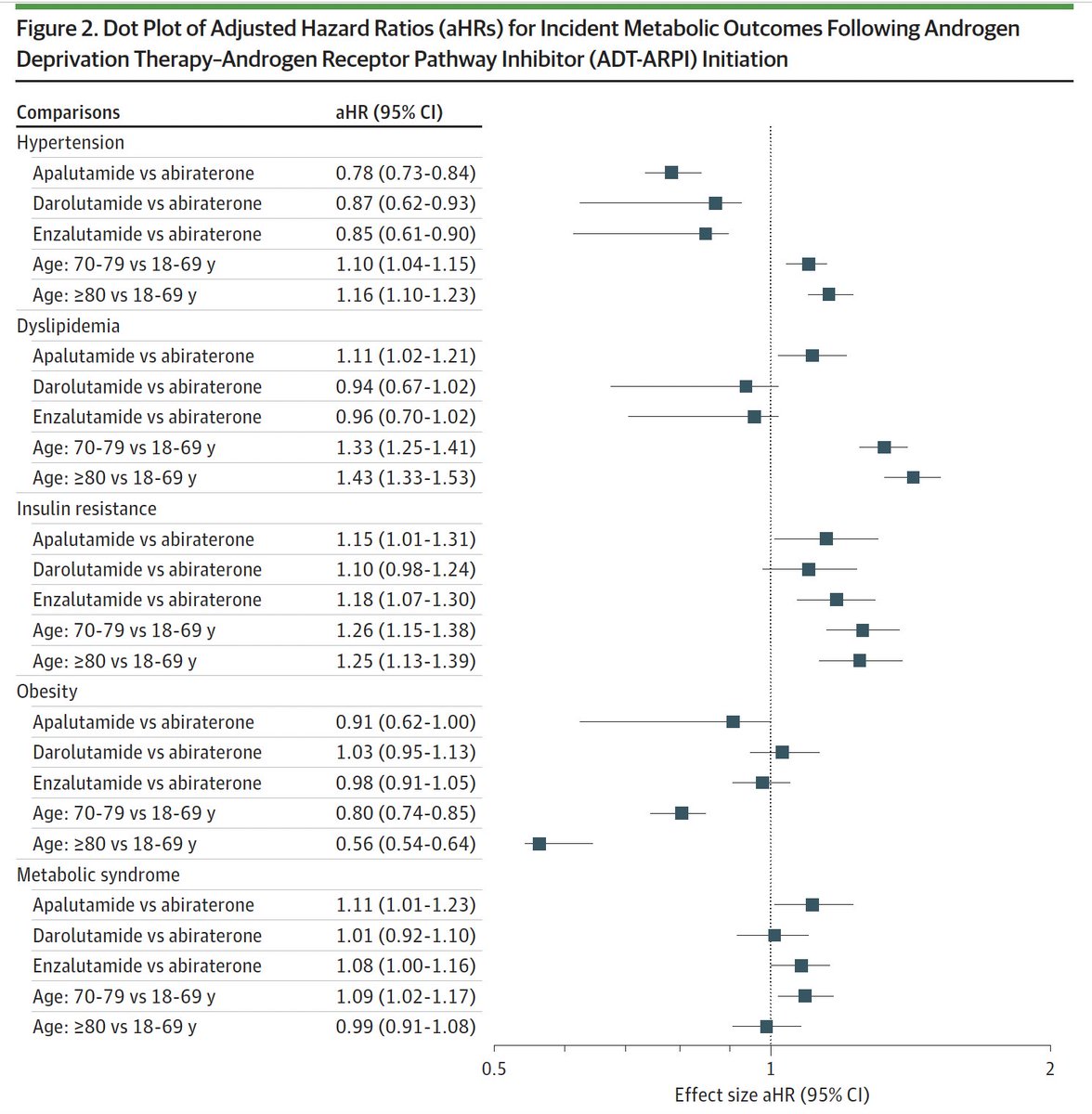
🚨 Start ADT + ARPI & metabolic dysfunction follows, often in just a few months🚨
@JAMAOnc
👥 16,924 men w/ #ProstateCancer starting ADT + ARPI, no prior metabolic dx
📊 12-mo cumulative incidence:
🔺 New HTN 83%
🔺 Dyslipidemia 52%
🔺 Metabolic syndrome 39%
⏱️ Median time to 1st abnormality: 1 mo. MetS: 2.6 mo
🔗 https://t.co/i5GLEJlUsP
@AmerUrological@PCFnews@PCF_Science@UroOnc@UrologyTimes@urotoday@renalandurology
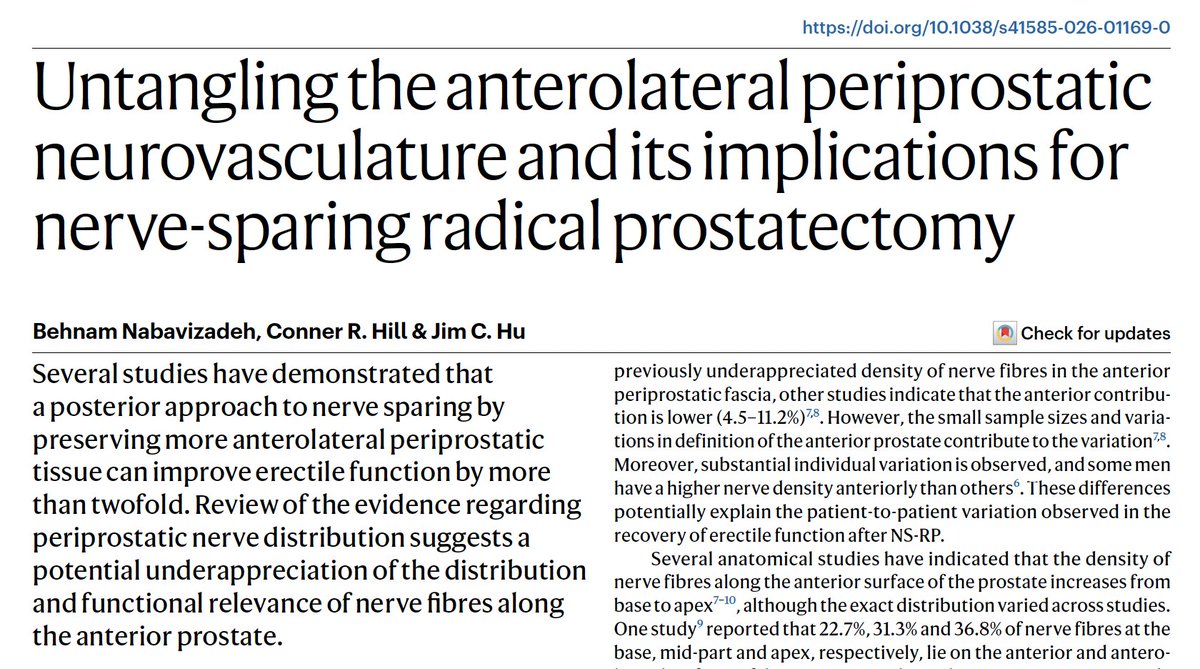
1/10 🧵 Posterior Approach to Endopelvic Neurovascular Total Sparing (PATENTS) was associated with >2-fold faster recovery of erections sufficient for intercourse after nerve-sparing RP. Our new Nature Reviews Urology @NatRevUrol COMMENTasks whether preserving more anterolateral tissue may explain why. https://t.co/pz3wz80H5A
Our new paper is out in JAMA, led by our fellow Andrea Cosenza: focal therapy for prostate cancer remains uncommon nationally, but half of the procedures performed were in patients whose disease was either too low-risk to need treatment, or too high-risk for focal therapy to be the appropriate choice.
Focal therapy has real promise. My partners and I at @UPMC@UPMCUrology believe in it. But promise isn't the same as "right for every patient." That distinction matters more as our treatment options keep growing. @DavidDan_Ngn@JasonZhiyuQian@ruimmbernardino@Putnam_Cole@daviesbj@GGandaglia
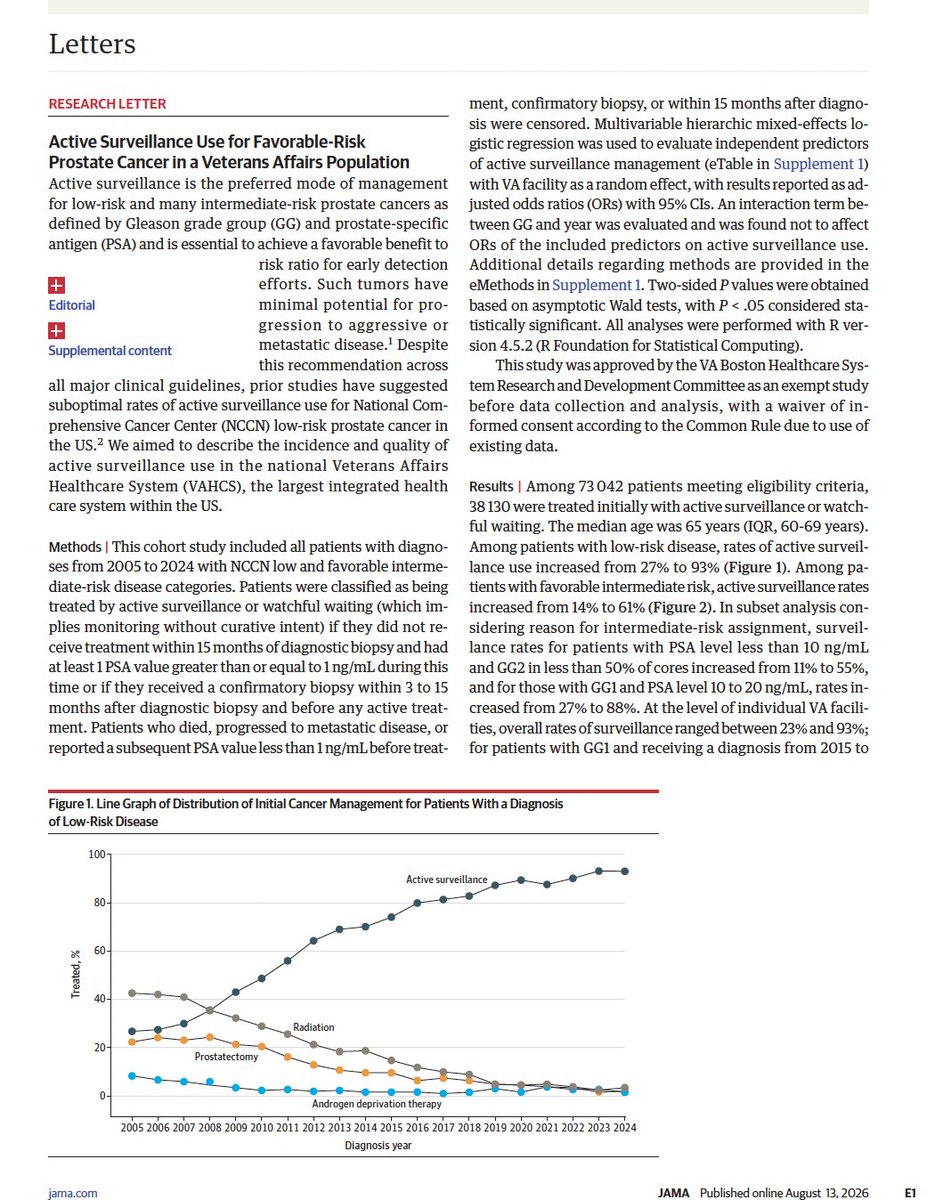
🚨 93% active surveillance for low-risk #prostatecancer in the VA system 🚨
@JAMA_current
👥 73,042 pts w/ NCCN low or favorable intermediate risk PCa, VA system 2005 to 2024
📊 38,130 managed initially w/ surveillance or watchful waiting
✅ Low risk: AS use 27% to 93%
✅ Favorable intermediate: 14% to 61%
✅ GG1 w/ PSA 10 to 20: 27% to 88%. GG2 in <50% of cores: 11% to 55%
✅ For GG1 dx 2015 to 2024, nearly every VA facility sat between 60% and 100%
⚠️ For context: ~60% national AS rate for low risk in AQUA those same year
⚠️ Gaps remain: lower AS odds for Black (OR 0.95) and Hispanic (OR 0.85) pts and higher area deprivation, independent of risk
🎯 Bottom line: an integrated system w/ guideline monitoring, no financial reward for intervening, and nowhere to opinion-shop got AS to 93%.
👉The barrier to surveillance was never the evidence. It was the incentives.
🔗https://t.co/DpLvnPiIyO
@dr_coops@AmerUrological@UroOnc@SUO_YUO@PCFne@UrologyTimes@renalandurology@urotoday@GabeCanales
🚨 Half of focal therapy for #ProstateCancer in the US is happening where no guideline supports it 🚨
@JAMA_current research letter
👥 1,179,384 pts w/ nonmetastatic PCa, NCDB 2010 to 2023
📊 15,672 (1.3%) got focal therapy
⚠️ 51% was in low, high, or very high risk disease.
-No guideline supports routine use in ANY risk group outside trials or registries
⚠️ Low risk held flat (1.8% to 2.2%) and favorable intermediate is rising (2.1% to 2.9%) while marketing and&reimbursement expand
⚠️ Focal therapy more likely w/ age ≥75 (adjusted probability 22.9%), community centers (7.6% vs 2.5% academic), nonprivate insurance
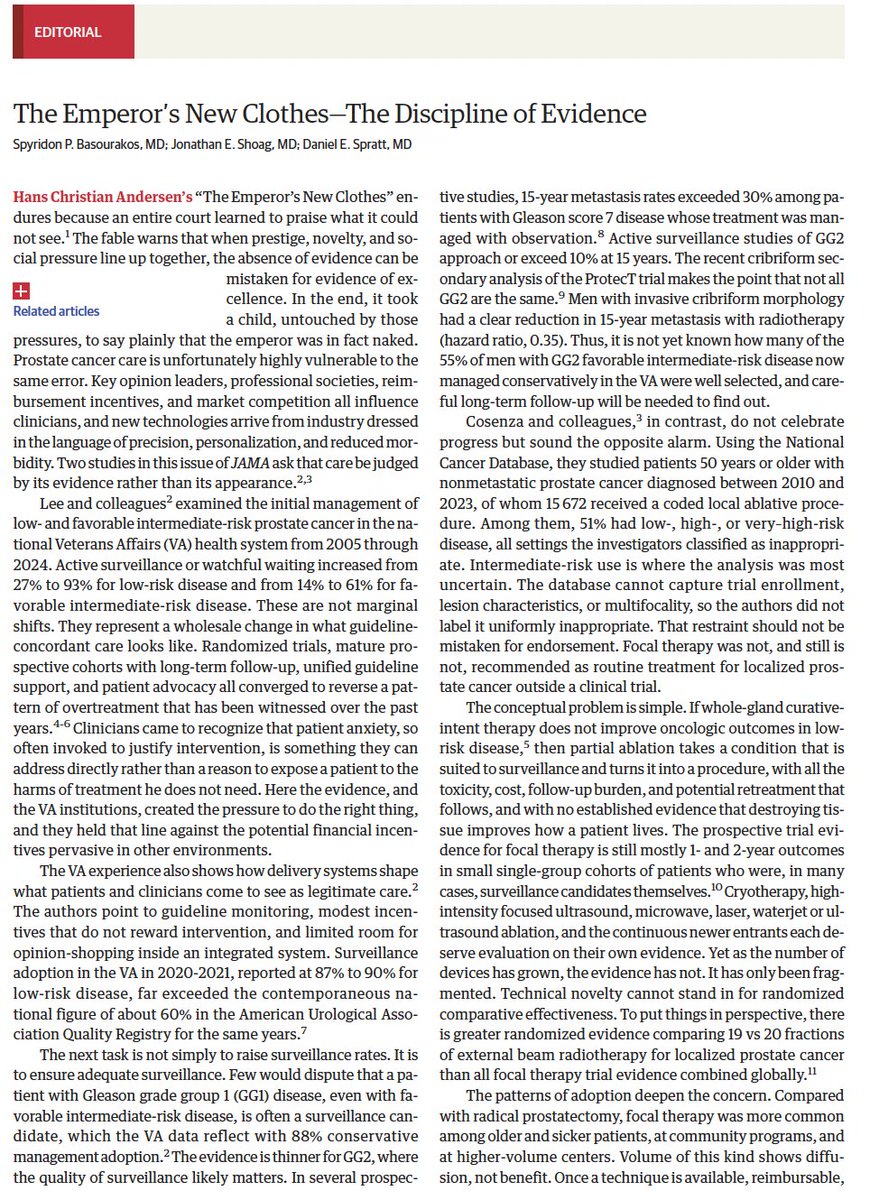
✒️From the accompanying editorial
"Volume of this kind shows diffusion, not benefit."
🎯 Key points
1⃣In low risk this converts surveillance candidates into procedure pts
2⃣In high risk it is undertreatment.
3⃣Repeated use is building "an aura of legitimacy the data have not earned." We owe pts trials, not marketing.
🔗 Study: https://t.co/xbxCAXPfWE
🔗 Editorial: https://t.co/Nb0yjFHhSx
@QDTrinh@DrSpratticus@AmerUrological@UroOnc@SUO_YUO@urotoday@UrologyTimes@PCF_Science@PCFnews
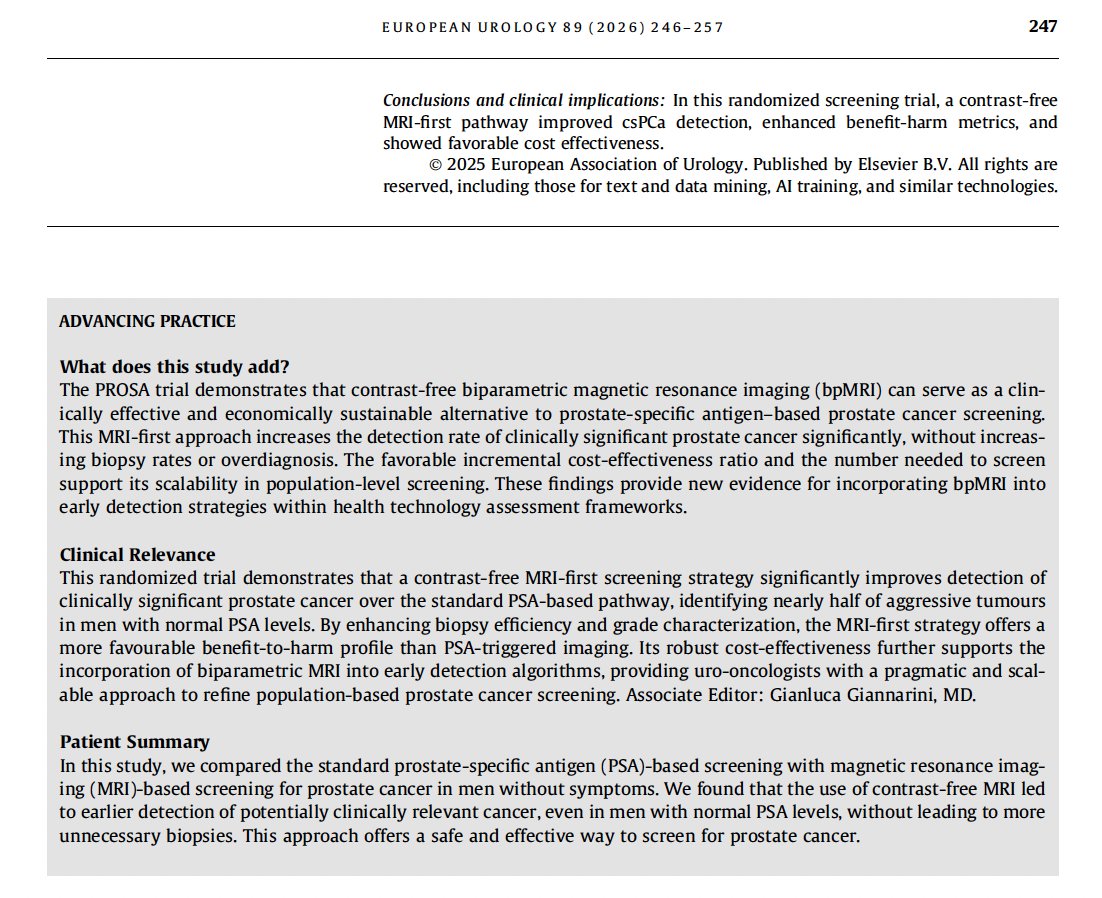
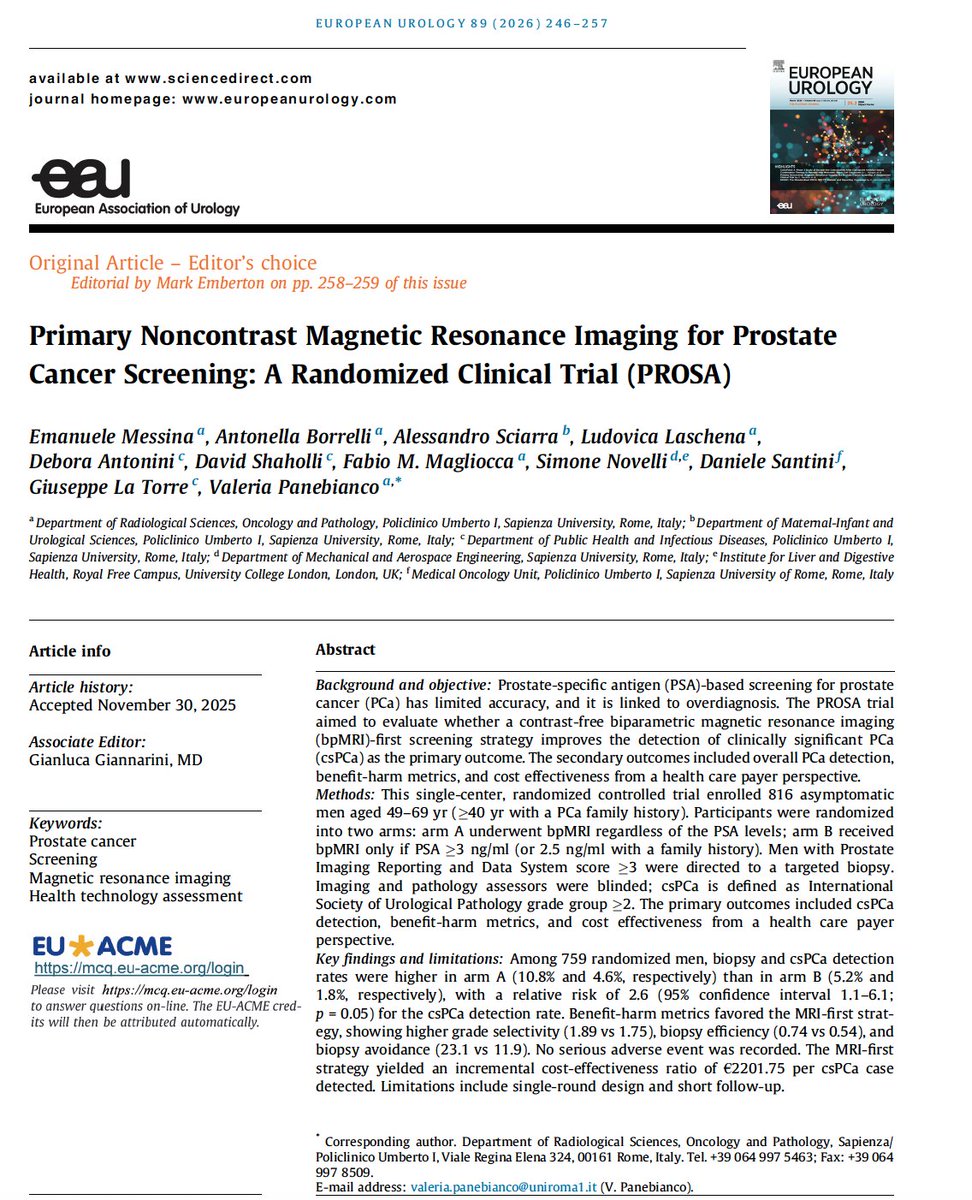
🚨 MRI-first screening w/o contrast finds more ≥GG2 #ProstateCancer 🚨
@EurUrol
👥 759 pts randomized
📊 Biparametric MRI first vs MRI only if PSA ≥3
⏱️ 15 min scan, no contrast
✅ csPCa detected: 4.6% vs 1.8% (RR 2.6, 95% CI 1.1-6.1)
✅ Several csPCa found in pts w/ normal PSA
⚠️ More biopsies in MRI-first arm (10.8% vs 5.2%)
🎯 A FAST⚡️ contrast-free MRI up front catches significant PCa a PSA screen might miss
@PCF_Science@PCFnews@urotoday@UrologyTimes@UroOnc
🔗https://t.co/E8rXTQL1nW
Original Article: Perioperative Apalutamide in High-Risk Localized Prostate Cancer (phase 3 PROTEUS trial) https://t.co/dJMlGVWc04
Editorial: A Watershed Moment in the Perioperative Treatment of Prostate Cancer https://t.co/YEfC0j9pC6
#Oncology#Urology