Why are problem solving courses so important for new scientists? Watch David LeBard and Ken Dill of @stonybrooku discuss that and the next era of drug discovery now!
https://t.co/qC1mgGsaFR
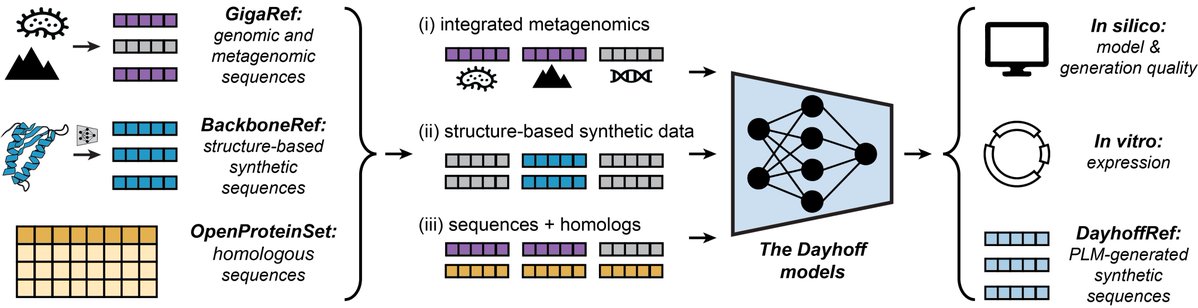
thrilled to share The Dayhoff Atlas of protein language data and models 🚀 protein biology in the age of AI!
https://t.co/4wP9kNRUoM
we built + open source the largest natural protein dataset, w/ 3.3 billion seqs & a first-in-class dataset of structure-based synthetic proteins
Today in the journal Science: BioEmu from Microsoft Research AI for Science. This generative deep learning method emulates protein equilibrium ensembles – key for understanding protein function at scale. https://t.co/WwKjj5B0eb
For readers interested in targeting GPCRs such as GLP-1R, this review in the April issue discusses how functional dynamics studies are revealing new routes to identify drug candidates with tailored selectivity and efficacy profiles https://t.co/S4i89ivJ8T
https://t.co/6OoXJxR7w8
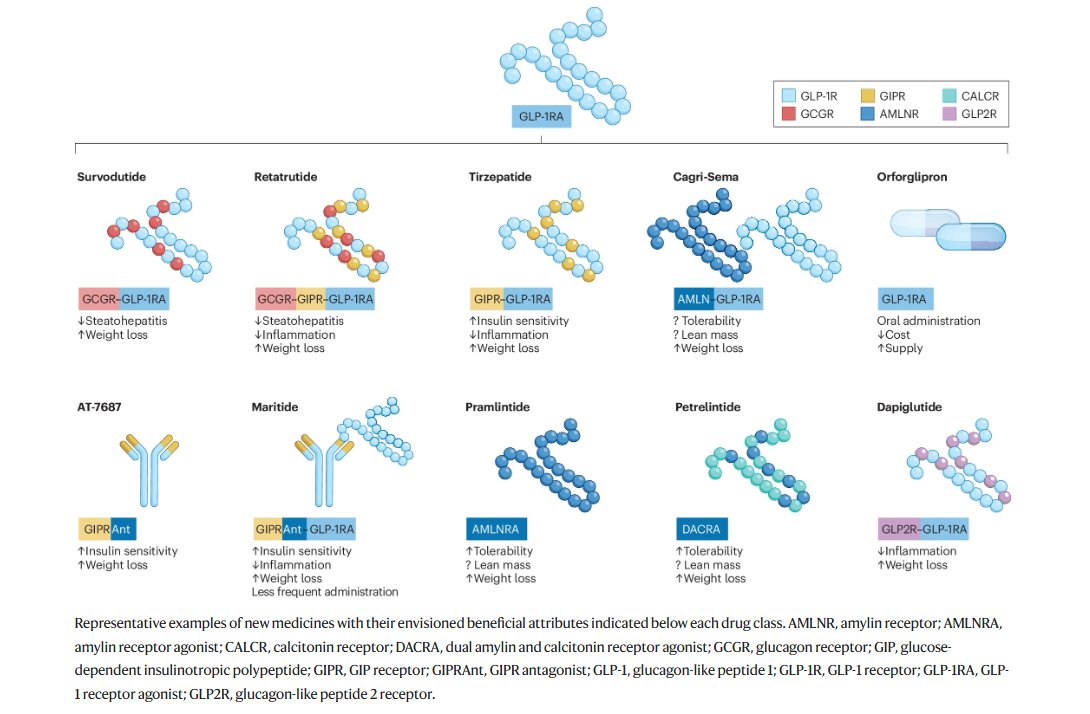
GLP-1-based therapies for diabetes, obesity and beyond https://t.co/JmGtGmwUTv
This new review by @DanielJDrucker profiles GLP-1-based medicines, discussing optimization of pharmacokinetics and tolerability, engagement of new therapeutically useful pathways and safety aspects
Today in @Nature, we share our latest paper. We developed an algorithm to predict novel peptides cleaved by proconvertases across all human tissues. Using this method, we identified BRP, a brain-derived anti-obesity peptide.
https://t.co/D5sgX2QrzK
It's long seemed that molecular biology is a natural home for ML interpretability research, given the maturity of human-constructed models of biological mechanisms--permitting direct comparison with their ML-derived counterparts--unlike vision and NLP. Our first foray below👇.
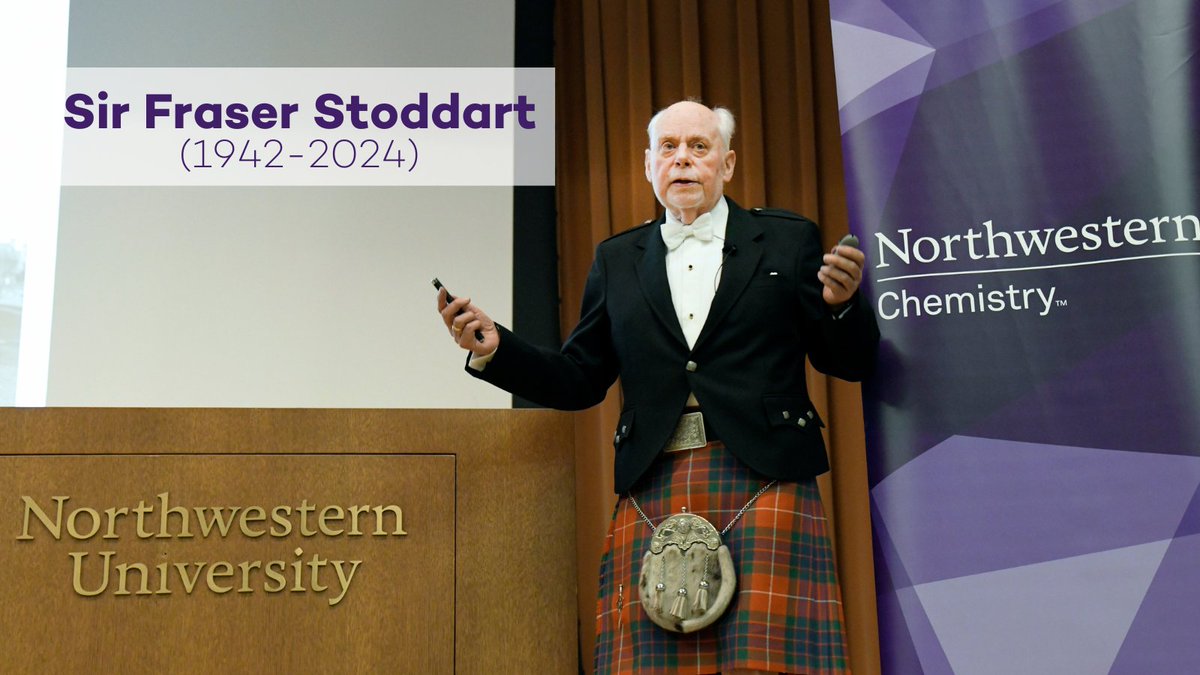
With profound sadness, we announce the passing of Sir Fraser Stoddart, Nobel Laureate and cherished member of @NorthwesternU. His groundbreaking contributions transformed the field of #chemistry and inspired countless scientists worldwide.
➡️ https://t.co/S7e0nwfruD
It is very sad to learn that Martin Karplus passed away on Dec 28 at age 94. He was a scholar and pioneering chemical physicist with great contributions in many areas including molecular dynamics. We interacted many times starting from my graduate time at Harvard. His legacy is reinforced by the large number of coworkers who have also done much to advance computational science.
Excited to share that the AlphaFold 3 model code and weights are now available for academic use.
Looking forward to seeing what new research this unlocks and how the research community builds on AlphaFold 3 for scientific discoveries https://t.co/GKIOGHm317 1/2
With David and the Baker Lab in the spotlight today, I wanted to share some insights into the @UWproteindesign and how it operates, a glimpse behind the curtain. I had planned to write this post-graduation, but now seems as good a time as any. (Got twitter blue free trial so this could all fit in less tweets!)
First, the lab is enormous. ~60 grad students, ~60 postdocs, a handful of visitors, undergrads, and a surrounding institution of another 150 or so. Collaboration is strongly encouraged (even mandated) by David, who sets up pro-collaboration incentives. Notably, he's fine with grad students graduating without a sole first-author paper—it's acceptable to "only" have worked as a co-first author. This is a key ingredient in the secret sauce: the tight collaboration between wet lab and dry lab. It ensures that all our work is ultimately grounded in strong wet-lab validation—our "oracle" is the real world, not another computational model.
While we have regular meetings for different subgroups and the entire group, much information travels through the lab via informal one-on-one interactions. In some ways, it reminds me of a classic "tribe of humans in the state of nature"—100-200 people with no clear hierarchy, passing information via "gossip". It’s maybe not the most complete way of ensuring everyone is on the same page, but saves time as we aren’t drowning in endless meetings.
Does David stay in touch with all these grad students and post-docs? Remarkably, yes. Unlike some very large labs known for being run entirely by post-docs, he knows exactly what everyone is working on and the stage of their projects. Each member has monthly one-on-ones with him, and monthly subgroup meetings that David attends. If he suggests you try something at your previous one-on-one, you'd better have it done by the next.
Does he actually contribute research ideas, or is he more of a detached big-picture project manager? Definitely the former. He understands the intricacies of a shocking range of topics. I'll be discussing some arcane deep learning concept with him, and then he'll turn around and talk to someone about the details of a catalytic mechanism. He's actually the most hands-on PI I've ever had—if anything, he verges on over-managing rather than being too detached.
How does he keep track of everything? Partly, he's just a brilliant person with exceptional recall. But he has also built infrastructure above and below him in the lab to handle many of the details, bureaucracy, big picture, and management tasks. This allows him to spend most of his day doing what he's most passionate about and skilled at: walking around talking to people about science. He also lives very much in the moment and in his own words, “never thinks very far ahead". To keep up with tools, methods, and wet lab techniques, he does the occasional project and design campaign himself on the side when time allows.
It's still a tremendous cognitive load to keep all this in his head, but as much as possible, he has offloaded non-scientific cognitive burdens. It helps that he’s in the lab in person most days of the year, rarely traveling for conferences or talks, instead doing them over Zoom or not attending. (1/2).
We recently spent a day in the lab with 2024 @NobelPrize winner and HHMI Investigator David Baker, where he discussed his groundbreaking work, the importance of basic science, and his passion for mentorship #NobelPrize
BREAKING NEWS
The Royal Swedish Academy of Sciences has decided to award the 2024 #NobelPrize in Chemistry with one half to David Baker “for computational protein design” and the other half jointly to Demis Hassabis and John M. Jumper “for protein structure prediction.”