I help bridge bold space ideas to reality.
Former NASA Engr/Flight Director, Planetary Resources CEO/co-founder.
Building tools from lessons learned both ways.
I wonder what's high-water count of airplane refueling in a single mission. I would guess the stat below would top it (since human metabolism isn't a limit).
Just now, on the Aerospace Safety Advisory Panel call, member Charlie Precourt said the latest estimate for refuelings needed to support a Starship landing on the Moon is "around 22" launches.
Program >> Mission
"we must launch annually and keep moving"
The idea of an ongoing campaign being served by a regular cadence of progress (via reliable, sacrosanct launch dates) is a refreshing return to how progress was made quickly 50 years ago.
Artemis II was not Apollo 8 either. At NASA, we are making the most of architecture decisions made, for better or worse, over decades. Regardless of the state of the lander, we must launch annually and keep moving in the direction of the Moon. Delaying for a perfect set of objectives doesn't make the rocket cost less, achieve the overall Artemis goals faster, or make anything safer.
When the LEM wasn't ready, NASA changed Apollo 8 from an Earth-orbit test of the lander to a mission around the Moon, moving the lander test to Apollo 9. When Gemini VI's Agena target failed, we pulled Gemini VII to the left and had Gemini VI to rendezvous with it. In both cases, NASA adapted to circumstances, made the most of what was available, and kept moving forward.
Some people choose to make this about their affinity for certain hardware, or equally, their distaste for certain hardware or people or companies, but it should be about what advances America's space program...and that is what Artemis III will do.
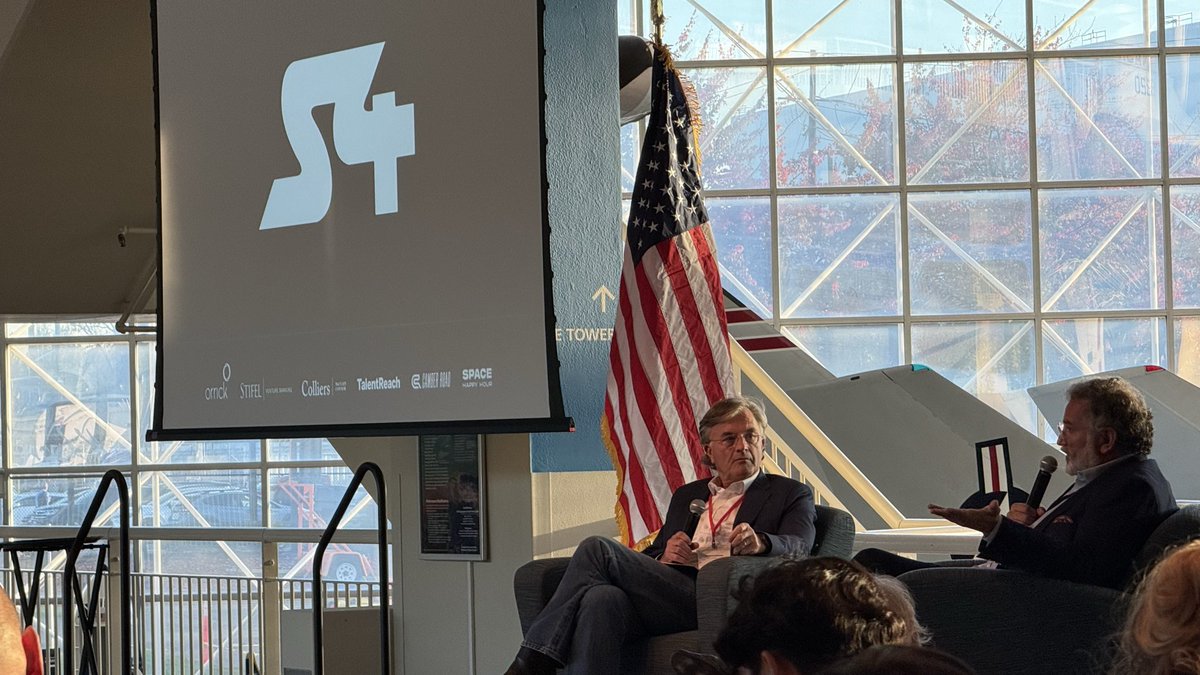
Surprising quote from @davidanderman (frmr Gen Council at Spacex) at the Seattle S4 conference today, promoting Sovera sovereign constellations:
“People are saying
‘You can not trust the United States.
You can not trust Elon Musk’.
And you know they might not be wrong.”
@CJHandmer At Planetary Resources, our inside-recruiter had the closest seat to the lunch room/common area, and probably new everybody on the team better than any other single person (myself included).
Also served some double-duty as unofficial staff therapist.
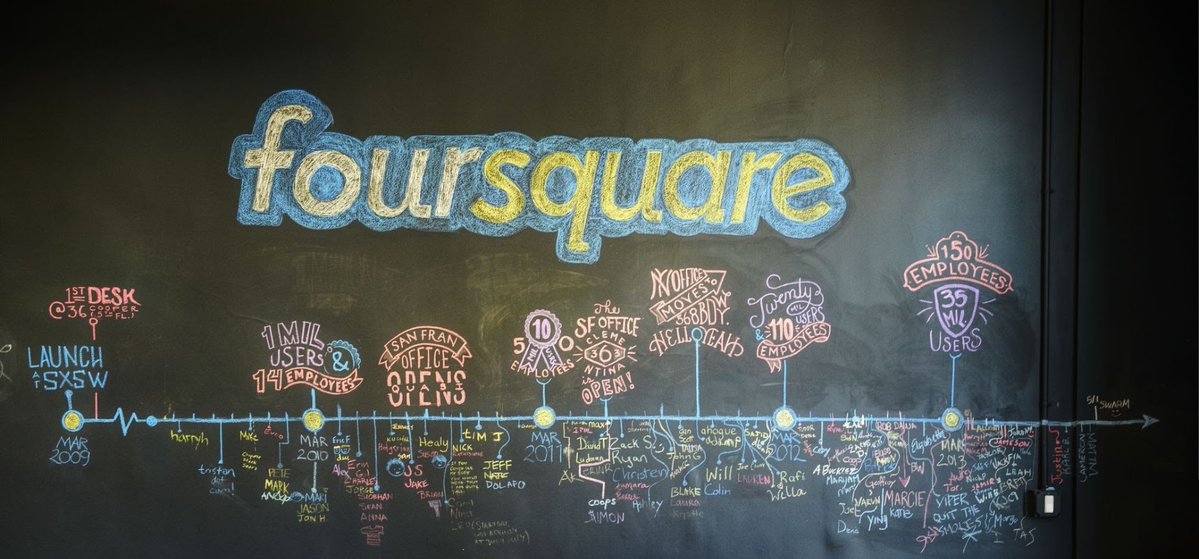
One could read this “eulogy” and have no idea what Foursquare did, or what value it provided to its users.
Being “the best job I ever had” or “the biggest mistake I made was falling in love with the company” seems to put the focus on the business as employing people who love to work together.
Perhaps it ended poorly because I, for one, can’t explain what Foursquare did (or tried to do) for its users?
And in my personal experience, ending in an iliquid acquisition is a notch higher than ending in bankruptcy. So, congrats?
Foursquare was acquired last month. The outcome was disappointing. It's taken me a while to write this, but I think I'm finally done grieving it. Here are some thoughts on our final years, an effort to honor the team who helped build & maintain FSQ's legacy, and my attempt to finally get some closure. https://t.co/HgcgI9DWvy
And the amount of https://t.co/mSUoNXeMNq shadow businesses is also stunning. I think its a 20:1 ratio of inbound making messages from the real thing quite difficult to discern.
I feel like I could start a business helping other founders get off lead lists for "You qualify for growth capital!"
At this point I'd pay money never to get another text or call on this topic, which I receive daily.
@DrPhiltill I've found it generally good for broad-brush-strokes research, but frequently compromised on specific confirmed details. Its been a useful front-end for a more rigorous workflow that follows.
As I'm building https://t.co/3dJWgcUuKP, the most consistent response I've received is:
"I don't have time for this right now I'm trying to close an investment round!"
One shrewd founder recommended that I use my Risk-Agent research workflow to help identify real and perceived risks, with a problem->solution action plan for each stage of the engagement.
Founders, did you know that many VCs are SOLELY using SI tools to read your data room?
Maybe worth adding this fact in the context window when promoting Claude to build your data room! 😅
(No judgement, I’d do the same if I was a VC!)
The "fundraising risk" concept made me realize I could build a similar database from prominent statements made by founders and investors with specific guidance on "do's and don'ts" depending on the context of your company or stage.
@PhilipJohnston I've been doing a lot of RiskThing analyses on "Funding Round Risks and Options" from exactly this feedback.
Lots of subtle, but easy ways to improve "how you look" to your prospective investors' agents.
DMs open to space companies raising a round who would like a look!
Sometimes I enjoy letting FSD 12 drive just to piss off the other drivers.
Driving 5-10mph below the speed limit, blinker on - not quite turning into the lane until too much time passed, hesitating to go through a green light unless there's a car ahead, coming to a near-stop at a yield sign. All of this is "safe", so I need not interrupt, despite the annoyances.
After all, its not my driving reputation at stake, people can only see the @Tesla logo on the car.