We study how the skin-brain axis drives somatosensory behaviors | Associate Professor @Zuckermanbrain @Columbia_Bio | Freeman Hrabowski Scholar @HHMINEWS
Excited to share my lab’s latest preprint led by postdoc @YukiHaba_ and grad student Ryan Schwark. We surprisingly find that spontaneous behavior in isolation predicts a naked mole-rat’s identity, its colony membership, and even rank within its colony.
https://t.co/4LFNOSj9UO
I’m delighted to present our new work on IRs, a massively expanded family of receptors derived from iGluRs. Here we explain how these proteins adapted the iGluR scaffold to sense a variety of stimuli, through an elaborate system of co-receptor subunits. Congrats, team!
Not one, not two, but three insect ionotropic receptor CryoEM structures from @hhmi_science#FreemanHrabowski Scholar Josefina del Marmol:
https://t.co/nK8HIFwFm4
Read this pre-print for the full picture of IR structure-function.
CHECK THE DATES | MARK YOUR CALENDARS! Join us for the #MSNSeminarSeries 2026–2027 @IcahnMountSinai! This year's series brings together researchers from leading institutions to share exciting discoveries, innovative approaches, and new perspectives in neuroscience. NOT TO MISS!
🧠Hypertension changes how brain blood vessels sense mechanical forces. Overactive Piezo1 disrupts cerebral blood flow and cognition, while Piezo1 inhibition reverses these deficits in mice. https://t.co/lHC0nVxRK9 @CircRes
So excited to finally share this collaborative work exploring the role of CADM2 recursive splice site deletions led by @Philip_M_Boone. We (@JKhokharLab) were fortunate to characterize the neural and behavioural consequences of CADM2 RS1 deletion https://t.co/dTc9E5sZgR
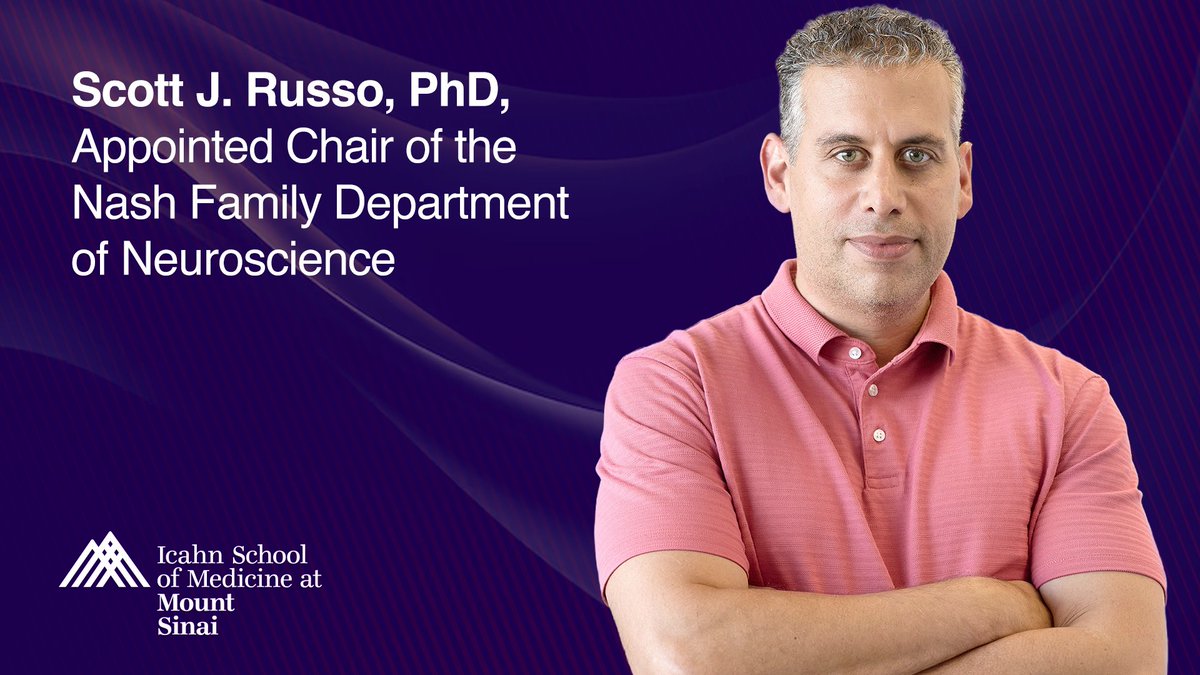
We are INCREDIBLY EXCITED to share that @ScottRussoPhD has been appointed Chair of #NashNeuroscience@IcahnMountSinai. Dr. Russo is a distinguished neuroscientist, visionary leader & mentor. We couldn't be happier for the Department of Neuroscience! Congratulations, Dr. Russo! 🎉
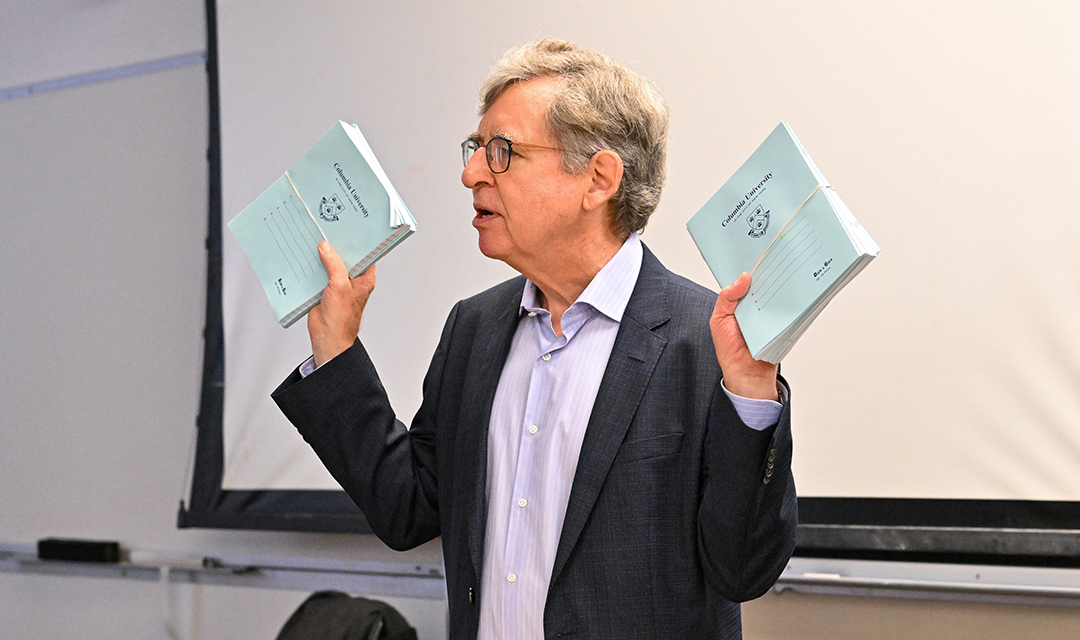
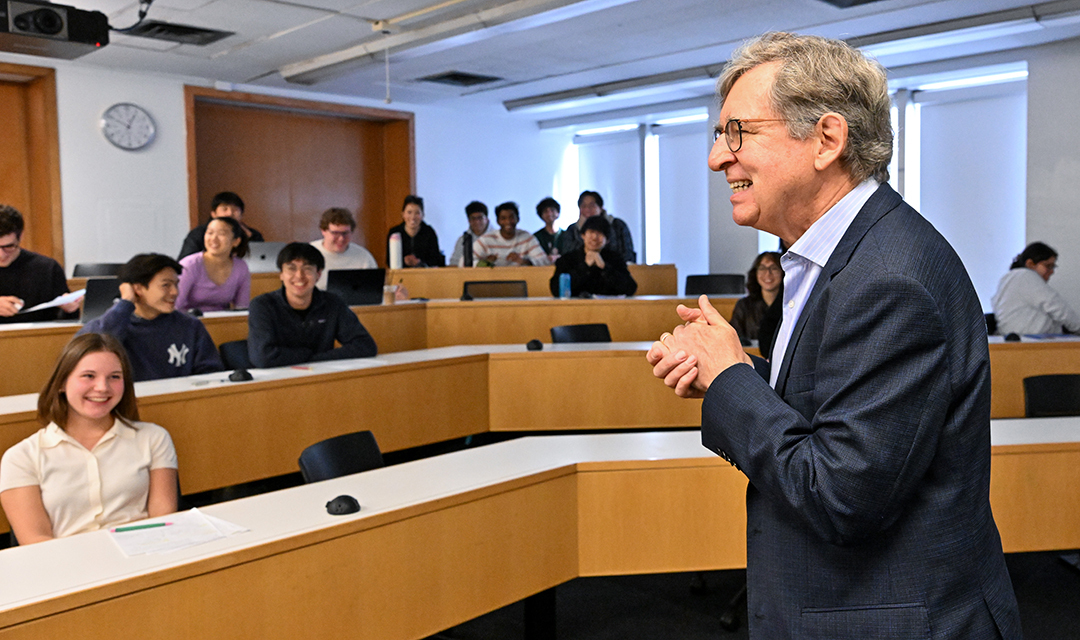
What do you do after winning the @NobelPrize? If you're Columbia Professor Michael Woodford, newly named a Nobel laureate in Economic Sciences, you head to Uris Hall and give your students an exam. Woodford entered the classroom to cheers and applause from the students in his course “Cognitive Mechanisms and Economic Behavior.”
“It's just a staggering piece of news,” Woodford said of receiving the honor. He is the 16th Columbian to receive this prize in economics, and the University's 89th Nobel laureate.
Hear more from Woodford about the award: https://t.co/fvqtEQakBh
📹 Columbia University
📷 Diane Bondareff/Columbia University
How does individual behavior reflect the organization of the society it belongs to?
Excited to share our new paper with @IshmailSaboor & team: a naked mole-rat’s spontaneous behavior in isolation predicts its identity, colony membership, and rank within its colony.
Exclusive: When Tessa Montague learned about #CRISPR, the gene-editing system that was supposed to make it easy to modify any organism, she set her sights on the cuttlefish. The Columbia University neuroscientist dreamed of injecting its embryos with genes that would prompt its neurons to fluoresce as they fired.
The flashes would let her track how this tentacled creature's brain controls one of its most striking behaviors: camouflaging itself by copying patterns it perceives in its surroundings onto its skin. Unlike most animals, she says, “cuttlefish can actually tell us what they see.”
Six years and thousands of embryos later, she has reached a milestone: seven cuttlefish that glow red under fluorescent light. Every cell in their boneless bodies contains a gene encoding a synthetic fluorescent protein—even their eggs and sperm, which means their cuttlebabies glow, too.
The work, posted as a preprint, marks the first time anyone has successfully added a new gene to a cephalopod. https://t.co/URTEOdc5za @NewsfromScience
so proud our work linking dopamine dynamics to brain-wide changes during learning is published! working with @AmirLawen was a privilege — he’s an incredible leader, thinker, and scientist. it was a delight to bring our scientific strengths together and find something very cool 🤩
Excited to see our fMRI paper is out, led by Itamar Kahn’s lab. Our grad students, Amir Lawen and Bella Succi, in collab with Darcy Peterka, built a setup for simultaneous fMRI and dopamine fiber photometry in awake behaving mice.
https://t.co/temXlZaVGQ
Thanks to everyone sharing in this moment!
I’m so grateful to my trainees & collaborators…
https://t.co/6JdZQHnYJf
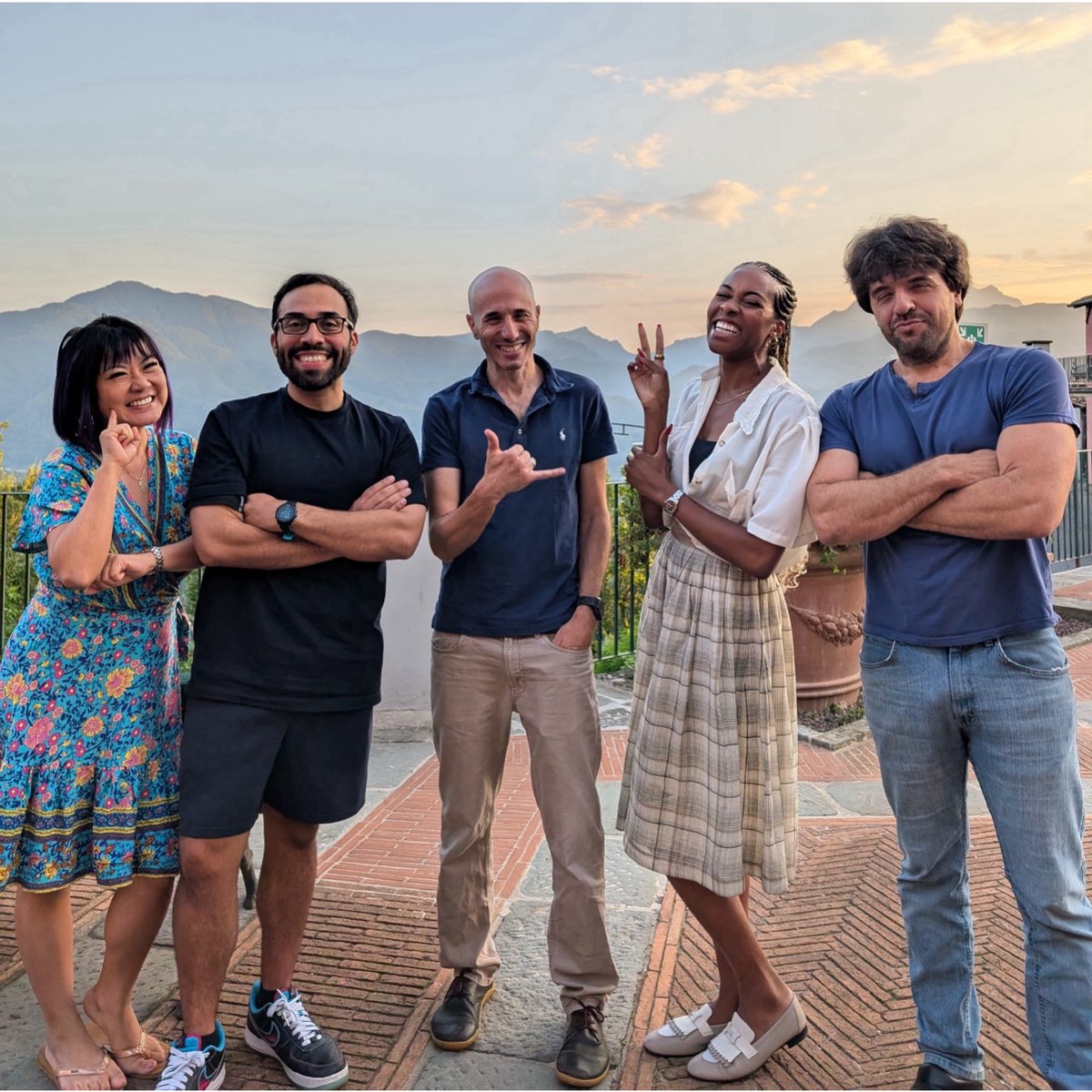
(pic: optogenetics conference chairs, Tuscany)
Reading for all those asking:
for technical details: https://t.co/x7kQvPujvq
for everyone: https://t.co/1omhw0hKAV
The most important briefings of the day.
Karl Deisseroth, professor of bioengineering and of psychiatry and behavioral sciences, shares the news of his Nobel Prize with his kids.