El 12 de agosto podrás seguir con nosotros un eclipse total de Sol 🌞🌑
🔗 Toda la información: https://t.co/UQvSkVqreb
https://t.co/uSFJbgnjGA
¿Te gustaría saber cómo se producen los eclipses?
🔗 Te lo contamos aquí: https://t.co/hzbA4su9gz
¿Todavía tienes preguntas? Envíalas con #AskESA
🚀🌌 Voyager 1 has left the Sun's protective bubble—the heliosphere—and is now traveling through interstellar space, over 25 billion km from Earth.
Launched in 1977, it's the most distant human-made object ever. Yet even after nearly 50 years, it isn't close to another star. At its current speed, reaching the nearest star system, Alpha Centauri, would take tens of thousands of years.
A humbling reminder of both human curiosity and the unimaginable scale of the universe. ✨
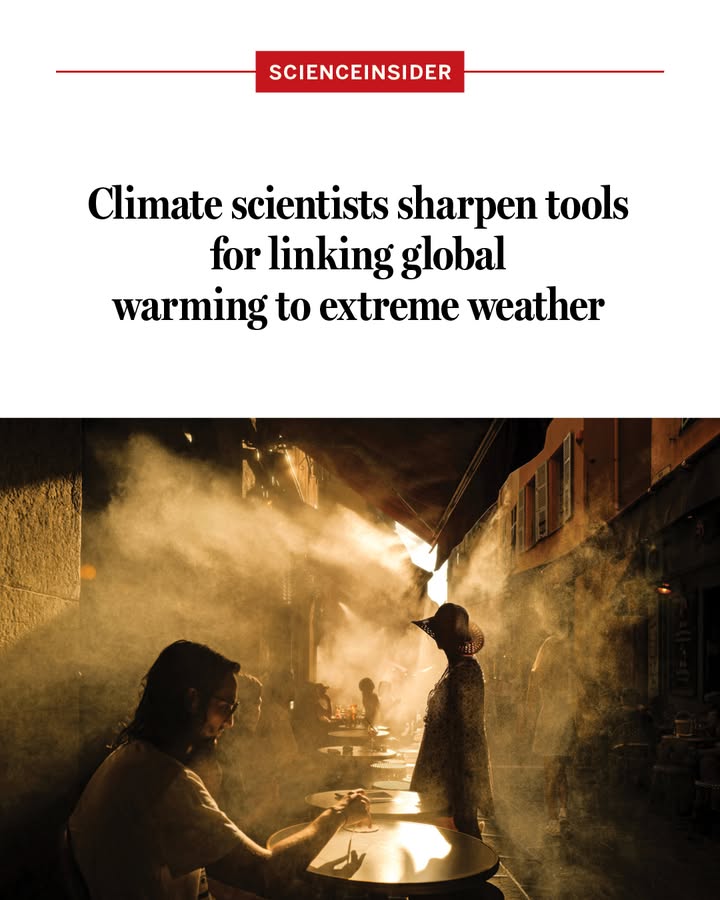
June’s European heat wave, in which temperatures above 40°C led to the deaths of more than 10,000 people, made headlines not just for its severity, but for what it said about climate change. A group called World Weather Attribution linked it firmly to global warming, saying such a heat wave would have been “virtually impossible” 50 years ago.
It was a high-profile claim from a field called extreme event attribution, which seeks to gauge how global warming impacted a particular heat wave, flood, or storm. Researchers say the fast-growing field can boost confidence with more rigorous results.
Learn more: https://t.co/bd99g9X9T3 @NewsfromScience
There's a solar eclipse happening on Wednesday, Aug. 12 — and if you're not in the path of totality, you can watch along with us online! Get the details: https://t.co/aAYzLGEqPU
"Be humble. Be teachable. The universe is bigger than your view of the universe. There's always room for a new idea. Humility is necessary for growth."
NASA has released one of the most detailed visualizations ever created of Earth’s ocean currents.
Using data from satellites and advanced ocean models, the map reveals massive rivers of moving water, swirling eddies hundreds of miles wide, and the powerful Gulf Stream carrying warm water from the Gulf of Mexico across the Atlantic.
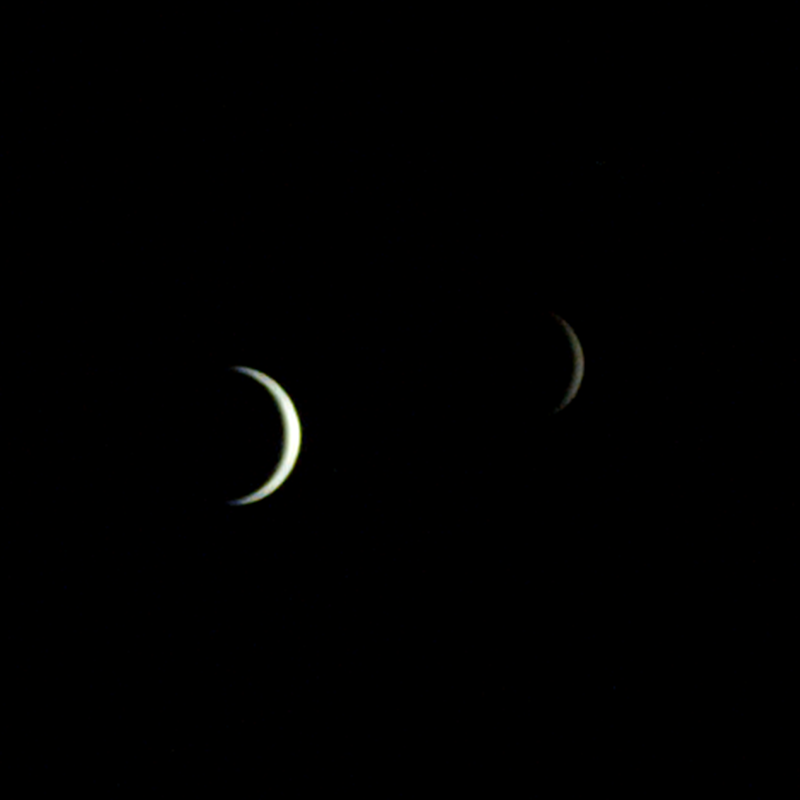
Say cheese, Earth and Moon! 📸
One of our two Mars-bound ESCAPADE spacecraft captured Earth and the Moon from 363,250 miles (584,600 kilometers) away. In visible light, both worlds appear as slim crescents.
But switch to thermal infrared and it’s a different picture 👇 🧵1/2
Like a stadium full of sports fans doing the wave, neurons coordinate their electrical signals in rhythmic patterns that sweep across the cortex, the brain’s outermost layer.
Recent studies in humans and animals have shown these patterns, called traveling waves, can take on complex shapes, among them a rotating spiral that has been observed during deep sleep, memory retrieval, and other brain processes.
Now, a study has captured the fast-spinning waves spanning whole brains, offering clues to how they’re organized and what they might do.
Learn more: https://t.co/gAK0mjsUyL
Drying of the Aral Sea has released more than 200 teragrams of carbon from exposed lake-bed sediments, transforming the region from a carbon sink into a carbon source, according to a new study in Science.
The findings reveal the importance of recognizing carbon fluxes from drying lakes in global carbon inventories and suggest that restoring shrinking lakes could become an important tool to limit future greenhouse gas emissions. https://t.co/tHGW4v317C
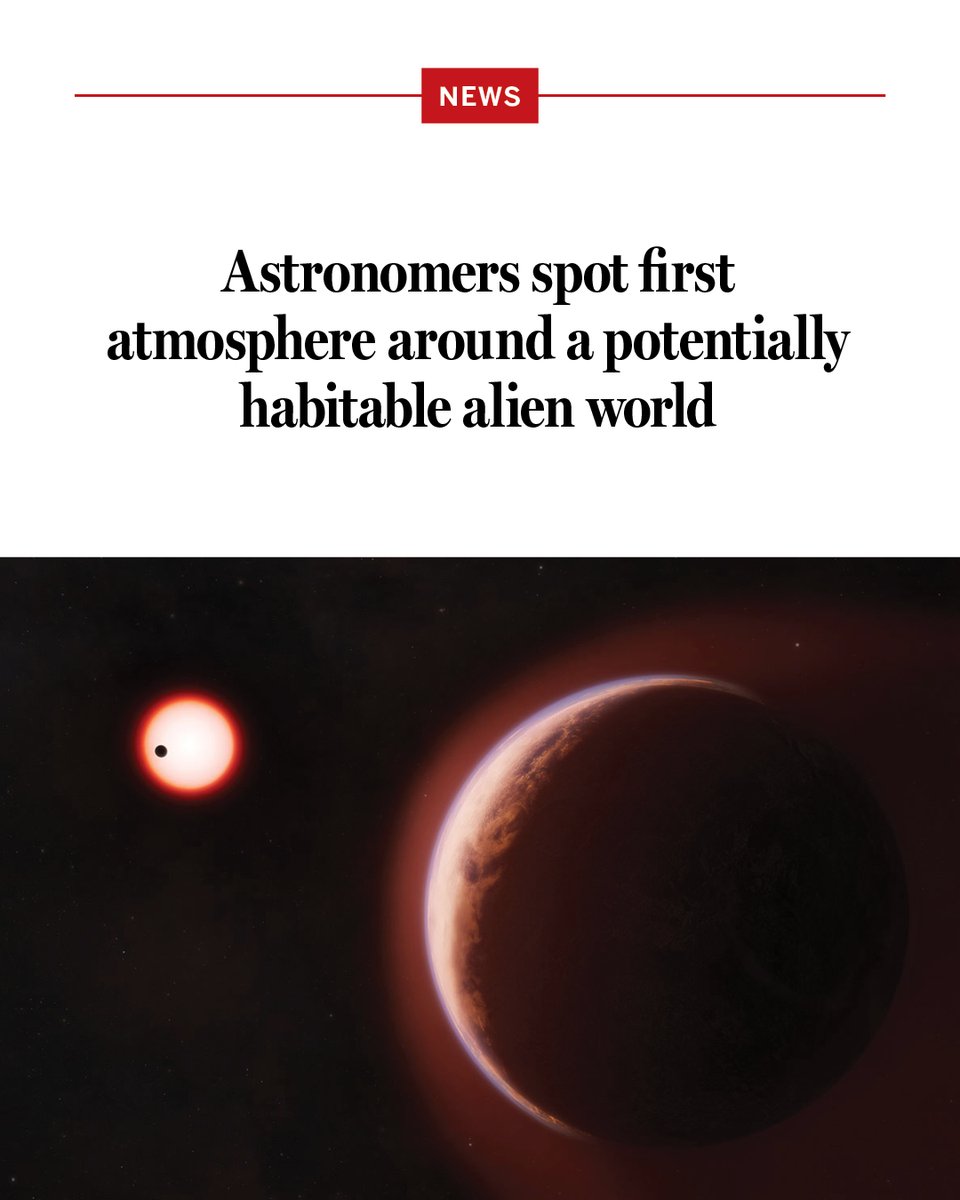
Astronomers have discovered more than 6000 planets orbiting other stars—many of them small and rocky like Earth. But despite years of searching, firm evidence that such worlds have stable atmospheres has remained elusive.
Now, researchers report that the relatively nearby super-Earth LHS 1140b appears to be leaking helium gas into space, implying it still has a substantial atmosphere billions of years after its birth.
Learn more: https://t.co/Q09XPkoxUr
A meteorite discovered 4 years ago may be the oldest ever identified from Mars, preserving a fragment of the planet’s crust from more than 4.1 billion years ago.
Although analyses are still unfolding, the nearly 800-gram rock, which split into eight pieces, is already offering an unprecedented glimpse of the planet’s watery youth—and challenging traditional views about how its crust formed.
Learn more: https://t.co/gbeaixwcoE
🌕 Happy #InternationalMoonDay!
Want to explore the #Moon yourself? Check out our #EarthScienceWeekPartner & Sponsor #NASA for lunar maps, activities, & Moon geology resources that let you investigate Moon rocks—no spacesuit required! 👩🚀🌍🚀
🔗 https://t.co/WUTvsvTeK0
#Geology
#UnDíaComoHoy se conmemora el Día Mundial de Toma de Conciencia del Abuso y Maltrato en la Vejez 👵🧓, para promover el respeto y la dignidad de las personas adultas mayores y resaltar la importancia de un entorno seguro y de apoyo para ellas > https://t.co/vDHsfj4Av7
“On the Moon is a photo of my family. I pray it reminds you that we and America and all of the world are cheering you on.”
Apollo 16 astronaut Charlie Duke recorded a message for the Artemis II crew. Fitting that they hear his words as they close in on their lunar destination.
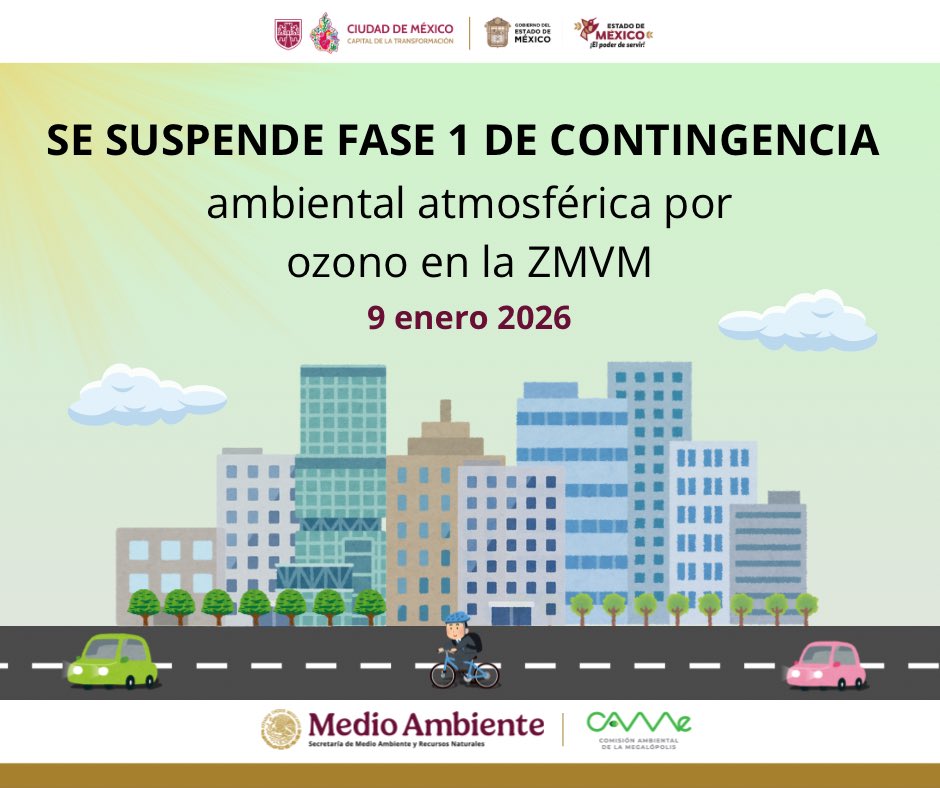
SE SUSPENDE LA CONTINGENCIA AMBIENTAL ATMOSFÉRICA POR OZONO EN LA ZONA METROPOLITANA DEL VALLE DE MÉXICO (ZMVM)
Más información: https://t.co/HQIRchYvvm