@gokulr@gauravvohra The best advice I received is once you acutely feel the pain point, know how to tackle it, and if you can’t tackle it yourself - then you hire. It ensures you actually have the problem before hiring.
@MattyKirsh This is a good point! Commercialization relies on getting HCP awareness / adoption which is tough. It cannot be controlled fully in biopharma as it relies on external stakeholders to buy in. Worthy of exploration and needs to solve problems for two sides - pharma and HCP.
Prior Auth is a pain, but new AI players are using LLMs to summarize medical charts and agent’s ability to automate payer phone calls to produce some PA serenity for practices. We dive deeper here: https://t.co/SfqV7r0lG4
@nikillinit I think ICHRAs could be an answer but I worry about how the instability in the ACA market affects folks willingness to adopt. Touched on some of that here: https://t.co/1Lnih1diEa
@healthapiguy It’s going to be fascinating as they build out their supply chain functionality. These are critical systems that are tough to displace. As in all things good change management will be key.
Great article @UnionInsight on payer earnings. The continued mentions of payers embracing AI tools to manage costs and control MLR is a space I’ll be watching. Tailwind for both payer and provider RCM tech as it signals no abatement of the arms race. https://t.co/KTaienaZyM
@carrynointerest Such a good post! Time to utility is such a good metric that can get lost in all the “easier to measure” sales metrics but it is critical.
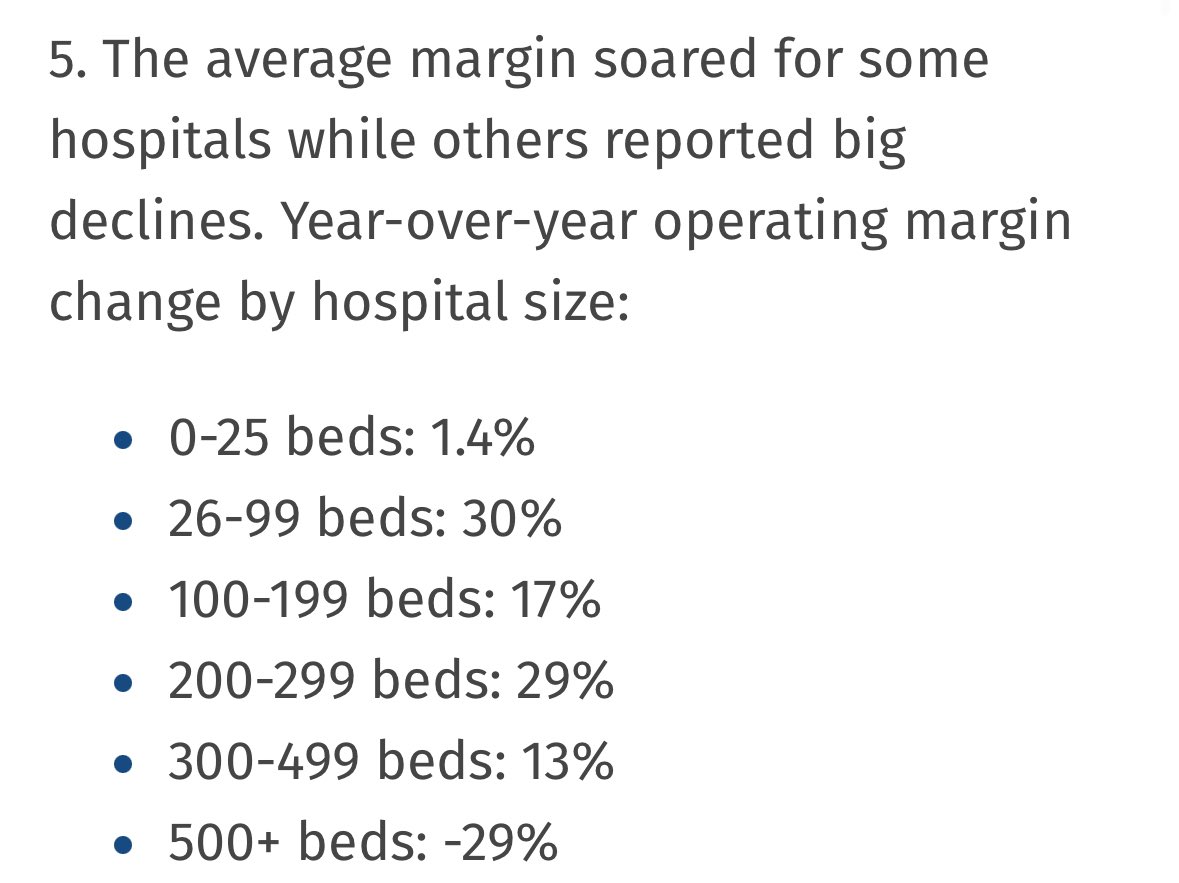
@BeckersHR highlighted a report on YoY hospital margin changes. The largest hospitals (500+ beds) had the largest YoY decrease in margin! Looks like it’s driven by increases in supply and drug expenses vs smaller peers. I thought economies of scale would’ve helped prevent this.