I wonder if this fool knows that Christianity in India predates Christianity in the U.S. by more than 1500 years. There are tens of thousands of churches in India. Yet America can’t handle a Hanuman statue? Religious nationalists everywhere are the most fragile, low self-esteem people on the planet
I’m a U.S. Army combat veteran and a Hindu American. I didn’t put on that uniform, leave my family, and go to war so some third-rate talk show guy could announce that when his side “wins,” they’re coming for my religion.
I served with Christians, Jews, Muslims, atheists, and other Hindus. Nobody pulled rank on God before we went outside the wire. Some of those men never came home. None of them died so you could fantasize about ravaging someone else’s faith. The people who worship in those temples pay taxes, run businesses, and send their sons and daughters into the same Army I served in. “When we win, we are tearing this down” is not patriotism. It is a threat against Hinduism itself to vandalize another American community’s house of worship because you hate the faith inside it.
If winning in America means demolishing Hindu temples, you don’t want the country I fought for. You just want a license to go after people who aren’t you. America is not your theocracy. Religious liberty does not expire for Hindus when you decide you’ve won. You don’t get to tear anything down. Not legally. Not morally. Not in the country for which I actually sacrificed.
@CoHNAOfficial@sudhaj12@pushpita@carlwheless@shiva_makki@ShawnBinda@Cloudwatch199
"AI isn't replacing radiologists" good article
Expectation: rapid progress in image recognition AI will delete radiology jobs (e.g. as famously predicted by Geoff Hinton now almost a decade ago). Reality: radiology is doing great and is growing.
There are a lot of imo naive predictions out there on the imminent impact of AI on the job market. E.g. a ~year ago, I was asked by someone who should know better if I think there will be any software engineers still today. (Spoiler: I think we're going to make it). This is happening too broadly.
The post goes into detail on why it's not that simple, using the example of radiology:
- the benchmarks are nowhere near broad enough to reflect actual, real scenarios.
- the job is a lot more multifaceted than just image recognition.
- deployment realities: regulatory, insurance and liability, diffusion and institutional inertia.
- Jevons paradox: if radiologists are sped up via AI as a tool, a lot more demand shows up.
I will say that radiology was imo not among the best examples to pick on in 2016 - it's too multi-faceted, too high risk, too regulated. When looking for jobs that will change a lot due to AI on shorter time scales, I'd look in other places - jobs that look like repetition of one rote task, each task being relatively independent, closed (not requiring too much context), short (in time), forgiving (the cost of mistake is low), and of course automatable giving current (and digital) capability. Even then, I'd expect to see AI adopted as a tool at first, where jobs change and refactor (e.g. more monitoring or supervising than manual doing, etc). Maybe coming up, we'll find better and broader set of examples of how this is all playing out across the industry.
About 6 months ago, I was also asked to vote if we will have less or more software engineers in 5 years. Exercise left for the reader.
Full post (the whole The Works in Progress Newsletter is quite good):
https://t.co/ON3GwlI3mi
We named @Tesla after Nikola Tesla, one of the greatest engineers ever.
He was a penniless immigrant whose inventions led to American dominance in electricity generation and usage.
Raj Subu, med student from the MCG/UGA Partnership presenting his research with @emory_urology at the Southeastern Section AUA this morning. @SES_AUA#SESAUA2023#SESAUA23
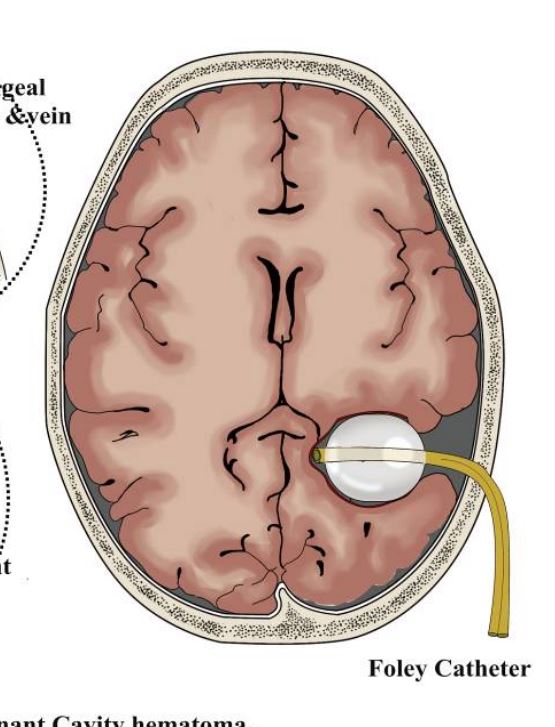
The non-urologic uses of Foley catheters - head and neck edition.
A less serious 🧵.
And yes, there are applications for the brain and the eyeball.
In later editions, we'll cover the torso and extremities.
The New York Times recently released an op-ed entitled The Greatest Life Hacks in the World (for Now).
It had some absolute gems of wisdom.
Here were my favorites:
Mark Cuban launched an online pharmacy providing cancer, cardiac, GI, rheum drugs at a steep discount. Leukemia drug Imatinib (Gleevec) which usually retails at $9,657 is sold at $47.
Perhaps the greatest disruption in US healthcare this decade.👏🏼
https://t.co/Ww5UFAt6L5 @mcuban