Thrilled to share our story of "lemon-shaped" virus SMV1 published at @CellCellPress
This is the first atomic structure of an archaeal lemon-shaped virus. Great collaboration with Virginija and @mkrupovic as always! (1/6)
https://t.co/ffXY7fJC3R
Another wonderful collaboration with
@alanbrownhms lab. The Zhang lab together with @PolinaLishko lab (co-first author
@QingweiN) contribute the doublet microtubule structure from Crithidia fasciculata, a model organism that infects mosquitoes.
https://t.co/eDieZsYzaz
Donor Strand Complementation and Calcium Ion Coordination Drive the Chaperone-free Polymerization of Archaeal Cannulae https://t.co/1NKKP7hFqj
Happy that the preprint is now published. Great collaboration with fantastic colleagues. @conticellolab@EmoryChem
Our study on how the human MCM2-7 helicase is loaded onto replication origins 🧬 is now online @Nature! 🎉
Our findings reveal that unlike in yeast, human MCM loading does not require ORC6 and can occur through multiple pathways.
Read more here: https://t.co/bPT5Y4uPkR
🚨 We've updated the glycan structure database on @GlycoShape (https://t.co/p0Xkdiu9pG)! You can now search through and rebuild glycoproteins with 453 unique glycans 🥳
Glycans are now primarily listed by their GlyTouCan IDs @glytoucan@kiyokof 🎉
#glycotime
The missing piece in the bacterial #ESCRT-III story.. #Vipp1 forms dynamic spiral filaments on membrane! Spirals are springs that drive 3D ring formation in the spiral centre! 😎😵💫 Wonderful collaboration with @Colom_D@RouxLab… 1/2
https://t.co/BRJhMGRE8u
Researchers led by @PhilGuo1, @JunLiuLab, @Dr_Lori_Burrows report the structure of the Pseudomonas aeruginosa T4P suggesting the localization and role of its tip adhesin, PilY1.
https://t.co/Vg9IZEVhJr
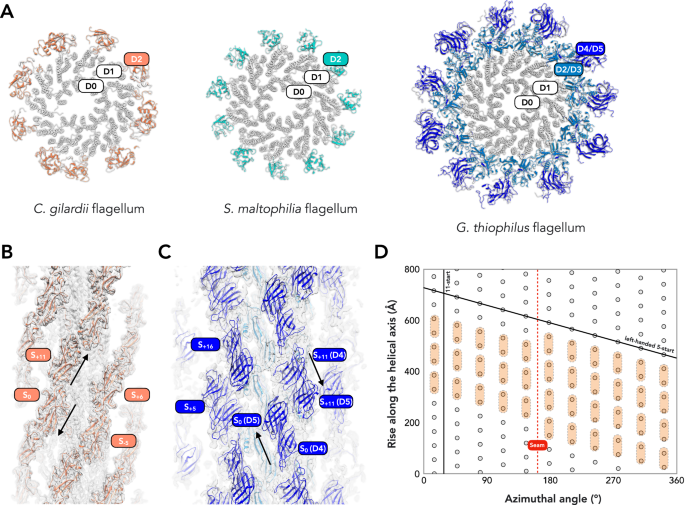
@jerrynosnothing @mkrupovic @OhsuHuiWu used cryo-EM to determine the structures of three bacterial flagellar filaments, showing distinct outer domains.
https://t.co/dT2wKwY0kM
@UAB_Biochem just kicked off Open Rank/Open Tenure Faculty search (expertise in structural biology and research programs focused on molecular mechanisms of cancer) https://t.co/Z2LawAlP2Y
Thank you Fengbin (Jerry) Wang @jerrynosnothing for inviting me to speak at @UAB_Biochem and meet Gino Cingolani @GinoCingolani2, Laura Volpicelli-Daley @lvolpic, Lindsay Rizzardi @LindsayRizzardi, Peter Prevelige, Matthew Renfrow, Shu Chen, Louise Chow, and Tom Broker.
Our Manual Plunge Cooler and Precision Ethane Cryostat system for Cryo-EM are now available - Designed to make your cryo-EM sample vitrification workflow efficient and successful at a reduced cost - Learn more https://t.co/baYrXczRVr Video https://t.co/AwUySNXaLG #cryoem
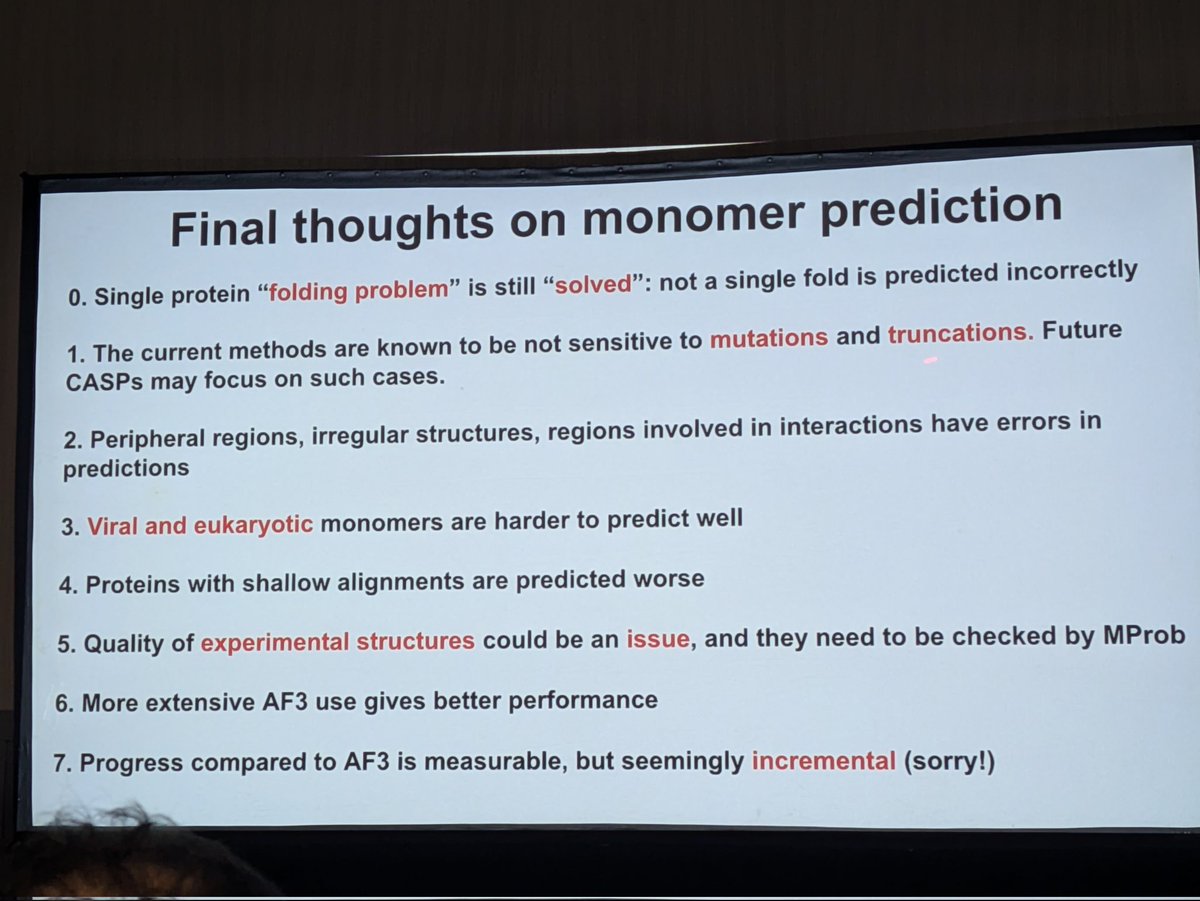
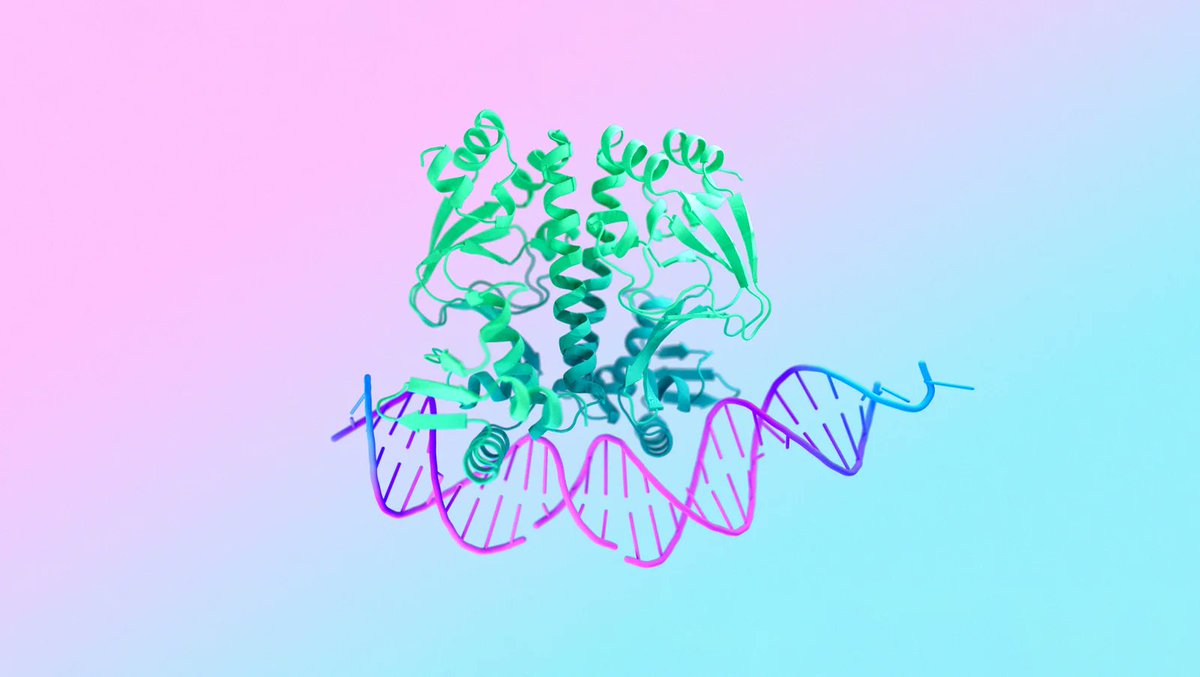
Thrilled to announce AlphaFold 3 which can predict the structures and interactions of nearly all of life’s molecules with state-of-the-art accuracy including proteins, DNA and RNA. Biology is a complex dynamical system so modeling interactions is crucial https://t.co/Gs4GoOB3fD
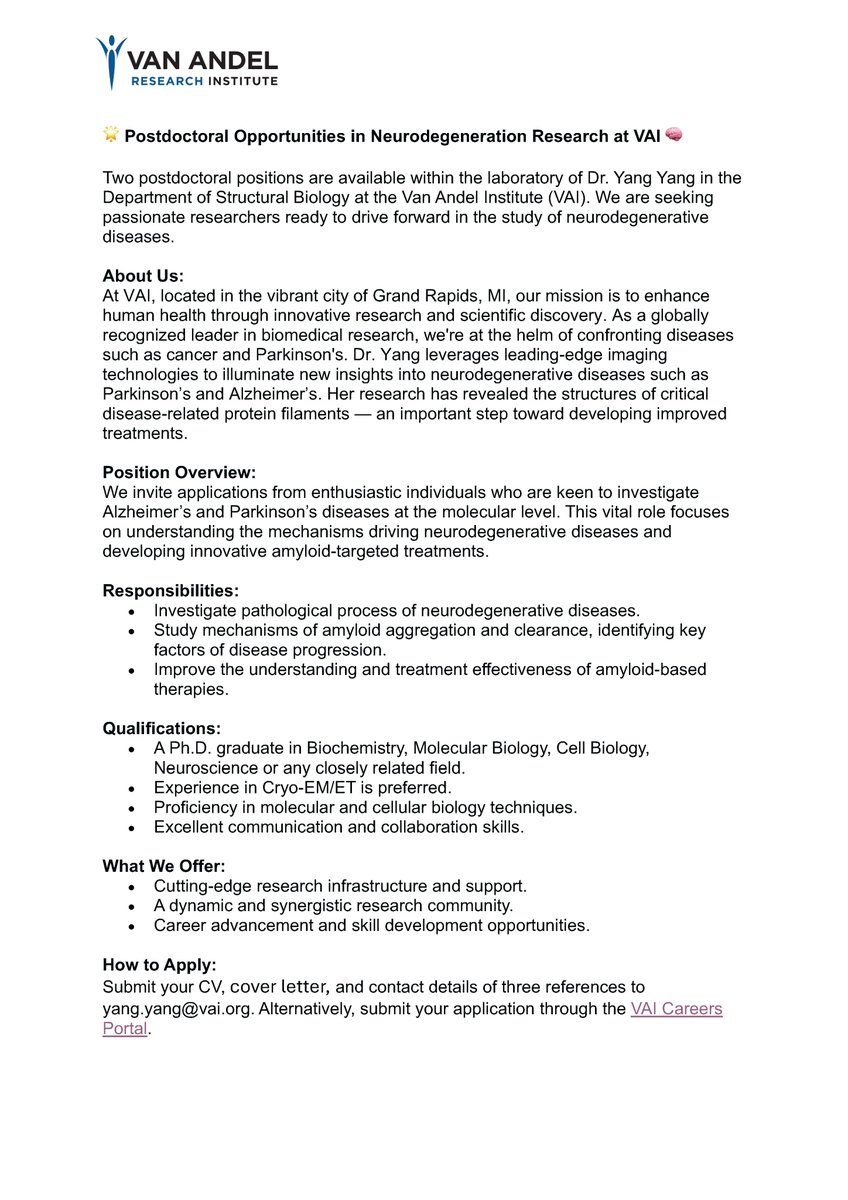
🔬👩🔬 Exciting news! I'll soon start my lab @VAInstitute to research molecular mechanisms in Neurodegenerative diseases. 🧠💡 Now recruiting postdocs to join our dynamic research team! Email me if you're interested! #Postdoc#CryoEM#Neuroscience#ResearchOpportunity
Check out our new cryo-EM preprint on bacterial flagellar outer domain diversity! No clue who'll see this due to Twitter's new algorithm. Important points: most work was done by rotation students, and collaborating with the Wu lab is great. @OhsuHuiWu 🦠https://t.co/jWo1Xy2XNc
Excited to finally share this final product!
Analysis of NIH K99/R00 awards and the career progression of awardees
https://t.co/Yh4BVU5QQR
There is bias in faculty hiring networks! bottom line.
We have received a lot of requests for help with making streptavidin affinity grids. We are happy to finally share our protocol for robust in-house fabrication of streptavidin affinity grids. Stay tuned for the accompanying video that is coming soon!
https://t.co/6IA1u7RRqg
It's phenomenal. We use it every day to guess unknown pili sequences. For our recent 3.5 Å pilus structure in bioRxiv, the predicted sequence is 56% to the correct protein (using the default parameter). Our lab record is 85% correctness for a 2.4Å novel pilus structure. 🍷❄️