Technologist, photographer, husband to @JenniferMcTeag1 and dad. Not always in that order. Opinions are my own, I speak for no one. I do stuff with clouds.
Centrally manage root access in AWS Identity and Access Management (IAM)
Today, AWS Identity and Access Management (IAM) is launching a new capability allowing customers to c... https://t.co/xpLWsqd8pJ
Centrally manage root access in AWS Identity and Access Management (IAM)
Today, AWS Identity and Access Management (IAM) is launching a new capability allowing customers to c... https://t.co/xpLWsqd8pJ
When I went to law school, I knew a law degree would be helpful no matter what I chose to do in life.
Never did I imagine that I would use my skills & training to "prove" my husband's innocence to federal prosecutors after @jeffbezos & @amazon tried to imprison him. A 🧵 /1
What #JustChangeItBackToHowItWas laws do you want to see eg
"All Salt & Vinegar crisp packets by law should be blue"
"Outlaw all 440ml beer and make them full pints"
"Snickers should be made to be called Marathon again"
Lets make Britain grate again.
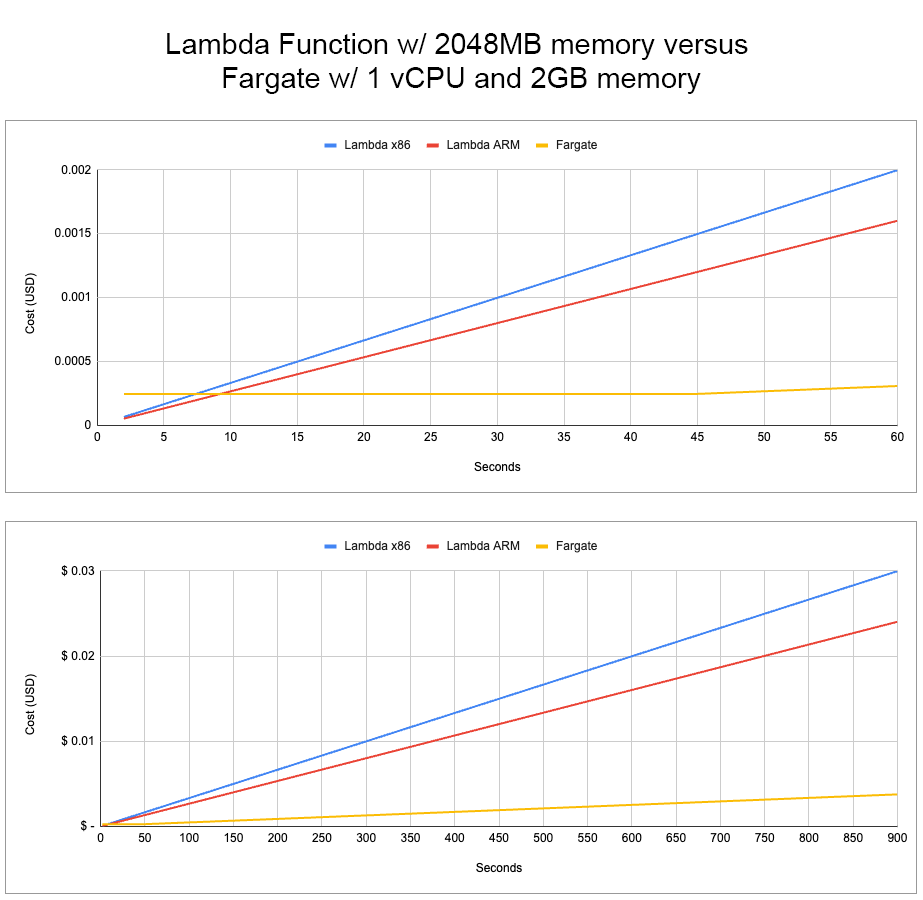
Some interesting Saturday afternoon back of the napkin math (well, interesting to me anyway). If you have background tasks that run for more than 10 seconds on Lambda Functions, it actually starts to become cheaper to run them on Fargate instead (even with the 1-minute minimum and ~10-20 seconds billed to download the container image).
Does it make sense to do this? That depends on volume and duration. For example, a 60 second task that runs 500 times per month would only save you $0.65 USD, but a 5 minute task that runs 5,000 times a month could save over $33 USD, and a 45 second task that runs 100,000 times a month could save over $95 USD.
There are lots of caveats (of course). You need to setup an ECS cluster, VPC, and ECR repo. You need to build and deploy the actual containers. You need to enable some sort of a coordination service (Lambda, Step Functions, etc.) to initiate the Fargate tasks with the proper context. And you need to set up alarms/monitoring/observability to ensure the tasks run correctly. Plus, you're going to get a 30-60 second cold start, but since they're background tasks, that usually isn't an issue.
Of course, if you ever need a task to run for more than 15 minutes, you'd probably need to do all this anyway.
We implemented this pattern at @amptdev using a combination of @DynamoDB to store task execution context/progress, SQS to buffer/schedule requests, Lambda to initiate Fargate tasks, and CloudWatch to centralize alarms and logs. It depends on volume, but we found the sweet spot for switching to Fargate to be somewhere around 20 seconds (from a cost perspective), but default to 60 seconds to balance performance/responsiveness.
The best part is that you don't need to package your code any differently, just define a task and timeout with our SDK (https://t.co/xQlCaLygPX) and then Ampt will package your code, set up the @awscloud infrastructure, and deploy it for you.
So @RoryStewartUK asked if I could explain marginal rates in more detail. I've had a go here - I'd be grateful for comments and suggestions: https://t.co/9o8PGh6pDs
It’s not AWS.
There’s no way it’s AWS.
It was AWS.
Our latest blog explains how we found a vulnerability in AWS Security Token Service (STS) and what we learned from the process.
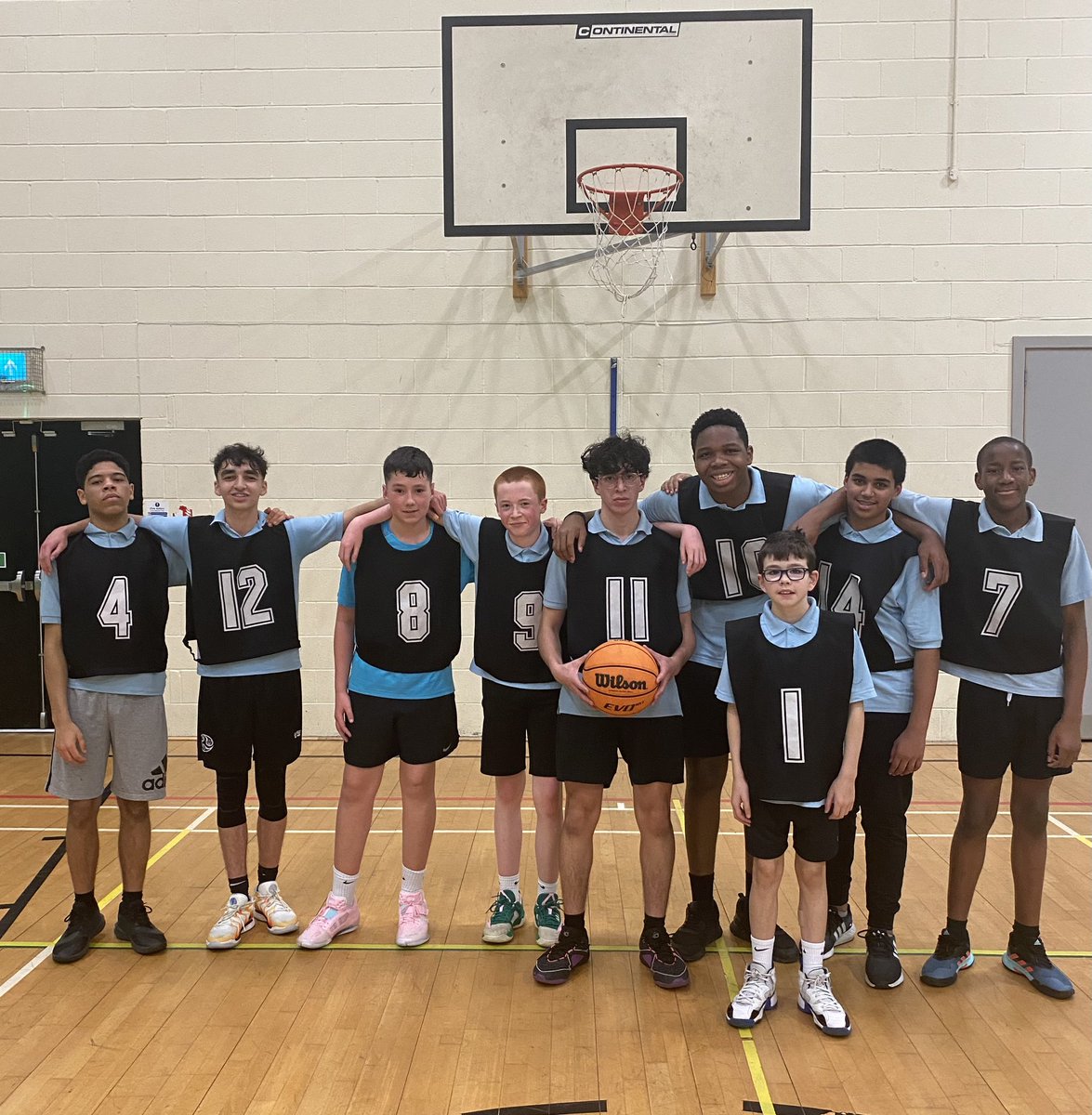
Magic start from the St Cadoc's Wizards 🧙last night at this year's Jr NBA. Three wins out of three - terrific performance! Thanks to @ActiveSchoolsER and @bballpaisley for organising again. 🏀
@TrevSpires So when a daddy lambda and mommy lambda love each other very much, they can make a little lambda…. Thank you for coming to my TED talk on lambda instantiation... (Big icon for Lambda service; small one for Lambda functions / resources)