New @NatureMedicine paper: A pan-cancer foundation model predicts immunotherapy response and highlights the biology behind it
https://t.co/p27ERHIDew
@harvardmed news: https://t.co/A3OjmNGXJM
Roughly a quarter of patients with advanced cancer respond durably to immune checkpoint inhibitors. The rest endure toxicity and cost with little benefit, and existing tools, TMB, PD-L1 staining, remain unreliable across cancer types and drugs
COMPASS is a pan-cancer foundation model that predicts immunotherapy response from tumor transcriptomes and reveals the reasoning behind each prediction
@HarvardDBMI@harvardMed@Roche@Harvard@BroadInstitute @KempnerInstitute
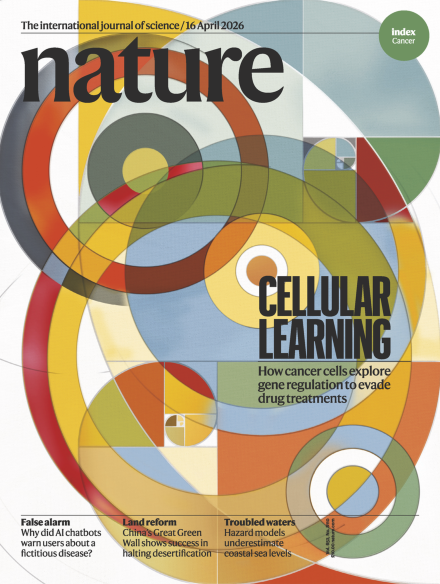
We're in this week's Nature! We propose a model of how a cell learns by running an evolutionary algorithm: exploring different gene-regulatory combinations and using feedback responses to stabilize those combinations that reduce stress levels.
Full text: https://t.co/yQYic2owl0
People often ask how breakthroughs occur in cancer biology-often the story is more complex - the survival plot for myeloma outcomes is extraordinary - improvements come about in incremental steps - in my lifetime treatment of Myeloma has almost transformed into a curable disease
Pharmaceutical giant Roche announced it is launching a new large-scale “AI factory” with thousands of the latest Nvidia chips to accelerate the development of new drugs and diagnostics.
Roche said the company has ramped up its AI capacity by purchasing 2,176 Nvidia Blackwell GPUs, which will be deployed across the U.S. and Europe.
That brings its total GPUs to more than 3,500, which it claims is the greatest number owned by any pharmaceutical company.
Roche, which made the announcement in conjunction with Nvidia’s GTC conference in San Jose, hopes to use that technological firepower to discover, develop, manufacture and commercialize therapies faster.
Learn more: https://t.co/IHHZFyFcVT (📸: Richard Morgenstein 2021)
Some dumb researchers still read papers one by one.
Stanford PhD students just use Claude.
Here are 9 prompts that turn 40+ papers into structured literature reviews, knowledge maps, and research gaps in minutes:
New paper from @VallierLab is online. "Acquisition of epithelial plasticity in human chronic liver diseases". Amazing work from @chrisgrbbn and @VasileiosGalan in collaboration with @imohorianu and Mike Alison. Few key points:
1/
https://t.co/hkjAroRkgY
⚡️🔬📣 Excited to share our new @Nature article building and evaluating PathChat, a multimodal generative AI copilot and chatbot for human pathology. Article: https://t.co/OAIG31ofWJ Open Access Link:
https://t.co/tvw6W6qmT9
We leverage our previous success in building foundation models for computational pathology such as UNI / CONCH and combine it with the advancements of large vision language models and generative AI to enable PathChat to answer diverse pathology-related queries. We assessed PathChat using both multiple choice diagnostic questions and open-ended questions.
Congratulations to @MYLu97@chenbowen118 @DFKW_MD @richardjchen and everyone else who contributed to this work.
Also see blog post from @MYLu97 about this work: https://t.co/exjpKMnrQp , also teasing the development and preview of PathChat 2, a successor to PathChat 1 bringing new capabilities and substantially improved performance to the state-of-the-art.
1. Excited to share our new paper in @Nature! With over 1000 tumors analyzed by scRNA-seq, we provide a systematic pan-cancer characterization of transcriptional intra-tumor heterogeneity (ITH)
https://t.co/u1aHEatzVz
The #HumanCellAtlas consortium aims to map every cell type in the human body.
In Science, researchers report a key feat: detailed maps of over a million individual cells across 33 organs, representing the most comprehensive, cross-tissue cell atlases to date. (THREAD) 🧵
Various characteristics of T cells that infiltrate tumors are relevant to therapeutic response, and may define cancer immune types that can stratify patients to optimize therapy.
Learn more in a new #SciencePerspective: https://t.co/zVgdtjwnnr
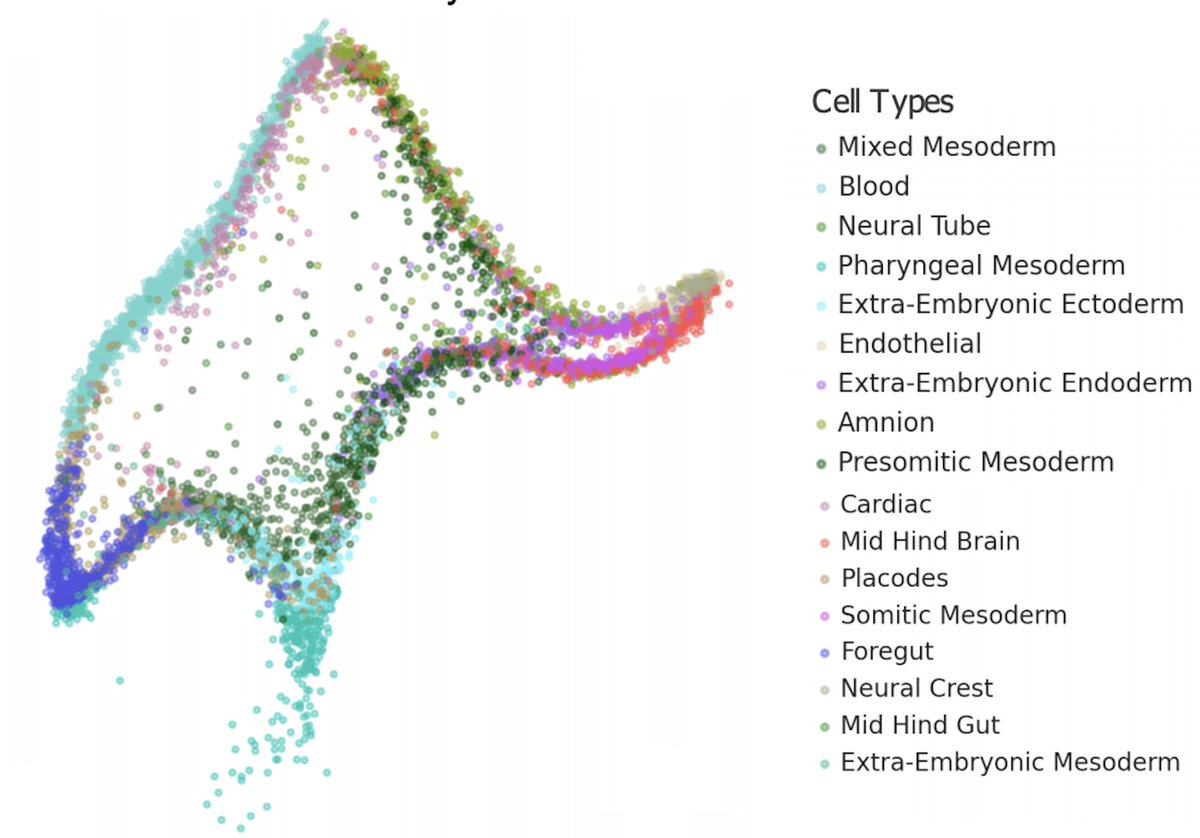
It's time to stop making t-SNE & UMAP plots. In a new preprint w/ Tara Chari we show that while they display some correlation with the underlying high-dimension data, they don't preserve local or global structure & are misleading. They're also arbitrary.🧵https://t.co/XkAOTKlOcs
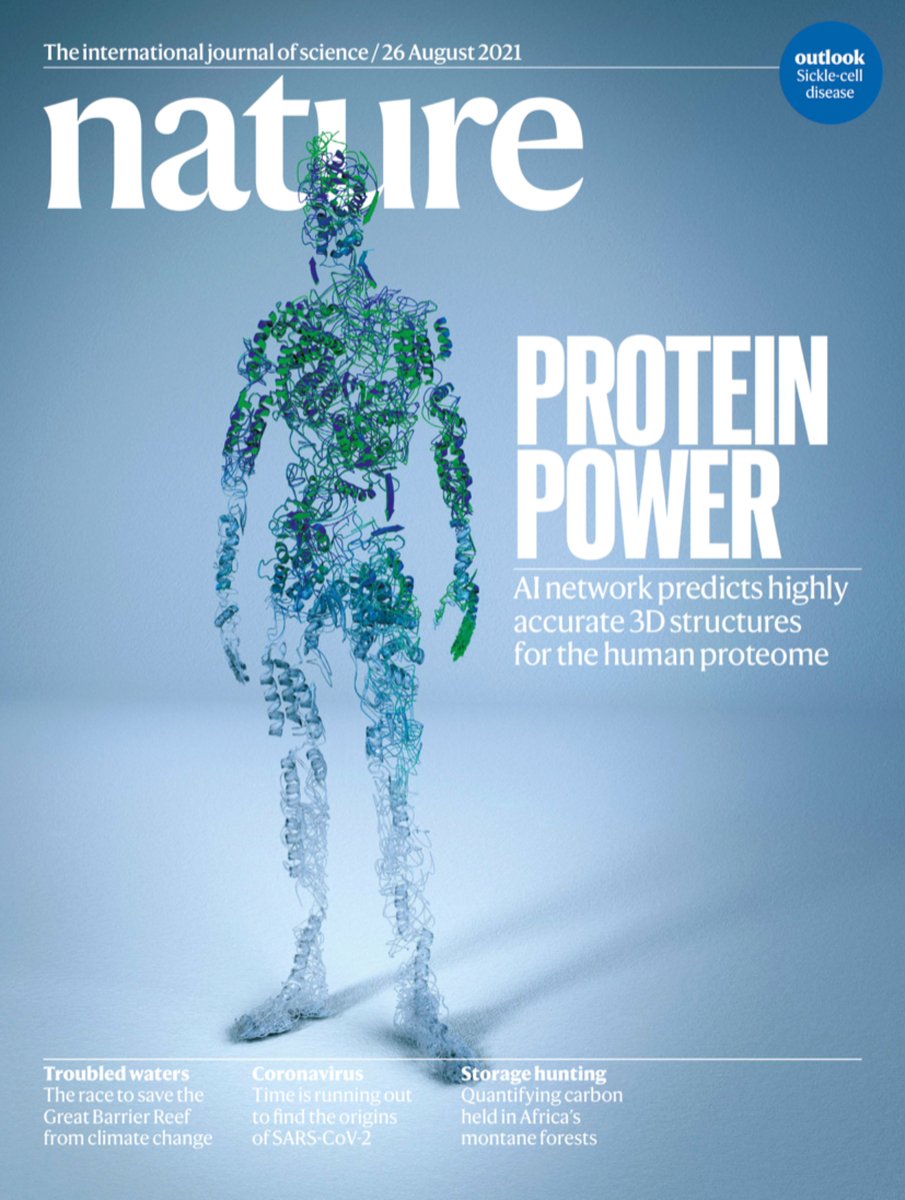
The #AlphaFold 2 papers on the methods and human proteome predictions are out today in hard copy in @Nature! A really proud moment to see our work featured with a fantastic image on the front cover of the issue: https://t.co/tqKc7xmj98