big progress!
Scientists just recreated one of the earliest stages of human development entirely from stem cells.
"Researchers developed self organizing human embryonic disc models that successfully underwent gastrulation, forming realistic body plans and generating early precursors of the brain, spinal cord, gut, liver, pancreas, lungs and even a rhythmically beating primitive heart."
"The embryo models reached a developmental stage comparable to a 21-day old human embryo, with over 80% successfully forming primitive streak-like structures."
"This breakthrough could transform how scientists study early human development, birth defects, miscarriage, regenerative medicine and eventually lab-grown organs."
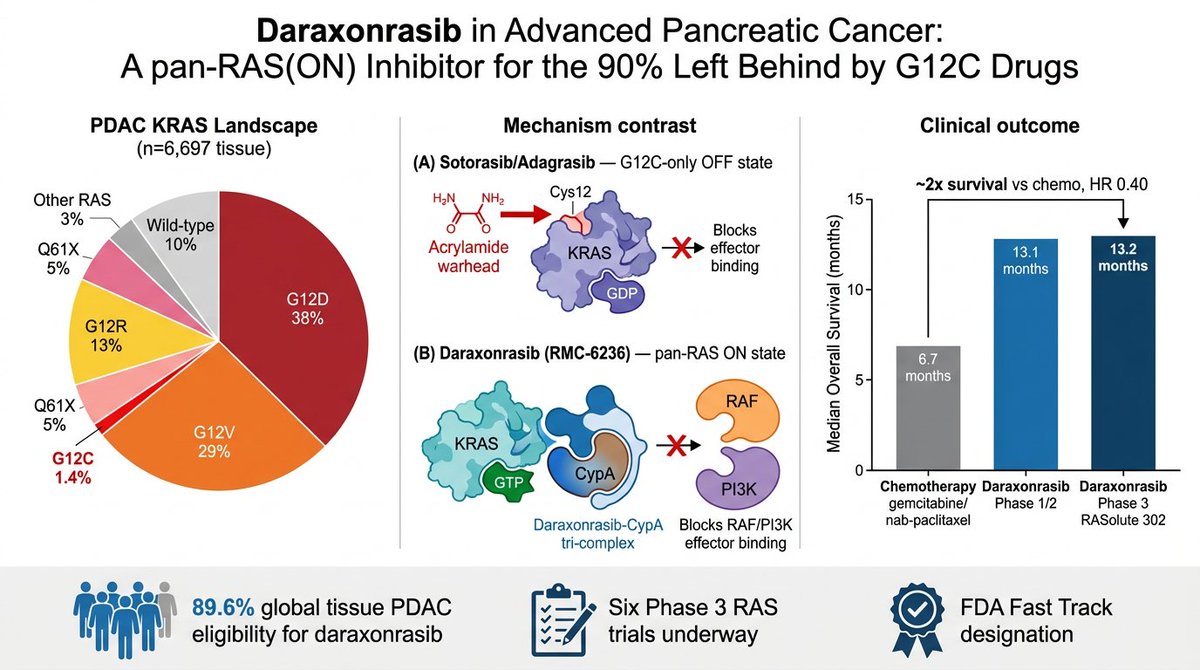
RAS finally getting drugged is one of the great stories in modern biology, and almost nobody outside oncology understands why it's such a big deal.
YOU'LL LEARN SOMETHING AWESOME TODAY.
i am going to keep this as understandable (and simple) as i can.
OPEN THE THREAD.
🧵
We wanted to see if we could take simple, physical materials (like cardboard and markers) and use AI to bring them to life. What was the result? A short film starring a bunch of TPUs getting ready for the big stage at Google I/O 2026!
Working with director Laurie Rowan and Nexus Studios, we kept human artistry at the center of the film by blending puppetry and 3D animation with our models to do the following ↓
Nano Banana: Generated beautifully stylized first frames from the raw puppet footage and basic 3D animations.
@GoogleAIStudio: Built a custom tool inside the platform to test these frames at scale, ensuring pixel-perfect consistency
Gemini Omni & experimental @GoogleDeepMind Models: Merged the base animation and stylized frames to elevate the final piece to a cinematic level.
Our AI pipelines were specifically designed to protect the crafty details that give these films their heart, like the tiny human imperfections of puppetry, or the nuance an animator can build into an expression.
This is a real and rapidly growing problem, and these are the results of some of the first papers to look into it. More will come as the problem develops, worsens, and its impacts spread.
We need antibodies for LLM-driven corruption, stat.
Paper here: https://t.co/rltLoOsmHP
BDBV (Bundibugyo ebolavirus) 2026 Ituri Outbreak – Technical Summary
Quick context for the Ebola fam: six species in the genus, four cause human disease — EBOV, SUDV, BDBV (“Bundy”), and TAFV. Reston and Bombali haven’t shown up in people yet. Bundy is still one of the understudied ones — first ID’d in the 2007 Uganda outbreak and divergent enough from Zaire that none of our approved vaccines or mAbs work against it.
Ebola-like haemorrhagic fevers show a striking periodicity in the modern era (major outbreaks in the 70s, then quiet until the mid-90s, followed by increasing frequency in the 2000s–2020s), and some virologists even speculate that similar VHF outbreaks stretch all the way back to antiquity — including Thucydides’ vivid description of the Plague of Athens in 430 BCE, which has several filovirus-like features. Unlike that Mediterranean event, today’s Bundy activity is firmly rooted in the Ituri region of northeastern DRC, right on the Uganda border — a gold-mining, conflict-affected zone with classic filovirus ecology.
Taxonomy
Distinct species Bundibugyo ebolavirus (Ebolavirus genus, Filoviridae).
~58–61% nucleotide identity to EBOV; >30% divergence in GP.
No approved vaccines or monoclonal antibodies (unlike Zaire ebolavirus).
Genome
~18.9–19 kb negative-sense ssRNA.
Gene order: NP-VP35-VP40-GP-VP30-VP24-L.
GP transcriptional editing produces sGP.
Key IFN antagonists: VP35 (IFN inhibitor) and VP24 (STAT1 nuclear import blocker).
Virion & Entry
Enveloped filamentous particles.
GP1/GP2 mediates attachment (TIM-1, NPC1), cathepsin cleavage, and membrane fusion.
Cytoplasmic replication with slower kinetics than EBOV in vitro and NHP models.
Pathogenesis
Primary targets: monocytes, macrophages, dendritic cells.
Dysregulated cytokine response (elevated IL-10, blunted early pro-inflammatory cytokines).
Endothelial damage, coagulopathy (DIC-like), lymphocyte apoptosis, multi-organ necrosis (liver, spleen).
Historical CFR: 25–51%. Supportive care remains primary management.
Epidemiology
Rare outbreaks: 2007 Bundibugyo (Uganda), 2012 Isiro (DRC).
Presumed zoonotic spillover (bats?), sustained human-to-human transmission via bodily fluids.
Current Ituri focus (Mongwalu/Bunia): mining/urban amplification + conflict-related mobility. Cross-border case reported in Uganda. Consistent with eastern DRC/Uganda border ecology.
Regional Context
Recurrent Marburg outbreaks in local mines (e.g., Durba 1998–2000), plus CCHF and yellow fever. Pre-1976 records suggest possible earlier undiagnosed filovirus activity.
Accurate species identification is critical for diagnostics and countermeasures. Continued monitoring required.
#Ebola #Filovirus #BDBV #GlobalHealth
Our implantable living materials work is officially out @ScienceMagazine! We confined therapeutic bacteria in stiff and tough hydrogels for deployment in vivo. Check out the paper https://t.co/ZbhZ4CxikO and perspective https://t.co/G8xcxgA3kM here
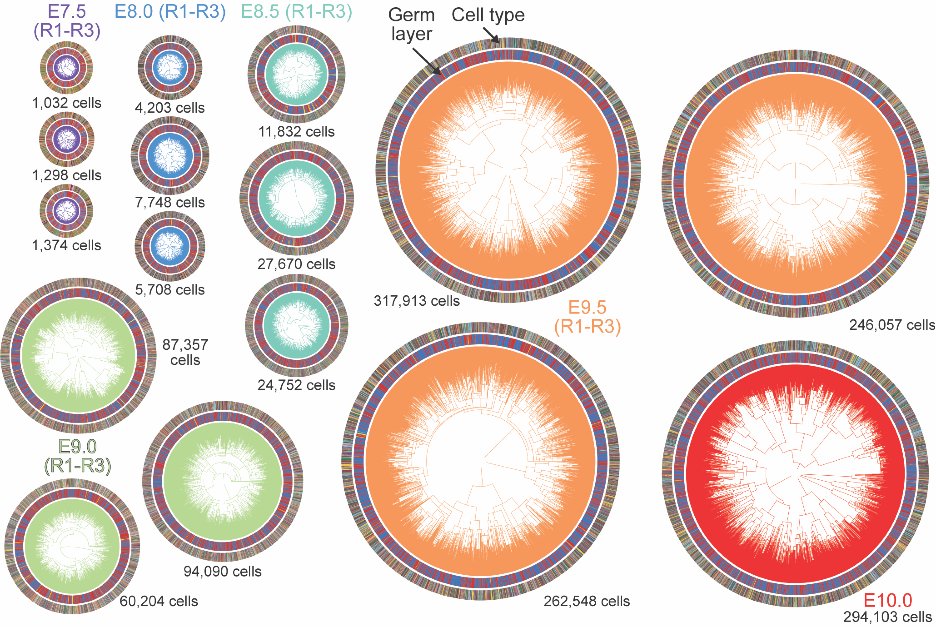
Excited to share a new preprint from the lab led by @LukeKoblan and @WilliamNColgan in which we describe our efforts to define a quantitative cell fate map of mouse embryogenesis! https://t.co/ffZdHX9ikp
The final version of this study just went online.
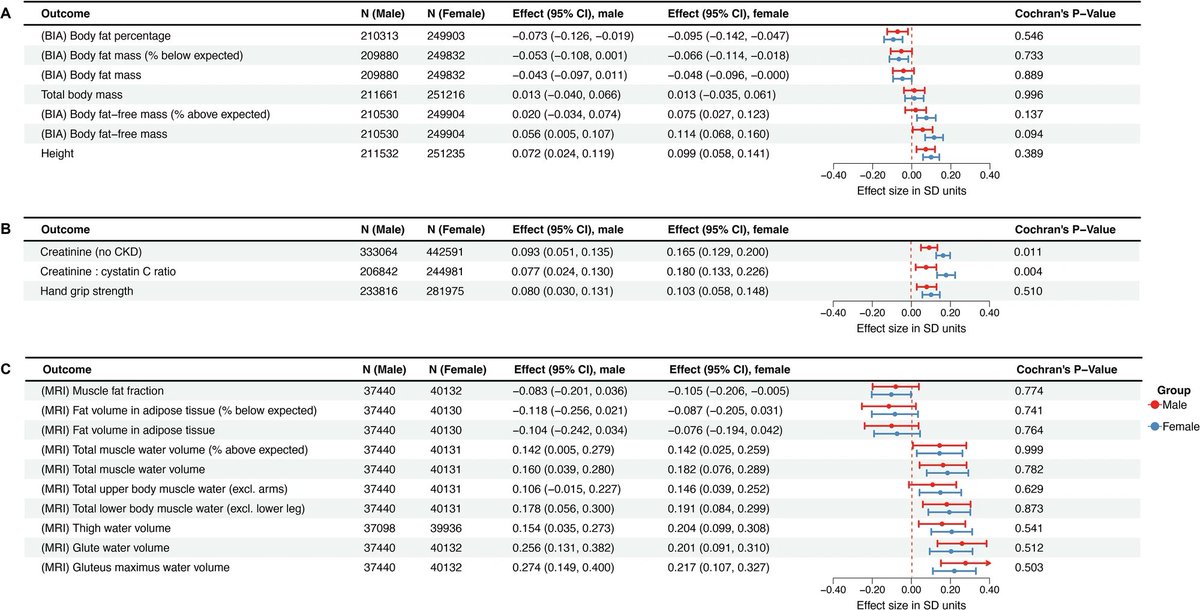
TL;DR: People with genetic variants that disrupt myostatin are naturally more muscular, less fat, and stronger, without apparent downsides.
A decade after our first observations, with plenty of serendipity and hard work by several generations in the lab, we are closer than ever to realizing the promise of orphan RNAs as universal disease barcodes, powered by AI models developed at @exaibio! Thanks MedScape and our colleagues for the coverage.
Our live tissue clearing paper is out in @naturemethods! We achieved optical clearing of mammalian brain tissues without compromising normal neuronal function. Big congrats to @Shigenori774 and our wonderful collaborators! 🎉
https://t.co/joMB5odihK (1/10)
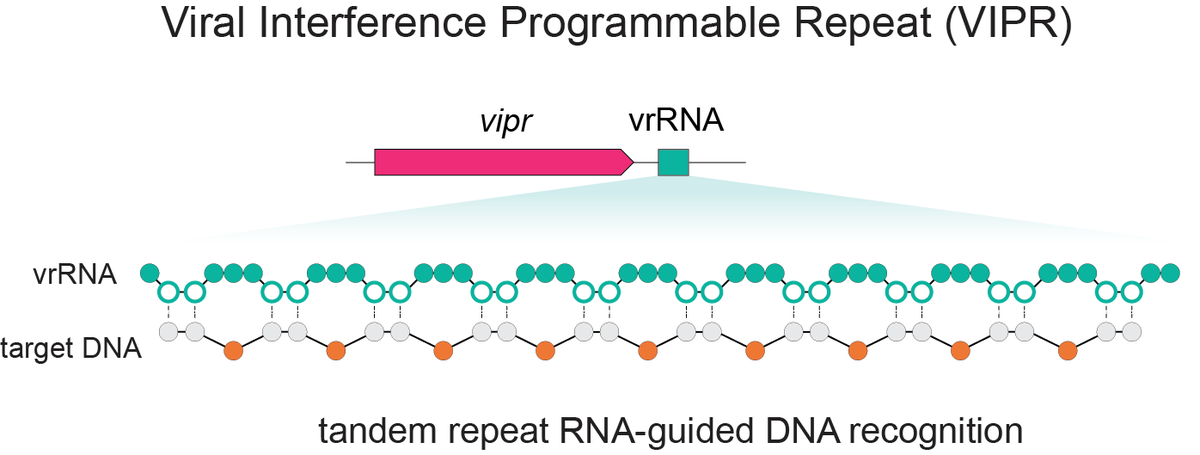
Excited to share our discovery of a new programmable RNA-guided DNA-targeting system hiding inside bacteriophages that predates CRISPR.
We call it VIPR (Viral Interference Programmable Repeat), and it uses an entirely new logic to find its targets.
Thread + link below.
Pancreatic cancer mRNA vaccine shows lasting results in an early trial. Scientists caution that more research is needed, but nearly all of the patients who responded to the personalized vaccine are still alive six years later.
https://t.co/13GBL8ujOV
Love it! Macaque, mouse, and TURTLE*!
"Vasculature exhibits fractal topology with a fractal dimension ~3, forming space-filling trees that prioritize proximity to every cell in the body. Nervous system networks exhibit a fractal dimension ~2, forming sheet-like arbors that prioritize electrical signal transmission. This architectural divergence originates from distinct biophysical constraints operating in bifurcations, where vascular junctions minimize energy expenditure while conserving fluid flow and nerve junctions maximize conduction velocity while conserving electrical current."
----
*I've been saying here that turtles are an ideal out group with a basal position in reptiles (esp for mammal/bird comparisons) and a very slow evolutionary rate (desirable for conserved regulatory mechanisms). Their plastral scute growth rings reveal past growth rates and age. There are determinately and indeterminately growing species. They have extreme temperature sensitivity at all life stages and some species are transitional-like between ectothermic and endothermic.
I am biased but the "middle" species should be a dog or bird rather than mouse, no? But of course I understand the usefulness of including the mouse, which is the workhorse genetic and experimental model.
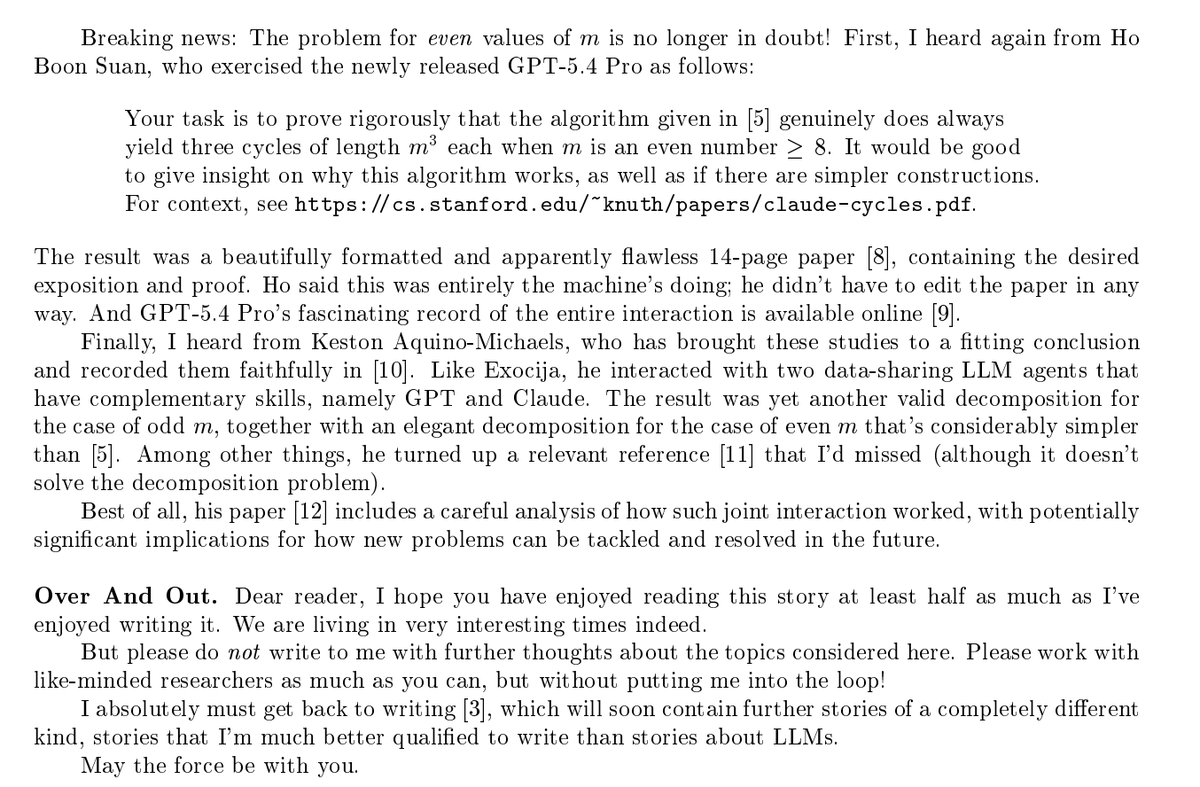
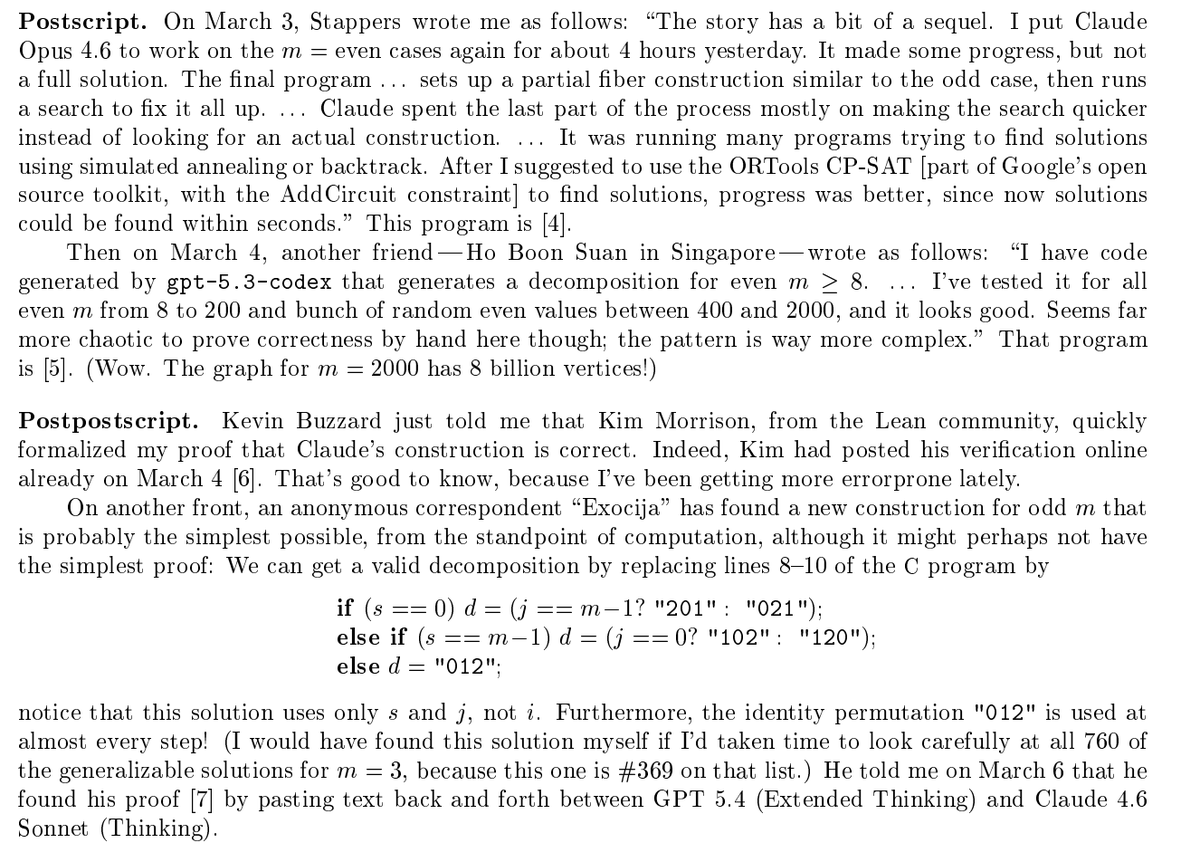
Three weeks ago I shared that Claude had shocked Prof. Donald Knuth by finding an odd-m construction for his open Hamiltonian decomposition problem in about an hour of guided exploration. Prof. Knuth titled the paper Claude’s Cycles.
The story didn't end there.
The updated paper shows the story got much bigger. For the base case m=3, there are exactly 11,502 Hamiltonian cycles. Of those, 996 generalize to all odd-m, and Prof. Knuth shows there are exactly 760 valid “Claude-like” decompositions in that family.
The even case, which Claude couldn’t finish, was then cracked by Dr. Ho Boon Suan using GPT-5.4 Pro to produce a 14-page proof for all even m≥8, with computational checks up to m=2000.
Soon after, Dr. Keston Aquino-Michaels used GPT + Claude together to find simpler constructions for both odd and even m, by using the multi-agent workflow.
Dr. Kim Morrison also formalized Knuth’s proof of Claude’s odd-case construction in Lean.
So yes: the problem now appears fully resolved in the updated paper’s ecosystem of human + AI + proof assistant work!
We went from one AI solving one problem to a full mathematical ecosystem (multiple AI systems, multiple humans, formal verification) running in parallel on a problem that stumped experts for weeks.
We are living in very interesting times indeed.
Paper (updated): https://t.co/Ecu6X5StbY
Sakana AI's AI Scientist just landed in @Nature. Not a tool that helps you write papers. A system that does science — generates ideas, writes code, runs experiments, drafts the manuscript. And v2 already passed human peer review. The new finding: there's a scaling law for AI-generated science itself. Better models → better papers. Automatically. We've had scaling laws for language, reasoning, and coding. Now apparently science too.
Wild time to be a researcher.