MD and former PhD student (UdeC, CL): current GP at UBB, Ñuble, CL. MSc CogSci (CCiL at UB, ES). Posts ESP(chilean)/ENG. Interested in neuroprogression
My new chapter “Conceptual Engineering of Medical Concepts,” just out in New Perspectives on Conceptual Engineering vol 3 (Springer).
I show how medicine constantly engineers its own concepts—like cancer and obesity—for epistemic, ethical, and policy goals
https://t.co/gY2HJueWb8
QEPD la gran Doctora Katia Gysling, excelente docente, cercana profesora en la facultad, y una gran neurocientifica. Un honor haber tenido clases con ella.
holy shit
MIT researchers just turned skin cells directly into neurons without stem cell intermediate, 100-fold efficiency boost, and they actually worked when transplanted into mouse brains
1/
@dylansmith2828@rostotona@adalozzo Aclaración: excepcionalmente un café tiene 200 mg de cafeína. Lo habitual es 80-150 mg que es bastante menos en la falsa proporción que intentas establecer (las energéticas tienen solo 2x de cafeína que 1 taza de café). Un principio de la medicina es la relación dosis-respuesta.
Neuron
Nucleus Accumbens Subnuclei Regulate Motivated Behavior via Direct Inhibition and Disinhibition of VTA Dopamine Subpopulations
https://t.co/oO6C5OKaSY
How wearable sensors (@Oura, @fitbit, or @Apple watch) detected subclinical inflammation up to 7 weeks before a flare of inflammatory bowel disease
https://t.co/JyPjWeO80g @RobertHirten@HPI_MS@MountSinaiNYC
In a surprising paper published in Nature, scientists accomplished what sounds impossible: using genes from a single-celled organism to create mouse stem cells, which eventually developed into a living, breathing mouse.
An analysis of FDA’s Adverse Event Reporting (FAERS) data, just posted on @researchsquare, provides early evidence of real-world increased mortality among #Alzheimers patients treated with anti-Aβ monoclonal antibodies, aducanumab & lecanemab. 🧵 (1/6)
https://t.co/1R9tl1hSAy
Biggest medical discoveries of the week (🧵)
1/10
A complete map of the fruit fly brain - the biggest and most detailed to date
140,000 neurons, which connect through 55 million synapses to permit vision, movement, and memory formation
(https://t.co/YTaJBwEhn2)
Comprehensive and deeply insightful, "A History of Bodies, Brains, and Minds" provides a brief history of life, the brain, and cognition, from the earliest living beings to our own species. #SfN24#OpenAccess https://t.co/b55ZUISVpv
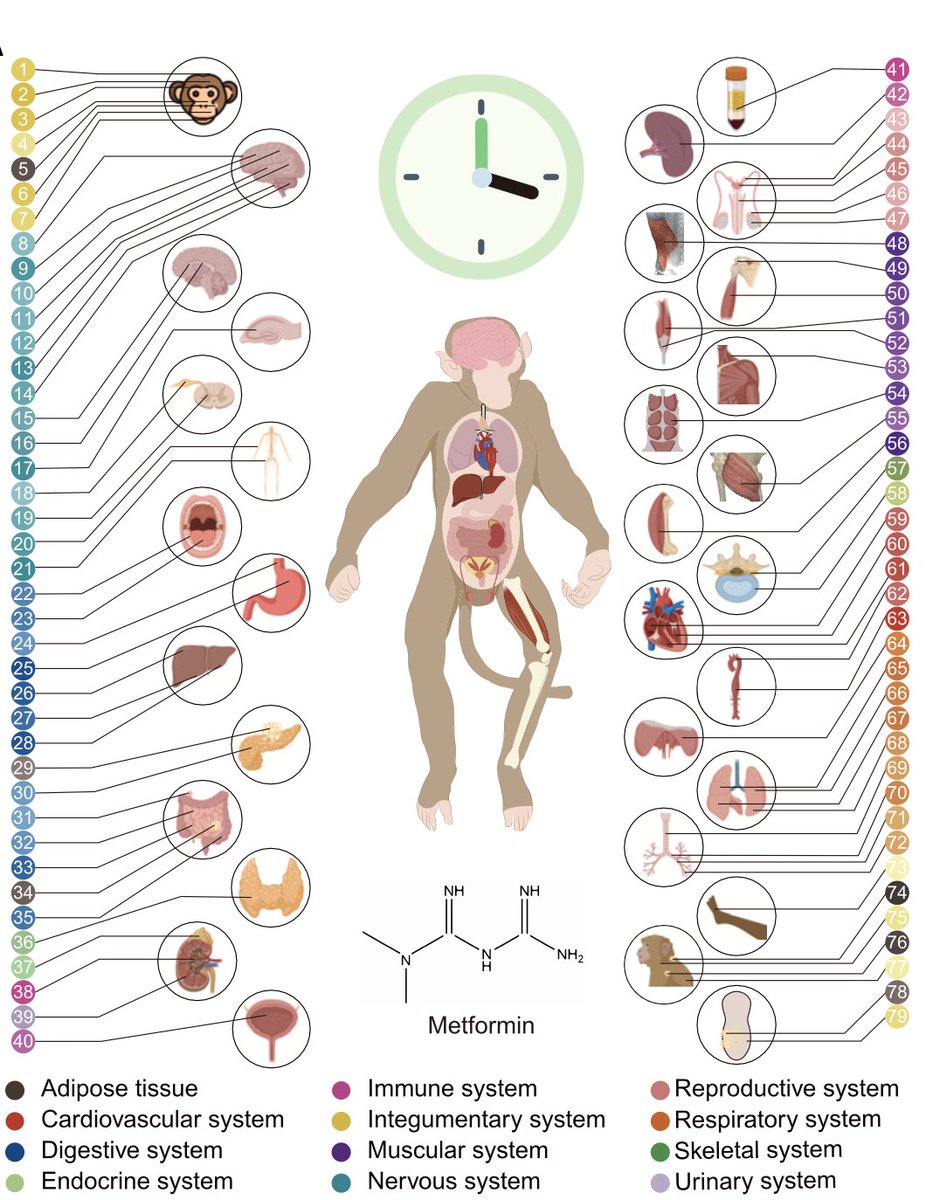
The anti-aging impact of metformin (randomly assigned, with controls) in male monkeys after 40 months of treatment, a pan-omic clock assessment
—~6 year regression of brain aging, with prevention of atrophy and enhanced cognitive ability
—minimal effect on blood sugar
—evidence for multi-organ decelerated aging
https://t.co/ENFZHZOxZS @CellCellPress
@Locati0ns Satellite view of South America at night from NASA, showing the contrast between heavily populated coastal areas and the more remote regions of the Amazonian interior and Patagonia
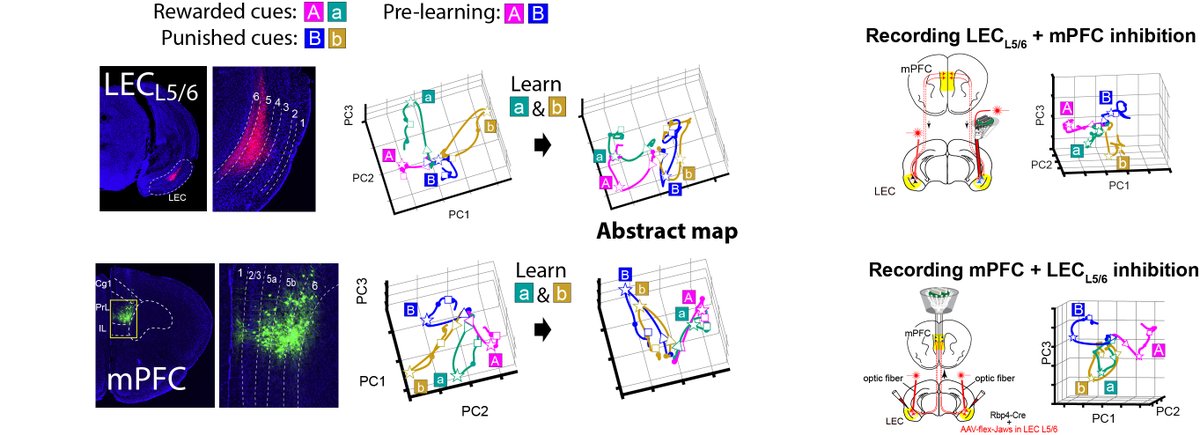
Where in the brain is abstract map generated?
It is the lateral entorhinal cortex (LEC) and the medial prefrontal cortex (mPFC), working together!!
Here is our new finding published in @Nature
Prefrontal and lateral entorhinal neurons
co-dependently learn item–outcome rules
Heechul Jun†, Jason Y. Lee†, Nicholas R. Bleza, Ayana Ichii, Jordan D. Donohue & Kei M. Igarashi*
Nature (2024)
https://t.co/nm2Ev96ej6
When you learn new items, your learned knowledge is sorted into an “internal map” of the brain. An internal map, also called as an “abstract map”, is made of population activity of many neurons.
In this new work led by Heechul Jun @jun_heechul and Jason Lee @jasonyensunlee, we found that the LEC deep layers and mPFC co-dependently generate abstract map during learning.
These two areas had bidiretional anatomical connections, making a loop circuit. Inhibition of the LEC disrupted the abstract map in the mPFC, and mPFC inhibition deleted LEC abstract map.
Our message is: LEC and mPFC are best friends!
@AnatomyNeurobio@UCIMedSchool@uci_bme@UCIEngineering@UCI_NeurCircuit@ucicnlm@ucimind@UCIrvineNews@UCIrvine