On July 25, an initial onsite inspection by the NASA Madrid Deep Space Communications Complex (MDSCC) emergency response team found wildfire damage primarily to pavement and surrounding vegetation, with no significant structural damage observed to antennas or buildings.
Additional inspections and testing will continue as safety procedures allow. The situation remains dynamic, and comprehensive assessments will proceed as conditions stabilize and access improves.
Meanwhile, NASA's Space Communications and Navigation (SCaN) Program has seamlessly transitioned mission support to its other Deep Space Communications Complexes in Goldstone, California and Canberra, Australia, ensuring continuity of operations and uninterrupted spacecraft communications.
The safety of NASA personnel remains the agency's highest priority. All personnel at MDSCC are safe, and NASA extends its sincere gratitude to Spanish emergency responders and members of The Ministry of Defense, The Ministry of Interior, and The Ministry of Science, Innovation and Universities for their professionalism and tireless efforts in helping protect the facility under extremely challenging conditions.
NASA is also thinking of its partners at the European Space Agency (ESA), whose colleagues continue to be affected by the broader wildfire emergency.
NASA will continue to monitor the situation closely and provide updates as new information becomes available.
NASA Voyager 1 is 24 hours 18 minutes 26 seconds light time away from Earth.
NASA Voyager 2 is 20 hours 9 minutes 2 seconds light time away from Earth.
#voyager#sister_ships#NASA
57 years ago today, DSS46 brought back the video of Neil Armstrong taking those first step on the Moon for the entire world to see. DSS46 was then located at Honeysuckle Creek. Happy Anniversary of the first Moon landing! 📡〰️〰️〰️🌖🚀👨🚀👨🚀👨🚀
#NASA#MoonLanding#DSS46#Apollo11
NASA's New Horizons probe has woken up in good health nearly 6 billion miles away beyond Pluto after spending nearly a year in hibernation. https://t.co/kxo59Yax3b
3 weeks after the announcement and still appreciative of the new Astronaut tradition of 'Passing the baton/Passing the torch/Carrying the Fire'. Many more of these and more often with accelerated @NASAArtemis missions!
For 250 years, America has pushed the boundaries of what’s possible. From the invention of the airplane to the first steps on the Moon and the missions shaping tomorrow, NASA embodies the fearless spirit of discovery that defines our Nation.
As we celebrate America's 250th with @Freedom250, we honor the innovation, courage, and scientific leadership that have propelled America forward. NASA continues to expand the frontier for the next generation.
🚀 The countdown to America’s 250th starts now. Just 3 days to go.
Did you know: There are usually between 2 and 4 licensed hams on the ISS during each expedition.
By the way, is KO5MOS (cosmos) the coolest ham callsign for an astronaut or what? Nice job @astro_kjell!
The Zvezda service module transfer tunnel, known as PrK, has suffered from cracks and leaks for some time, and has been mitigated by Roscosmos as much as possible to date. The cracks have always been a concern that NASA watches very closely. NASA and Roscosmos have been working to determine the root cause of the cracks, and Roscosmos manages the issue through operational mitigation measures and periodic partial-repair efforts. Following new leaks, Roscosmos has elected to proceed with a more extensive repair operation on Friday, June 5. Out of an abundance of caution, NASA has directed all four of the agency's SpaceX Crew-12 members and NASA astronaut Chris Williams to assume an elevated safety posture in the Dragon spacecraft while the repair is underway. We continue to work with our Russian counterparts, along with the rest of the international community that supports the space station, to arrive at a more permanent resolution.
The last things Roman will "see" on Earth are the faces of some of the countless people who created it. ✨
The observatory’s primary mirror has passed its last inspection as it nears its final days @NASAGoddard before heading down to @NASAKennedy.
https://t.co/BtK8CqrDz3
We go where we need to be, and today that was @NASAKennedy.
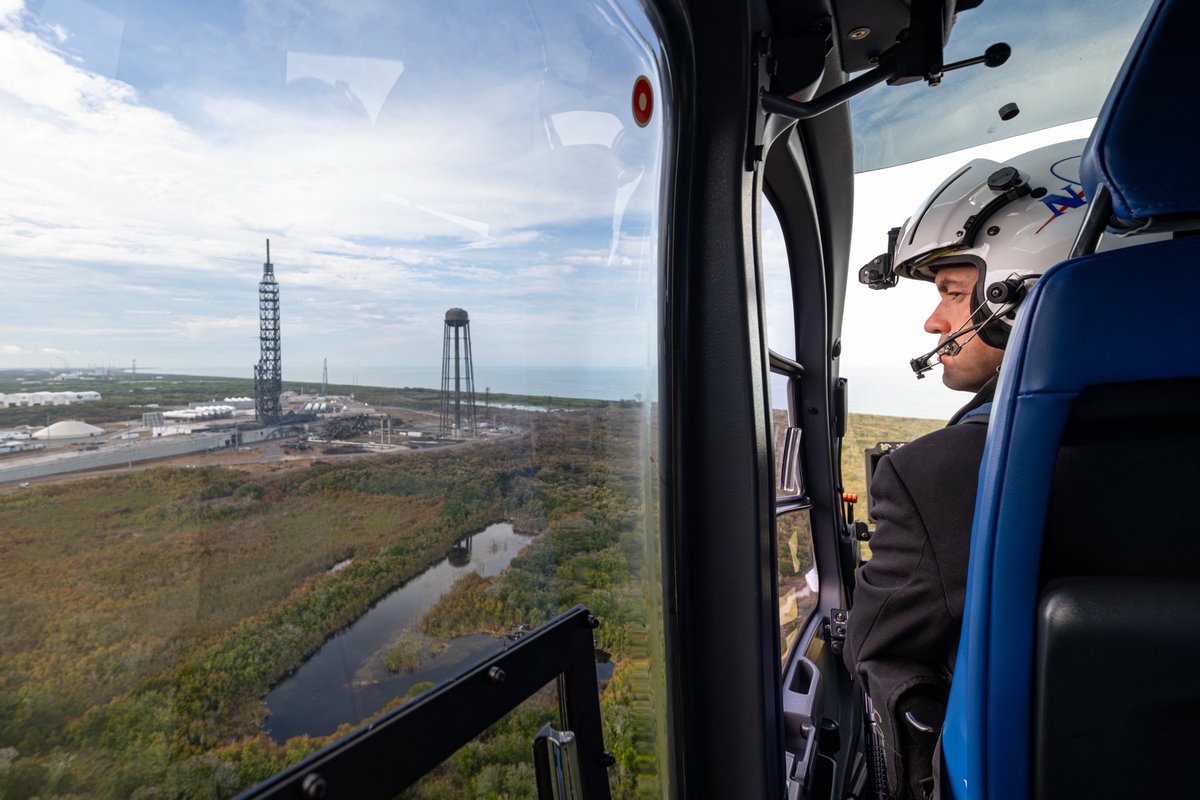
Some of my senior engineers and I spent time at @blueorigin with @JeffBezos and @davill, speaking with the workforce and seeing the damage at LC-36 firsthand. I appreciated the opportunity to hear directly from those working through the aftermath and better understand the challenges ahead.
There is a lot of work to do, but this is exactly why people choose careers in aerospace, whether at NASA, Blue Origin, or across the industry. The talent in this field thrives under pressure and performs at its best when solving the toughest problems.
We have been saying for months at NASA that we are not going to sit on our hands and wait for the capabilities necessary to achieve the nation’s most pressing objectives. We are going to take an active role alongside our partners, just as we did in the 1960s, to overcome setbacks, remove obstacles, and deliver the intended outcomes.
@NASA is committed to helping the Blue team recover, continue to advance their lunar lander and get New Glenn back to launching as soon as safely possible.
America’s greatest achievements in space were never the result of avoiding setbacks. They came from overcoming them. We have done it before, and we will do it again🇺🇸
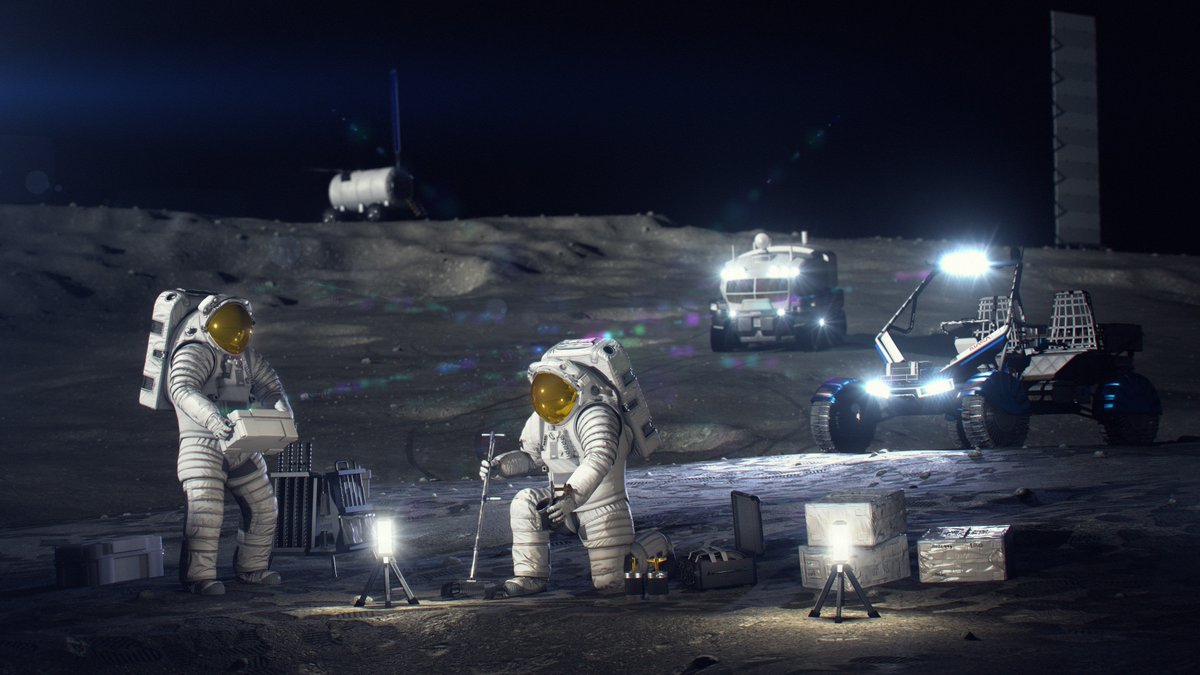
We're building a Moon Base!
@NASAMoonBase will serve as a habitat where astronauts live and work during long-term science missions.
Join us at 2pm ET on Tuesday, May 26, for a live news event where we’ll share updates on our lunar exploration plans: https://t.co/IJXA7xYwju
NASA’s #MissionToPsyche – on its way to explore a rare, metal-rich asteroid – is about to get a speed boost from Mars. 🚀🏁
On May 15, spacecraft will harness the Red Planet’s gravitational pull as a slingshot to increase its speed and adjust its trajectory. 1/2
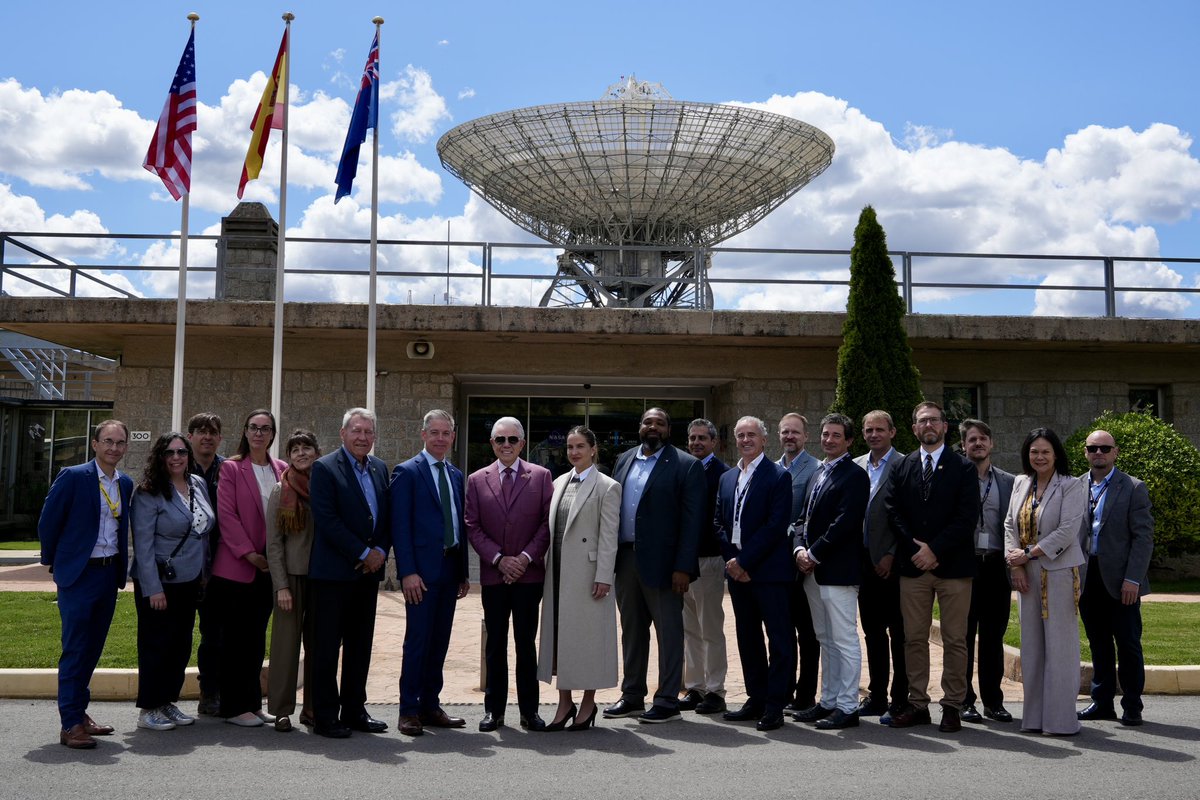
El Embajador Benjamin León Jr., junto a su esposa Mavi, visitaron el Complejo de Comunicaciones del Espacio Profundo de Madrid (MDSCC) en Robledo de Chavela, Madrid, una de las tres estaciones que forman la Red de Espacio Profundo de la NASA. En su visita, han felicitado al equipo por su papel esencial en el éxito de Artemis II.
Durante esta misión, esta instalación de NASA —operada conjuntamente con el Instituto Nacional de Técnica Aeroespacial (INTA), organismo público español— fue clave para los ajustes de navegación hacia la Luna y para garantizar el regreso seguro de la nave Orion y su tripulación. Además, gracias a sus seis antenas, el complejo fue protagonista de un hito: la primera prueba de comunicaciones por láser desde el espacio, transmitiendo grandes volúmenes de datos a alta velocidad.
Más de 60 años de cooperación entre Estados Unidos y España impulsando la exploración espacial, mientras avanzan en los preparativos de Artemis III, la próxima misión tripulada a la superficie lunar.
🌕 ¿Sabías que una parte clave de las misiones a la Luna ocurre en estas instalaciones de NASA en España?
NASA seeks industry input on innovative communications for Artemis III. Submit ideas for high-rate communications for Orion operations in low Earth orbit. Responses are due May 29, 2026.
Learn about the opportunity & register for our Industry Day: https://t.co/WlRXAgVL9L
Powering the next giant leap.
A novel electromagnetic thruster that runs on lithium metal vapor was successfully fired up for the first time during initial tests at JPL.
Fully developed and paired with a nuclear power source, these thrusters could reduce launch mass and support payloads required for human Mars missions.