Today we're announcing @_panthalassa’s $140M Series B, led by Peter Thiel, with participation from John Doerr and many other incredible investors. The mission: unlock the ocean as another planetary-scale energy resource for humanity. First stop: compute.
We just raised $300M in Series C!
Helicopters and small planes are vastly less safe than large commercial aircraft. @Skyryse is bringing the safety of commercial aviation and the simplicity of driving an EV to the world of general aviation and military aviation.
Several months ago, I joined the advisory board of Skyryse because I was super impressed by the management team and the scale of its mission.
We set out to raise $150M Series C. Today, we announced the closing of an oversubscribed and upsized round of over $300M at $1.15B valuation, with a cap table that I'm very proud of. I can't wait to see Skyryse's 21st-century tech transform the aviation industry.
https://t.co/8HrH21LEky
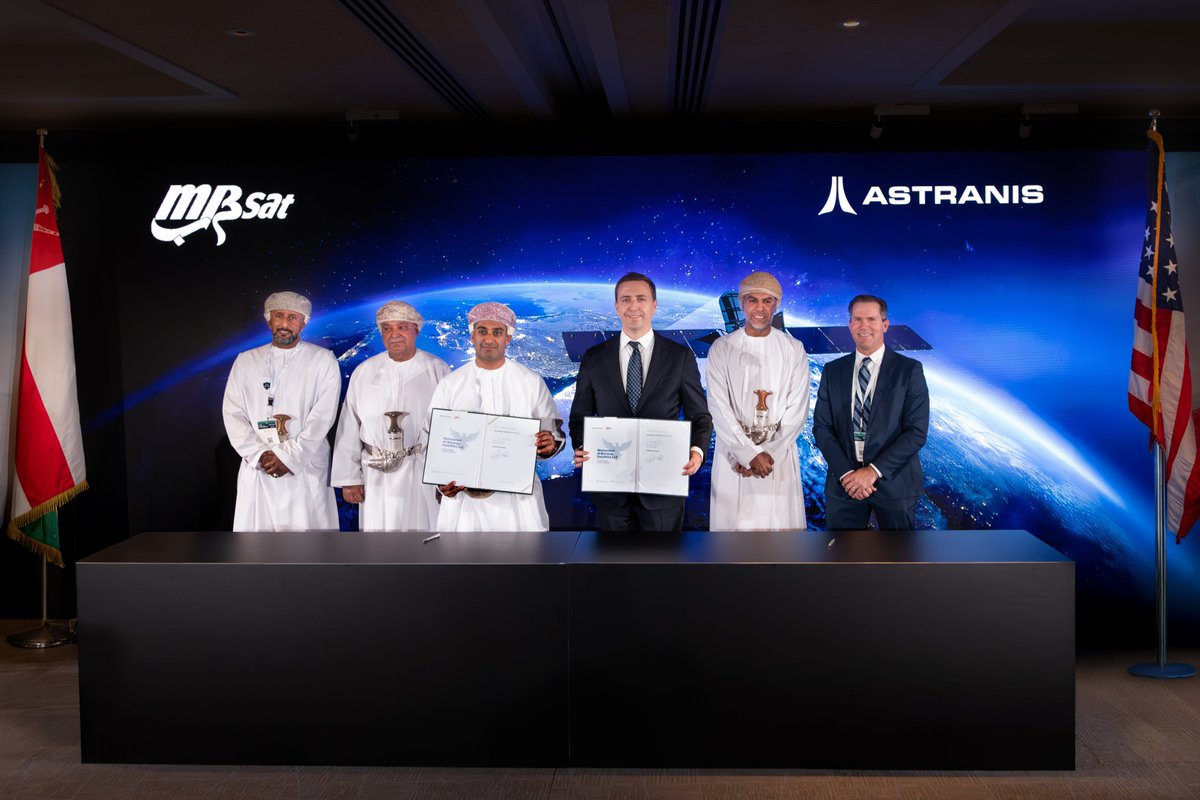
Very excited to announce that Astranis is building a new satellite for Oman.
We've signed a 9-figure contract with MB Group —the largest oil and gas conglomerate in Oman— to bring Oman its first dedicated communications satellite.
This partnership was announced today in Oman with the leadership of MB Group and senior government officials from the Oman Ministry of Transport, Communications and Information Technology.
The deal is part of an overall $200 million investment by MB Group in sovereign connectivity, advancing the Vision 2040 program by the Oman government. This satellite will go up on our Block 3 launch later this year, going from contract to operations in months, not years.
Sovereign connectivity is no longer optional. Countries need private, secure networks to know their data is secure and in the right hands.
Astranis builds dedicated satellites that make this possible, giving our customer full control over payload configuration, coverage, and network operations.
We are the only company that gives our customers a standalone, dedicated network that spans their geography of choice and delivers enterprise-grade security, customizability, and operational visibility of the network and data traffic.
This type of infrastructure is impossible to replicate with shared networks or terrestrial links alone. And that's why countries like Oman and Taiwan are choosing Astranis.
We built Astranis on the belief that access to secure, reliable communications infrastructure is foundational to growth. It's an honor to partner with MB Group and Oman, and we look forward to supporting the people of Oman and their digital future for many years to come.
San Francisco is the best place on Earth to scale a satellite startup.
Nowhere else do you have the same convergence of capital, software talent, hardware talent, and the uniquely American willingness to try bold new things.
Astranis today builds more commercial GEO satellites than the rest of the industry combined.
But we're not stopping there. We believe it’s critical that we bring back manufacturing to America and rebuild our industrial base. Especially in aerospace and defense.
That’s why we are scaling up production, tripling our output from 8 to 24 satellites per year. We have no choice— our commercial and defense customers demand it. They want as many satellites as we can build.
Here’s how:
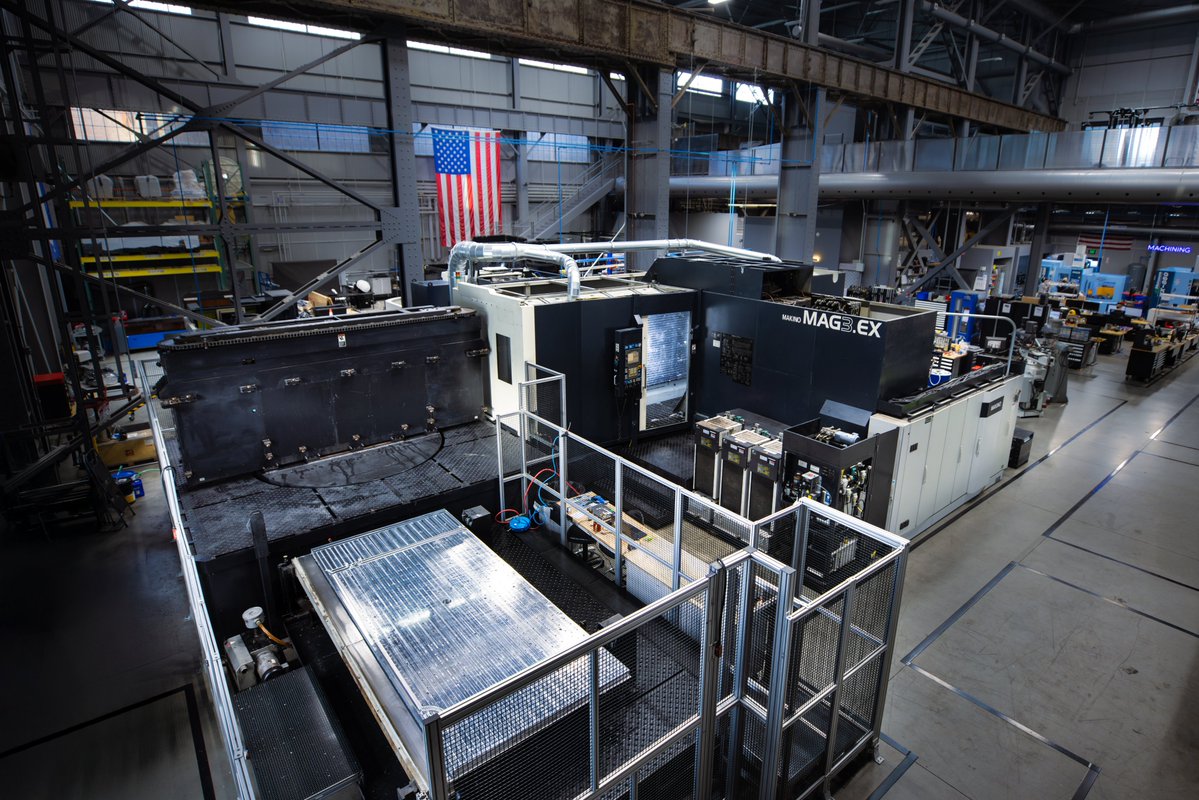
‣ We’re making huge investments in our in-house machining capabilities. That includes our massive new Makino Mag3.EX. It’s a beast of a horizontal endmill, weighing in at 100,000 pounds. it can remove a ridiculous 75 pounds of metal per minute. We’re using it to bring structural panel builds in house. Previously, those panels were quoted with over a 1-year lead time, but we’ll machine our own panels in a single day.
‣ We’ve added other CNC machines in total now also, basically bringing them in as fast as we can buy them, from manufacturers like Haas, Matsuura, and DMG Mori. And we are running lights-out on many of these machines today, building everything from brackets to boxes to other structural elements, in house, from raw aluminum and titanium stock.
‣ We’re upgrading our in-house testing and qualification. We added a new crown jewel recently, a massive 15-foot-diameter vacuum chamber with pumps capable of maintaining a hard vacuum even as we fire xenon thrusters inside it. We’ve done some outrageously cool testing in this chamber, bringing in house yet another costly and time-consuming test.
‣ We upgraded our electronics labs, outfitting them with state of the art equipment for board bringup and testing. Power supplies, signal generators, spectrum analyzers, and more. We now have two large labs— one for our digital payloads, and one for the satellite bus including power, avionics, and guidance-navigation-control (GNC) systems.
‣ And, of course, we’re hiring. We now have an incredible team of 500 working out of our San Francisco office daily, and we’re hiring even more now to reach scale. We may be the largest company in SF with a 5-days-per-week in person office culture. Because there’s no other way to build real hardware.
This is the kind of investment in our capabilities it takes to bring real manufacturing back to America— a lot of hardware, a lot of people, and a lot of iterative improvement along the way. But we know we can do it, and we know we must do it. For our customers and for our country.
Today we’re announcing a new product for warfighters and first responders: Astranis Vanguard.
A fully air-gapped, rapidly deployable network using a dedicated satellite. In partnership with Persistent Systems, Kymeta, and Satcube.
And we’ve demonstrated this capability using an operational, on-orbit satellite asset.
Astranis Vanguard offers both defense and commercial customers the ability to quickly and easily spin up a resilient, self‑forming network capable of voice, video, and broadband data.
For defense missions, Vanguard allows operators to sustain command‑and‑control and situational awareness in austere or contested environments. Dismounted or mounted teams can deploy mobile terminals to extend connectivity beyond line-of-sight, all without reliance on a central hub or existing infrastructure.
For commercial and public safety users, Vanguard offers a method to rapidly restore or extend coverage. First responders can stand up connectivity within minutes after severe weather or wildfires, enabling push‑to‑talk, live drone feeds, and data sharing for incident command. And industrial operators in the energy, mining, rail, and maritime industries can use the system to link remote crews and equipment where cellular access is sparse or unavailable.
The live demonstration proved out this capability with:
‣ an operational Astranis satellite in geostationary orbit (GEO), with connectivity managed using the satellite’s onboard software-defined radio
‣ a Mobile Ad-Hoc Network (MANET) with Persistent Systems MPU5 broadband radios, using that network to share video feeds, comms, and IP traffic
‣ Flat-panel user terminals by Satcube (for communications on the pause) and Kymeta (for communications on-the-move), connecting directly to the Astranis satellite to provide backhaul and extend the network beyond line of sight
This is real equipment that is already deployed all over the world with warfighters, first responders, and a wide array of enterprise customers. In industries that care about mobility and security like oil & gas.
Astranis Vanguard is a big deal. It’s a capability that customers have long asked us for. It was only made possible due to our collaboration with Kymeta, Persistent Systems, and Satcube, and we’re excited to roll it out to our existing and future customers.
Zed has raised a $32M Series B, led by @Sequoia.
We’re full speed ahead making a great editor, but there’s a bigger picture: we're building DeltaDB, a new kind of database for collaborative coding.
Early days, but the vision is clear: https://t.co/flEYYMxwWh
Excited to announce that @sequoia is leading the Series B in @zeddotdev
Zed is an open-source, multiplayer code editor built for performance from the ground up in Rust, built by the creators of Atom and Electron. Zed is used by ~150K active developers including ~10% of the Rust community (up 10x y-o-y!).
Nathan and team believe from first-hand experience that decade-old web tech (i.e. VS Code) just won't cut it to build a world-class editing experience. The IDE needs to evolve significantly for AI, and the Zed team believes a wholesale rewriting is necessary, prioritizing speed and collaboration as first-class attributes.
Zed's multiplayer collaborative vision is especially important as developers begin collaborating with AI agents in our code bases. They've built some important primitives to enable this already, e.g. DeltaDB, an open-source sync engine that captures every code operation, enabling character-level permalinks and real-time collaboration. More exciting announcements here soon.
Welcome to the Sequoia portfolio @nathansobo@as__cii. I know that creating the perfect tool for your craft has been your life's work for multiple decades now, and we are delighted to support you on this journey.
Our first two satellites are now on station and fully operational over the United States.
With just these two spacecraft we’re providing broadband coverage over the entire continental US, in the world’s first private, dedicated network from GEO.
We deployed these satellites to build out a private network for our customer Anuvu, one of the world’s largest in-flight connectivity providers. They provide broadband in-flight connectivity for major airlines around the world, and broadband data connections for mobility applications like cruise lines and other maritime customers.
Our two spacecraft arrived in GEO in early July, and have been undergoing a series of in-orbit checkouts and calibrations over the last 3 weeks. The payload performance is excellent, we have all systems up and running at full capacity, and the two satellites are now ready for service.
This is a massive milestone for Astranis, and for our industry.
And it demonstrates the power of the MicroGEO model. With just one or two of our spacecraft, Astranis can deploy a private network that covers an entire country in one shot, with all the benefits of a dedicated network that are impossible from other orbits:
• Control — our customers want customization and control, and with their own dedicated satellite they get it. They can adjust capacity and coverage on the fly and can get deep insight into the details of the network operations.
• Security— Astranis has a world-class cybersecurity team and with a dedicated satellite, and network, our customers know exactly where their data is flowing at all times.
• Independence — our customers know that they, and they alone, have the final say in how their network is configured and how their capacity is deployed.
• Zero contention — the capacity on an Astranis network is there when our customers need it. They aren’t sharing the capacity with any other users on the system, so they never have to worry if it will be there, it's guaranteed.
Traditionally, to get the benefits of this approach, a large traditional GEO satellite would need to be built and launched at a cost of hundreds of millions of dollars, and the capacity would have needed to be shared between many users and companies. But the Astranis model puts this capability in reach of countries and companies that would never have had access to it before.
LEO constellations, by contrast, ask their customers to share a network with the entire world. That’s a fine trade for many customers, particularly consumers, but it’s not acceptable for enterprise customers that want real security, independence, and control. Those customers need their own systems dedicated to their needs, and Astranis is now providing this dedicated service from GEO, live, today, for the first time in history.
It’s been a long road to get here, but now that we’re operational, Astranis is set to scale up extremely quickly. Astranis now operates five satellites on orbit, has more than $1B in contracted backlog for more commercial satellites, and, with these two entering into service and more on the way, we have proven out the private-network thesis.
For now, stay tuned. Our satellites work. And they’ve created the world’s first private network from GEO — but certainly not the last.
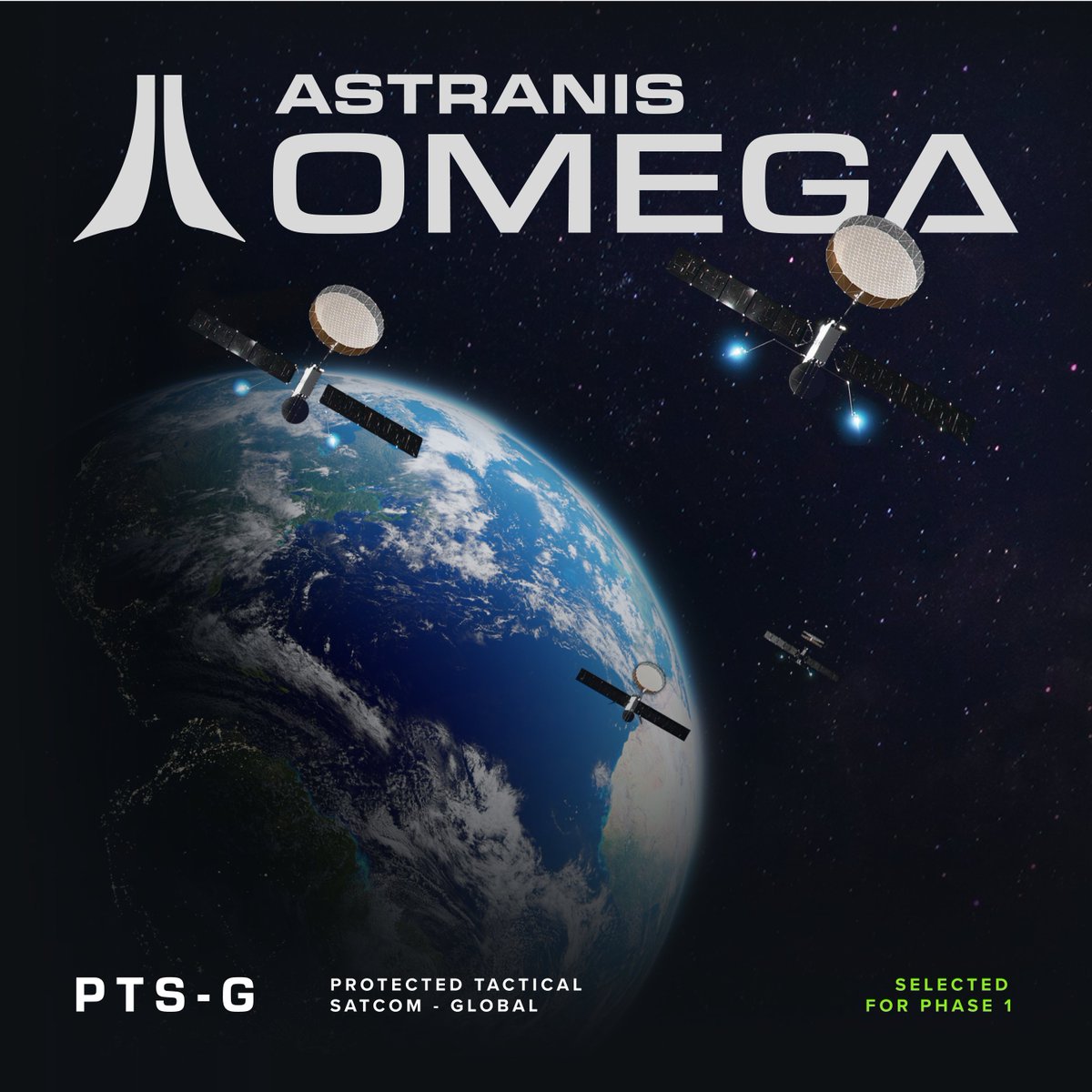
Astranis is now a prime contractor for a @SpaceForceDoD Program of Record.
We've been selected for Phase I of Protected Tactical Satcom-Global, an up to $4 billion program to launch small geo comms satellites on an aggressively fast timeline. That is what we do best.
Game on.
Big news! Umbra has signed a CRADA with the @NGA_GEOINT! We’re partnering to align our SAR & RF tech with NGA’s mission needs for better resiliency, readiness & data collection.
Read more: https://t.co/RQsvUSFgSn
Today, we’re announcing a $300 million Series C in a mix of primary and secondary funding at a $3.5 billion valuation.
We’re excited to bring on @Sequoia as our lead investor in the round, with participation from @sparkcapital, @MarathonMP, @coatuemgmt, @CRV, & @a16z.
🚀 Arize AI raises $70M Series C!
From the first-ever AI Copilot to troubleshoot AI, to the leading open-source AI development platform for evals and tracing @ArizePhoenix, we’re pushing the edge of AI infrastructure.
The goal? Smarter, better dev tools for building more robust AI that delivers real-world impact.
With this funding, we’re doubling down on our mission of making AI work at scale. Thank you to Adams Street Partners, @M12vc@SineWaveVC@OMERSVentures@datadoghq@pagerduty@archermancap. We’re also grateful to our existing investors— @FoundationCap@BatteryVentures@TCVTech & Swift Ventures.
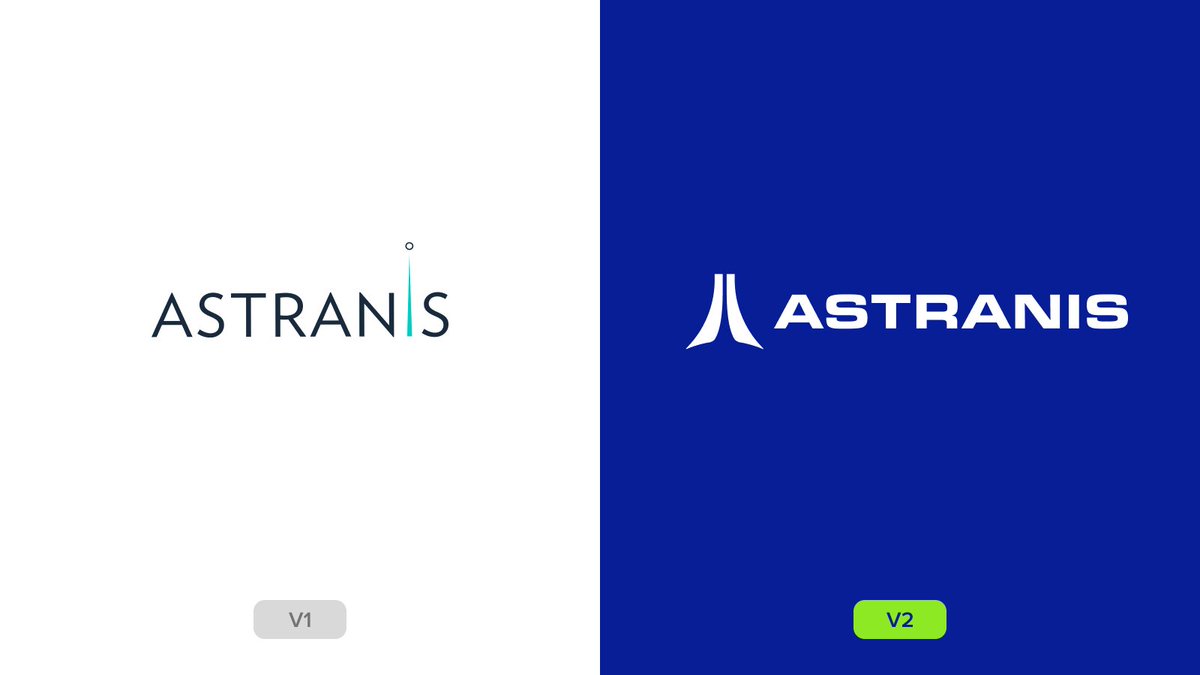
Astranis just rebranded.
We didn't use an agency, and we didn't sacrifice our brand identity at the altar of "modernity."
Instead, we added personality that matches the new @Astranis— advanced satellites for high orbits.
When we started Astranis back in 2015, we saw the magic of geostationary orbit— that you can provide coverage over an entire country with a single satellite. But when we looked at the legacy GEO satellites, we knew there had to be a better way.
This by itself was a huge market: broadband data for trunking and backhaul. Sold to enterprise customers or countries one satellite at a time.
What we discovered since then is that we can do more, much more, than just GEO comms with the same satellite platform. Both for commercial customers, and to support the US military.
With the new Resilient GPS program we are now working on with Space Force, we are able to leverage the same design but for a new use case— providing robust GPS signals to commercial and military users. And we're doing it in MEO, a new orbit for us.
There are $15 billion worth of large satellites launched to high orbits each year, doing a variety of different jobs. And we can do all of them. That's why we changed our logo from a single satellite beaming down from GEO, to symbolizing humanity reaching for higher orbits, and beyond.
Stay tuned, much more to come soon.