This week on A4LI’s Scientist Spotlight, we chat with Dr. Karl Miller (@knmiller71), a Staff Scientist in Peter Adams' Lab at @sbpdiscovery.
In this episode, we discuss his path to longevity science, his latest research findings, and his goals as a newly independent researcher.
You can listen to the full episode here: https://t.co/5WM1iFUCv4.
I have always felt there is a monumental disconnect between how transformative science has been in improving the human condition, and how it is generally perceived. With this in mind, we are launching The Discovery Dialogues Podcast. Please listen/share.
https://t.co/WUJBVjz0sN
@DanMosenzon@AdamsBioAging Maybe the missing context is that p53 is downregulated in senescent cells after initial proliferation arrest. We think this is required for CCF and the SASP. We are manipulating p53 in this context. Not sure if that answers your question
@ZaneKoch6 @AdamsBioAging Thanks, good point. I think the genetic models suggest that timing and dose are important. The MDM2i doses we use throughout the study are low, too low to induce senescence in normal cultured cells. And we saw no obvious toxicity with our in vivo approach
Excited to present my latest work, a mitochondria-p53 regulatory circuit linking genome stability and inflammation in senescent cells, on biorxiv: https://t.co/sYdAdckaSD
Thanks to my coauthors and especially my mentor @AdamsBioAging for their work and support on this project!
@Mangan150 This tweet is very misleading. The study participants were in their mid 20s, p16 is not an exclusive marker of senescent cells, and death of the p16+ cells was not tested
After a long break from twitter, I’m excited to announce the NOA for my K99! A huge thank you to everyone involved, especially my mentor @AdamsBioAging. This work will focus on mitonuclear signaling pathways in cellular senescence.
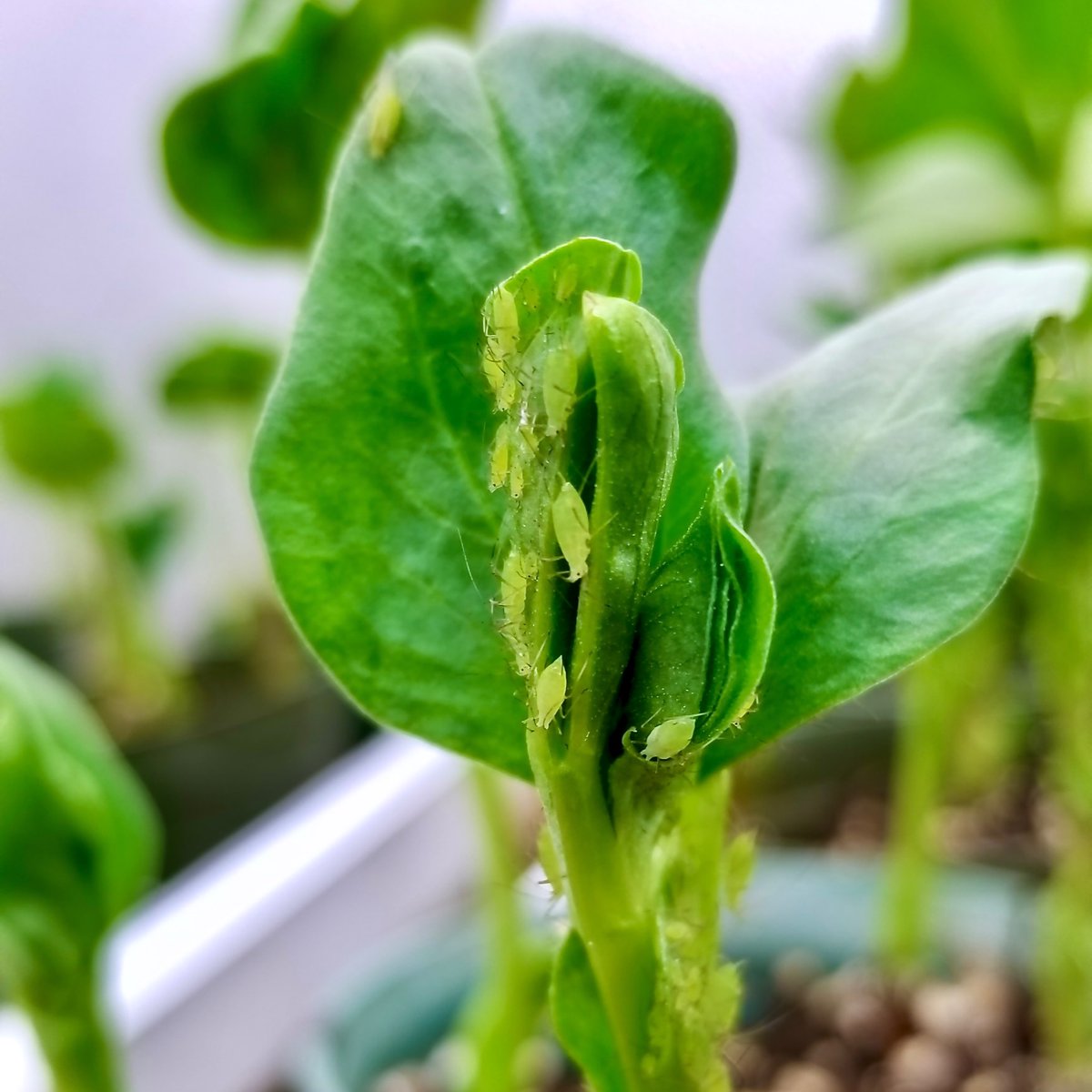
Interested in light at night, temperature and predator-prey interactions? Check out our paper on how light influences insect behavior and ecology! 🐞💡https://t.co/h5e4NLnzqX
Many thanks to my wonderful coauthors @ToxicPlantLab and @MarenVitousek and so many others!
@CornellEEB
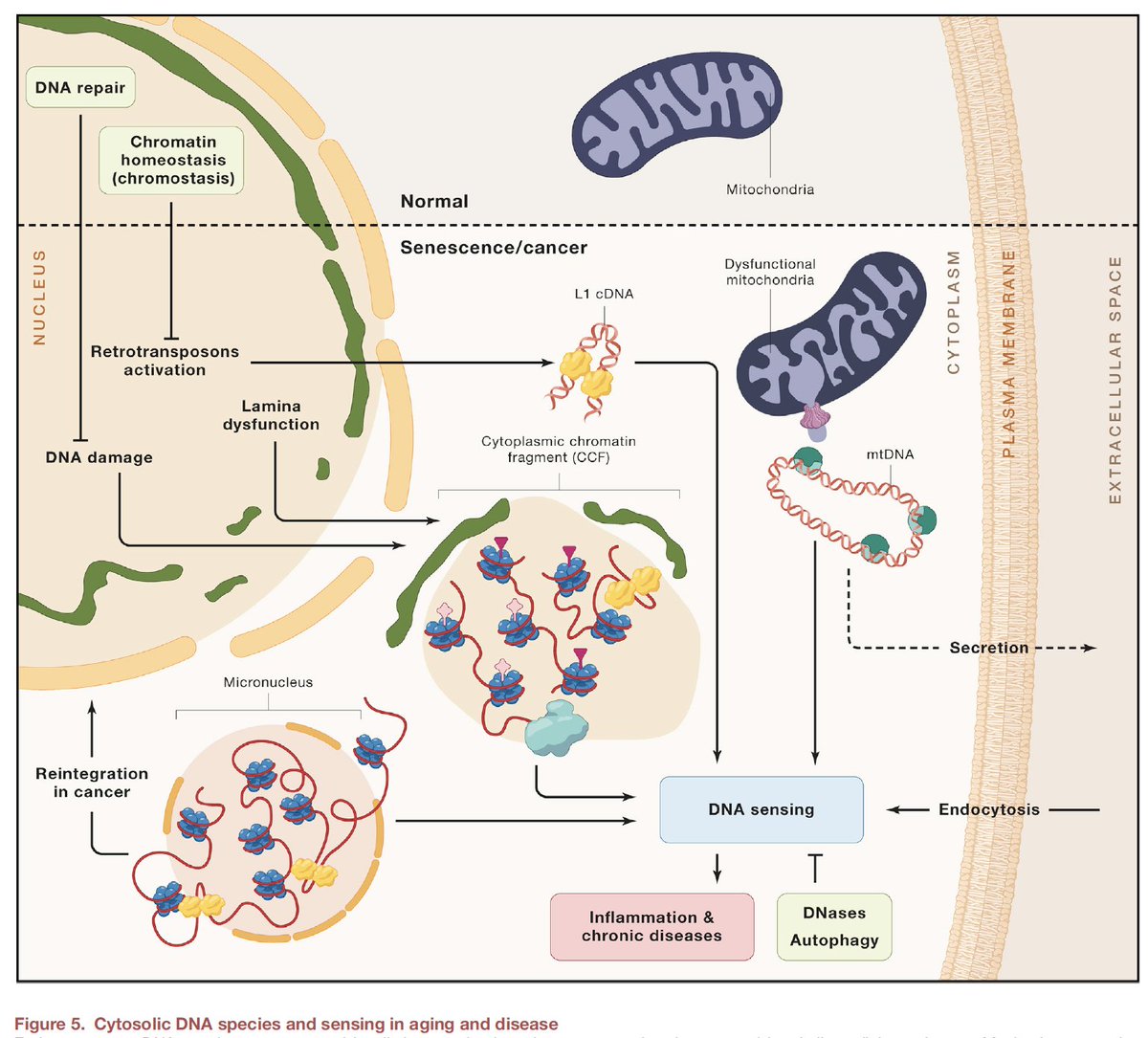
Cytoplasmic DNA: sources, sensing and role in aging and disease. Our contribution started w/ "CCF" in 2013 @andrejs_braun, cont w/ @berger_lab, @ZhixunDou and @MG_Vizioli, now by @knmiller71 and Tianhui Liu. Funded by NIA @NIH. Review w/ @PassosLab. https://t.co/9q16XvhupM
Check out our freshly published review @CellCellPress: how #cytosolic DNA is born and its consequences for #ageing and age-related #diseases!
Figures wouldn't be possible w/o the support from @DiMeN_DTP and internship at @MonneyMedMedia! Thank you again! https://t.co/mF1kydi5xN
Out today! Our review with @PassosLab, Cytoplasmic DNA: sources, sensing and role in aging and disease @AdamsBioAging@HSalmonowicz @CB_GREAN @sbpdiscovery https://t.co/vpFSVzezxf
Post Doc positions available to study epigenetics of cell senescence, cancer and aging. https://t.co/8tmyIjih2e
San Diego is a great place to live and do science. Message or email me - [email protected]
We have 2 post-doc positions available to study aging + cancer (why does cancer increase w/ age?); role of chromatin stability in healthy aging; mitochondria to cytoplasmic chromatin signaling in senescent cells. In sunny San Diego.
I'm excited to speak today at UCSD GRC - "The dynamic epigenome - challenges and opportunities for healthy aging"
4pm PST today, March 11.
https://t.co/lHwsjlRrdM
Password: GRC2020