New paper out in JEB! Under the leadership of @lienardmarjorie.bsky.social, we explore the visual system of the Black Grouse and how it plays a role in how the species deals (or not) with human-made structures in its environment. https://t.co/R9vVrzhB0T
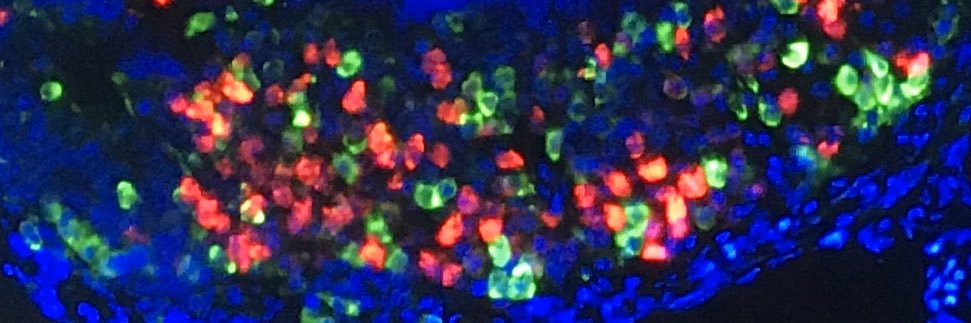
Olfactory receptors in the mouse nose have been mapped out in unprecedented detail — overturning researchers’ understanding of how noses build a sense of smell
https://t.co/37dyUBFnJp
Black grouse in the French Alps @pnVanoise need protection from ski cables. To design better warning flags @MarjorieLienard@PotierSimon1 discovered that the birds see black & white cheques well, don't see deep red & markers must be no more than 16m apart
https://t.co/kAPhPaWff3
It’s clear to me that AI adoption in knowledge work will be slow, because it's mentally exhausting for humans to use, and because it radically distorts existing knowledge workflows, massively accelerating some tasks while slowing others, creating inevitable bottlenecks, that force a fundamental re-engineering of the workflow.
Re-engineering workflows is obviously possible, but time-consuming.
More importantly, this re-engineering isn't a one-time thing.
The need seems to repeat every 3–6 months. The models change, but so do best practices, from early prompt engineering to managing autonomous agents. Each shift requires workers to relearn failure points, and mentally recalibrate to changes in reliability.
Business workflows can't adapt at this pace. Workers can't fundamentally redesign what they're doing every few months.
Therefore, adoption will be slow.
A horse’s whinny begins as a piercing, high-pitched screech that’s soon joined by a lower, guttural rumble. But the two components of the call don’t differ just in tone—they’re made in entirely different ways, researchers report.
The lower tone emerges when the horse vibrates its vocal folds, much as a human does to speak. To make the high note, the horse whistles.
The observation provides the first experimental evidence that a mammal can produce a whistle and a vocal-fold vibration at the same time.
Learn more: https://t.co/fnsVjbzU2F
“Why are some males caring while others neglectful?” asks postdoc Forrest Rogers, advised by PNI’s Peña, and MolBio’s Mallarino. His research reveals a molecular “switch” in the brain that may make the difference between a doting or disinterested dad. https://t.co/jtmckE8yv0
Brain drain will not happen unless the EU increases the budget of its various funding instruments. The wish to relocate may be there, but is there the necessary will on the other side?
How do different tissues silence different genes? In CRISPRi, genes are silenced by a potent repressor TRIM28; we discovered a special version, TRIM66, that is only expressed in nose, testis, & cancer. It controls smell & behaviors. Now in @NatureComms: https://t.co/6XV0oVaJtP
🚨 NEW: One of the largest COVID-19 vaccine studies ever (28 MILLION people in France) just dropped.
Results?
• 74% lower risk of death from severe COVID-19
• 25% lower risk of all-cause mortality
• No increase in 4-year mortality
• Vaccinated people had lower risk of death from any cause.
In short: mRNA vaccines weren’t just safe — they were protective across the board. 🔥📉
Simple result in Nature shows flow doesn't just destroy spatial context but tosses out important biology. Activated T cells are usually physically stuck to tumor cells and gating pipelines toss them out. Up to 91% of T-cell/tumor clusters gone. A huge fraction of clinical IO papers that used single-cell flow on dissociated tumors have systematically deleted the most tumor-reactive cells and then drawn conclusions from what was left
With his ultimatum that Ukraine surrender to Russia, Trump finally wins a prize:
The Neville Chamberlain award for betraying peace, freedom, and justice.
Based on feedback from applicants, reviewers and broader research community, the ERC Scientific Council decided to make changes in the 2026–27 calls for proposal for research funding.
More details from the ERC President 👉 https://t.co/09BiCl0Txu
What’s your take? Tell us! 👇
🧬 New study out: we report a chromosome-level assembly of the deer mouse Peromyscus maniculatus! A launching pad for chemosensory-evolution research. Read more 👉 https://t.co/sdeSGDPiAN
Some chemosensors however are too critical to lose: we identify a handful of V1Rs tuned to universal metabolites (steroid & bile-acid sulfates). Deer mouse receptors respond exactly like their mouse counterparts —showing conserved sequence = conserved function