A student asked me about my habit of bike riding or walking in the forest as a way of gaining inspiration. I thought I'd share my response:
I suspect everyone is different but all of our brains need time to process information. Some of this happens in sleep -- the idea that if you have a hard problem that you should "sleep on it" is very true. I often wake up with an inspiration.
You need to give your brain time to do its thing. You can't control inspiration. All you can do is create opportunities for it to occur.
I often have ideas in a dark conference hall while half-listening to a boring talk. I'll have spent the day at posters and learning about new work. Sitting in the dark and letting my mind drift is when those fragments come together into something new.
I will often do some work early in the morning and hit a snag. Then I go for a bike ride in the forest. I am not intentionally thinking about my problem -- I'm in the moment. My body is moving in the world. But part of my brain must be working on the problem because within 15-20 minutes, I have the solution.
The brain is amazing. Cramming it with information all the time may feel productive. But feeding it information is very different from letting it be creative. You can't force it to be creative and if you are force feeding it, it can't be creative. You need to leave it alone. Let it wander. Let it make connections. Give it space. Trust it.
I accidentally discovered how to compress a month of research into 3 hours.
A founder at a YC company showed me his Claude setup. I thought he was just fast. Then I watched him build an entire go-to-market strategy for a market he'd never worked in before.
Here's exactly what he did:
First: he didn't ask Claude to "research the market."
He fed it 8 competitor landing pages, 3 earnings call transcripts, 12 customer reviews, and a Reddit thread of complaints.
Then he asked one question:
"What does every successful player in this market understand that their customers never say out loud?"
Not "summarize these." Not "analyze the competition."
The unspoken insight. The thing that takes founders 2 years of customer calls to figure out.
But the next part is what broke my brain.
He followed up with:
"Now show me the 3 assumptions this entire market is built on, and what would have to be true for each one to be wrong."
In 15 minutes he had the attack surface of an entire industry.
The blind spots. The fragile consensus. The opening nobody was talking about.
Most founders spend 6 months doing customer discovery just to find one of those.
Then he did something I've never seen before.
He asked:
"Write 5 questions a world-class investor would ask to destroy this business idea, then answer each one using only the evidence in these documents."
He spent the next 2 hours stress-testing every assumption. Every weak answer triggered a follow-up:
"What's the strongest version of this argument and where does it still break?"
By hour 3, he had a strategy deck that felt like it came from someone who'd spent a decade in the space.
The tool didn't change. The questions did.
Most people treat Claude like a faster Google.
These founders are using it like a thinking partner who has read everything and has no ego about being wrong.
The difference between 3 hours and 3 months isn't the amount of information.
It's knowing which questions actually matter.
HiAR: Efficient Autoregressive Long Video Generation
Conditions blocks on same-noise-level context using hierarchical denoising to eliminate temporal drift, enabling pipelined parallel inference and infinite-length video generation.
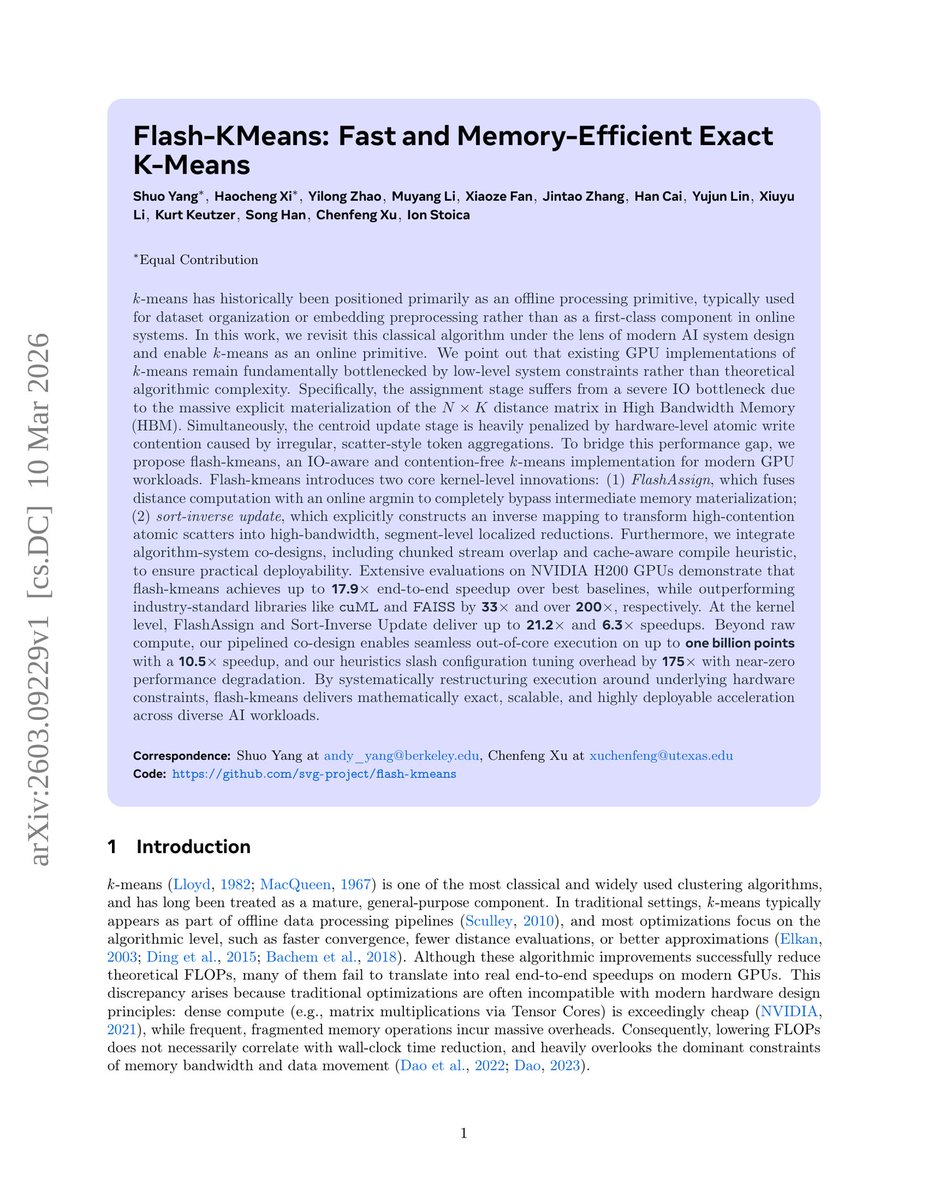
Flash-KMeans
Achieving up to 17.9x speedup over baselines and 200x over FAISS via IO-aware FlashAssign kernels that eliminate memory bottlenecks and atomic contention in GPU clustering.
🚀Try out rCM—the most advanced diffusion distillation!
✅First to scale up sCM/MeanFlow to 10B+ video models
✅Open-sourced FlashAttention-2 JVP kernel & FSDP/CP support
✅High quality & diversity videos in 2~4 steps
Paper: https://t.co/xZZK25oIrJ
Code: https://t.co/aPAo1MO0JQ
Tired to go back to the original papers again and again? Our monograph: a systematic and fundamental recipe you can rely on!
📘 We’re excited to release 《The Principles of Diffusion Models》— with @DrYangSong, @gimdong58085414, @mittu1204, and @StefanoErmon.
It traces the core ideas that shaped diffusion modeling and explains how today’s models work, why they work, and where they’re heading.
🧵You’ll find the link and a few highlights in the thread.
We’d love to hear your thoughts and join some discussions!
⚡ Stay tuned for our markdown version, where you can drop your comments!
Introducing Simile.
Simulating human behavior is one of the most consequential and technically difficult problems of our time.
We raised $100M from Index, Hanabi, A* BCV, @karpathy@drfeifei@adamdangelo@rauchg@scottbelsky among others.
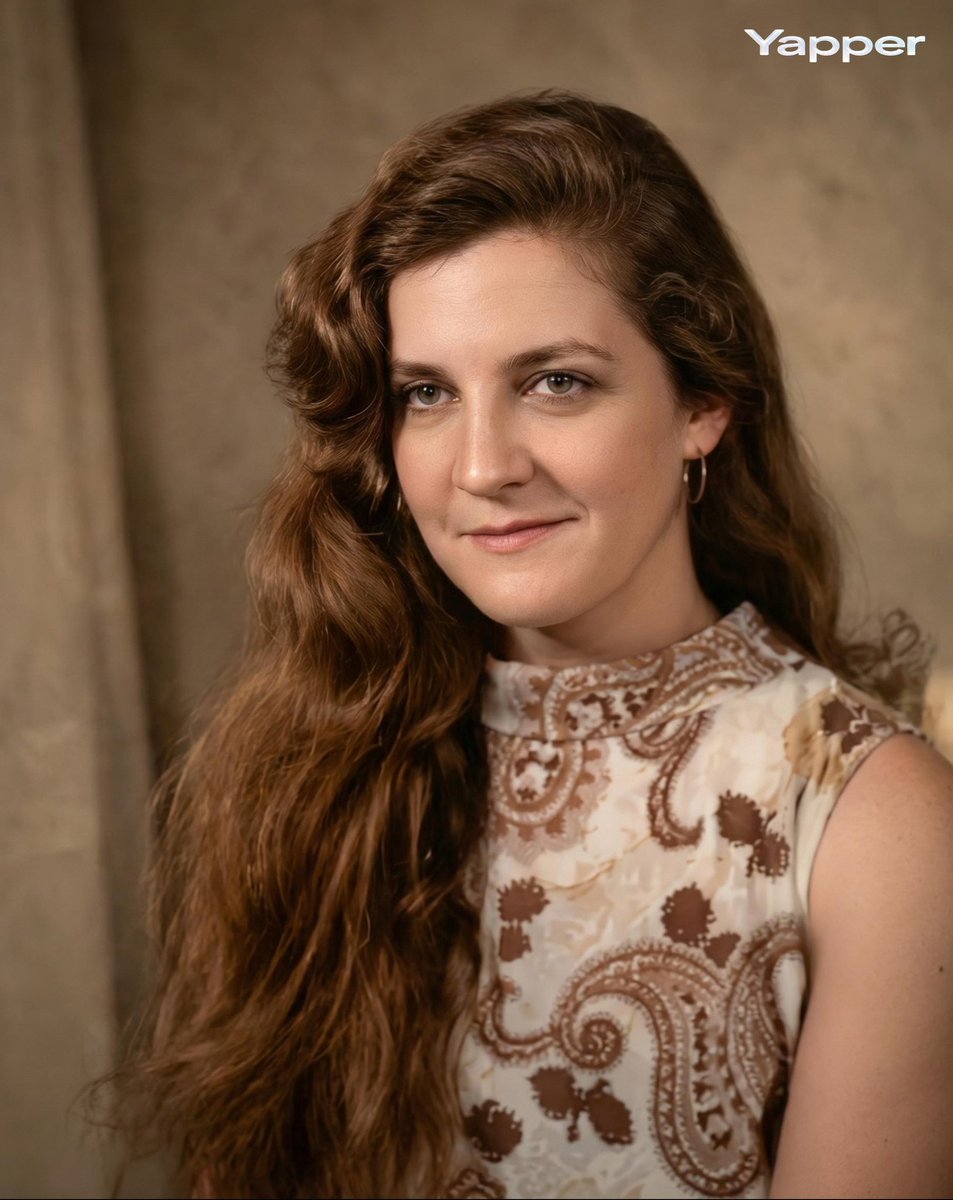
Convert a moment lost to time into a professional-grade portrait that honors every detail.
Nano Banana Pro on Yapper
"Restore this old photo into professional portrait of DLSR - quality colour and detail, using an advanced upscaling algorithm comparable to the results from canon EOS R6 II. Ensure the restored the image looks natural, retains exact facial features, has great clarity......"
BREAKING: Claude can now research like a Stanford PhD student.
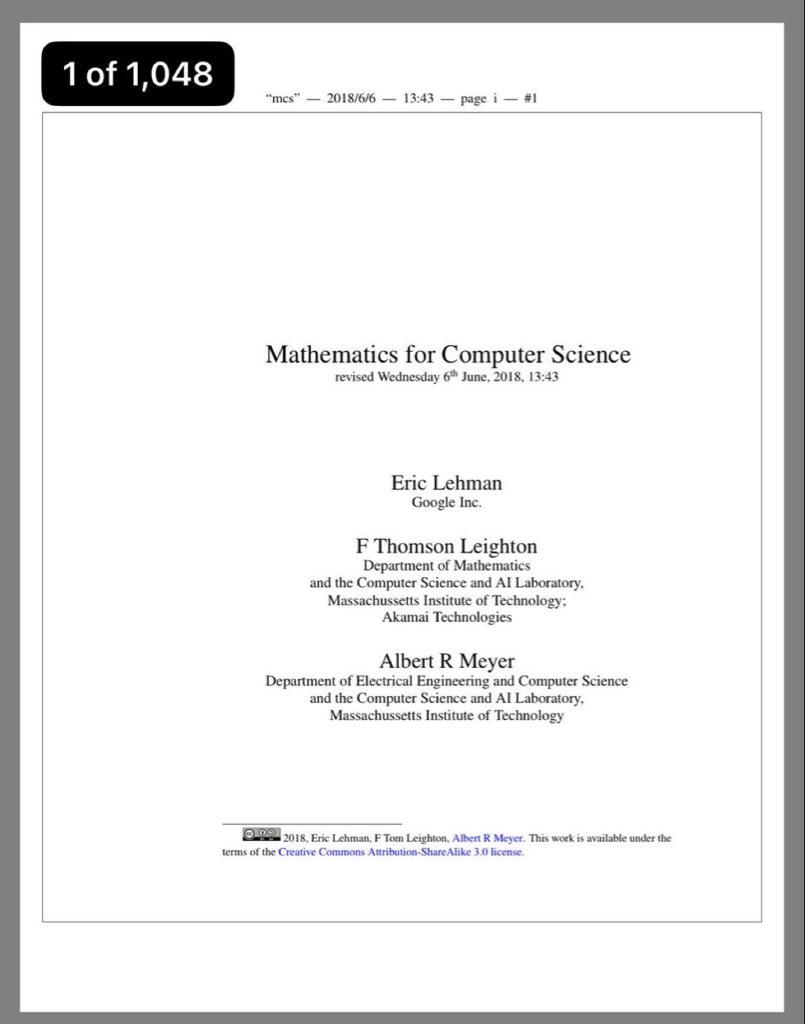
Here are 9 insane Claude prompts that turn 40+ research papers into structured literature reviews, knowledge maps, and research gaps in minutes (Save this)
Train Beyond Language. We bet on the visual world as the critical next step alongside and beyond language modeling. So, we studied building foundation models from scratch with vision.
We share our exploration: visual representations, data, world modeling, architecture, and scaling behavior! [1/9]






![TongPetersb's tweet photo. Train Beyond Language. We bet on the visual world as the critical next step alongside and beyond language modeling. So, we studied building foundation models from scratch with vision.
We share our exploration: visual representations, data, world modeling, architecture, and scaling behavior! [1/9]](https://pbs.twimg.com/media/HClL4cFbEAA3PHP.png)


