Excited to share our work in @CellCellPress on using generative AI to design entirely new antibacterial molecules that kill Neisseria gonorrhoeae and Staph aureus! https://t.co/wnJkDWEVtn
@MGHPath@mgh_id@broadinstitute@MIT#AMR
In our latest paper we share our machine learning protocol to screen billions of compounds for novel ligands with tailored properties. @scilifelab, @UU_University, @UniversidadeUSC, @KAWstiftelsen https://t.co/KVmD0zA8nm
Very excited to share our latest paper on DNA repair in @NatureComms ! A large-scale fragment docking screen paved the way to potent OGG1 inhibitors with anti-inflammatory effects in cells. https://t.co/dTibuVRNbF Special thanks to @EnamineLtd@karolinskainst @UU_University
SciLifeLab & Wallenberg’s National Program for Data-Driven Life Science (DDLS), receives continued funding from Knut och Alice Wallenbergs Stiftelse (@KAWstiftelsen) for an additional two years, with 740 million SEK!
https://t.co/0b0VPKjrPo
An interdisciplinary team of remarkable scientists (and great friends) put together a study leveraging AI to find new antibacterial molecules against Acinetobacter baumannii. I think we are well into an era of AI-augmented drug discovery...WOOO!!!
https://t.co/Igp8bRRAv0
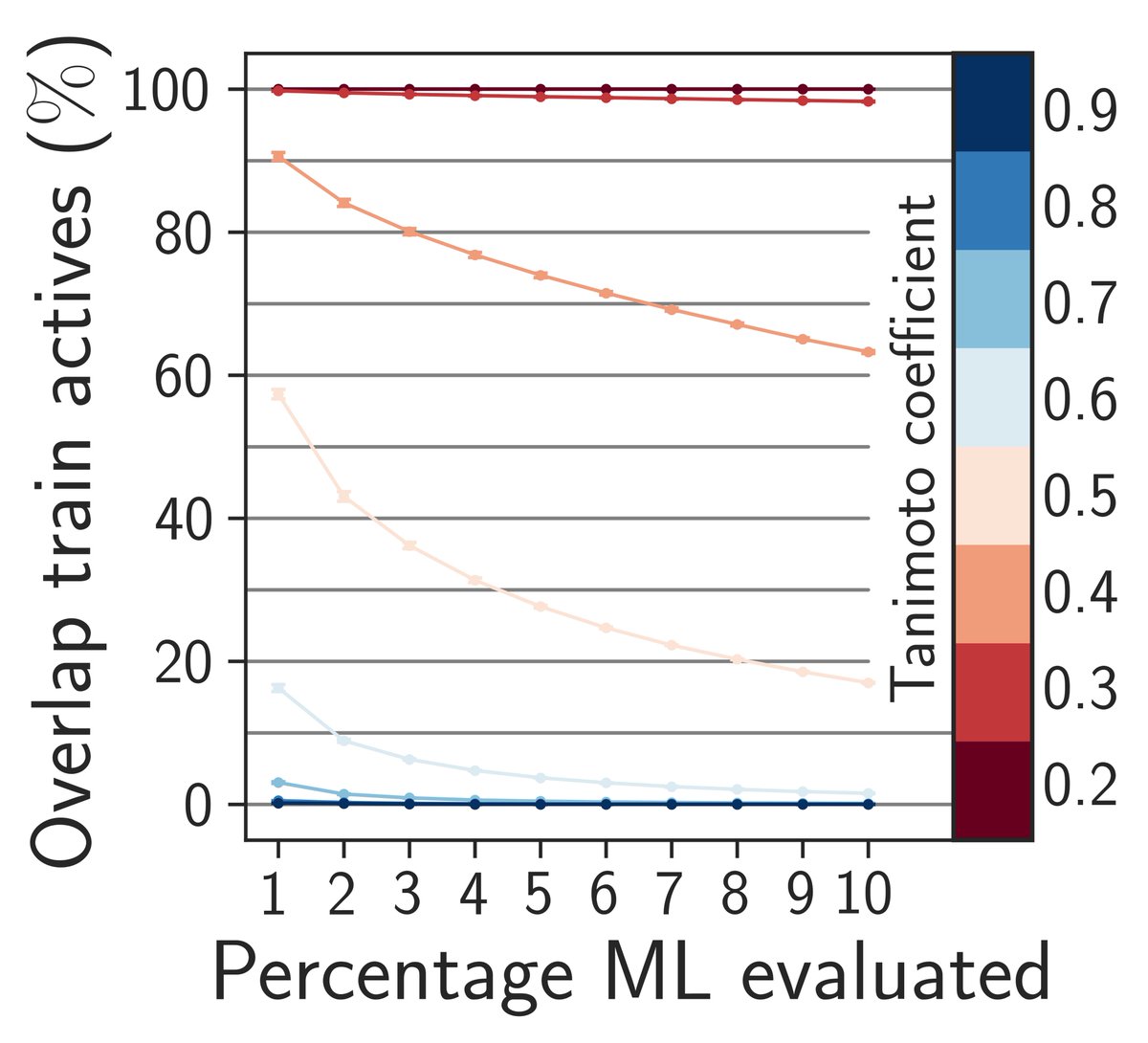
@rflameiro @predict_addict We actually did this analysis and will update our pre-print soon! In incremental steps of 1% of the test set, we checked what fraction of compounds had a Tanimoto coefficient higher than ... the EFCP4-based method prioritizes mostly familiar compounds, but some are clearly novel!
🔬 Unveiling a blend of #MachineLearning & docking for ultra-fast virtual screening of billion-scale databases. 🚀 CatBoost leads, empowering efficient drug discovery. 💊 Stay tuned for more! 🧵👇 #DrugDiscovery#AI
Want to perform virtual screens of libraries containing billions of compounds? We have developed an approach that combines molecular docking and machine learning to screen vast chemical space. Preprint: https://t.co/ZQOtPkUId6
Workflow will be made publicly available on GitHub.
Paper alert! We developed a machine learning-based strategy for rapid virtual screening of databases containing billions of compounds. (https://t.co/WOxzFC391m) #machinelearning#drugdiscovery (1/5)
We also share our datasets, containing the docking scores of several hundred million molecules against 8 different targets (https://t.co/YqVUPxeSiw) Please benchmark your own methods! (5/5)
Our review on computational approaches in drug discovery is finally online:
https://t.co/DfFlgCmCTj
We tried to keep balance between physics- and data-driven sides. Huge thanks to @ASadybekov & 🇺🇦 friends @EnamineLtd and @Chem_space for enabling many breakthroughs in this field!
Predicting if a GPCR ligand is an agonist or antagonist is difficult... even if receptor structures are available! In our new Angewandte Chemie paper, use MD simulations to predict drug efficacy:
https://t.co/WaGI1xN60w
@UU_University @scilifelab@KAWstiftelsen @DelemotteLab
Super excited to be able to share our work on ultra-large virtual screening to discover antivirals and DNA repair inhibitors at Medicinal Chemistry Frontiers in Boston! @AcsMedi@EuroMedChem
Thanks for the continuous support! @scilifelab @UU_University @YoungSciNet
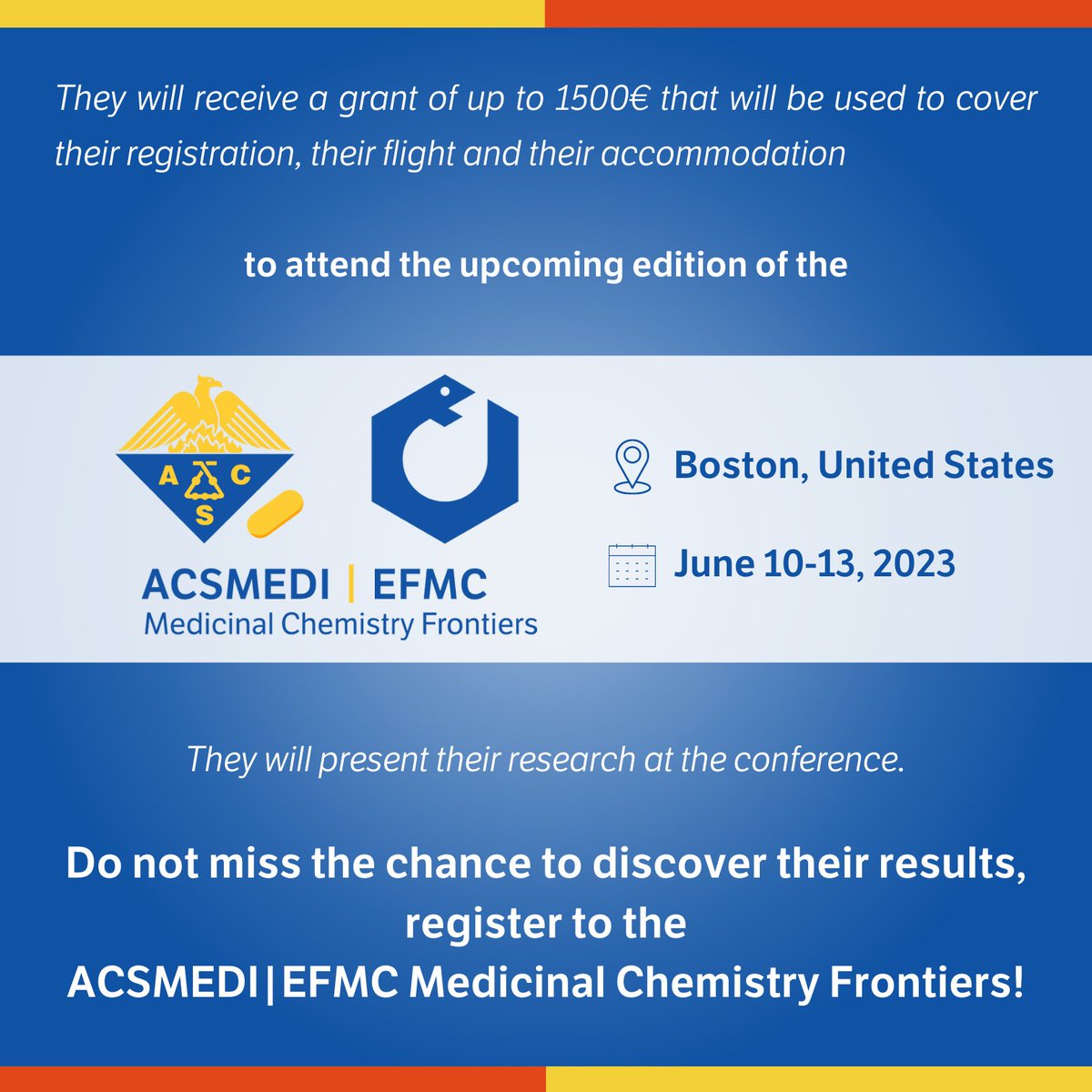
🏆 Awardees of the YSN-YMCC Grant announced! 🏆
Andreas Luttens (@luttens) and Aleša Bricelj (@AlesaBricelj) will fly to Boston to present their research at the ACSMEDI-EFMC Medicinal Chemistry Frontiers 2023.
Congratulations to both!
@EuroMedChem@AcsMedi
“Short coverage upon the SCT Evotec Pasteur Symposium dedicated to "Excellence in Molecular Design".
Evotec Prize was awarded in person to Andreas Luttens, who gave a very insightful talk, along with brillant contributions from other speakers.
Thank you all for participating!!!