🦉New paper out with @hugoreasoning in RoPP, in which we review evidence for several ways expressions of intellectual humility can serve reputation management purposes: 🧵 (1/6)
NEW PREPRINT!
Led by my brilliant Ph.D. student, Meriel Burnett.
In this new work, titled "Roman Personality," we ask: Would ancient Romans have recognized anything like the Big Five personality dimensions?
THREAD 1/n
Cool study I took part in (as a participant, for once) mapping Croatian researchers abroad and providing recommendations for strenghtening ties between scientists at home and abroad. "From brain drain to structured brain circulation" has a nice ring to it! https://t.co/kvxfGWUq73
🦉New paper out in Evolutionary Behavioral Sciences with @heintz_c, in which we connect the evolution of recursive mind reading with the task of prosocial reputation management in a partner choice ecology. A quick summary: (1/5)
➡️In Study 2 (a lab-based economic game), we show that actors think about what audiences will think about prosocial displays that might originate from the intention to manage their reputation and adjust their contributions in the game accordingly. (4/5)
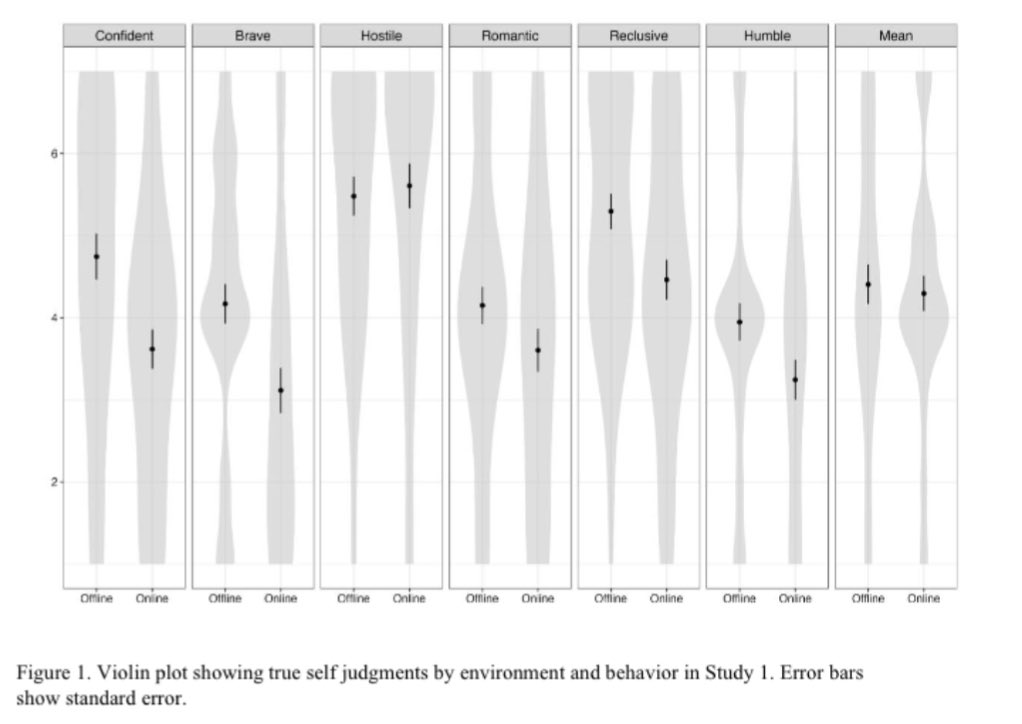
Imagine a person who acts one way online (by email, on social media) but a different way in person. Which of the two is more revealing of their true self?
In a new paper, we suggest that this question shows something deep about how people see certain environments as ‘natural’
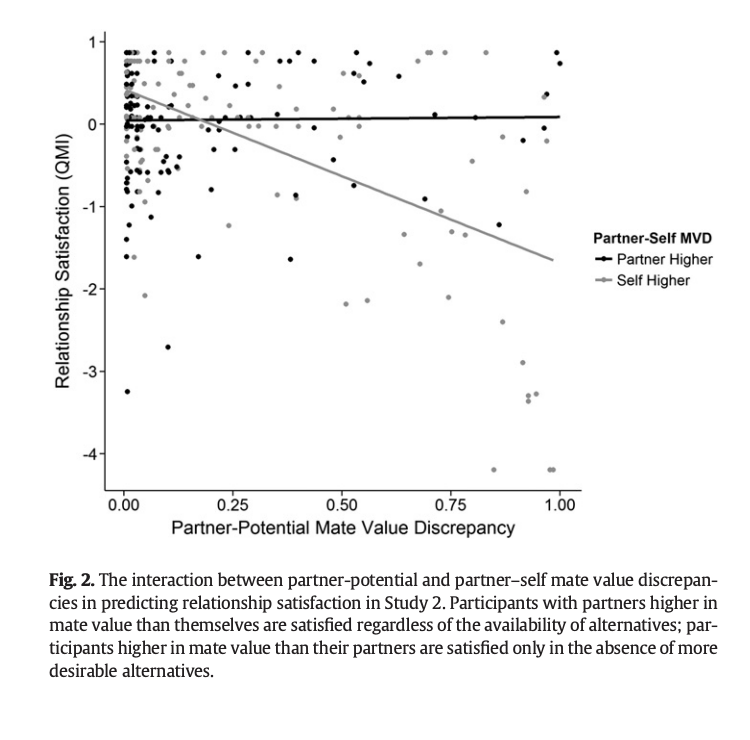
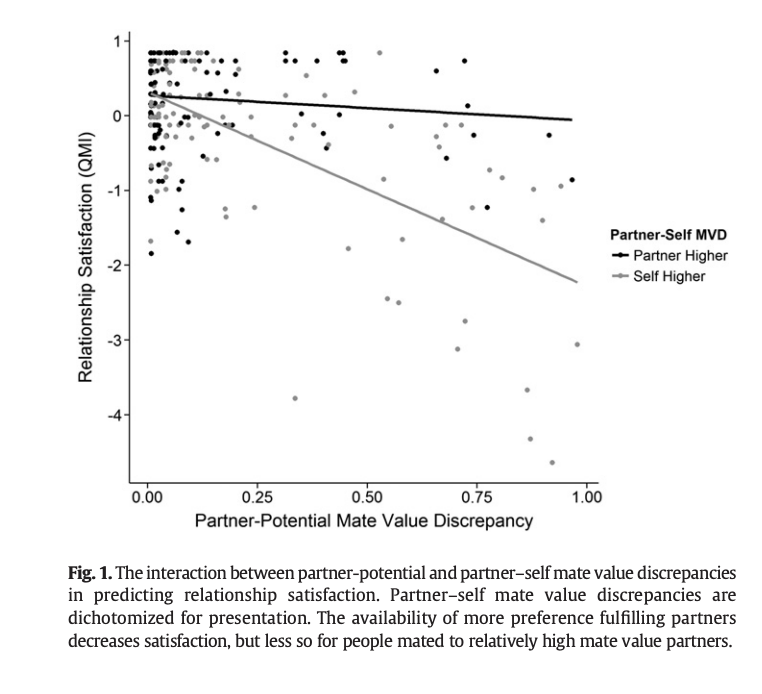
How important is getting what you want in a partner for❤️RELATIONSHIP SATISFACTION❤️?
Not much
What matters?
Your/Your partner's mate-value
Who else is out there
You being higher mate-value >partner + desirable ALTERNATIVES out there =⏬satisfaction
https://t.co/sUPlmZyLUd
Like individuals, we argue that collectives can possess intellectual humility.
Our new @TrendsCognSci paper explains who groups can achieve better decisions by catching each other's biases, expressing dissent, and more.
We need to focus on building intellectual humble environments and cultures that can outlast the given membership in a group:
https://t.co/KVgAQCuhKG
🚨JOB ALERT🚨
OPEN-RANK, tenure-track job in SOCIAL INFLUENCE.
Come be my colleague @UCLA Psychology!
Full ad 👉 https://t.co/Pb27M3pYLj
Please RT + spread!
Introducing UCLA's NEW
🧠Center for Friendship Research🧠
Science needs to pay more attention to FRIENDSHIP. So, we're doing that!
The multi-faculty center will help lead the way in forwarding a science of friendship.
Let's be friends!👇
https://t.co/BoREodxatQ
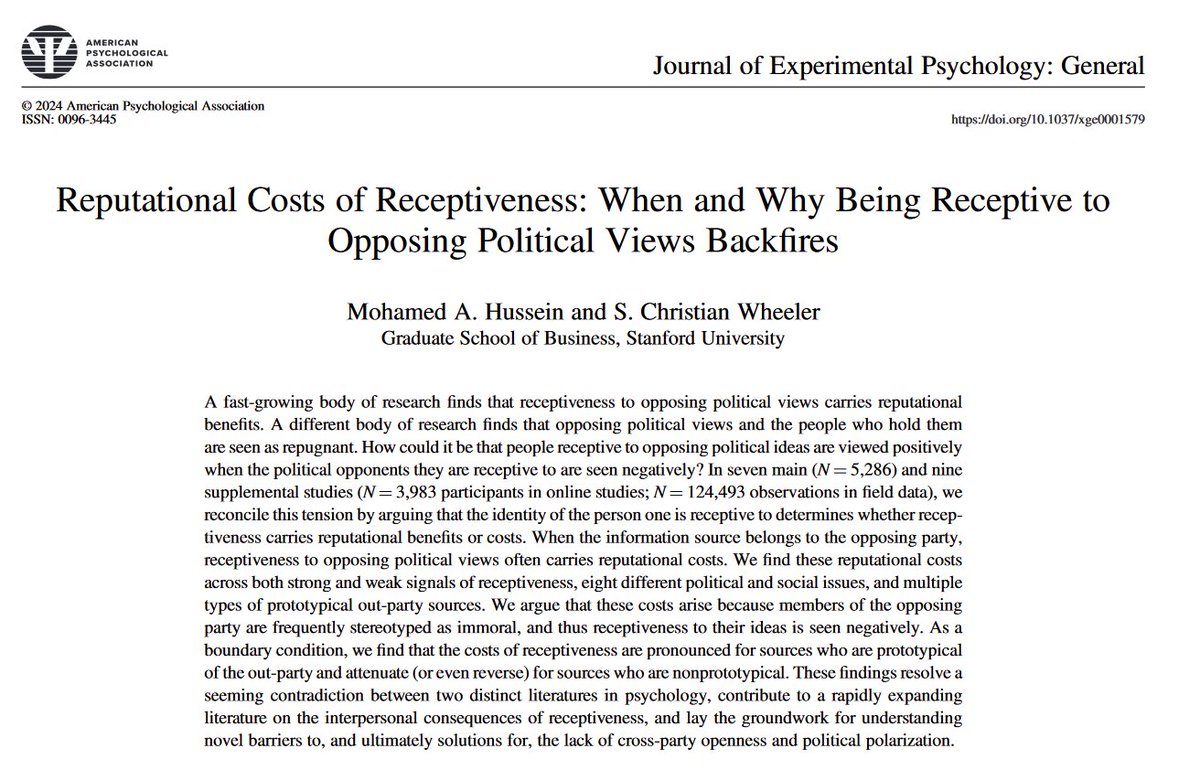
New evidence for my theory of paradoxical status games just dropped: people who desire status are given less status. HT @robsica https://t.co/IsuWLYNe3Y
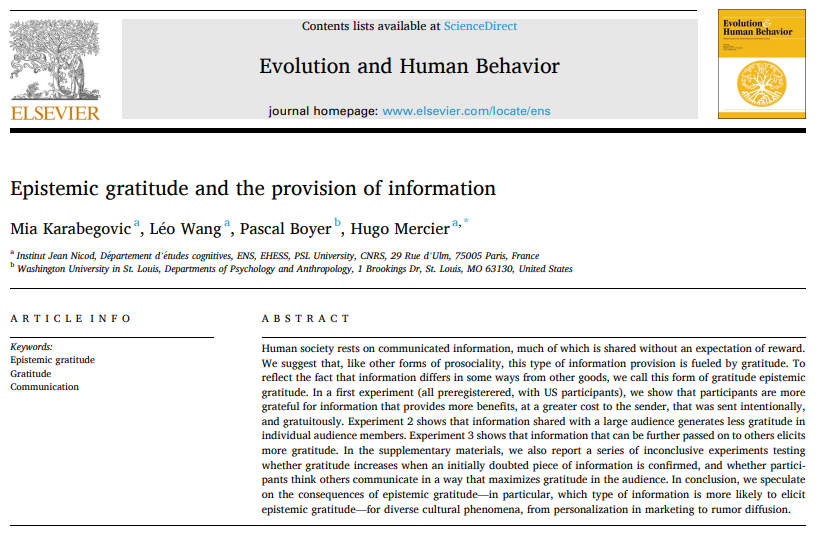
Why do people share information for free? Mia Karabegovic & Hugo Mercier make new & interesting predictions about epistemic gratitude in their HBES blog on their latest research: https://t.co/aweDJYehNd
Or read the original E&HB article: https://t.co/nrXZ4SsOap
Once, we ran a study on Prolific and a participant wrote on Reddit that the study “Felt like I was losing the will to live.” I went on the Prolific Subreddit (24k members!) and asked what matters. Here is what they told me. A thread on happier participants and better studies 1/9
➡️Participants are also more grateful for information shared with them individually as opposed to with a larger audience, and information they can pass along to win reputation points/gratitude themselves.
🦉New paper in press at @EvolHumBehav on the factors that affect feelings of gratitude when it comes to the provision of information. With Léo Wang, @PascalBoyerUSA & @hugoreasoning
https://t.co/8dgHkO0ht7